
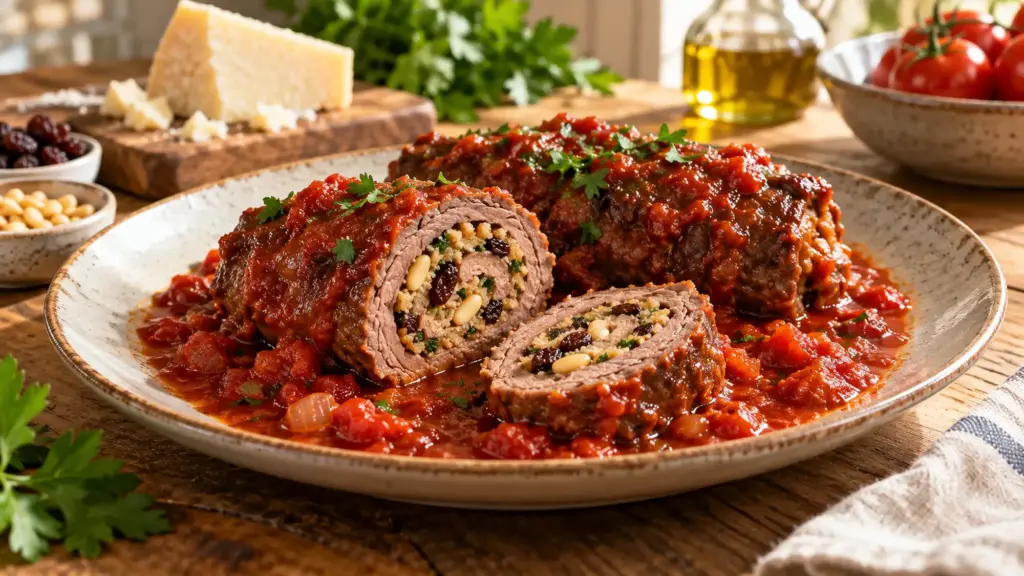
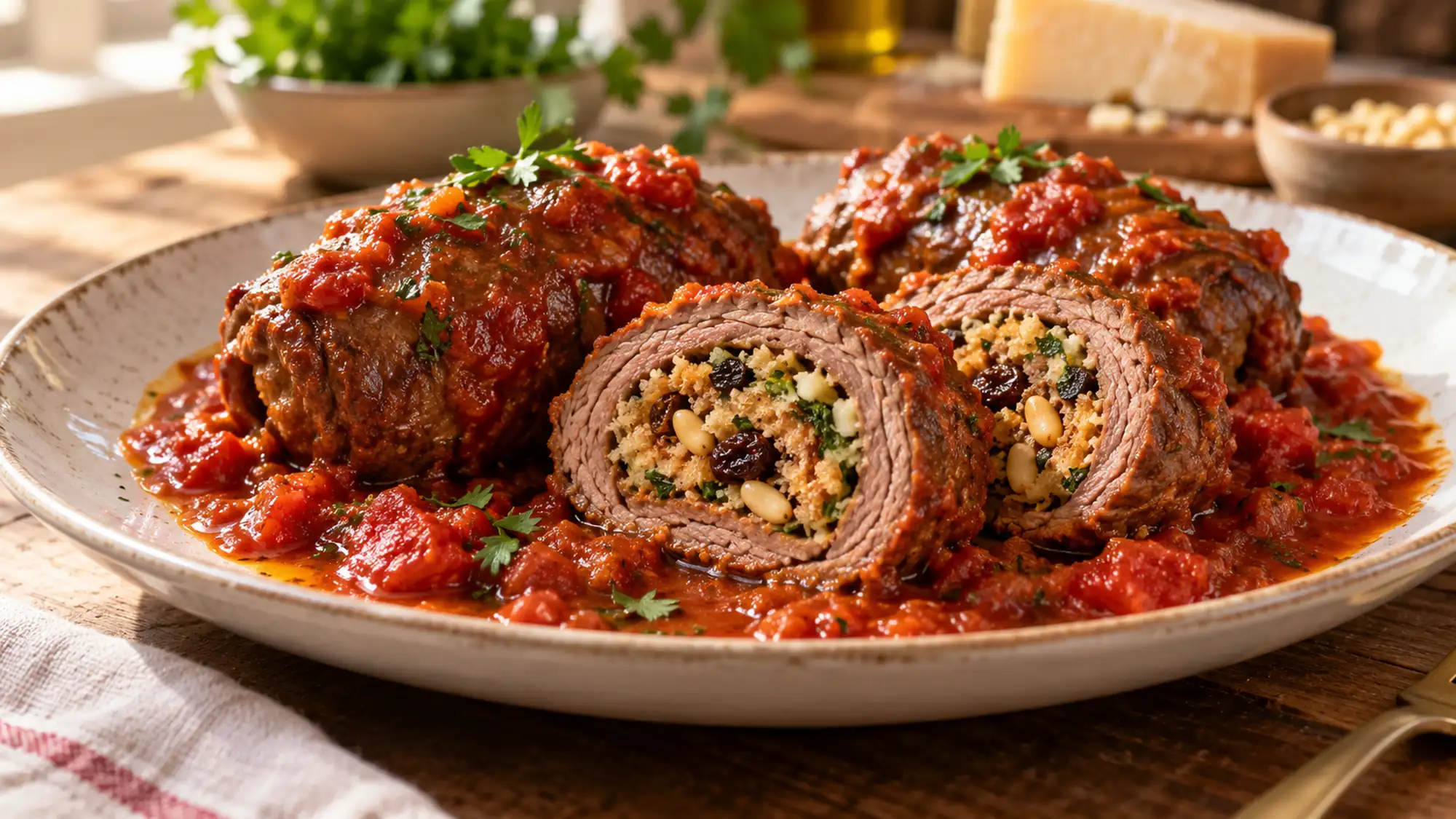
A sliced beef roll can make a simple pot of tomato sauce feel like a special meal. Beef braciole has that effect: the outside looks familiar, but the cut surface reveals herbs, crumbs and little pockets of filling. The long simmer matters more than an elaborate presentation.
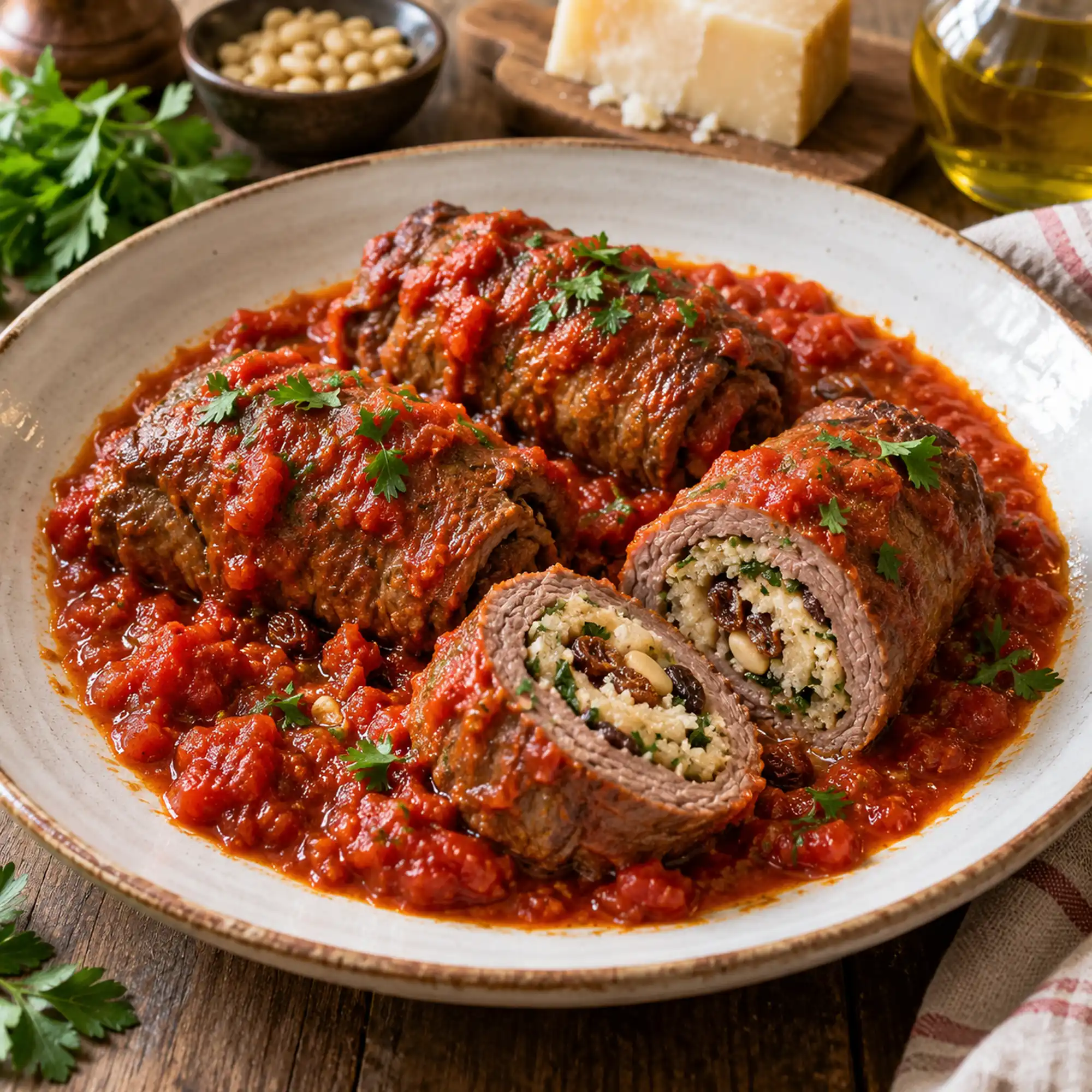
These beef braciole are filled with breadcrumbs, Pecorino, raisins and pine nuts, browned, then gently braised in tomato sauce. Thin, even beef and secure tying help the rolls hold their shape while the meat becomes tender.
The combination is adapted from Sip and Feast’s braciole, with a smaller sauce quantity and six standardized servings. I like the raisins as occasional sweet notes rather than a dominant flavor; they make the savory filling more interesting without turning the dish sweet.
Serving Beef Braciole
Let the rolls settle briefly before removing the twine and slicing across them. A sharp knife makes the filling easier to see and reduces the temptation to saw through tender meat. Spoon sauce onto the plate first, then arrange the slices so they do not disappear beneath a large ladleful.
Pasta is a familiar partner, but it is not essential to the recipe. Bread or vegetables can also work, depending on the rest of the meal. The estimate covers the beef, filling and sauce only, so add any separate pasta portion to your own planning.
- With pasta: dress it lightly with some of the tomato sauce rather than burying the beef.
- With vegetables: green beans provide a simpler contrast.
- For sharing: slice the rolls before serving so portions are easier to divide.
| Serving detail | Why it helps | Practical note |
|---|---|---|
| Remove all twine | Makes slices ready to eat | Count ties before plating |
| Slice across rolls | Shows the filling | Use a sharp knife |
| Offer a plain side | Balances a rich main dish | Optional sides are not in the estimate |
Remove every tie, slice neatly and let the tomato sauce support rather than hide the filling.
Beef Braciole Variations
The beef needs to be thin enough to roll but not so thin that it tears around the filling. Pound between protective sheets and work gradually. A few smaller rolls can be easier to manage than one oversized roll, particularly if your pot has limited room.
I would resist adding more filling simply because there is space on the board. A modest layer stays inside more reliably and lets the beef close securely. Loose crumbs in the sauce are not a disaster, but an overfilled roll is harder to brown and turn.
- Without raisins: omit them for a less sweet filling rather than replacing them with extra salt.
- Without pine nuts: omit them when needed, noting that the texture changes.
- Different cheese: Parmesan gives a related but not identical flavor to Pecorino.
- A thicker sauce: uncover briefly near the end, watching that the bottom does not catch.
Keep the beef even and the filling restrained; secure rolls are easier to brown and braise.
Nutrition and Safe Cooking
Beef contributes protein, while cheese, oil and the bread filling add richness. The tomato sauce brings vegetables to the plate, but it does not make the dish automatically low in fat or sodium. A measured portion and a simple side give a clearer picture of the meal.
The card counts the full sauce and measured oil conservatively. Actual servings can differ if sauce remains in the pot or rolls vary in size. Generic round-beef composition is used as a stated estimate for the top-round cut, not as a laboratory analysis of your particular meat.
- Mind allergens: the filling contains wheat, dairy and pine nuts.
- Remove ties: check every roll for twine before it reaches the table.
- Keep a gentle simmer: boiling hard can tighten the outside before the meat becomes tender.
- Store safely: refrigerate leftovers promptly in shallow containers and reheat thoroughly.
Portion thoughtfully and check for every piece of twine; attractive slices still need practical handling.
Bottom Line
Beef braciole rewards steady cooking rather than constant adjustment. Give the rolls time to soften in the sauce, keep the filling balanced and slice them carefully at the end. The appeal is in the contrast between tender beef, savory crumbs and a few sweet, nutty details, not in making the plate complicated.
Thin beef, a modest filling and a patient simmer make these rolls worth the extra shaping.
Beef Braciole Recipe

Ingredients
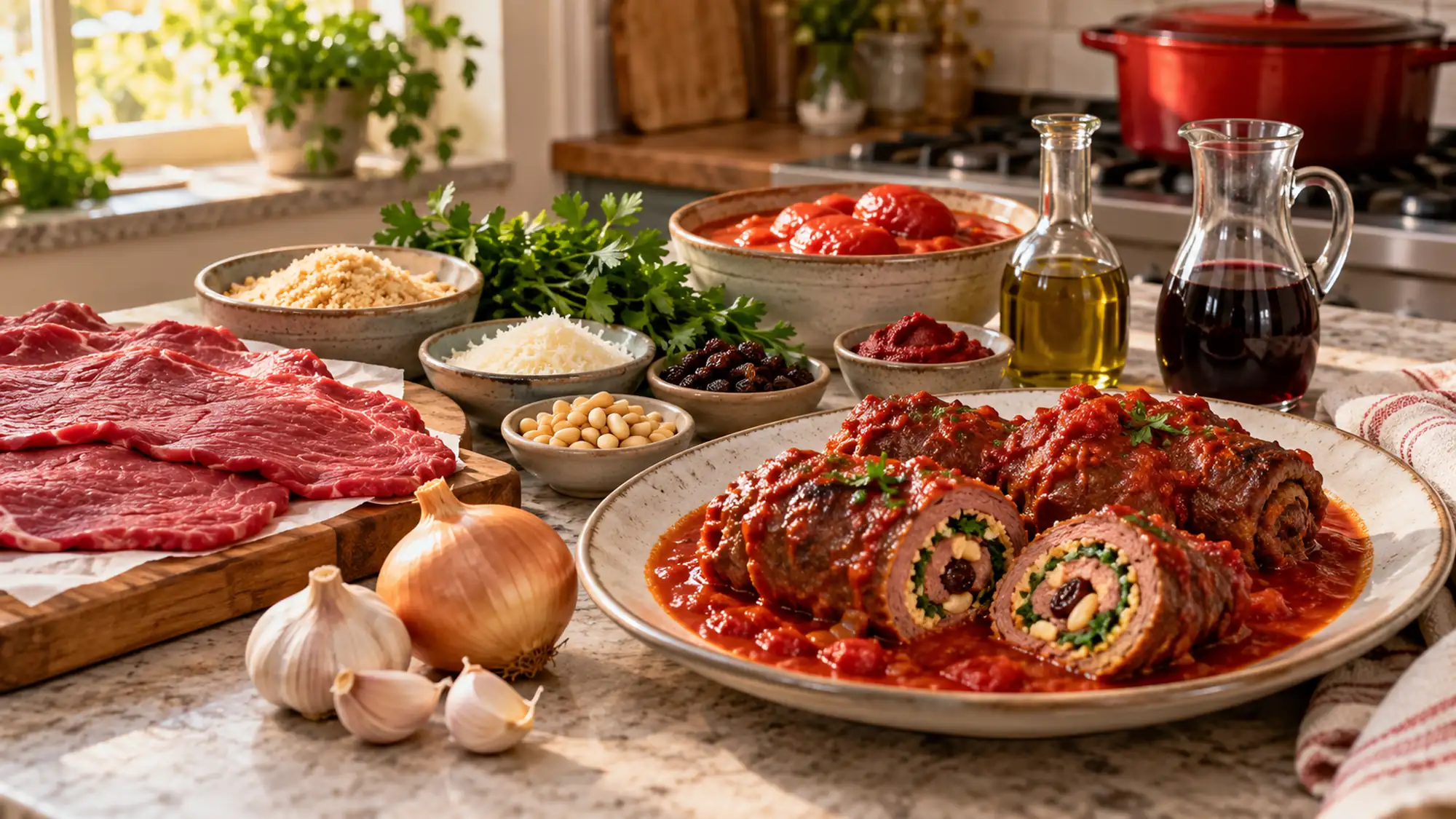
- 900 g beef top round thin slices, pounded to about 6mm
- 120 ml olive oil 45 ml sauce, 45 ml filling, 30 ml browning
- 150 g onion diced
- 24 g garlic 15 g sauce, 9 g filling
- 30 g tomato paste
- 240 ml dry red wine divided
- 1600 g canned whole tomatoes with juice
- 120 ml water plus more as needed
- 100 g fine dry breadcrumbs
- 25 g fresh parsley chopped
- 37 g raisins soaked and drained
- 35 g pine nuts
- 45 g Pecorino Romano
- 6 g fine salt
- 1 g black pepper
Equipment
- 1 Meat mallet
- 1 Kitchen twine
- 1 Wide heavy pot
Instructions
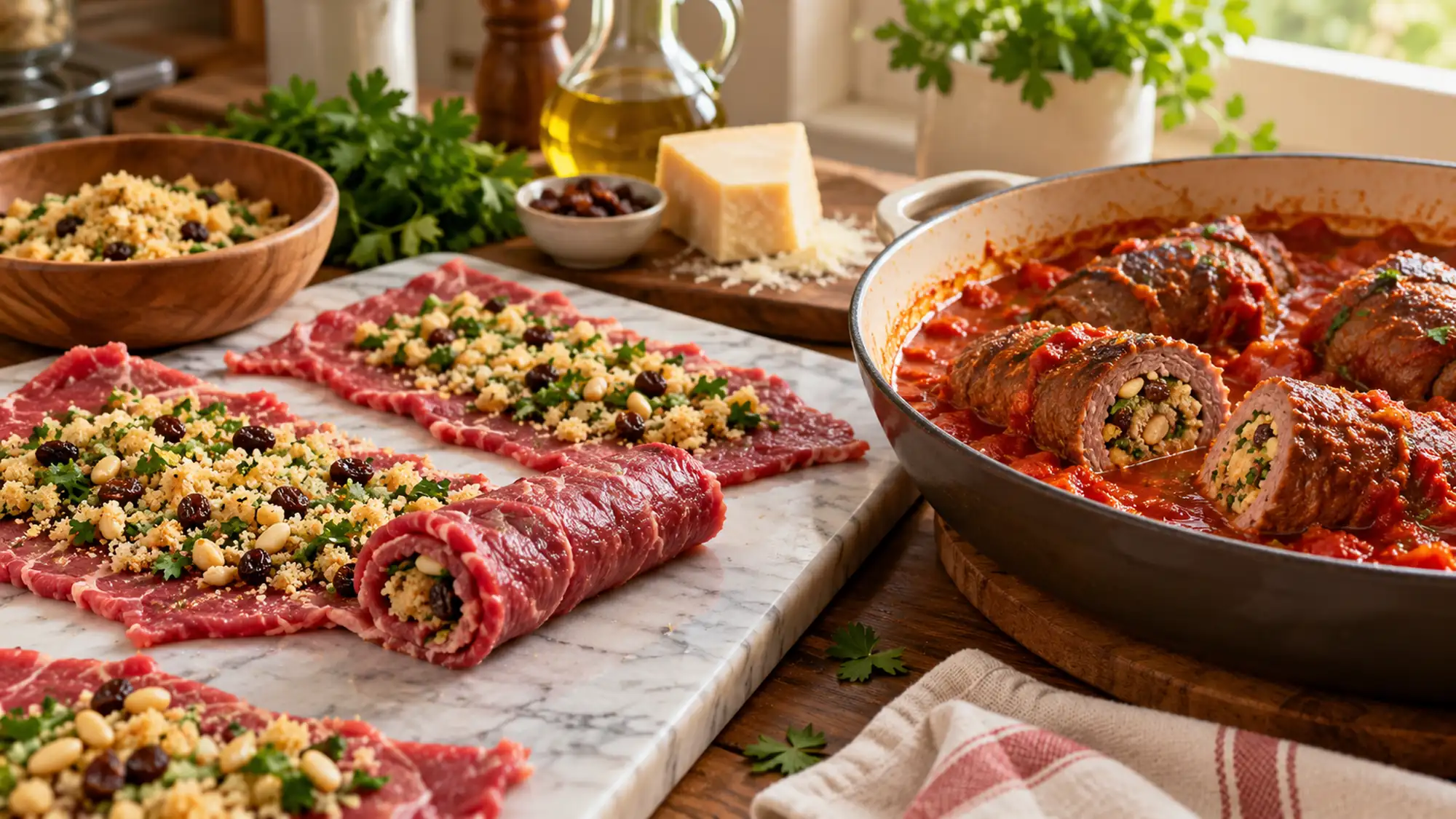
- Pound beef slices evenly to about 1/4 inch, without tearing them. Mix breadcrumbs, 45 ml oil, 9 g garlic, parsley, raisins, pine nuts, Pecorino, half the salt and pepper. Divide filling over beef, leaving a border, roll tightly and tie securely with kitchen twine.
- Heat 45 ml oil in a heavy pot and soften onion with remaining garlic. Stir in tomato paste, then add 120 ml red wine and simmer briefly. Add tomatoes with juice, water and remaining salt; break up tomatoes and bring to a gentle simmer.
- In a separate skillet, heat the remaining 30 ml oil and brown rolls on all sides in batches. Transfer them into the tomato sauce. Deglaze the skillet with the remaining 120 ml wine, scrape the browned bits and add that liquid to the pot.
- Partly cover and braise gently about 2–3 hours, turning occasionally, until the beef is fork-tender. Add small splashes of water if the sauce becomes too thick. Rest briefly, remove and count every piece of twine, then slice across the rolls. Divide rolls and sauce into six portions.
Nutrition
Video
Notes
Tried this recipe?
Let us know how it turned out!Hi, I’m Laura, the voice behind Tastiva. I’ve always believed that eating well should feel enjoyable, comforting, and realistic—not like another complicated rule to follow. I love creating recipes that fit into everyday life, sharing simple nutrition ideas, and finding small ways to make meals feel a little better without losing the pleasure of good food.