
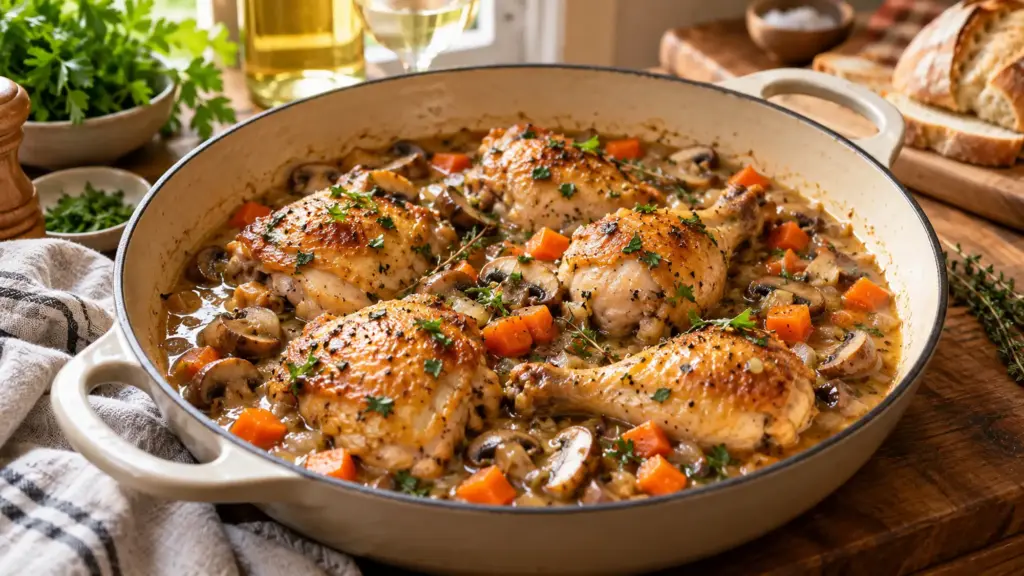
Chicken chasseur can look wonderfully rustic without needing a heavy, creamy sauce. In this tomato-free version, golden chicken pieces sit among carrots and mushrooms in a glossy wine-and-stock sauce. The mushrooms are cooked separately, which helps them keep their browned edges instead of simply releasing water into the braise.
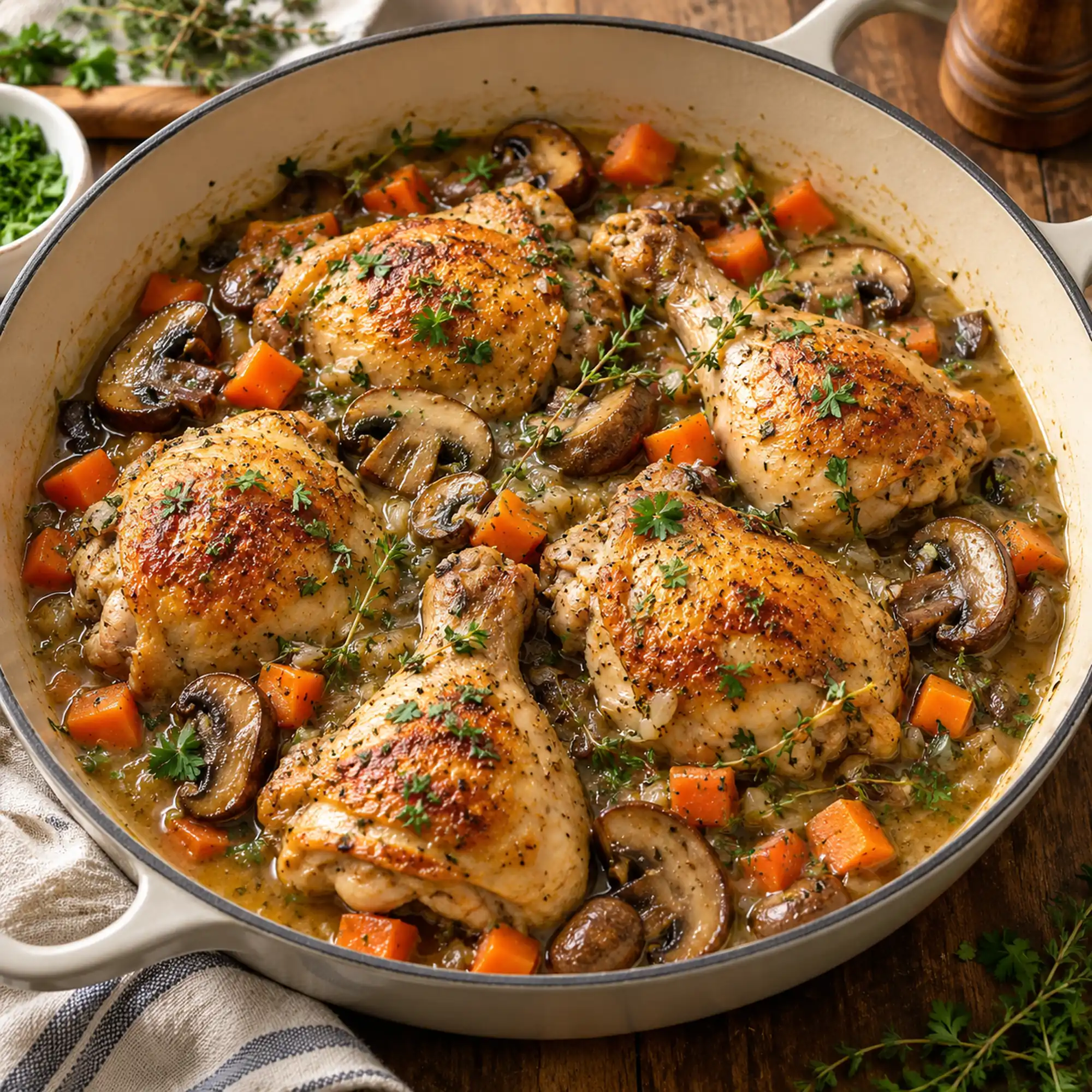
This chicken chasseur follows a gentle stovetop braise: brown the chicken, build the wine sauce, then cook the pieces until safely done. Add the sautéed mushrooms near the end so their flavor and texture remain distinct.
The approach is adapted from Chef Jean-Pierre’s version, with measured butter and no optional cognac. I like the contrast between the tender chicken and the firmer mushrooms; it gives the pan enough interest without a long list of extra ingredients.
Serving Chicken Chasseur
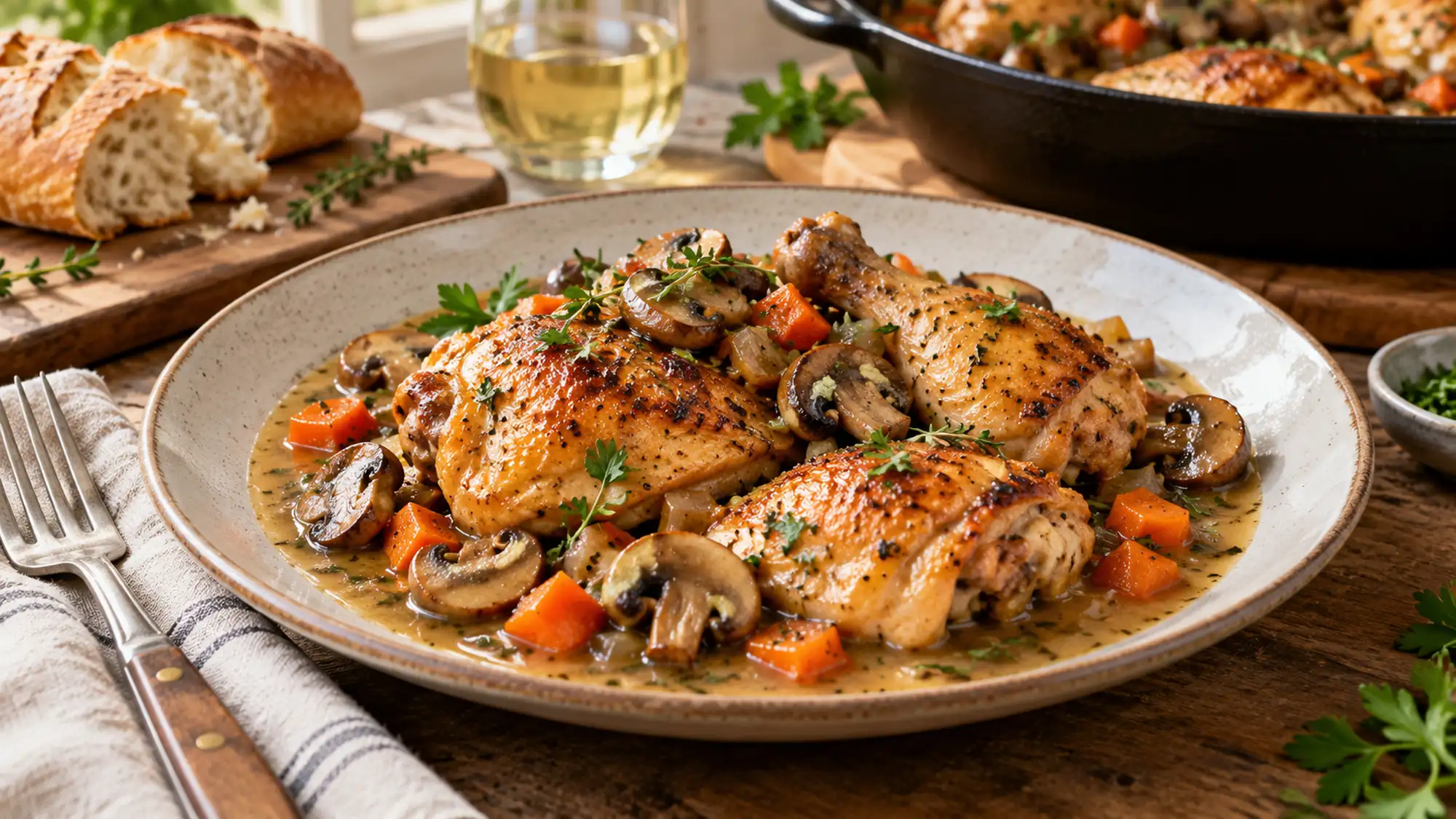
A wide, shallow serving dish makes this chicken easier to share. Arrange the pieces first, then spoon carrots, mushrooms and sauce around them. That keeps the browned skin visible, even though a braise naturally softens it and should not be expected to stay as crisp as roast chicken.
Choose a plain accompaniment that can catch a little sauce. Rice or potatoes work, but a green vegetable can be enough when you want a simpler plate. The estimate covers four portions of chicken and sauce, not an additional starch or bread basket. Keep extra sauce in a small bowl for anyone who wants another spoonful.
- For sauce: mashed potatoes provide a soft base.
- For contrast: green beans add a firmer bite.
- For sharing: offer both light and dark pieces rather than assuming every portion is identical.
| Choice | What it adds | Keep in mind |
|---|---|---|
| Plain potatoes | A place for the sauce | Count the side separately |
| Green vegetables | A different texture | Keep dressing restrained |
| Wide serving dish | Easy access to pieces | Spoon mushrooms around the chicken |
Serve the chicken with its mushrooms and sauce, then choose one straightforward accompaniment.
Chicken Chasseur Variations
Different chicken pieces do not finish at the same moment. Breast meat can become dry while larger legs still need time, so treat the pan as a collection of individual pieces rather than one uniform roast. Remove smaller pieces when they are ready and return them briefly to warm through.
I would keep the mushrooms in their own skillet even when trying to simplify dinner. Their separate browning is one of the useful details here. Crowding them into a small pan makes that harder, so cook in batches if necessary rather than increasing the heat aggressively.
- No wine: use extra stock and adjust acidity gently at the end; the flavor will differ.
- Different mushrooms: choose a firm variety and cook away excess moisture.
- Less tarragon: reduce it if its anise-like flavor is not your preference.
- All dark meat: use comparable pieces and check each one rather than relying only on time.
Keep the gentle braise and separate mushroom browning, even when adjusting herbs or chicken cuts.
Nutrition and Safe Cooking
Chicken provides protein, but skin, clarified butter and the sauce also contribute to the meal. This is not automatically a light dish because it contains vegetables. Portion size and the side you choose matter more than assigning a health label to the whole pan.
Bone-in chicken makes nutrition estimates less precise than a weighed boneless portion. The card uses an explicit edible-yield assumption and counts the butter conservatively. Some sauce or coating may remain behind, and different combinations of breast and leg meat will change individual portions.
- Check each piece: use the 165°F poultry endpoint away from bone.
- Use clean utensils: do not return cooked chicken to a plate holding raw juices.
- Handle wine honestly: cooking does not guarantee that all alcohol disappears.
- Cool promptly: divide leftovers into shallow containers rather than leaving the full pot out.
Use temperature and careful handling, not browned skin or a fixed timer, to judge readiness.
Bottom Line
Chicken chasseur works through small contrasts: tender meat, browned mushrooms and a sauce that is rich enough to connect them without becoming heavy cream. Give each part enough space and attention. The result should feel generous and practical, with the vegetables contributing real texture rather than serving only as decoration.
A gentle braise and separately browned mushrooms are the details worth keeping.
Chicken Chasseur Recipe

Ingredients
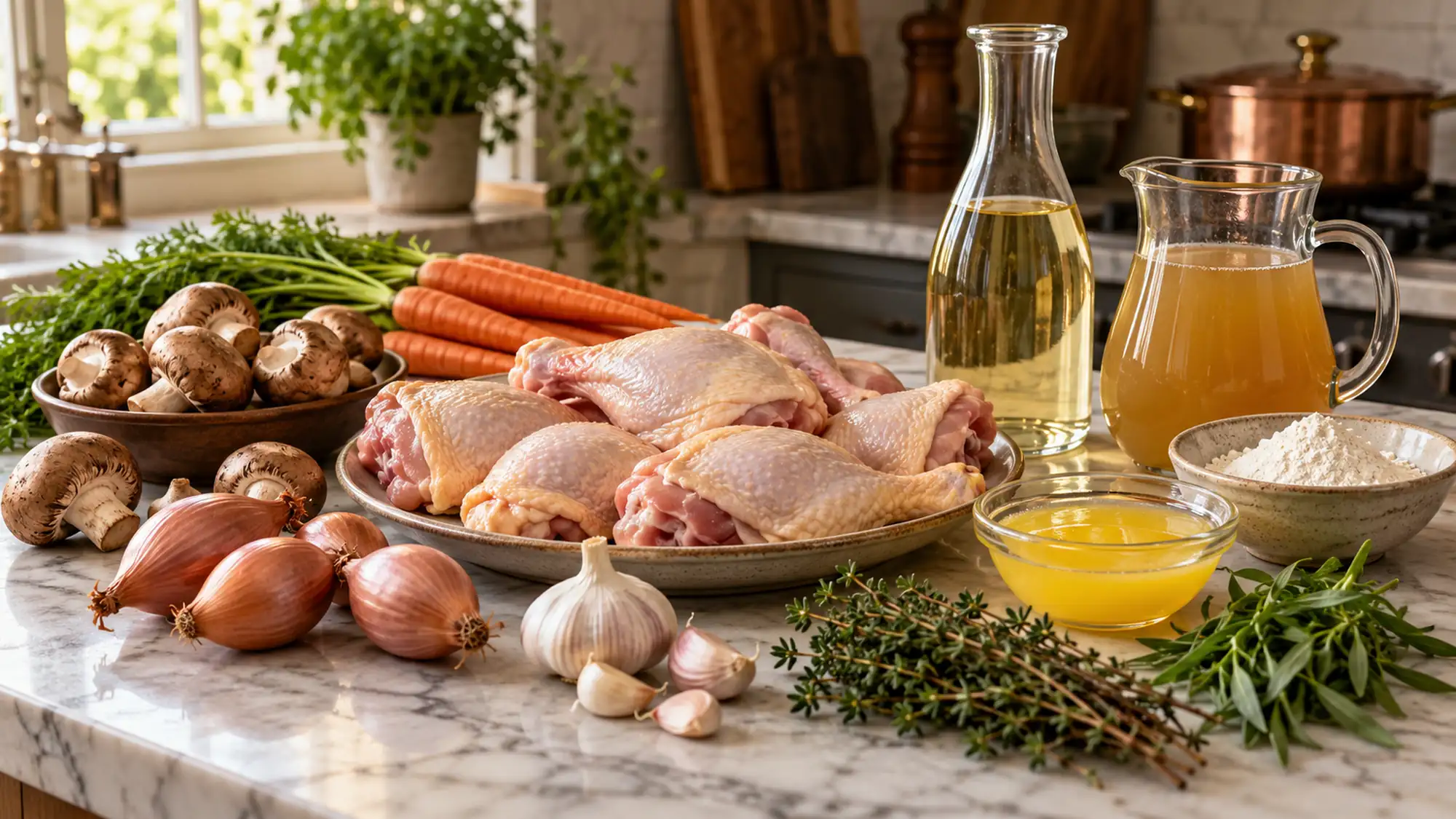
- 1800 g whole chicken cut into 8 pieces bone-in, skin-on
- 56 g clarified butter 28 g chicken, 28 g mushrooms
- 60 g all-purpose flour dredging bath;30 g estimated retained
- 60 g shallot 40 g chicken, 20 g garnish
- 15 g garlic minced
- 180 g carrots sliced
- 9 g fresh thyme 6 g sauce, 3 g mushrooms
- 360 ml dry white wine
- 3 g fresh tarragon
- 480 ml unsalted chicken stock
- 200 g mushrooms sliced
- 8 g fresh parsley
- 5 g fine salt
- 1 g black pepper
Equipment
- 1 Wide sauté pan
- 1 Skillet
- 1 Instant-read thermometer
Instructions
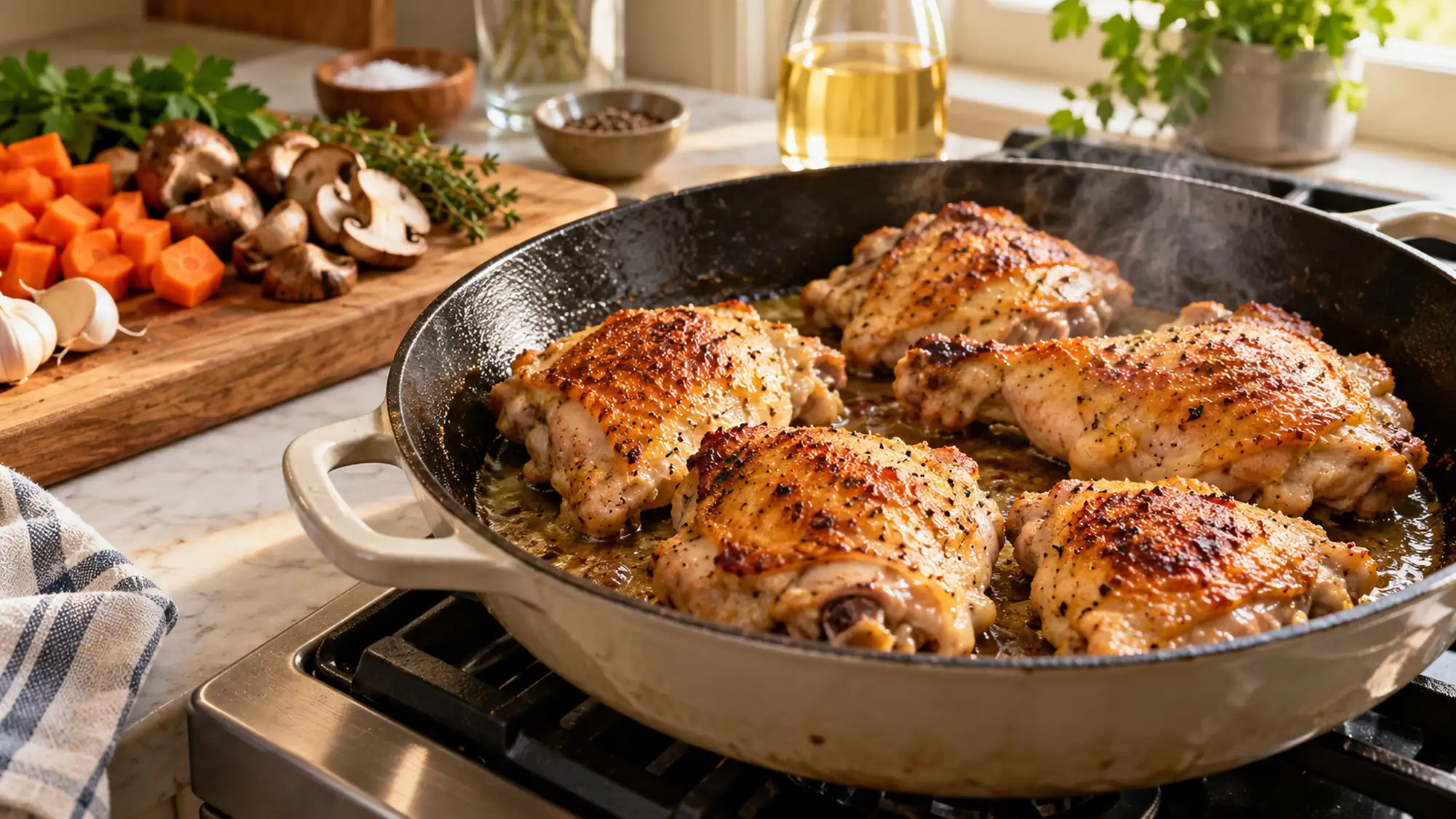
- Pat chicken dry. Reserve the measured flour in a shallow dish and lightly coat the pieces, shaking off excess. Heat 28 g clarified butter in a wide pan and brown the chicken in batches. Transfer to a clean holding plate; it is not yet cooked through.
- Add 40 g shallot, garlic, carrots and 6 g thyme to the pan. Cook briefly, then add white wine and scrape up browned bits. Simmer until the wine reduces by about half. Add stock and tarragon.
- Return legs and thighs first and simmer gently, partly covered, for 10 minutes. Add breast pieces and continue about 25–40 minutes, turning as needed, until every piece reaches 165°F (74°C) away from bone. Remove pieces as they finish rather than overcooking smaller ones.
- Meanwhile, sauté mushrooms in the remaining 28 g clarified butter in a separate skillet until their moisture evaporates. Add remaining shallot and thyme and cook until softened. Fold mushrooms into the finished chicken sauce, season with measured salt and pepper, and finish with parsley. Serve four portions; refrigerate leftovers promptly in shallow containers.
Nutrition
Video
Notes
Tried this recipe?
Let us know how it turned out!Hi, I’m Laura, the voice behind Tastiva. I’ve always believed that eating well should feel enjoyable, comforting, and realistic—not like another complicated rule to follow. I love creating recipes that fit into everyday life, sharing simple nutrition ideas, and finding small ways to make meals feel a little better without losing the pleasure of good food.