
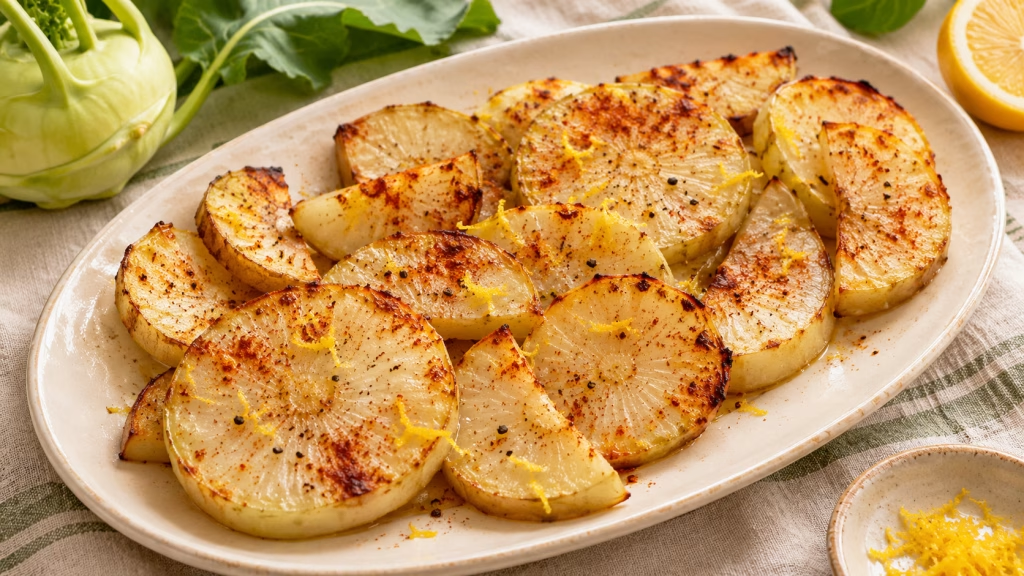
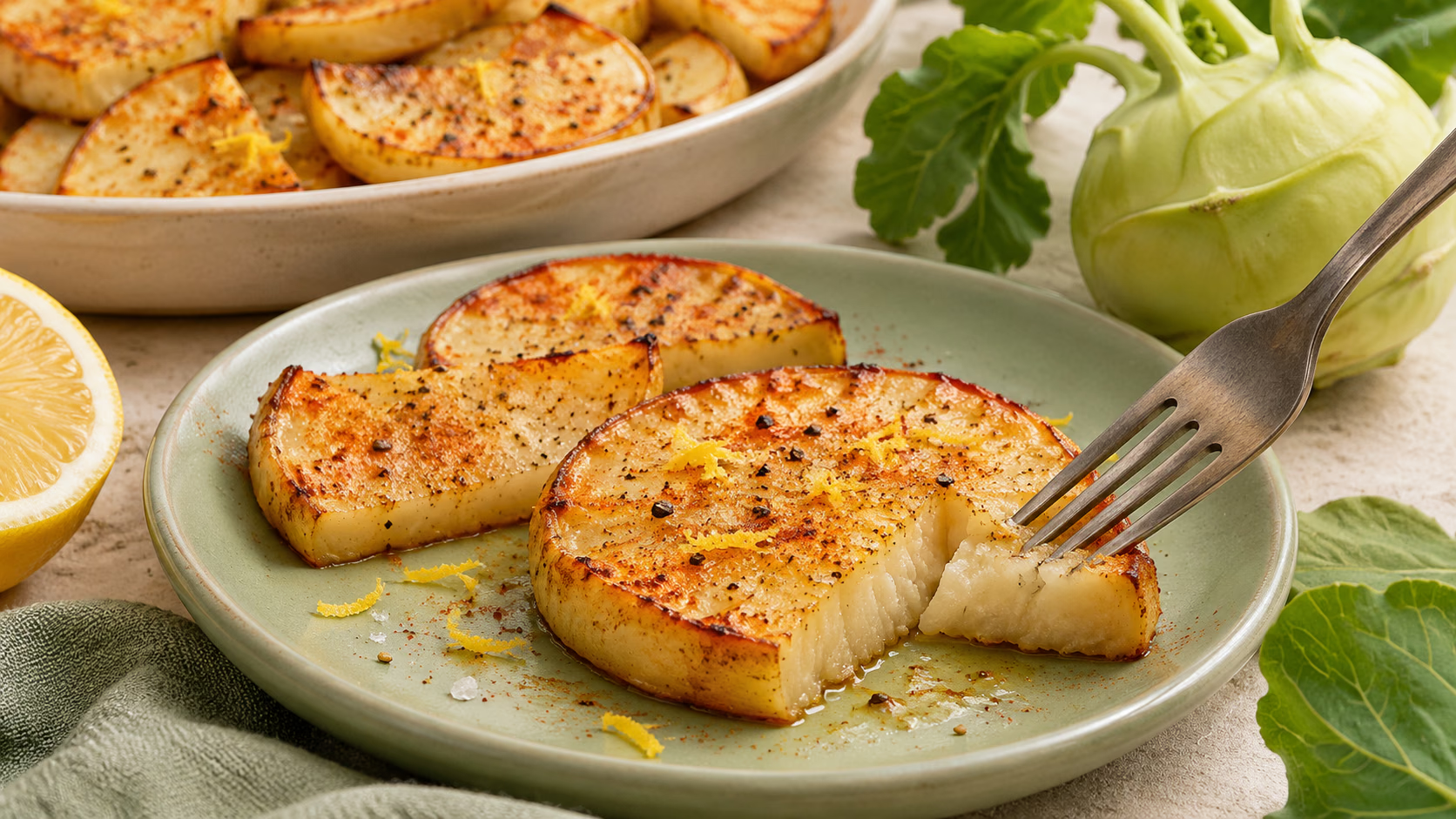
Roasted kohlrabi deserves a spot beside your usual carrots and potatoes. Its pale flesh becomes tender in the oven, while the broad cut surfaces pick up golden patches and a gently sweet, cabbage-like flavor. Smoked paprika gives this version a little warmth; lemon zest keeps the finish lively rather than heavy.
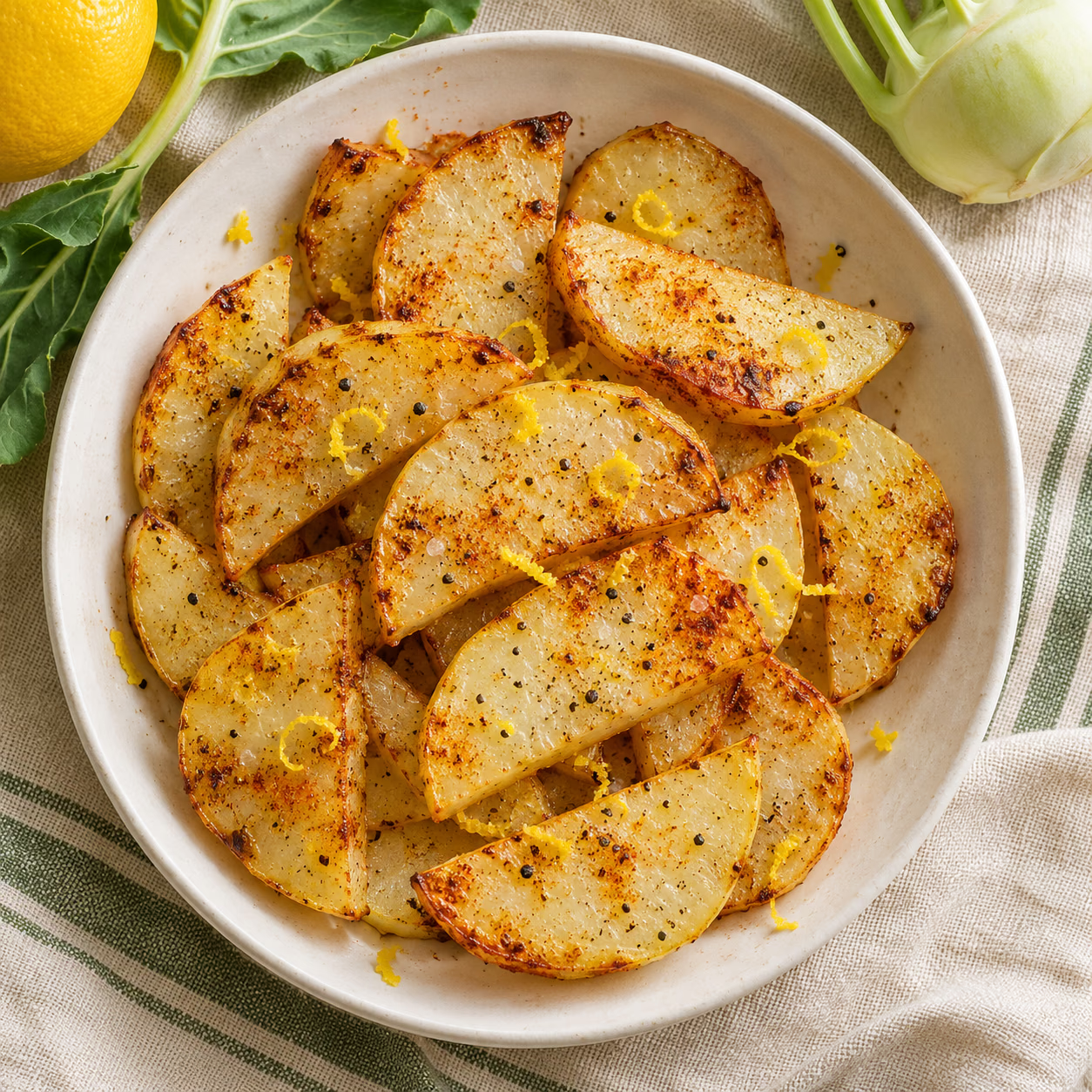
Let the pan do the browning, then let the lemon do the brightening.
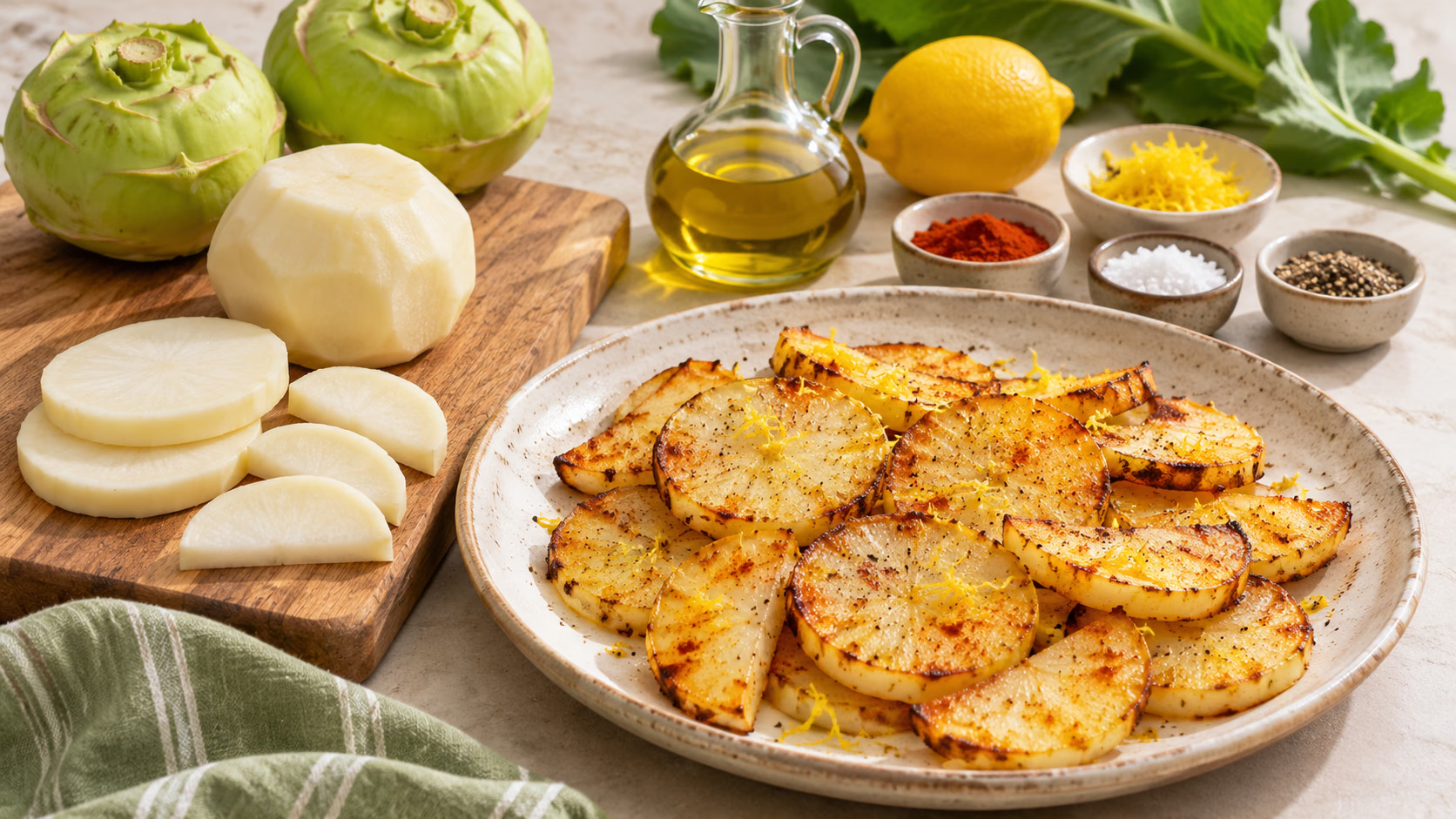
The useful trick here is to save the juice for the end. Adding it before roasting wets the surface just when you want it to dry and color. A light coating of oil, a roomy pan and a few patient minutes give you a more interesting side than simply steaming the vegetable until soft.
How to Get Golden Roasted Kohlrabi
Choose firm bulbs without soft spots. Small and medium ones are easier to work with, though size alone cannot guarantee tenderness. Trim a flat base before peeling so the bulb stays steady. Remove the tough outer skin and continue past any visibly stringy layer; a thin shaving is not always enough.
Cut rounds about three-eighths of an inch thick, keeping their thickness consistent rather than worrying about perfect circles. Broad faces offer plenty of contact with the pan. Halve the largest rounds, then pat everything dry before seasoning. The recipe starts with the peeled weight, so buy a little more than 600 grams.
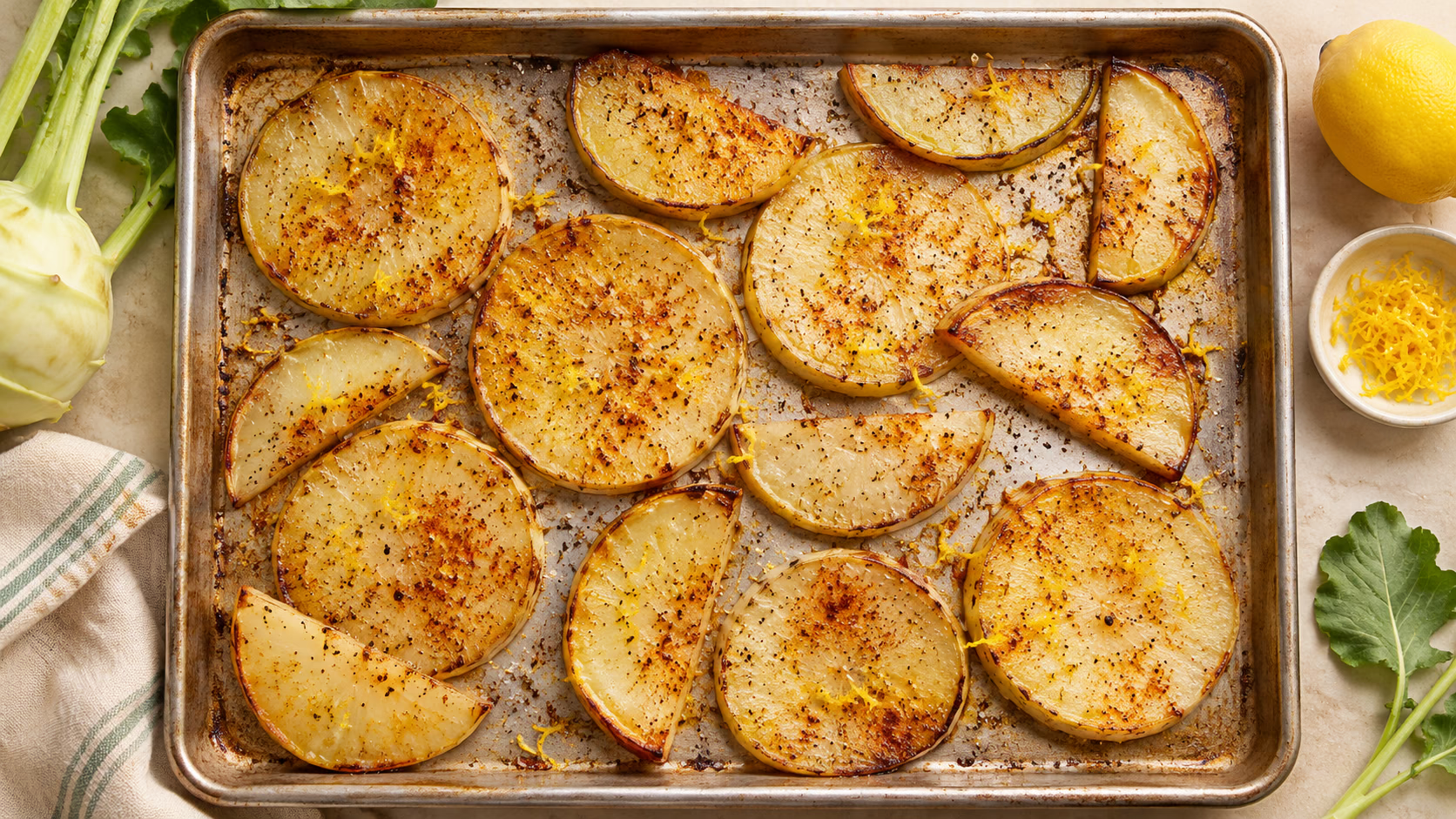
A single layer matters more than squeezing everything onto one tray. If pieces overlap, divide them between two pans. Turn once midway through roasting and check both color and tenderness near the end. A browned edge is lovely, but the center should also yield easily to a small knife.
| What you notice | What to do |
|---|---|
| Pale, damp surfaces | Spread the pieces farther apart. |
| Golden outside, firm center | Roast a few minutes longer and test again. |
| Seasoning darkens quickly | Check the pan early; ovens vary. |
| Flat flavor after roasting | Add the measured lemon finish before more salt. |
A heavy metal pan is helpful, but there is no need to buy special equipment. Use the tray you have and watch how quickly it colors the undersides. Dark pans can brown food sooner than pale ones, so the clock is only a starting point.
Serving Suggestions
Serve these rounds hot alongside baked fish, grilled chicken or a bowl of lentils. Their smoky edges work especially well with something simple and creamy. A spoonful of plain yogurt can become a quick dipping sauce, although it is an optional addition rather than part of the recipe.
For a vegetable-centered plate, pair a modest portion with celeriac puree and beans or mushrooms. The contrast between browned rounds and a soft puree keeps the meal from feeling repetitive. Set the kohlrabi on top at the last moment so its surfaces do not sit in sauce.
Variations
Use sweet paprika instead of smoked if you prefer a quieter seasoning. For a warmer finish, add a small pinch of crushed red pepper after roasting. Keep the base quantity of oil the same; more spice does not require more oil.
Lime zest and juice can replace the lemon for a sharper citrus note. Dried thyme is another option, but use only a small pinch so the kohlrabi remains the main flavor. Change one accent at a time, especially if this is your first time cooking the vegetable.
Health Benefits
Kohlrabi contributes fiber and potassium to the plate. The USDA-based raw ingredient data used for the estimate lists 3.6 grams of fiber per 100 grams. Roasting changes its water content, so a cooked serving should not be compared gram-for-gram with that raw entry.
The recipe uses olive oil rather than butter and contains no dairy ingredients. Its nutrition numbers are estimates for one quarter of the complete batch, including all the oil and measured salt. They are a useful guide, not a laboratory analysis or a promise about any particular health outcome.
Bottom Line
Think of this as a small change to an everyday roasting routine: broad slices, enough space and citrus after the oven. You do not need a complicated sauce to make an unfamiliar vegetable inviting. Start checking at twenty minutes, trust the knife test, and serve while the golden faces are at their best.
Roasted Kohlrabi Recipe

Ingredients
- 600 g peeled kohlrabi weigh after peeling; about 2–3 medium bulbs
- 2 tablespoons olive oil
- 1/2 teaspoon smoked paprika
- 1/4 teaspoon fine salt
- 1/4 teaspoon black pepper
- 1 teaspoon finely grated lemon zest
- 2 teaspoons lemon juice
Equipment
- Rimmed sheet pan
- Cutting board
- Chef’s knife
- Mixing bowl
- Spatula
- Fine zester
Instructions
- Heat the oven to 425°F (220°C). Trim the kohlrabi leaves and ends. Stand each bulb on a flat cut end and slice away the tough green skin and any fibrous layer with a sharp knife; weigh 600 g of peeled flesh.
- Slice the peeled bulbs into even 3/8-inch (1 cm) rounds. Halve very wide rounds so they fit comfortably on the pan. Pat dry and toss in a bowl with the olive oil, smoked paprika, salt and pepper.
- Spread in one layer on a large rimmed sheet pan with a little space between pieces. Roast for 20–25 minutes, turning halfway, until the broad faces are golden and a knife enters the centers easily. If needed, give thicker pieces a few more minutes; do not judge doneness by color alone.
- Transfer to a serving dish. Sprinkle with lemon zest and drizzle with lemon juice immediately before serving. Taste and adjust only if needed.
Nutrition
Notes
Tried this recipe?
Let us know how it turned out!Sources
Mayo Clinic: roasted kohlrabi preparation; USDA kohlrabi nutrient data; University Hospitals ingredient nutrition tables.
Hi, I’m Laura, the voice behind Tastiva. I’ve always believed that eating well should feel enjoyable, comforting, and realistic—not like another complicated rule to follow. I love creating recipes that fit into everyday life, sharing simple nutrition ideas, and finding small ways to make meals feel a little better without losing the pleasure of good food.