
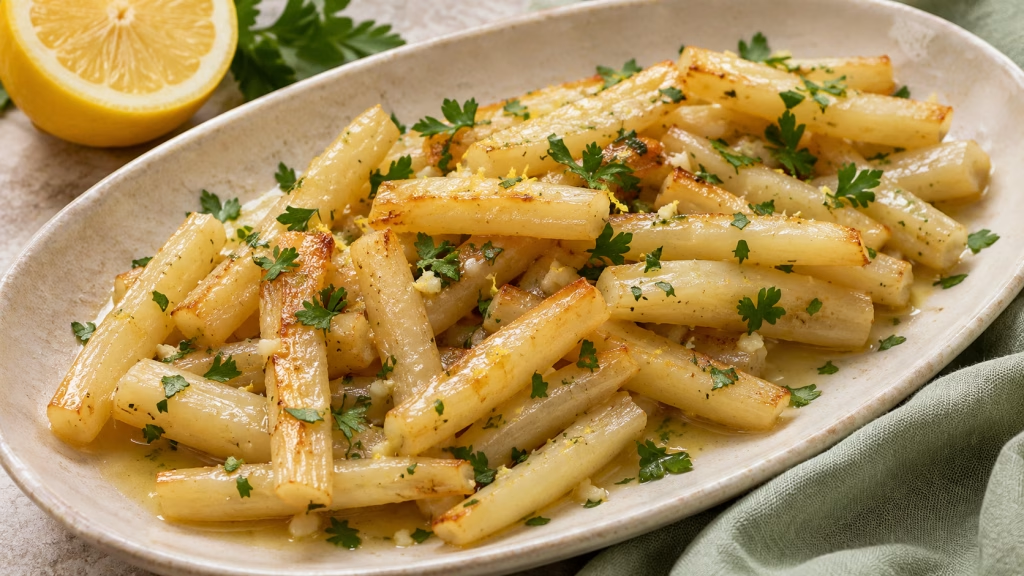
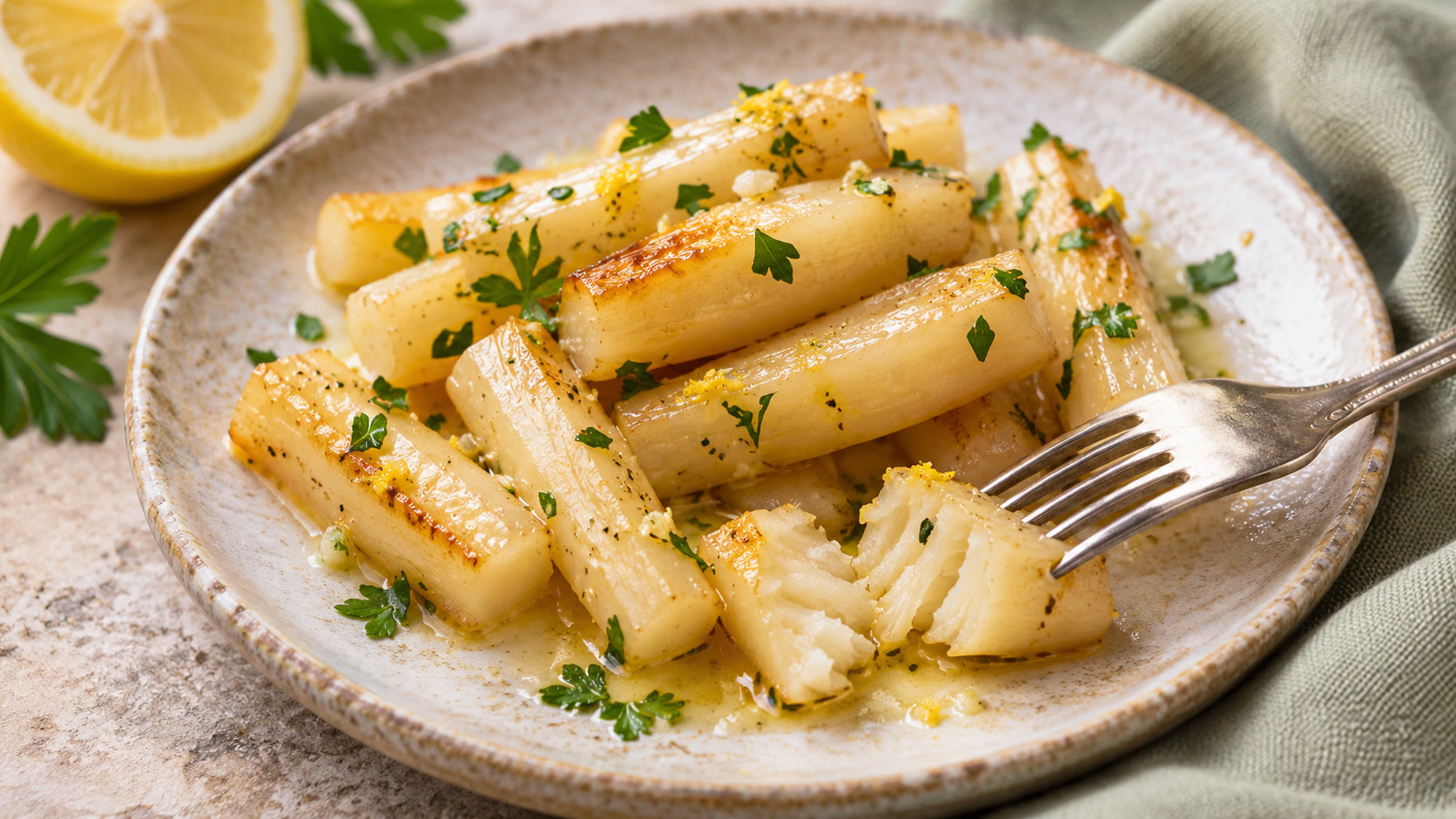
Sautéed salsify turns a rather unpromising-looking root into a golden, buttery side. Beneath the dark skin is pale flesh with a mild, earthy flavor that suits garlic, parsley and lemon. The useful trick is to cook it until tender in water first, then give the drained pieces a short turn in a hot skillet.
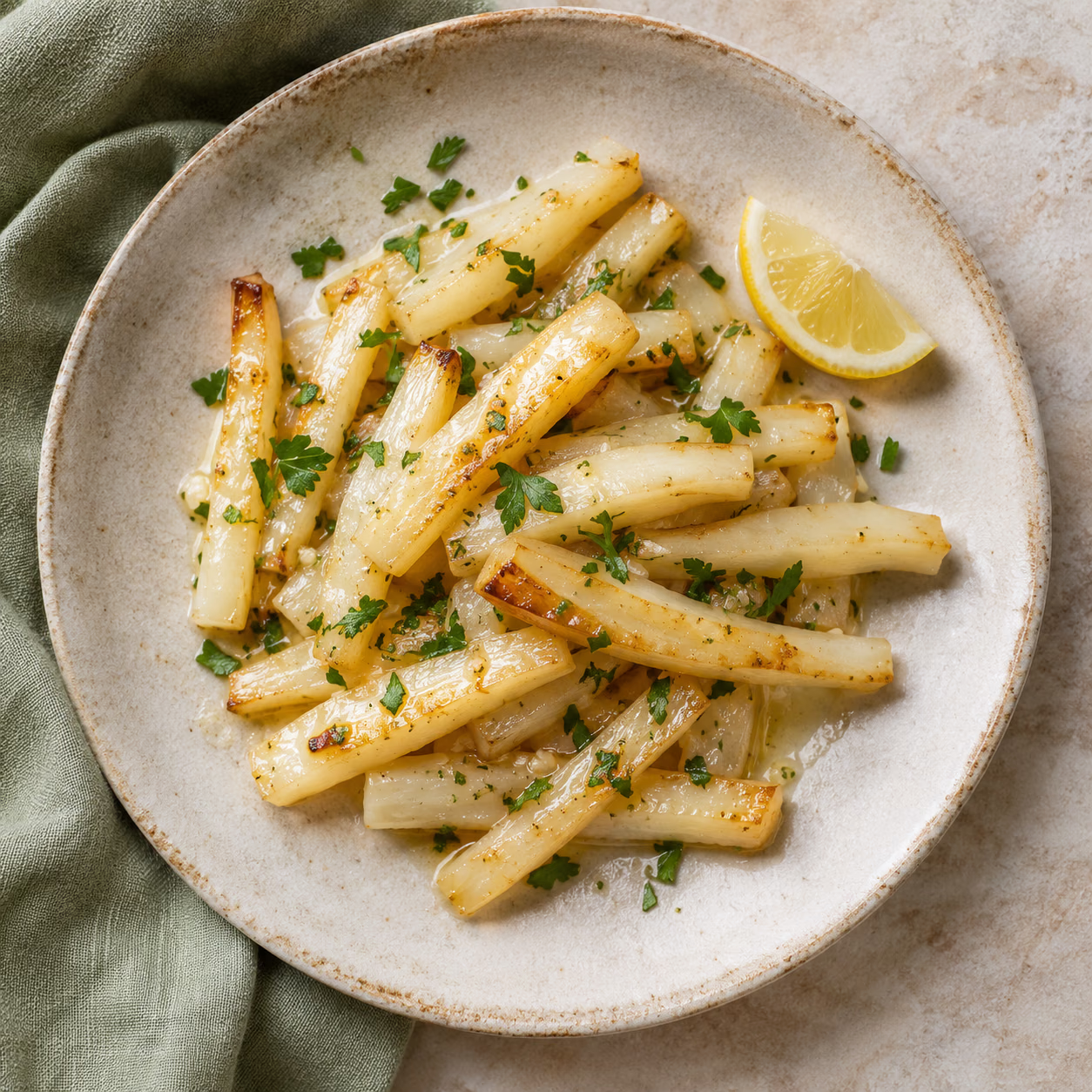
Prepare the lemon water before you start peeling. Once the salsify is cooked, let the surface dry well: damp batons steam in the skillet instead of developing those appetizing golden patches.
Serving Suggestions
I would serve this alongside roast chicken, baked fish or a pan of lentils and mushrooms. The buttery coating already supplies richness, so a sharp salad makes a better partner than another creamy side. A little lemon at the end keeps the plate from feeling heavy without hiding the root’s delicate flavor.
This batch makes four side servings, not four main courses. Arrange the batons loosely on a warm platter and spoon over the garlic butter left in the pan. Keep the parsley visible rather than stirring it through for several minutes; the final handful should look fresh against the pale vegetable.
For a vegetable-focused dinner, pair it with our roasted romanesco and a substantial bean dish. The contrasting shapes make a pleasant plate. I would avoid adding breadcrumbs to both vegetables, since the salsify is nicest here with a tender center and a simple glossy finish.
| Pairing | Why it works |
|---|---|
| Baked fish | A mild main that suits lemon and parsley |
| Lentils and mushrooms | A substantial, savory vegetarian partner |
| Sharp green salad | Crisp leaves alongside the buttery roots |
Variations
Start with the straightforward version before adding stronger seasonings. Salsify is not as assertive as garlic or smoked paprika, and a heavy hand can make it disappear. The aim is a recognizable vegetable side, not merely a carrier for a sauce.
- For a dairy-free version, replace the butter with olive oil. Add the garlic toward the end just as you would in the original method.
- For a softer herb note, use chopped chives instead of parsley. Add them off the heat so their flavor stays gentle.
- For a brighter finish, add a little finely grated lemon zest. This is optional; the measured juice already supplies acidity.
Choose fresh black salsify for this version, not canned roots in liquid. Canned salsify has already been cooked and would need a different preparation and timing. If the fresh roots vary greatly in width, halve the thicker batons lengthwise so their centers soften at roughly the same pace.
Health Benefits
Black salsify contributes fiber and potassium. The Norwegian Food Composition Table provides the raw-root data used here. A quarter of this recipe is estimated at about 194 calories and 10.6 grams of fiber, with all the measured butter and oil included.
That is an ingredient-based estimate, not a laboratory result for the cooked dish. The calculation does not model nutrients lost in the boiling water. It also converts the Norwegian table’s available carbohydrate figure to total carbohydrate by adding fiber, so the card follows the total-carbohydrate convention rather than mixing definitions.
The butter contributes saturated fat, and this side is not a complete meal by itself. Pair it with a protein source and other foods you enjoy. There is no need to promise special health effects from a less-familiar vegetable; making it enjoyable and understanding the portion are useful enough.
Bottom Line
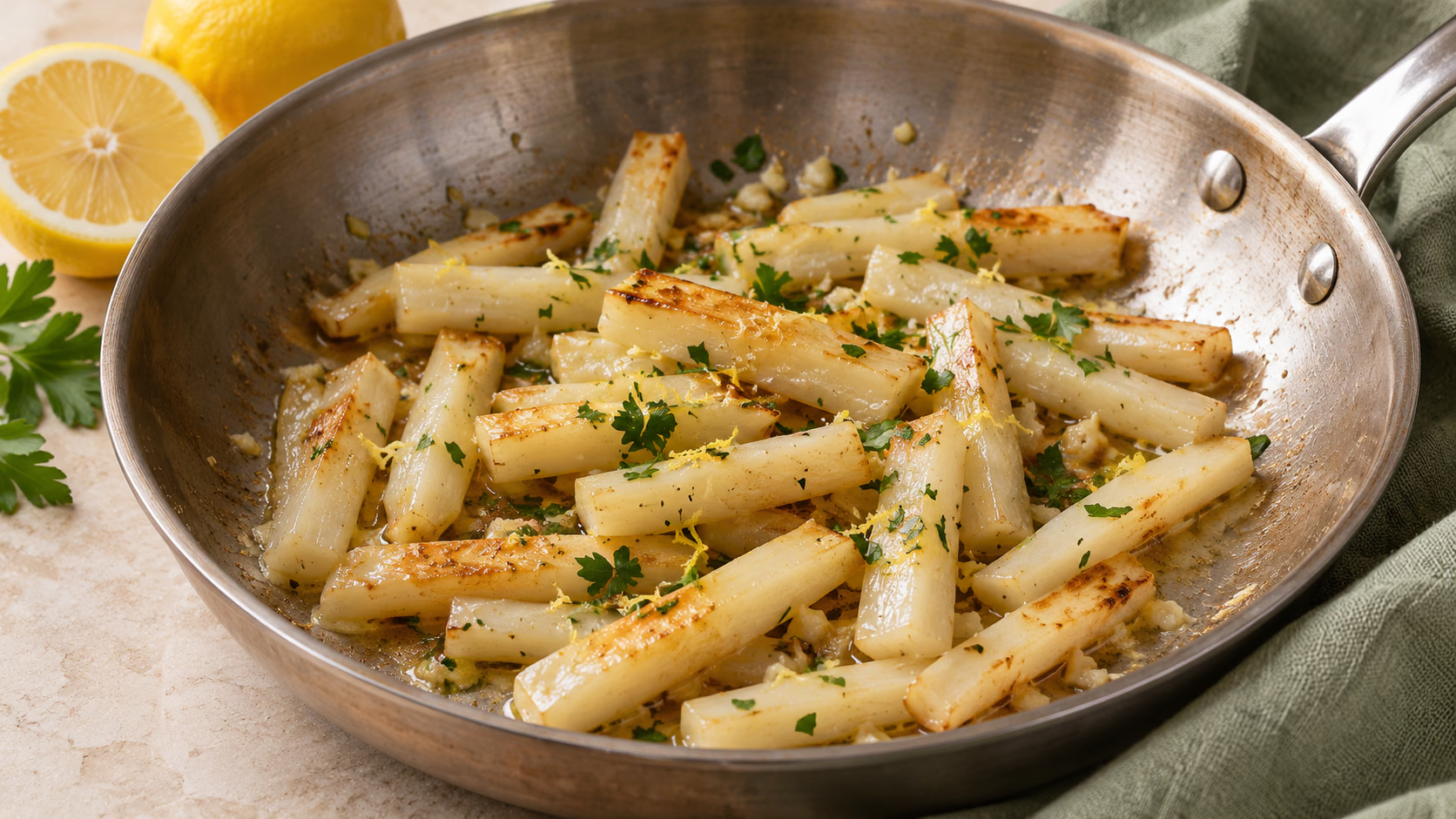
Think of this as two different cooking jobs. Simmering softens the centers, while the skillet adds color and coats the pieces in garlic butter. Trying to accomplish both in a very hot pan can leave you with browned surfaces and roots that are still firm inside.
The Great British Chefs preparation guide recommends lemon water to limit discoloration after peeling. Have the bowl ready before the peeler comes out. The roots can leave a sticky residue on your hands, so food-safe gloves are an option if that bothers you.
My preference is a few golden patches rather than deep browning on every surface. Add the garlic late, lower the heat if necessary and stop before it burns. The full card below includes the quantities, doneness checks and a related preparation video, with the original video date clearly credited.
Sautéed Salsify Recipe

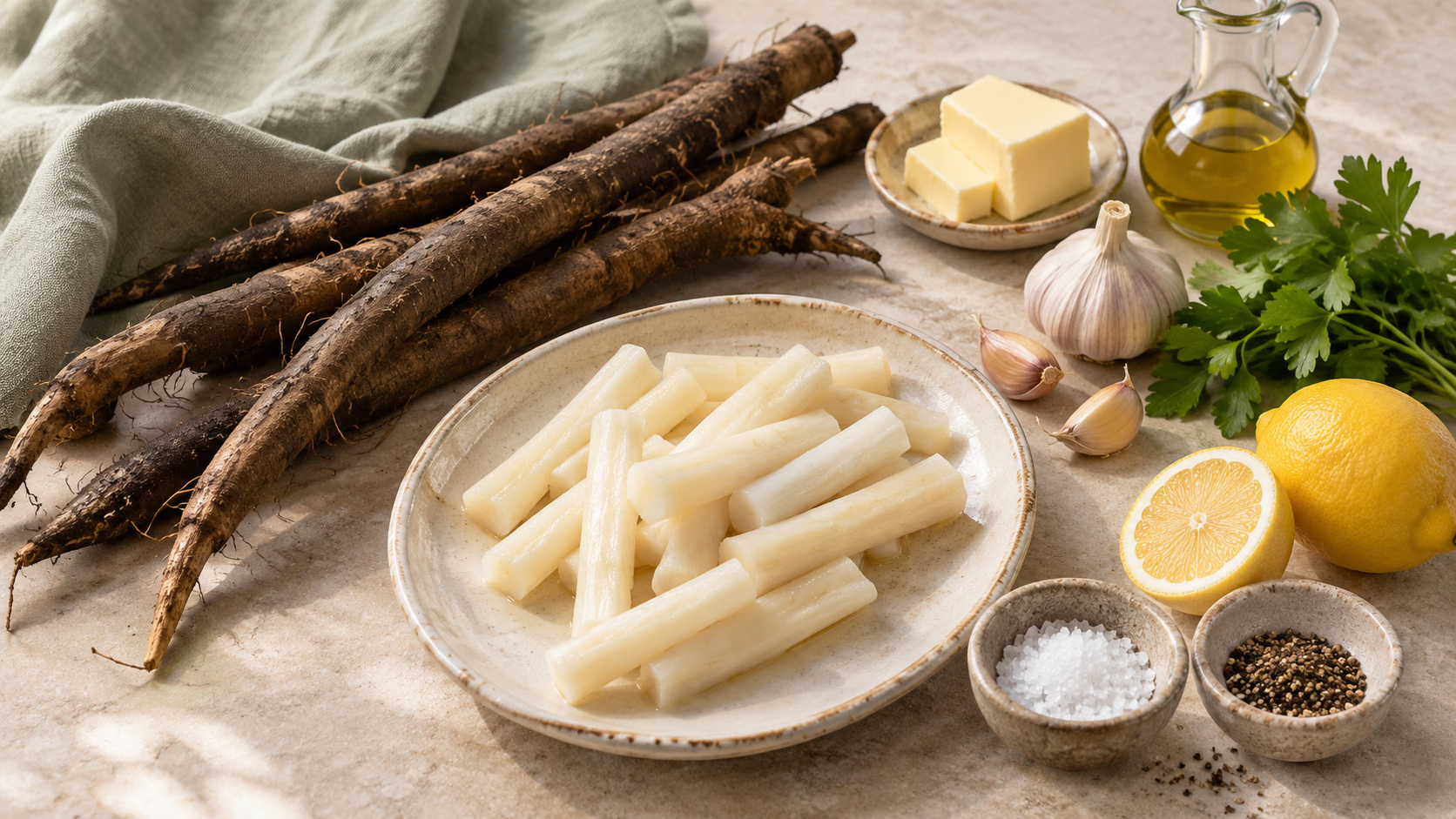
Ingredients
- 600 g black salsify peeled weight; buy extra to allow for peel and trimming
- 1 tablespoon olive oil
- 2 tablespoons unsalted butter about 28 g
- 2 garlic cloves minced, about 6 g
- 2 tablespoons chopped flat-leaf parsley
- 2 tablespoons lemon juice divided: 1 tablespoon for soaking water, 1 tablespoon to finish
- 1/4 teaspoon fine salt
- 1/8 teaspoon black pepper
- as needed water for soaking and simmering
Equipment
- Large bowl
- vegetable peeler
- Knife and cutting board
- Saucepan
- Colander
- wide skillet
- Measuring spoons
Instructions
- Fill a bowl with cold water and stir in 1 tablespoon lemon juice. Wash and trim the salsify, peel it, then cut into roughly 2-inch batons, halving thick pieces lengthwise. Put each peeled piece into the lemon water as you work to limit discoloration. Measure 600 g peeled roots.
- Drain the soaking water. Transfer the batons to a saucepan, cover with fresh water and bring to a boil. Reduce to a simmer and cook about 10–20 minutes, checking early, until a knife enters the thickest piece easily but the batons still hold their shape.
- Drain thoroughly in a colander. Spread the batons on a clean kitchen towel and gently pat dry. Heat the olive oil in a wide skillet over medium-high heat. Add the salsify in a single layer; use batches if needed.
- Cook about 5–7 minutes, turning occasionally, until several sides have golden patches. Reduce the heat to medium-low. Add the butter and minced garlic and toss for about 1 minute, until fragrant but not browned.
- Remove from the heat. Add the parsley, remaining 1 tablespoon lemon juice, salt and pepper. Toss gently, taste and serve warm with the pan butter spooned over the top.
Nutrition
Video
Notes
Tried this recipe?
Let us know how it turned out!Sources
Les Food’Cuisine: Salsify Stir-Fry (October 22, 2022); University Hospitals’ unsalted butter data; and its raw parsley data. The preparation and black-salsify nutrition references are linked above.
Hi, I’m Laura, the voice behind Tastiva. I’ve always believed that eating well should feel enjoyable, comforting, and realistic—not like another complicated rule to follow. I love creating recipes that fit into everyday life, sharing simple nutrition ideas, and finding small ways to make meals feel a little better without losing the pleasure of good food.