
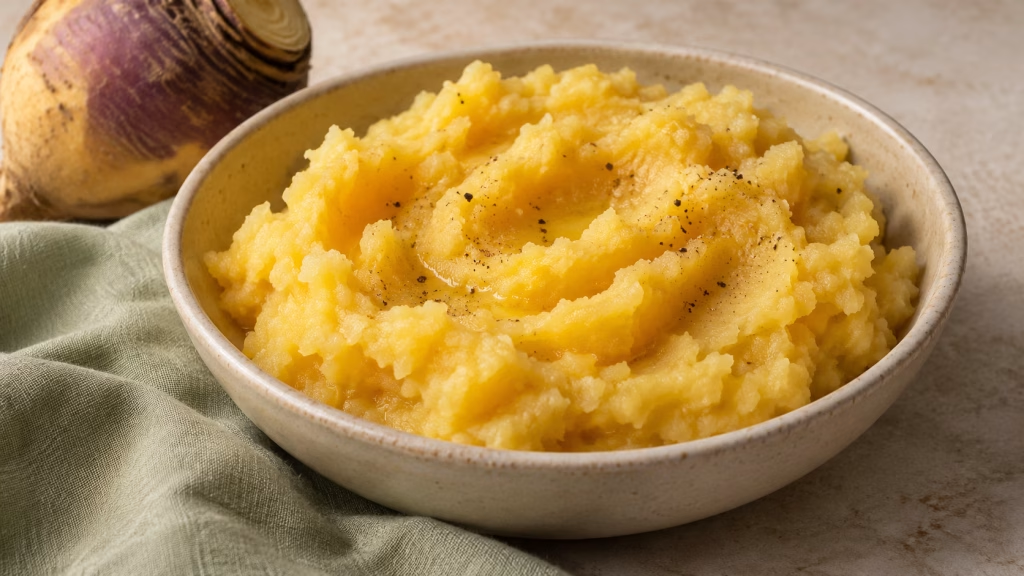
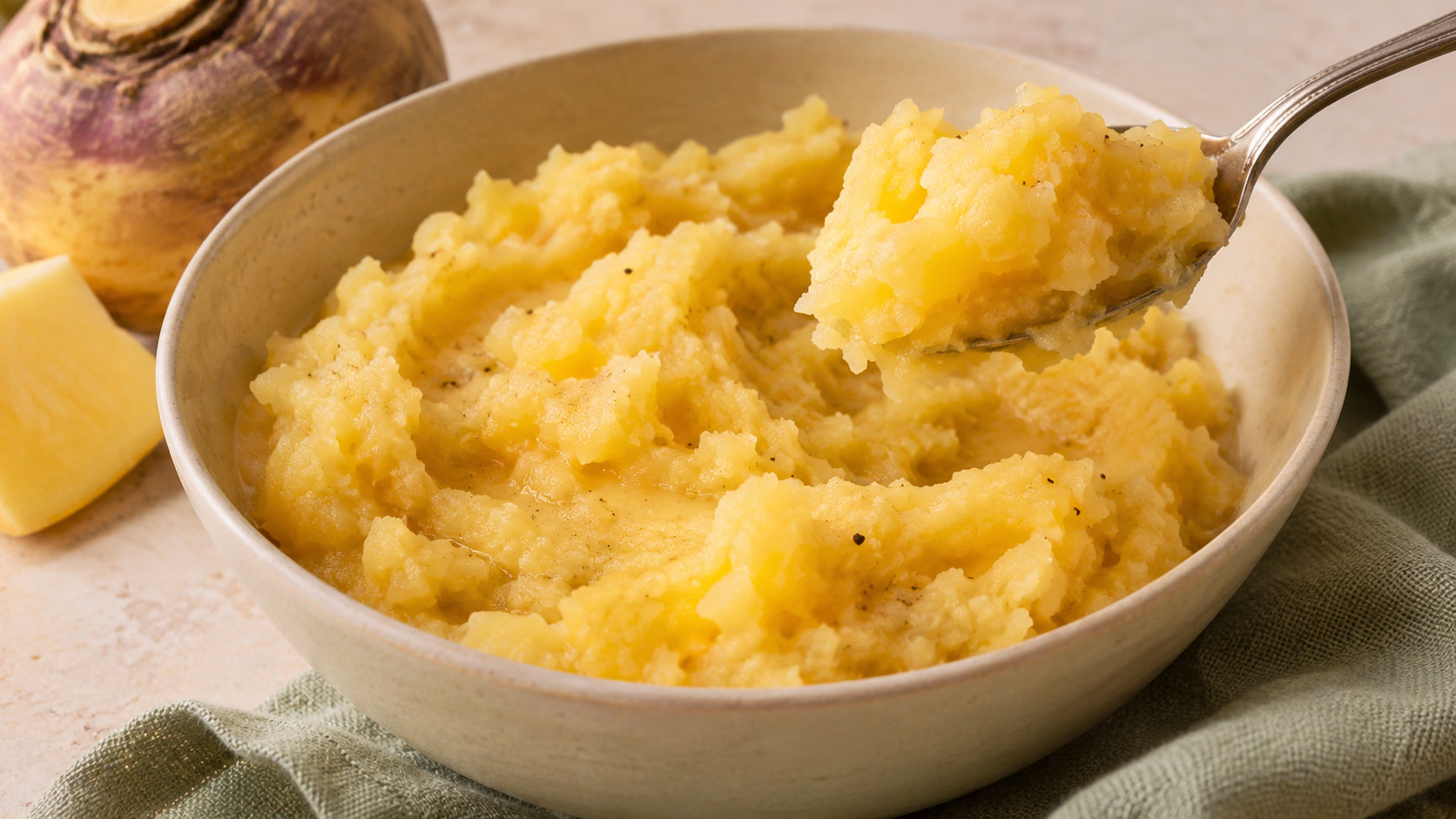
Mashed rutabaga is a buttery, pale-gold side with more earthy character than mashed potatoes. You do not need cream to make it pleasant to spoon: cook the cubes until truly tender, drain them thoroughly, then let the remaining moisture evaporate before mashing. A little salt and pepper keep the vegetable’s flavor in view.
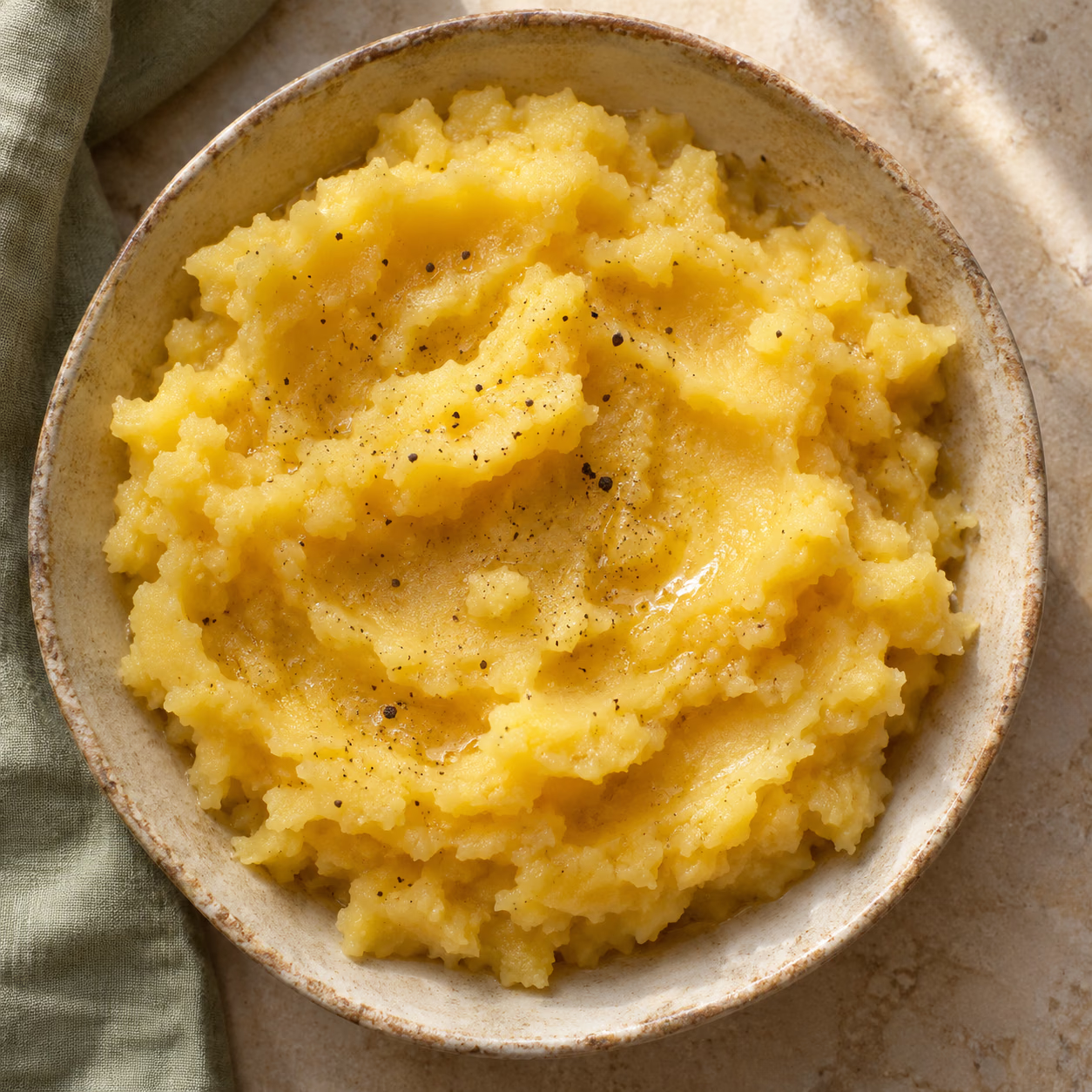
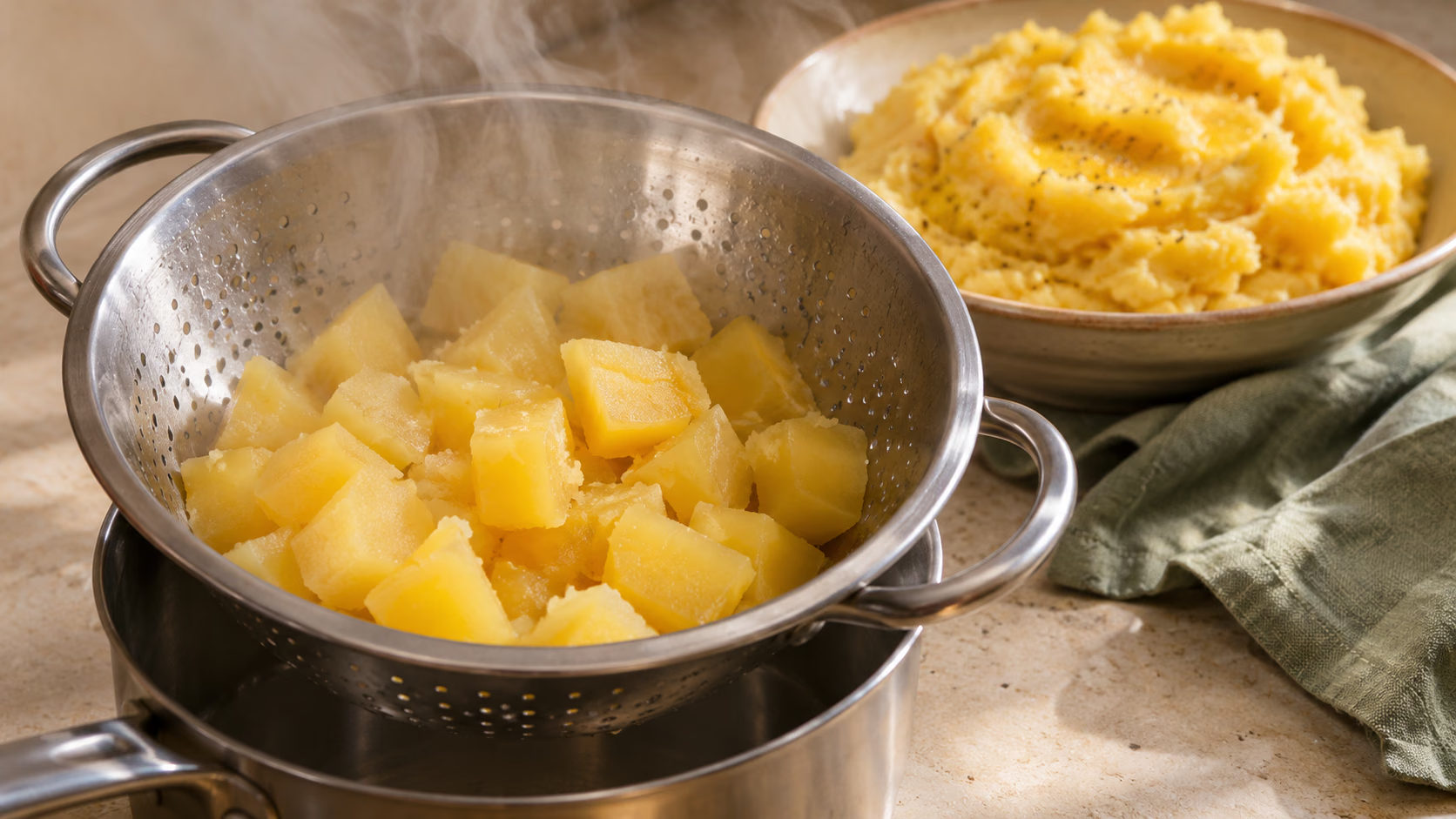
A fork should pass easily through the largest cube before you drain the pan. Give the cooked rutabaga a brief spell over low heat afterward, so the butter enriches the mash instead of disappearing into leftover water.
Serving Suggestions
I would put this beside something savory with a little sauce: roast chicken, braised beef or mushrooms cooked with onions. The mash catches pan juices without needing a complicated finish of its own. Add a green vegetable or a sharp salad for contrast rather than making every part of dinner soft and buttery.
This small batch makes four side portions. Spoon it into a warm bowl and leave the surface slightly ridged; a hand masher gives a rustic texture, not the perfectly smooth finish of a restaurant puree. Soft little pieces are welcome. Firm chunks that fight the fork are a sign that the vegetable needed longer in the pan.
For a different texture on the same table, our roasted romanesco brings golden tips and breadcrumb crunch. I would choose one strongly flavored accompaniment and keep the rest simple, so the rutabaga does not disappear under competing toppings.
| Partner | What it adds |
|---|---|
| Braised mushrooms | Savory flavor and a little sauce |
| Roast chicken | A substantial main alongside the mash |
| Sharp green salad | A fresh, crisp contrast |
Variations
The recipe deliberately stops at butter, salt and pepper. That makes it easy to understand the vegetable before adding other flavors. Rutabaga can have a gentle sweetness and a peppery edge, so taste the finished mash before deciding that it needs sugar, more salt or a heavy sauce.
- For a dairy-free version, replace the butter with olive oil. Start with a little less, then stir in more if you like the flavor.
- For a warmer seasoning, add a small pinch of nutmeg after mashing. It should stay in the background rather than dominate.
- For a softer flavor, mash separately cooked potato with the rutabaga. That is a different blend, so its nutrition and yield will change.
Avoid adding milk simply because the first few strokes of the masher feel difficult. Liquid cannot fix a cube that is still undercooked. Test several pieces before draining, especially if your chunks are different sizes. Once tender, the vegetable usually has enough moisture for this butter-only version.
Health Benefits
Rutabaga contributes fiber and potassium. The University Hospitals raw rutabaga table is the basis for this recipe’s ingredient estimate. One quarter of the finished batch is estimated at about 102 calories and 3.5 grams of fiber, including the butter and seasoning.
Those figures are a guide, not a lab measurement of the cooked dish. The calculation starts with raw ingredients and does not model nutrients lost in the boiling water. Portion size, the amount of butter you actually use and any variations will change the result. It is still useful to know what went into the estimate.
Butter adds saturated fat as well as richness, and this side contains little protein on its own. Build the rest of the meal around that: beans, fish, eggs or meat can provide a more substantial partner. There is no need to label rutabaga a miracle food or insist that it replace potatoes every time.
Bottom Line
Tender cubes and careful draining are the two checkpoints worth remembering. The brief drying step is gentle, not a frying stage; stir over low heat and stop before the vegetable starts to brown. Then take the pan off the heat and mash in the butter while everything is warm.
When shopping, look for a firm rutabaga without soft spots or deep cracks, as Illinois Extension recommends. The thick outer layer needs peeling, and a flat cut surface makes the root steadier on the board. Do not rush that preparation just to save a minute.
My preference is a softly coarse mash with a few spoon marks rather than an elaborate garnish. The card below gives the full method and a related boiling-and-mashing video. Use the fork test as your final guide, since the age of the vegetable and the size of the cubes affect timing.
Mashed Rutabaga Recipe

Ingredients
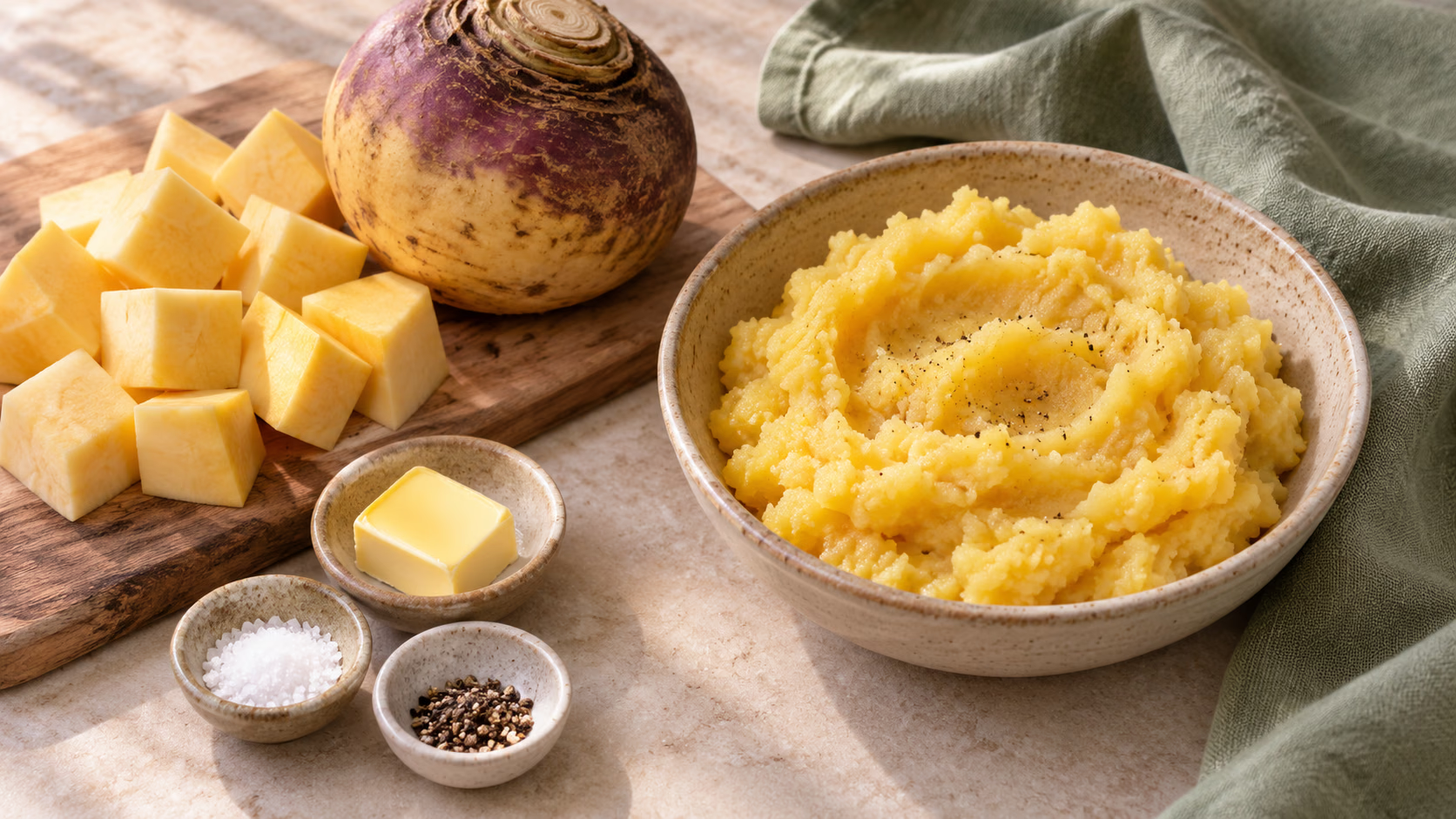
- 4 cups rutabaga peeled and cut into 1-inch cubes, about 560 g
- 2 tablespoons unsalted butter about 28 g
- 1/4 teaspoon fine salt
- 1/8 teaspoon black pepper
- as needed water to cover for boiling
Equipment
- Saucepan with lid
- Colander
- Hand potato masher
- Chef’s knife and cutting board
- Measuring cups and spoons
Instructions
- Wash the rutabaga, trim the ends and remove the thick peel. Set a flat cut surface on the board for stability, then cut into even 1-inch cubes. Measure 4 cups.
- Place the cubes in a saucepan and cover with cold water by about 1 inch. Bring to a boil, reduce to a steady simmer and cook 25–35 minutes, until a fork passes through the largest pieces with very little resistance. Add hot water if needed to keep the cubes covered.
- Drain thoroughly in a colander. Return the cubes to the warm saucepan over low heat for 2–3 minutes, stirring, until excess surface moisture has evaporated. Do not brown them.
- Take the pan off the heat. Add the butter, salt and pepper and mash with a hand masher until softly coarse. Taste, adjust seasoning if needed, and serve warm. If a few pieces resist the masher, they need more cooking rather than extra liquid.
Nutrition
Video
Notes
Tried this recipe?
Let us know how it turned out!Sources
My Ol’ Lady’s Cookin’ Show: Mashed Rutabaga (January 5, 2021); Food Gatherers’ rutabaga preparation sheet, for the drain-and-dry technique; and University Hospitals’ unsalted butter data.
Hi, I’m Laura, the voice behind Tastiva. I’ve always believed that eating well should feel enjoyable, comforting, and realistic—not like another complicated rule to follow. I love creating recipes that fit into everyday life, sharing simple nutrition ideas, and finding small ways to make meals feel a little better without losing the pleasure of good food.