
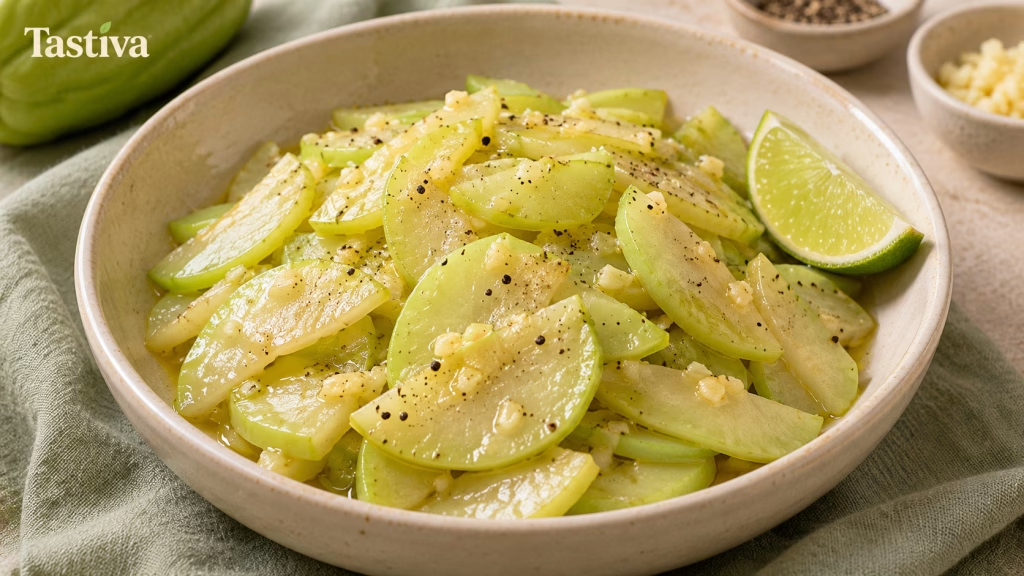
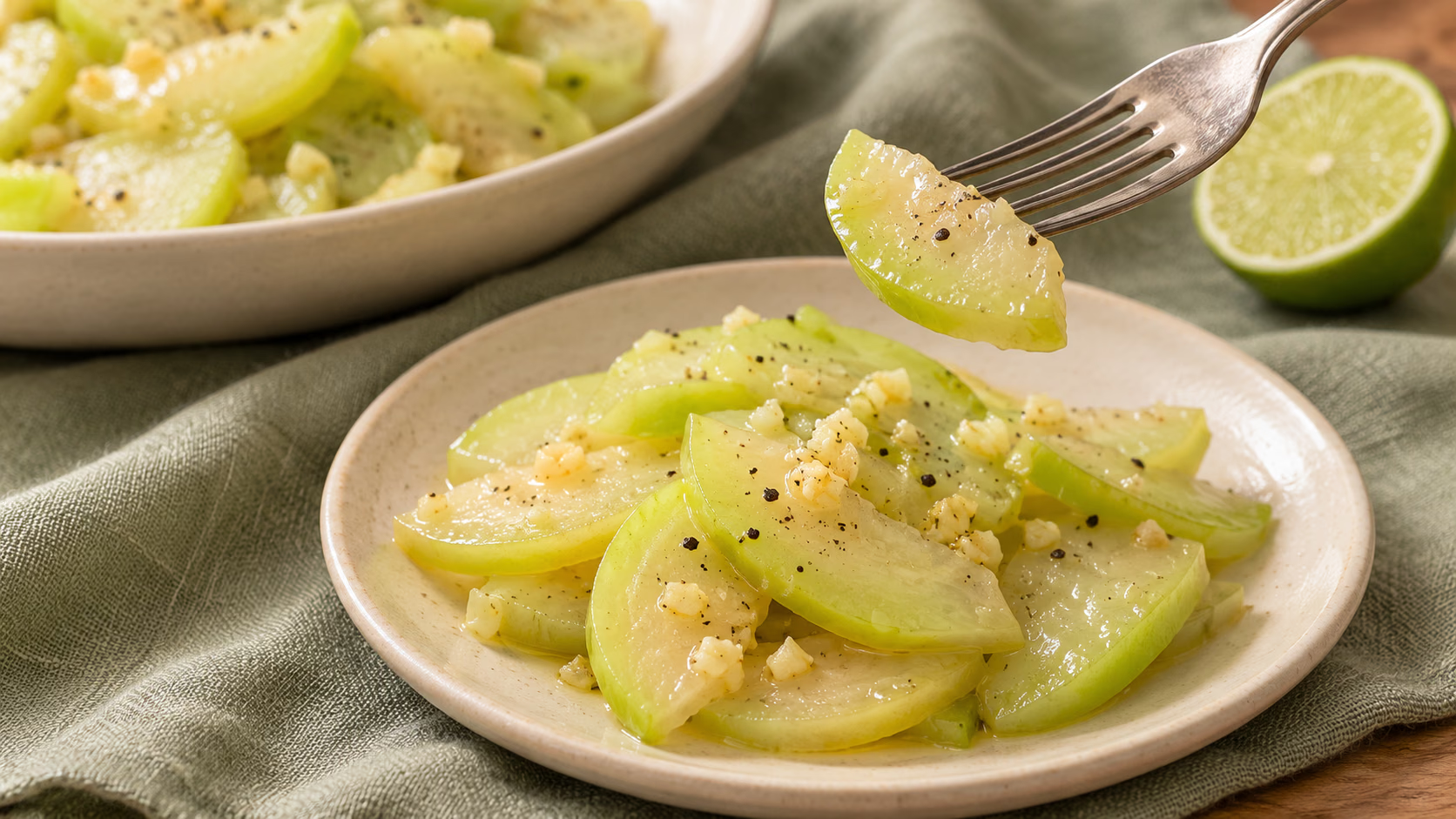
A pale-green chayote can sit in the produce drawer looking like a question you meant to answer. Sautéed chayote is a straightforward place to start: thin slices, a little olive oil, garlic and lime. A brief covered spell softens the vegetable, then an uncovered finish lets the extra moisture escape without turning dinner into soup.
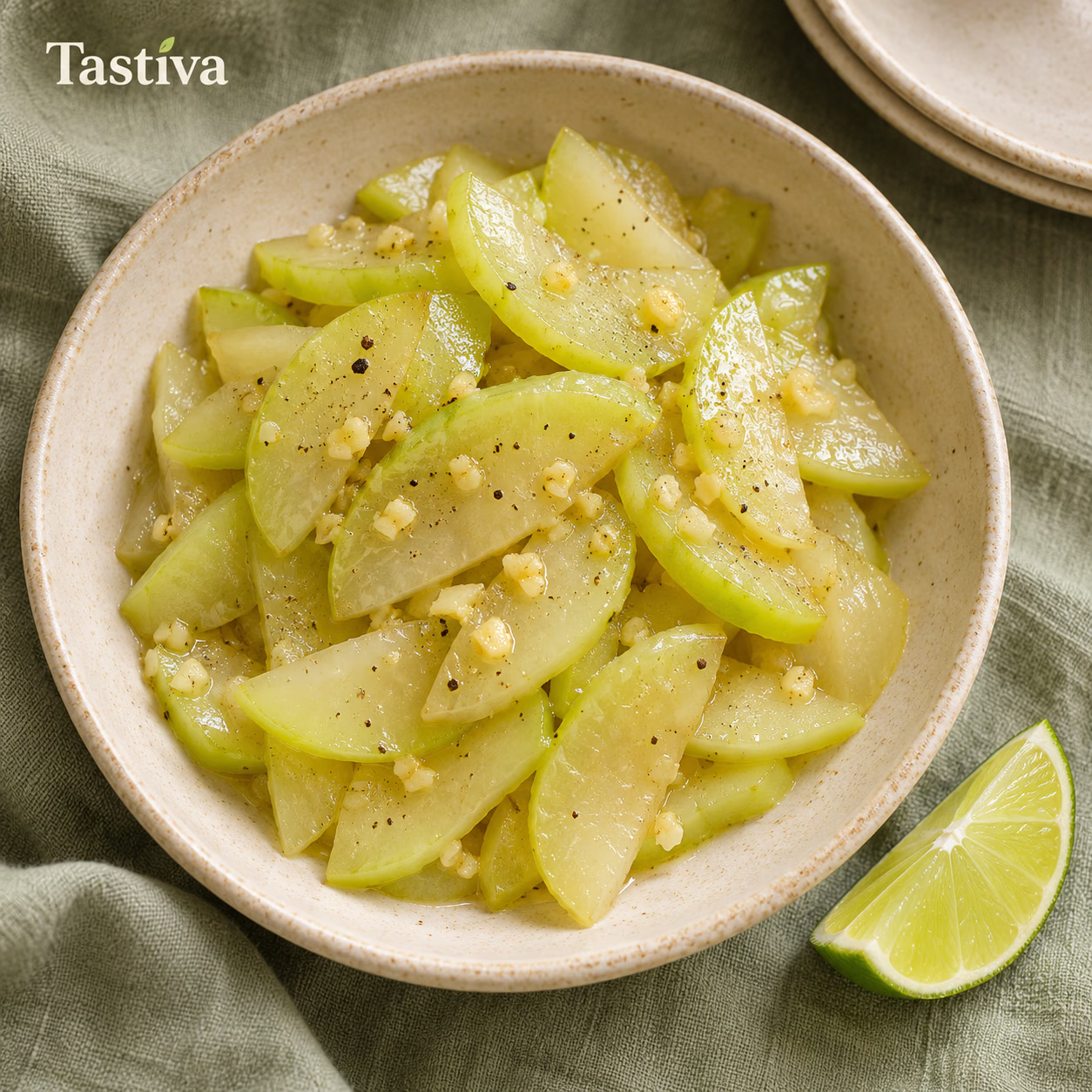
Keep the slices even and stop while they still have a little bite. This is a pale, glossy vegetable side, not a roasting project: chasing a dark crust can cost you the fresh texture that makes it appealing.
Serving Suggestions for Sautéed Chayote
I would put this beside rice and black beans, grilled fish or a simple roast chicken. The lime gives it a clean finish that suits richer main dishes, while the restrained garlic leaves room for other seasonings on the plate. There is no thick sauce to compete with whatever else you are cooking.
The recipe makes four modest side portions. Serve them warm from the skillet rather than piled under a lid for a long stretch, where trapped steam keeps softening the slices. A shallow serving bowl makes it easy to spoon up the light coating without leaving all the garlic at the bottom.
For another simple skillet vegetable, our garlic-lemon green beans use a related steam-then-finish approach. I would choose one or the other for an ordinary dinner and save the two-vegetable spread for a larger table.
| Main dish | What the chayote adds |
|---|---|
| Rice and black beans | A juicy vegetable with a little bite |
| Grilled fish | Gentle garlic and a fresh lime finish |
| Roast chicken | A lighter-textured partner to crisp skin |
Sautéed Chayote Variations
The base recipe deliberately leaves out herbs and chili so you can taste the chayote itself. Its mild flavor is flexible, but that does not mean it needs every seasoning in the cupboard. Make one small change at a time, especially if this is your first time cooking it.
- Use fresh lemon juice instead of lime for a different citrus finish. Start with the same measured amount, then taste.
- Add a pinch of red pepper flakes with the garlic if you want heat. Keep the pan moderate so the flakes do not scorch.
- Scatter chopped cilantro or parsley over the finished dish. Treat the herbs as an optional addition rather than a replacement for the lime.
If you prefer a softer vegetable, extend the covered stage slightly and test a slice before adding the garlic. If you like more crunch, check earlier. Adjust the doneness rather than increasing the heat and hoping the outside will tell you what is happening in the center.
Health Benefits
Chayote contributes fiber and potassium without much fat of its own. The University Hospitals raw-chayote entry supplies the vegetable data for the card’s calculation. A quarter of this recipe is estimated at about 54 calories and 2.2 grams of fiber, including the measured olive oil.
Those figures describe a side portion, not a complete dinner or a special health treatment. The dish contains little protein, so beans, tofu, fish, eggs or meat can help round out the meal. Adding more oil or changing the serving size will change the numbers, even though the vegetable itself stays the same.
The estimate starts with 500 grams of prepared raw chayote and counts the garlic, lime juice, oil and seasoning. Cooking losses are not modeled. Use it as a transparent guide to the ingredients, not as a promise that every home-cooked serving will be identical.
Bottom Line
Buy firm chayotes without blemishes, following University of Minnesota Extension’s selection advice. This version peels and removes the seed core for consistent slices, even though those parts are edible. Weigh the prepared vegetable rather than relying on a fixed number of fruits, because their sizes vary.
Chayote sap can bother some people’s skin. The University of Hawaiʻi preparation sheet recommends gloves as one option while peeling. Work steadily on a board, and aim for slices of similar thickness rather than perfect little geometric shapes.
My preference is a tender slice with just enough resistance to keep it interesting. Let the excess water evaporate, add the garlic near the end and squeeze in the lime off the heat. The complete card gives the quantities and checkpoints without requiring a second pot or a complicated sauce.
Sautéed Chayote Recipe

Ingredients
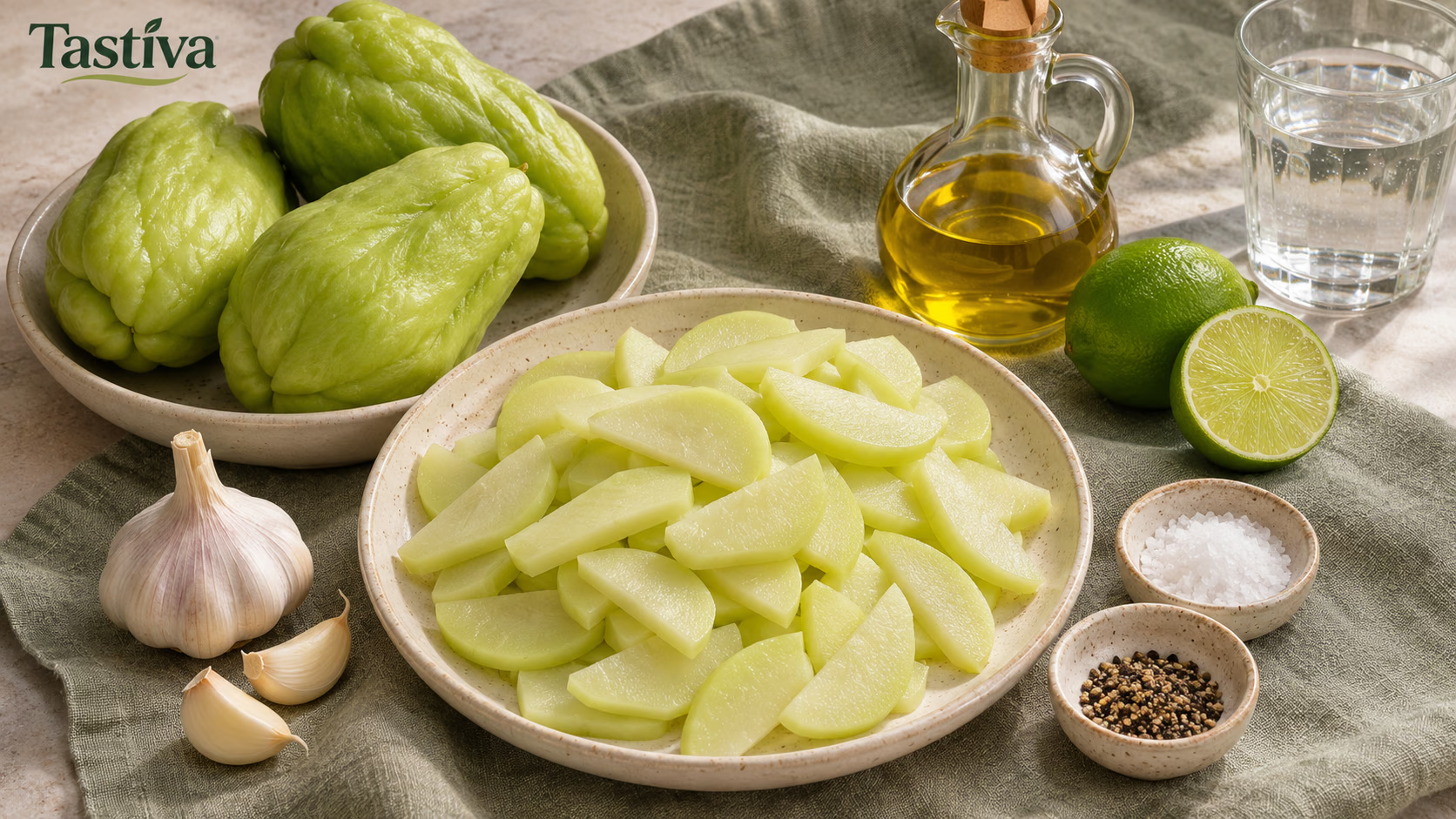
- 500 g chayote peeled and seed core removed; cut into 1/4-inch quarter-slices
- 1 tablespoon olive oil
- 2 garlic cloves minced, about 6 g
- 1 tablespoon fresh lime juice
- 1/4 teaspoon fine salt
- 1/8 teaspoon black pepper
- 2 tablespoons water plus a little more only if the pan dries before the chayote is tender
Equipment
- Wide skillet with lid
- vegetable peeler
- Knife and cutting board
- Kitchen scale
- Measuring spoons
- Spatula
Instructions
- Wash the chayote. Wearing food-safe gloves if its sap irritates your skin, peel it, cut lengthwise into quarters and remove the soft seed core. Cut into even 1/4-inch quarter-slices and weigh 500 g prepared chayote.
- Heat the olive oil in a wide skillet over medium heat. Add the chayote and salt and toss for 2 minutes. Add 2 tablespoons water, cover and cook for 6–10 minutes, stirring once or twice, until the slices are nearly tender. If the pan dries too soon, add a small splash of water.
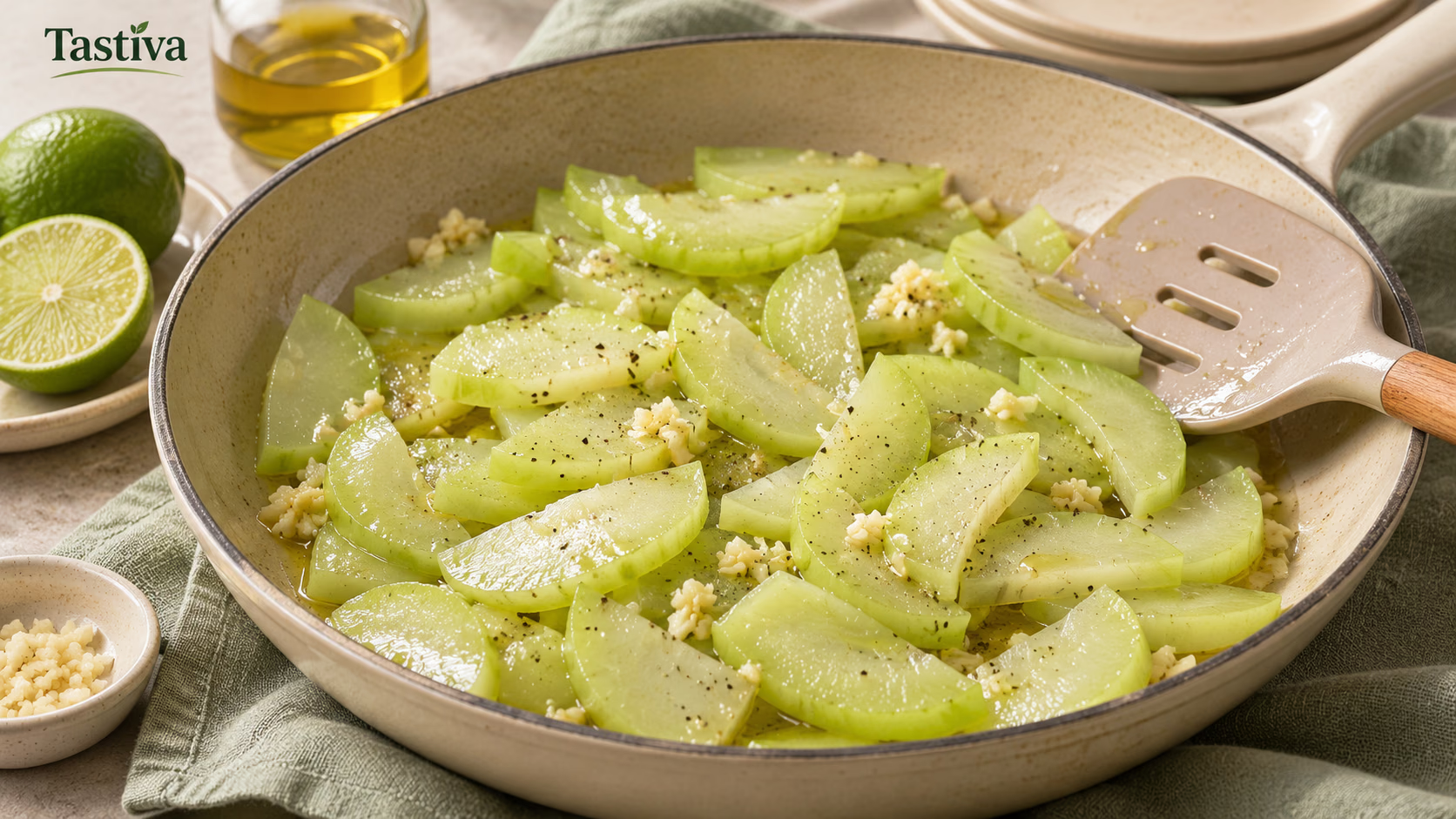
- Uncover and let excess water evaporate. Add the garlic and cook, stirring, for 1–2 minutes until fragrant. Test a thick slice: it should be easy to bite but still hold a little crunch. Cook briefly longer if needed; lower the heat if the garlic starts to color.
- Take the skillet off the heat. Toss with the lime juice and black pepper, taste and serve warm. This version stays pale and lightly glossy rather than deeply browned.
Nutrition
Video
Notes
Tried this recipe?
Let us know how it turned out!Sources
Joi Cozinha pratica: Simple Sautéed Chayote Recipe (April 22, 2021), a related garlic-and-oil preparation; and University Hospitals’ fresh lime juice data. Selection, preparation and chayote nutrition sources are linked above.
Hi, I’m Laura, the voice behind Tastiva. I’ve always believed that eating well should feel enjoyable, comforting, and realistic—not like another complicated rule to follow. I love creating recipes that fit into everyday life, sharing simple nutrition ideas, and finding small ways to make meals feel a little better without losing the pleasure of good food.