
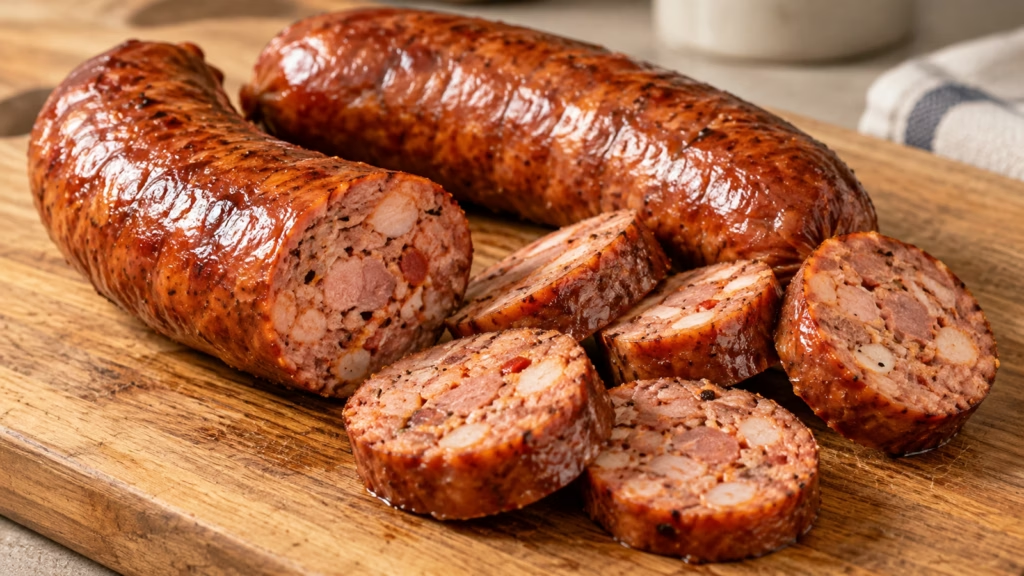
A recipe calls for andouille sausage, and the store offers several brown links that look almost interchangeable. The useful distinction is inside the casing. Louisiana-style andouille is typically a coarse pork sausage with a pronounced smoked flavor; the package still needs to tell you whether it is fully cooked or must be cooked before eating.
“Smoked” describes a process and flavor. It does not, by itself, tell you that a sausage is ready to eat.
I would choose andouille for the character it brings to a pot, rather than simply for heat. A few slices can contribute smoke, savory richness, and a peppery bite to beans or rice. Getting the right style matters more than finding the reddest link on the shelf.
Louisiana and French andouille are different foods
In Louisiana’s River Parishes, andouille is associated with coarse pieces of pork and slow smoking. Makers have their own seasoning and smoking traditions, so one link may be more garlicky, peppery, or smoky than another. It is familiar in gumbo and jambalaya, but it also appears in soups, sandwiches, and other dishes where a little deeply seasoned meat can flavor the whole serving.
French andouille is not simply a milder version of the Louisiana product. There are distinct regional traditions: Brittany’s Guémené-sur-Scorff is known for andouille made with pig intestines. If a U.S. recipe expects Louisiana-style smoked pork andouille, a French charcuterie product can change the texture and flavor substantially. Read the description rather than letting the shared name make the decision.
- For gumbo or jambalaya: Look for Louisiana-style or Cajun-style smoked andouille, then check the actual ingredients and cooking status.
- For a French recipe: Use the named regional product when possible; do not assume a supermarket Cajun-style link is equivalent.
- For less heat: Compare the maker’s description and ingredient list. Andouille is not a standardized promise of one spice level.
Read the label before choosing the cooking method
Start with three details: the meat, whether it is fully cooked, and the package’s handling instructions. Pork is common, but an andouille-style product may use poultry or a mixture. For example, Aidells’ current Cajun Style Andouille Smoked Pork Sausage is labeled fully cooked and lists pork, garlic, peppers, paprika, and other seasonings. That description applies to this product, not every sausage carrying the same name.
- Fully cooked or ready to eat: Follow the manufacturer’s heating and storage directions. Browning is useful for flavor, but it is a different task from cooking raw sausage.
- Uncooked pork or beef sausage: Cook to 160°F in the center, measured with a food thermometer.
- Uncooked chicken or turkey sausage: Cook to 165°F; use that poultry endpoint for a mixed sausage containing poultry.
- Unclear label: Ask the seller or manufacturer. Brown color, smoke aroma, and a firm casing cannot settle the question.
For intact raw links, insert a thermometer from the end toward the center rather than judging the browned casing. Our air-fryer sausage guide explains the distinction between raw and precooked links. Its fresh-sausage timing is not a universal reheating time for andouille.
Let the sausage season the meal
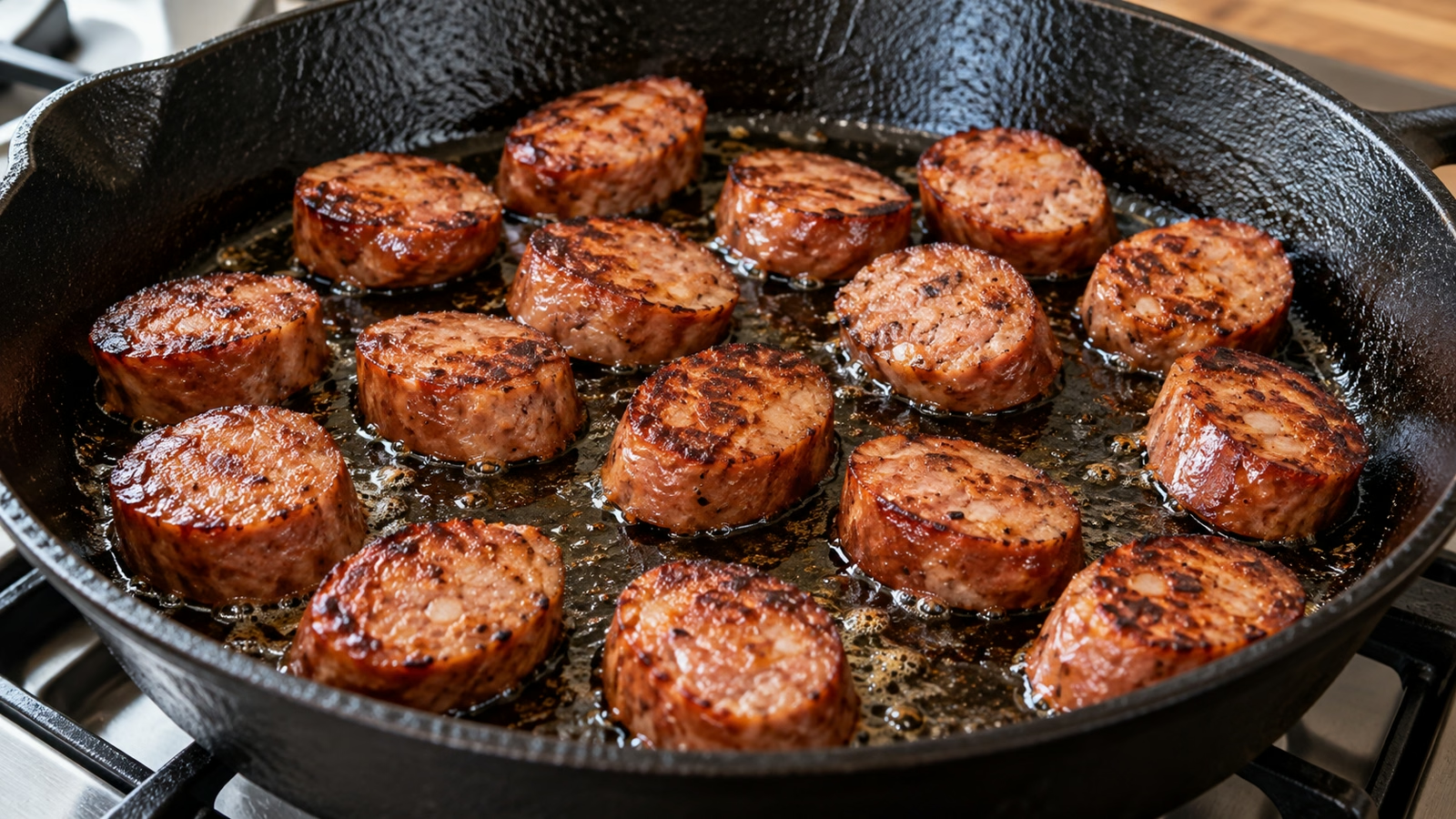
For a fully cooked product, a brief browning step can give sliced edges more color before the sausage joins a soup or skillet. Use moderate heat and enough pan space for the pieces to contact the surface. If a lot of fat collects, you do not have to carry every spoonful into the finished dish; keep only what the recipe needs.
I would hold back on extra salt and cayenne until the sausage has warmed through and flavored the other ingredients. A strongly seasoned link can make an already salty broth feel heavy. Pairing it with beans, greens, rice, or potatoes gives that flavor somewhere to go without turning every bite into sausage.
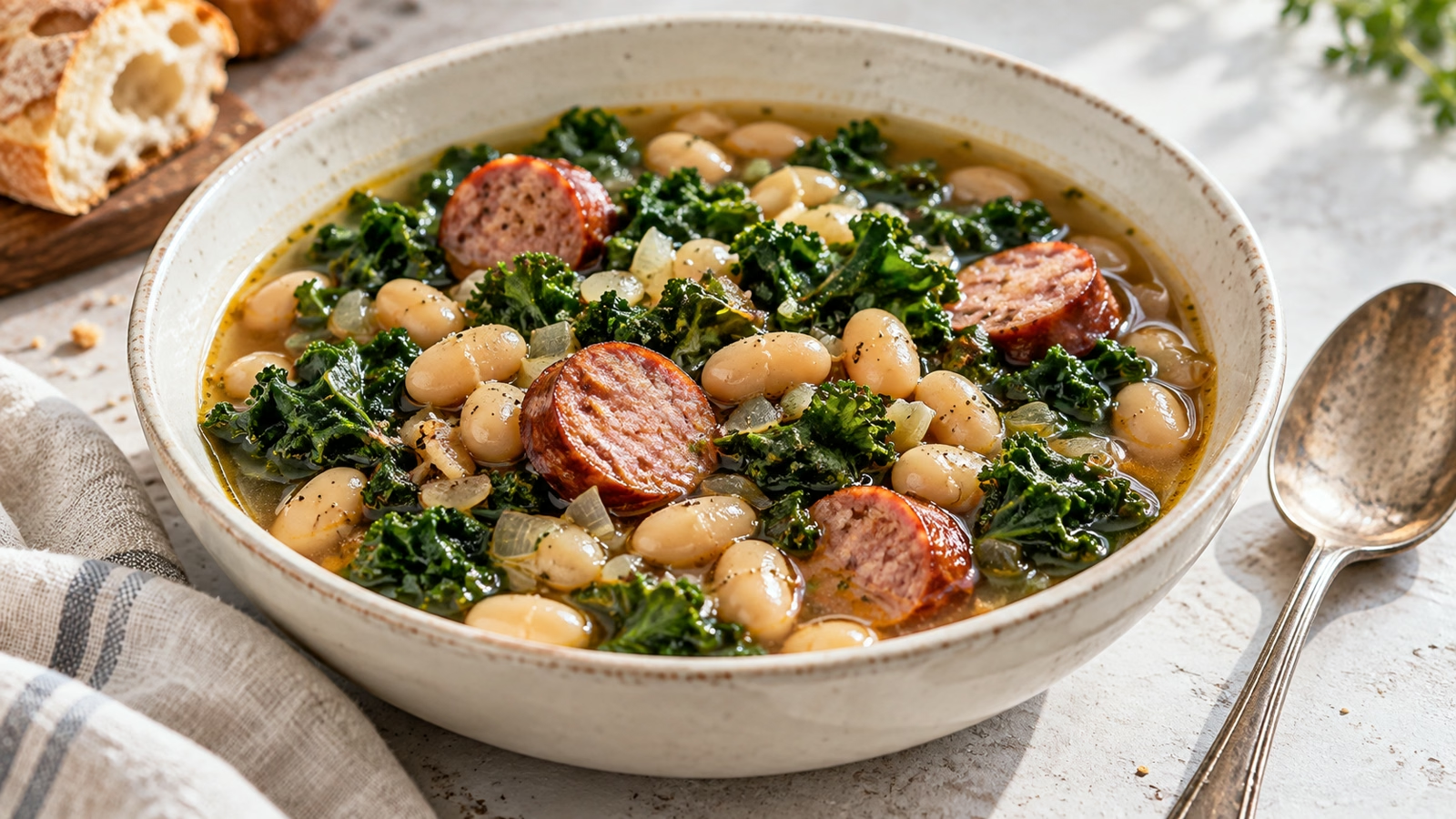
- Bean soup: A fully cooked andouille can replace another fully cooked smoked sausage in this white bean and kale soup; expect a different salt and spice balance.
- Rice or vegetables: Treat thin slices as a flavorful component alongside the other ingredients, rather than assuming every plate needs a whole link.
- Substitutes: Another smoked pork sausage can supply smoke and meatiness, but the grind and seasoning will differ. Fresh sausage or loose chorizo changes the cooking process as well as the flavor.
Compare portions and keep the package guidance
Nutrition depends on the brand and portion. As one concrete example, Aidells lists 200 calories, 12 grams of protein, 16 grams of fat, 5 grams of saturated fat, and 600 milligrams of sodium per 85-gram link. Use those figures only for that product; compare equal gram weights when considering another brand. “Chicken” on a label does not automatically tell you which option has less sodium.
Check the ingredient and allergen information each time you buy, especially if a different flavor or brand replaces your usual choice. Keep refrigerated products cold and follow their use-by and after-opening directions. Freeze portions you cannot use in time, with the product name and date clearly marked, so a future dinner does not begin with a mystery bag.
Once andouille becomes part of a cooked meal, refrigerate leftovers promptly in shallow containers and use them within 3–4 days; reheat leftovers to 165°F. The video below from Chef Billy Parisi shows andouille used in a chicken gumbo. It is a related cooking example, not a sausage-making formula or a replacement for your package’s safety directions.
Sources
- Louisiana’s River Parishes: andouille traditions
- Brittany Tourism: Guémené andouille
- Aidells: Cajun-style andouille ingredients and nutrition
- USDA: cooking raw sausages safely
- USDA: safe reheating

Hi, I’m Laura, the voice behind Tastiva. I’ve always believed that eating well should feel enjoyable, comforting, and realistic—not like another complicated rule to follow. I love creating recipes that fit into everyday life, sharing simple nutrition ideas, and finding small ways to make meals feel a little better without losing the pleasure of good food.