
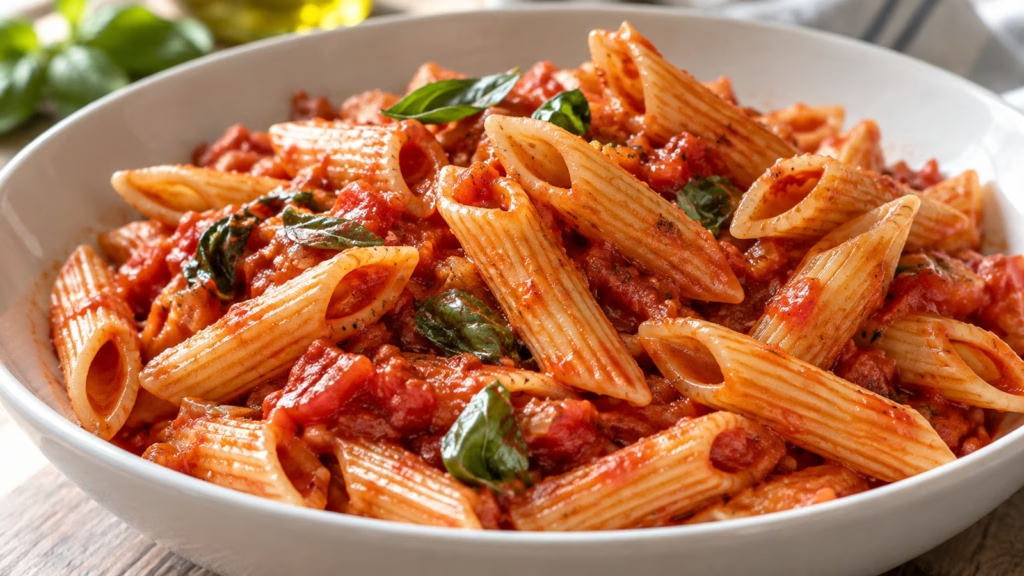
Penne is the short, hollow pasta with diagonal ends that look like the tip of a writing quill. The familiar ridged version is penne rigate; smooth penne is called penne lisce. Both belong in the same family, and both can carry a good sauce. The more useful choice is whether you want a ridged bite, a smoother surface, or a shape headed for the oven.
Let the dish choose the penne: look at the surface, then leave room in your timing for the sauce or oven.
Penne rigate and penne lisce, side by side
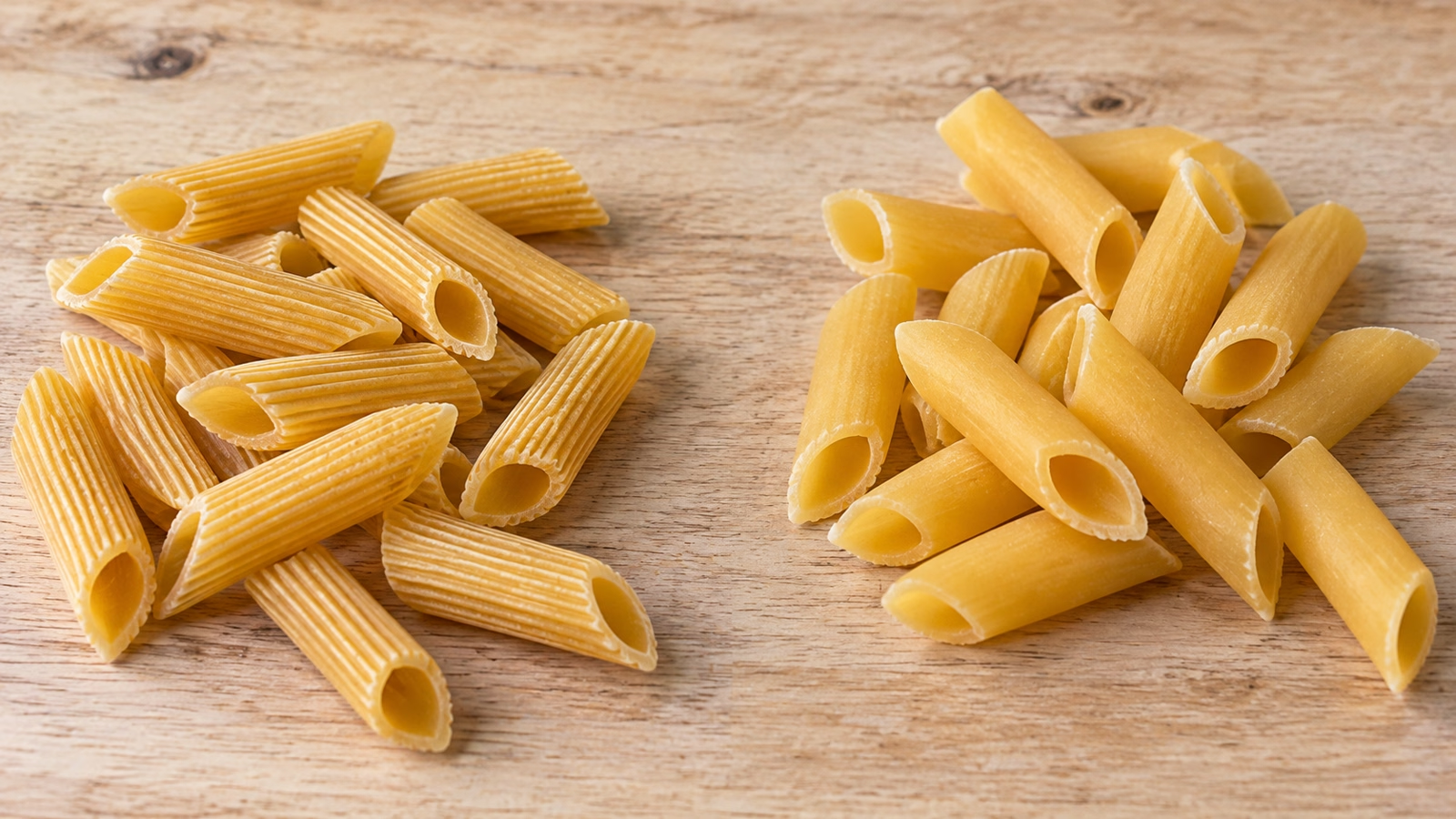
Penne is easy to identify by its angled cut. Ridged and smooth versions share that pointed profile, but the outside feels different on the fork. Barilla describes the ridges and hollow center as places for sauce to settle; De Cecco’s smooth penne offers a softer-feeling surface without those grooves.
- Penne rigate: Longitudinal ridges run along the tube. It is a useful starting point for chunky tomato, meat, or vegetable sauces and baked pasta.
- Penne lisce: The outside is smooth. De Cecco recommends it with meat and vegetable sauces, including arrabbiata, so do not dismiss it as pasta that cannot carry sauce.
- Smaller versions: Names such as mezze penne signal a shorter format. Check the actual package when size matters for a salad or casserole.
- Other tubes: Rigatoni has a broader, more substantial shape with squared-off ends. Our rigatoni guide explains that comparison.
I would choose the surface for the dish rather than buy by a rule that ridges are always better. Smooth penne in a well-combined sauce can be a deliberate choice. A rougher or ridged surface also cannot rescue pasta that has been drained and left in a sticky mound.
Pick the sauce before filling the pot
A forkful of penne is naturally a small package: pasta, a little sauce, and perhaps a piece of vegetable or meat. Keep additions manageable enough that they share the fork. Large chunks can still taste good, but they may turn the meal into separate bites rather than one combined dish.
- Tomato and chile: Arrabbiata is a classic direction for penne. Adjust heat through a recipe’s seasoning choices rather than assuming every jar labeled spicy will taste alike.
- Meat or mushroom sauce: Small crumbles and chopped pieces distribute more easily around the tubes. A sauce with some body is helpful.
- Vegetable-forward pasta: Try a sauce built around eggplant, peppers, zucchini, or other vegetables you enjoy, with pieces sized for a comfortable bite.
- Pesto: Toss until the coating reaches the whole bowl, loosening as the sauce recipe directs. You do not need to reserve pesto only for long pasta.
- A cheese-topped bake: Use a recipe that plans for the second cooking stage. The timing and moisture balance are different from simply serving boiled pasta.
The shape also comes in different formulas. Semolina, whole-wheat, and lentil penne may look similar in the box, but they do not necessarily cook or taste alike. Our lentil pasta versus regular pasta comparison explains what to check before making that swap.
Boil for the final dish, not just the timer
Use the cooking directions for your exact pasta. For example, Barilla’s Australian penne rigate page lists eleven minutes, while De Cecco lists eleven minutes for penne lisce no. 40, or nine for al dente. These are reference points for named products, not a universal penne schedule.
- Begin with boiling salted water. Stir after adding the pasta and periodically during cooking so the pieces separate.
- Check a whole piece. Bite across the tube to judge the wall, not only a thin pointed edge. Aim for cooked pasta with the firmness you enjoy.
- Reserve some water. Keep a little cooking water before draining so you can loosen a sauce gradually.
- Combine promptly. For a hot sauced dish, drain without rinsing and toss with the sauce. Barilla recommends finishing hot pasta and sauce together.
- Allow for more heat. If the recipe finishes in a pan or oven, account for that stage instead of fully softening the pasta first.
My final check is a sauced piece from the pan. If the pasta is pleasantly firm but the coating seems tight, a small splash of reserved water may help. If everything is already soft, a longer simmer will not reverse it. Change the timing on the next batch rather than keeping dinner on the stove.
For baked penne and tomorrow’s leftovers
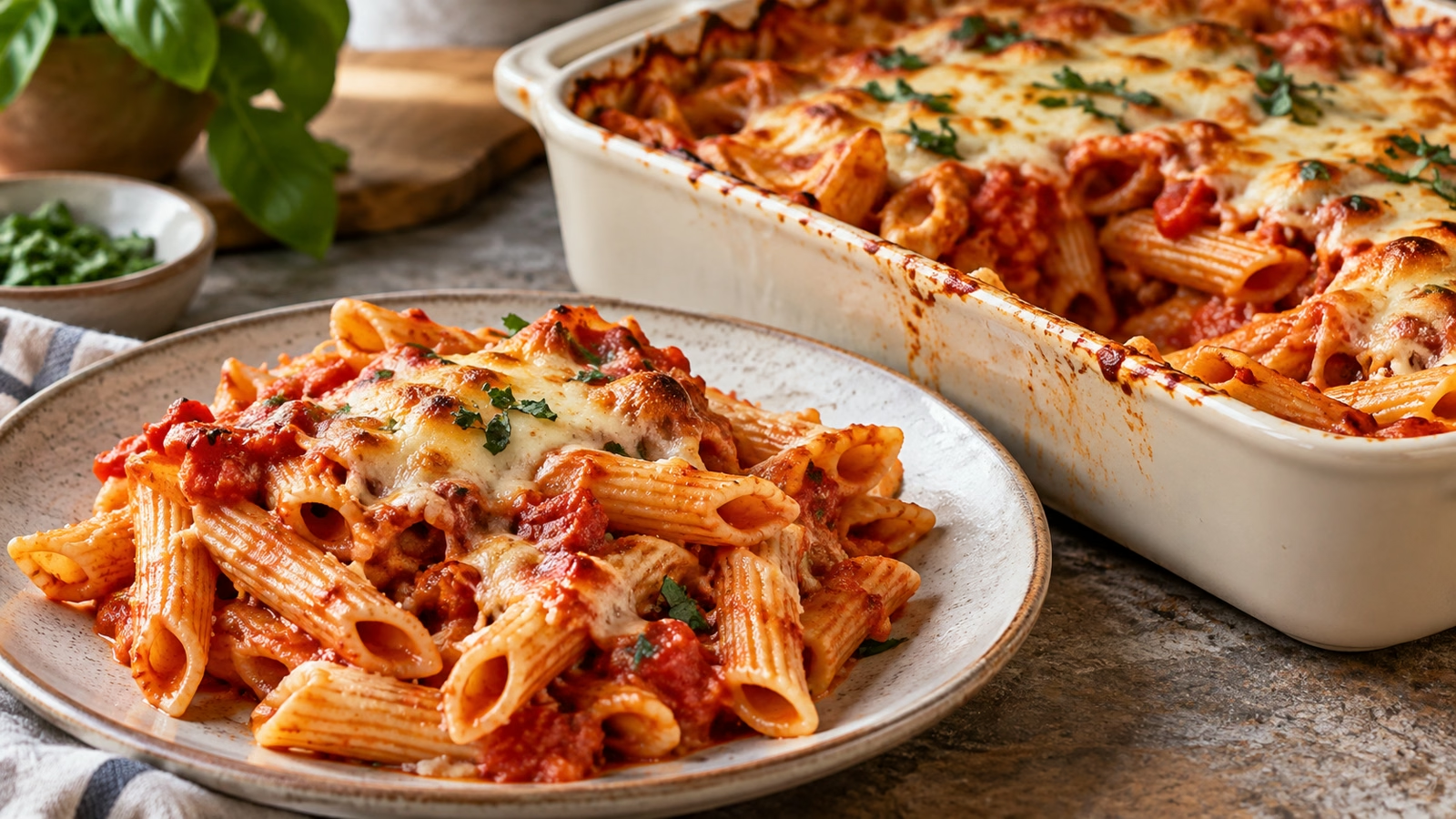
Penne gives a casserole recognizable bites beneath the cheese. For a bake, follow a recipe’s shortened boiling stage so the pasta can finish in the hot sauce and oven; Bon Appétit’s test-kitchen guidance emphasizes this point. Mix sauce through the pasta before adding the topping, rather than leaving a dry interior under a browned lid of cheese.
- Choose the right recipe: A no-boil bake needs a liquid balance designed for dry pasta. Do not treat it as interchangeable with a recipe using boiled penne.
- Cool leftovers safely: Divide them into shallow containers and refrigerate within two hours, or one hour when the surroundings exceed 90°F (32°C).
- Keep them cold: Store refrigerated leftovers at 40°F (4°C) or below and use within three to four days, following USDA guidance.
- Reheat thoroughly: Bring leftovers to 165°F (74°C), measured with a food thermometer. A little suitable liquid can help loosen a thickened sauce.
I would save portions that fit a later meal instead of reheating the whole dish for one serving. For a stovetop example of penne with a spicy tomato sauce, watch Gennaro Contaldo’s arrabbiata demonstration on Jamie Oliver’s channel below.
Sources
- Barilla: Penne rigate shape and sauce pairings
- De Cecco: Penne lisce no. 40
- Barilla: Pasta cooking guidance
- Bon Appétit: Baked pasta technique
- USDA FSIS: Handling leftovers safely
- USDA FSIS: Reheating leftovers safely

Hi, I’m Laura, the voice behind Tastiva. I’ve always believed that eating well should feel enjoyable, comforting, and realistic—not like another complicated rule to follow. I love creating recipes that fit into everyday life, sharing simple nutrition ideas, and finding small ways to make meals feel a little better without losing the pleasure of good food.