
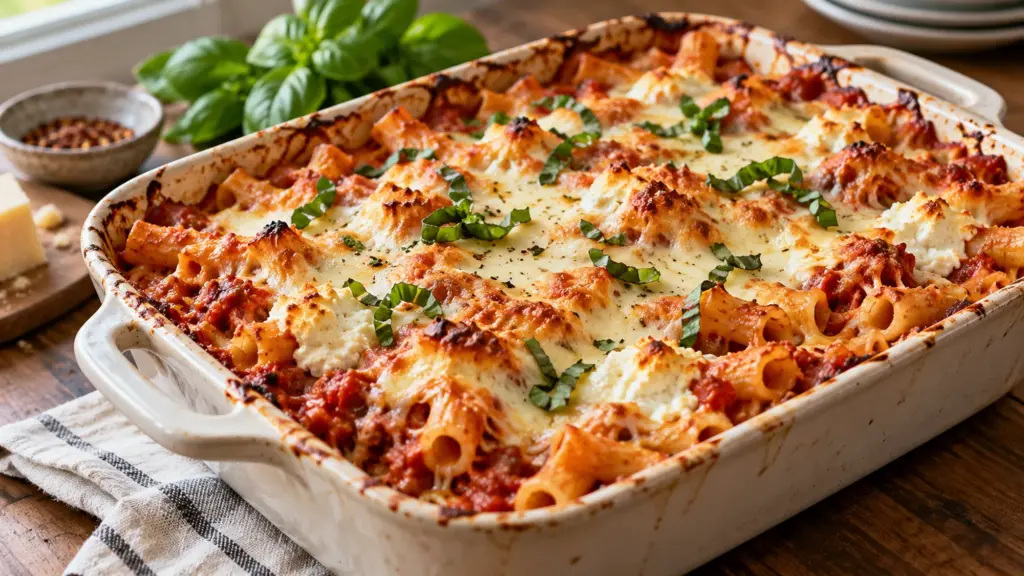
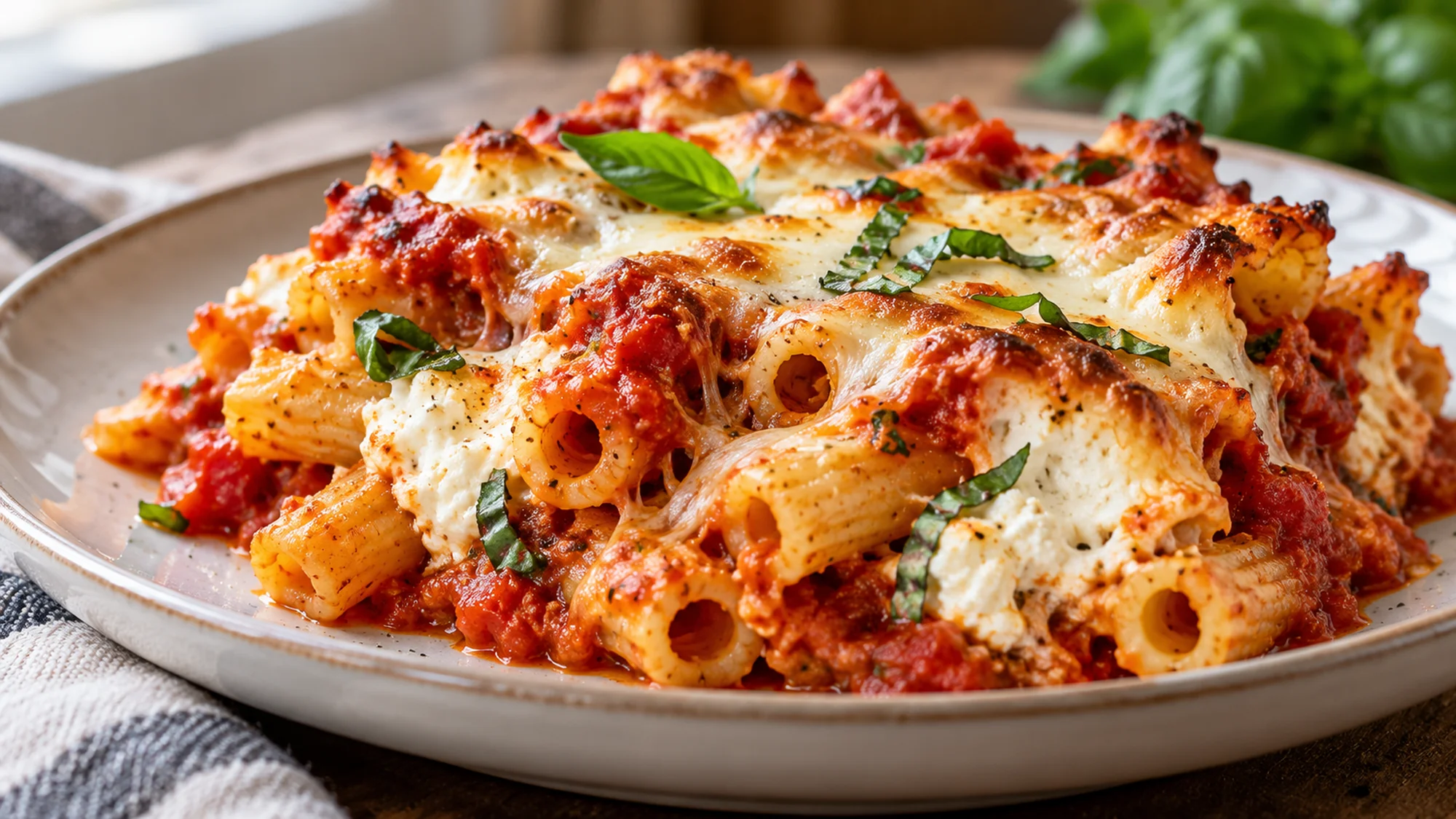
Baked ziti has two textures worth protecting: tender pasta coated in tomato sauce and soft pockets of ricotta beneath a melted mozzarella top. This meatless version keeps those parts distinct instead of stirring every cheese into one uniform pink filling. Fresh basil at the finish makes the warm tomato aroma feel a little brighter.
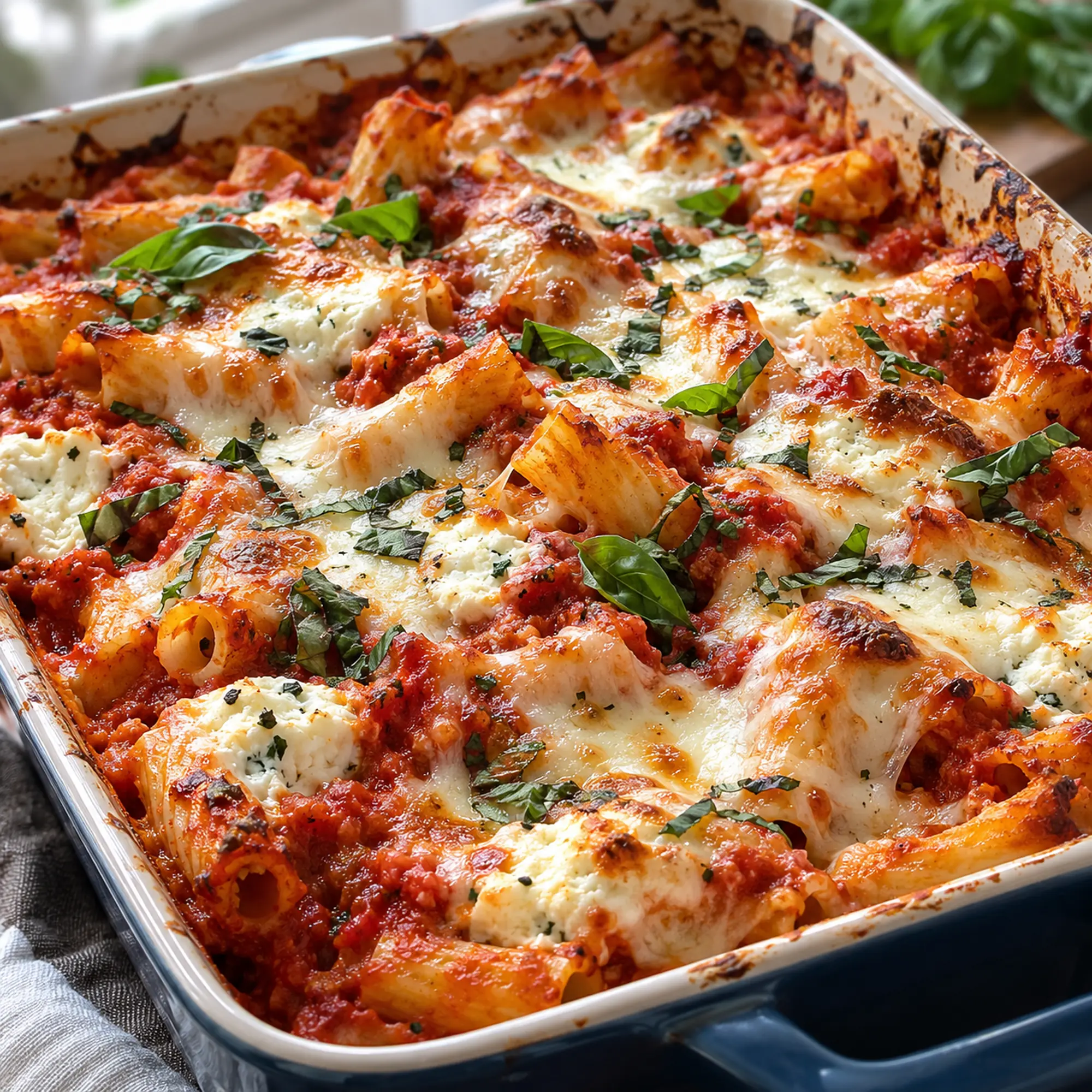
Leave some ricotta in soft pockets so each spoonful has a little contrast.
I would make this when dinner needs to feel generous without a long list of separate components. A baking dish of pasta can do most of the work at the table. The important preparation happens before baking, when you choose how far to cook the noodles and how much sauce they will carry.
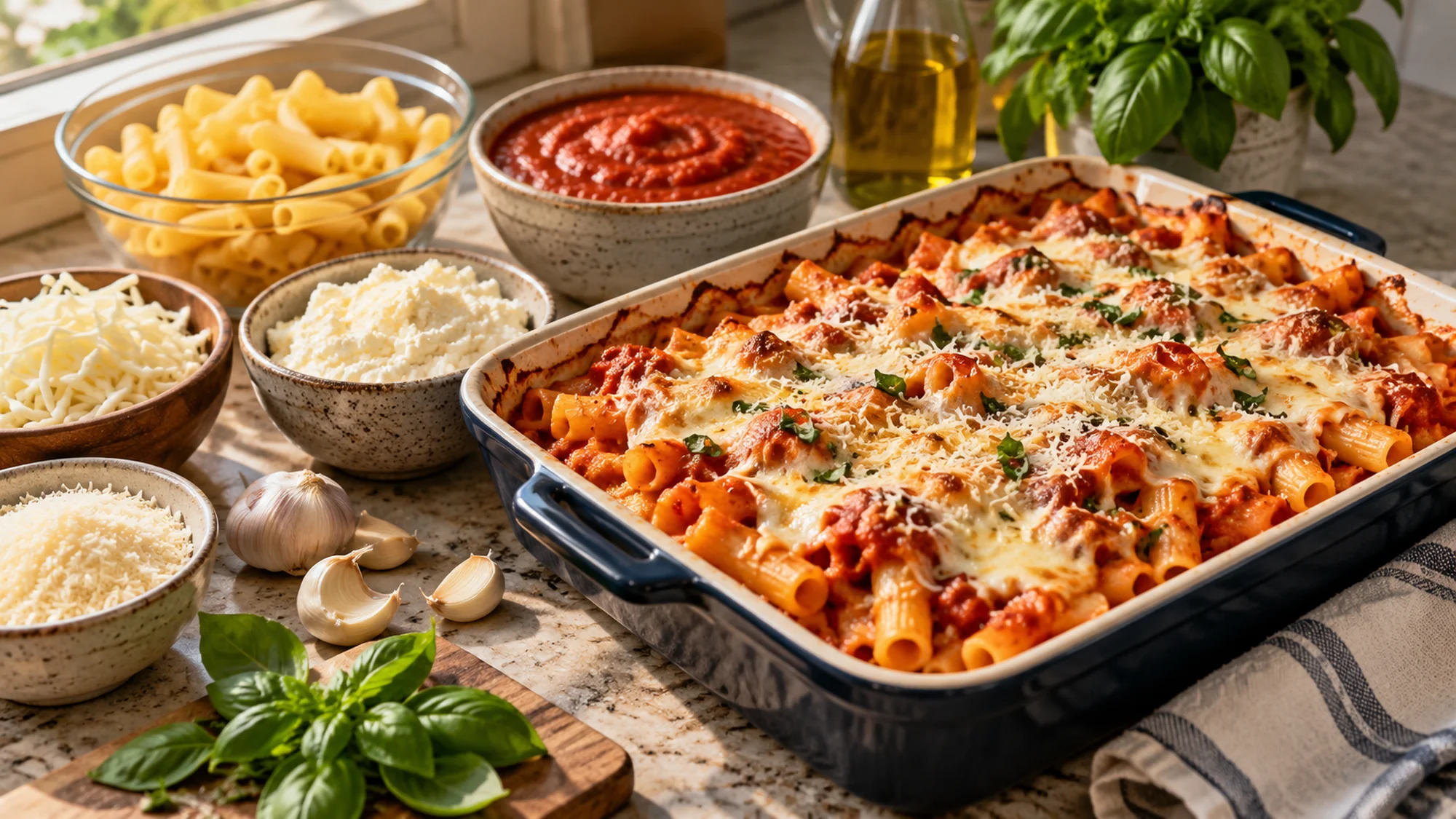
Serving Baked Ziti
A green salad with a tangy dressing is an easy companion. For a cooked vegetable, roasted broccoli brings some browned edges and a different shape to the plate. You can leave off its extra cheese when the pasta already provides plenty.
Allow the ziti to stand for about ten minutes before serving. It will still be hot, but the sauce has a chance to settle around the pasta. This is a spoonable casserole, not a tightly layered lasagna, so relaxed portions are part of the appeal.
- I prefer a modest serving with a large crisp side to a plate of pasta and garlic bread alone.
- Put extra sauce on the table if you have it, rather than adding enough to turn the casserole soupy.
- A wide spoon lifts the soft ricotta pockets more gently than a narrow fork used as a serving utensil.
A crisp side gives the creamy, tender main dish a useful contrast.
Variations and Ingredient Choices
Penne or another similar short tube can stand in for ziti, though its package cooking time may differ. Whole-wheat pasta changes flavor and firmness, and gluten-free pasta can soften quickly during the second cook. Watch texture rather than treating every shape as interchangeable; cooked pasta cannot regain firmness in the oven.
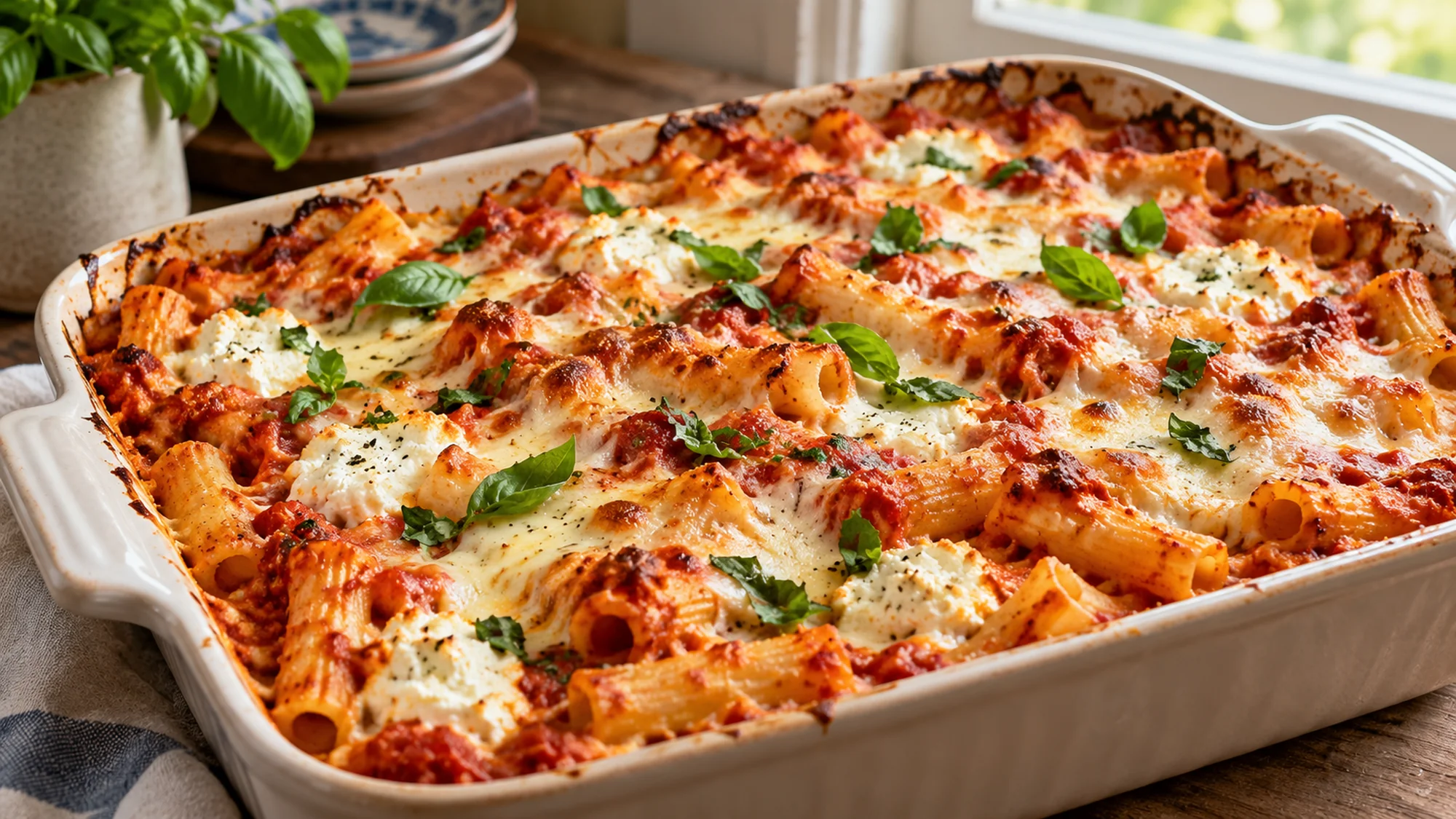
Low-moisture mozzarella gives a predictable melted topping. Fresh mozzarella carries more water and should be drained and blotted well. I would keep the ricotta in small pockets rather than mix every cheese into the tomato sauce, because the contrast between creamy filling and sauced pasta is part of the appeal.
- A different marinara changes acidity, herbs and sodium.
- Choose one you enjoy before it meets the cheese, and avoid treating extra sugar as an automatic correction.
- For a strictly vegetarian meal, check the cheeses for vegetarian-suitable rennet.
- Adding meat makes a different formula with its own cooking and nutrition needs; this card is intentionally meatless.
| Cheese | Main role |
|---|---|
| Ricotta | Soft creamy pockets |
| Mozzarella | Melted topping |
| Parmesan | Sharper savory flavor |
Choose pasta and cheese for their moisture and texture, not just a similar shape.
Nutrition Benefits and Sensible Portions
This is meatless, but cheese still contributes protein, fat and sodium, while pasta supplies most of the carbohydrate. The card estimate covers one-sixth of the dish without salad or bread. For a strictly vegetarian meal, check that the cheeses use vegetarian-suitable rennet. Refrigerate leftovers within two hours, or one hour above 90°F (32°C), and use within three to four days under USDA guidance. Reheat to 165°F (74°C).
Cheese supplies protein as well as fat and sodium, while pasta supplies most of the carbohydrate. The tomatoes add another ingredient group, but a red sauce is not a replacement for every vegetable you might otherwise serve. A separate green side offers both variety and a different texture.
- Brand differences matter here, especially for marinara and cheese.
- A smaller amount of a strongly flavored Parmesan can still taste noticeable, but changing the written quantities changes the estimate.
- The useful comparison is one-sixth of the prepared dish with its actual additions, not an undefined restaurant-size bowl.
Meatless pasta can be satisfying and rich at the same time.
Bottom Line
Slightly undercooked pasta, enough tomato sauce and a few deliberate ricotta pockets give this baked ziti its character. Melt the cheese without drying the edges, add basil at the end, and give the dish a short rest. It is a straightforward pasta dinner that benefits more from timing than from extra ingredients.
Keep the noodles tender, the sauce generous and the ricotta easy to find.
Baked Ziti Recipe

Ingredients
- 400 g dry ziti pasta
- 1 tablespoon olive oil 13.5 g
- 2 cloves garlic minced, about 6 g
- 800 g marinara sauce about 3 1/3 cups
- 250 g ricotta cheese about 1 cup
- 200 g low-moisture mozzarella shredded, about 2 cups; divided
- 40 g finely grated Parmesan about 1/2 cup
- 3 tablespoons torn fresh basil about 6 g
Equipment
- 1 large pasta pot
- 1 Colander
- 1 9-by-13-inch baking dish
- 1 small saucepan
Instructions
- Heat the oven to 375°F (190°C). Bring a large pot of water to a boil. Cook the ziti about 2 minutes less than the package’s al dente time, until still firm in the center. Drain without rinsing. The nutrition estimate assumes unsalted cooking water.
- Meanwhile, heat the olive oil in a small saucepan over medium-low heat. Add garlic and stir 30 seconds. Add marinara and warm gently for 3–4 minutes.
- Spread about 150 g sauce over the base of a 9-by-13-inch baking dish. Toss the drained pasta with about 500 g sauce and half the mozzarella.
- Add half the pasta to the dish. Dot with half the ricotta in small spoonfuls. Repeat with remaining pasta and ricotta. Spoon the remaining 150 g sauce over the top, then add the remaining mozzarella and Parmesan.
- Cover loosely with foil and bake 20 minutes. Uncover and bake 10–15 minutes more, until hot and bubbling with melted, lightly golden cheese. Let stand 10 minutes, scatter basil over the top and divide into six portions.
Nutrition
Video
Notes
Tried this recipe?
Let us know how it turned out!Hi, I’m Laura, the voice behind Tastiva. I’ve always believed that eating well should feel enjoyable, comforting, and realistic—not like another complicated rule to follow. I love creating recipes that fit into everyday life, sharing simple nutrition ideas, and finding small ways to make meals feel a little better without losing the pleasure of good food.