
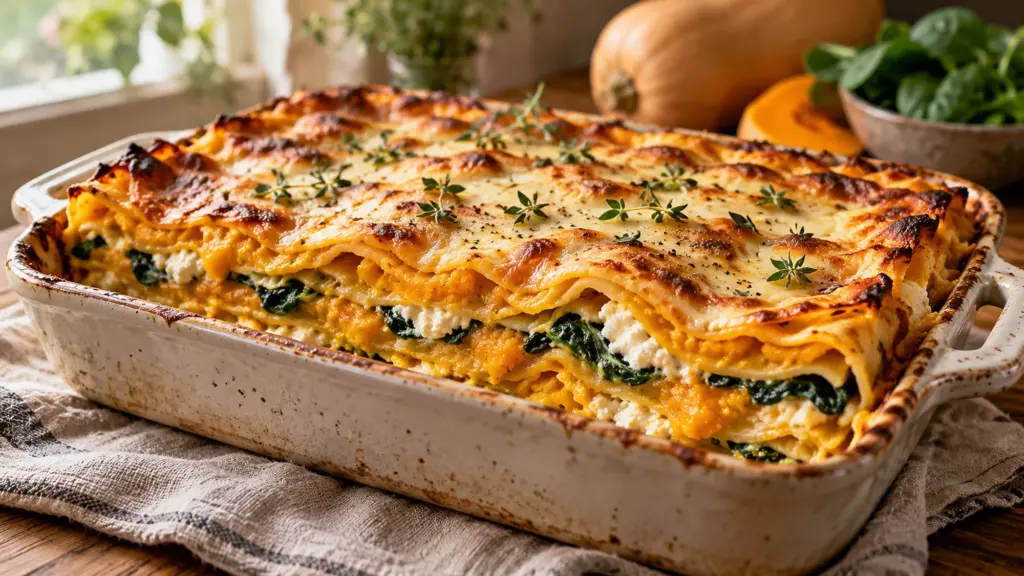
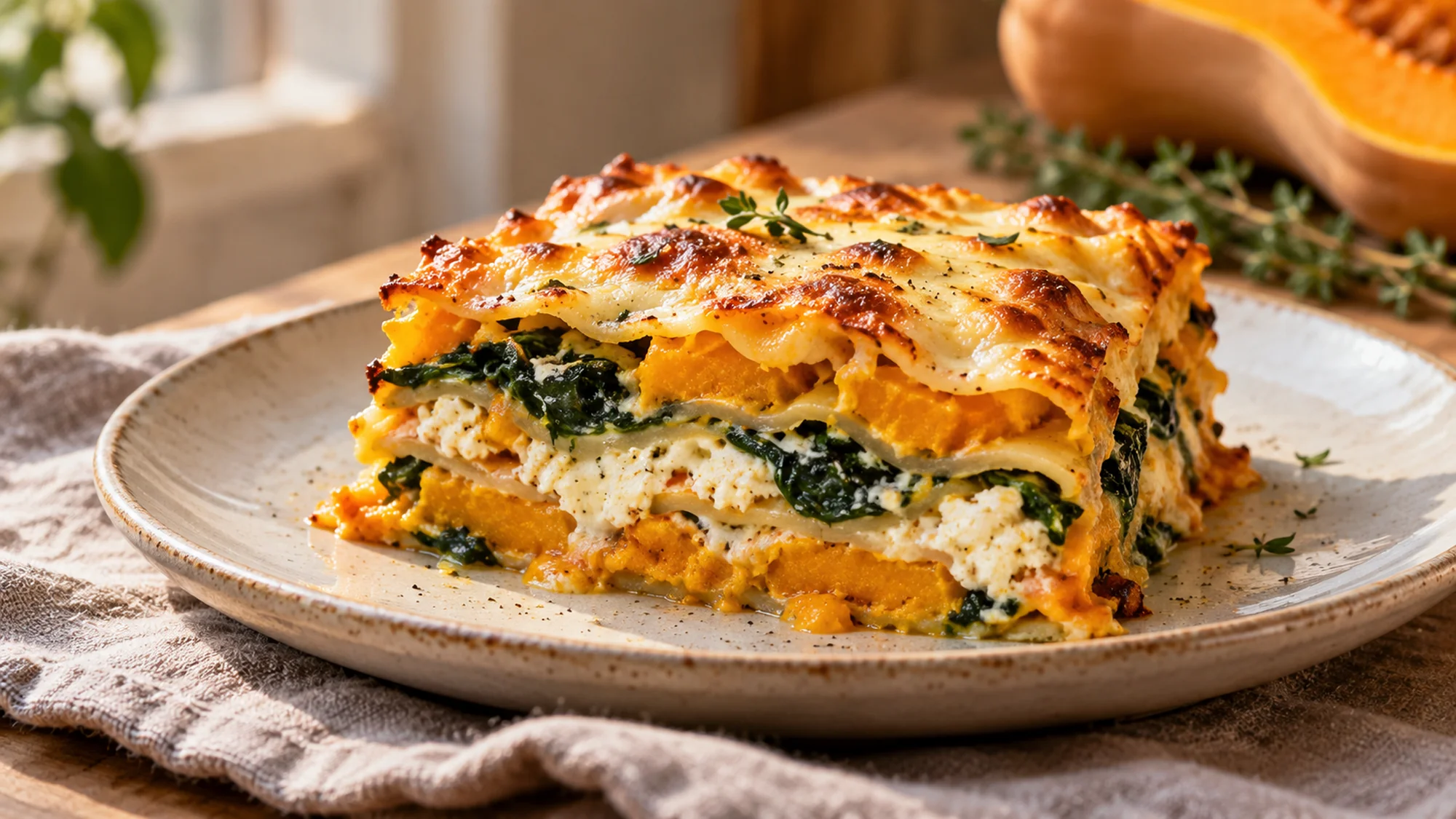
Butternut squash lasagna trades the usual red sauce for a mellow orange layer of roasted squash. Spinach, ricotta and mozzarella keep it firmly in savory-dinner territory, with soft pasta between the fillings and a lightly golden top. The squash needs to be truly tender before you mash it; firm little pieces make an uneven layer.
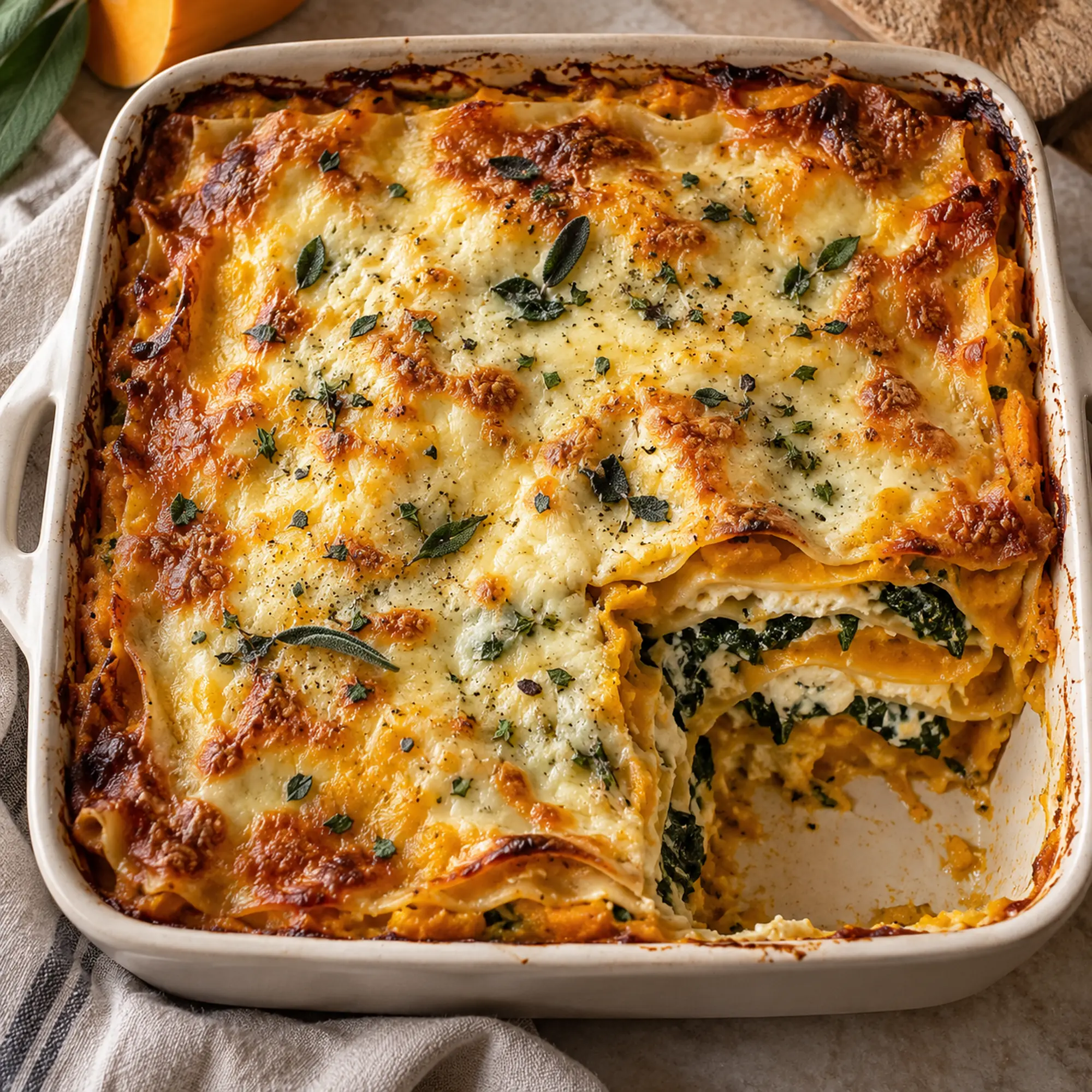
Roast until the squash gives way easily, not merely until its edges take on color.
I like the contrast between the sweet squash and the greener, slightly earthy spinach. There is enough cheese to make the layers feel generous, but the vegetables should remain easy to recognize. This is a project for an evening with some oven time available, not a ten-minute substitute for a sandwich.
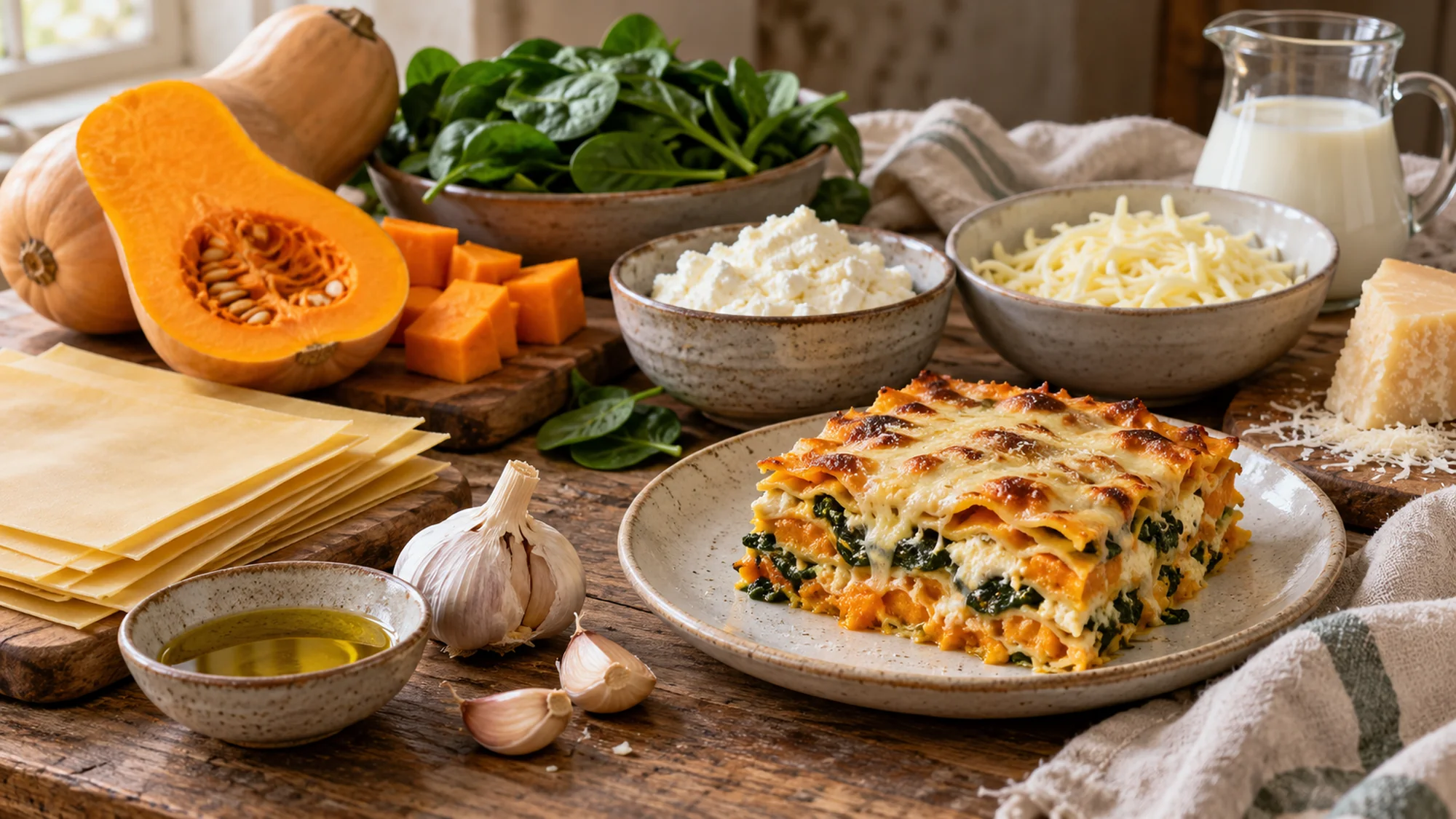
Serving Butternut Squash Lasagna
A crisp green salad with a sharp dressing is enough beside a generous square. I would avoid another creamy side because the lasagna already brings plenty of soft texture. A small cabbage salad gives the plate something cool and crunchy, while simply dressed arugula adds a peppery contrast without another cooking project.
Resting makes the layers easier to lift, though a vegetable-filled lasagna will not become a rigid block. A wide spatula supports the first serving, which is usually the least tidy. Spoon any escaped squash back onto the plate rather than worrying about a perfect photograph; the flavor is in the filling, not the straightness of its edges.
- For a larger table, serve smaller squares with salad and offer seconds.
- Bread is optional because the pasta already provides a starchy base.
- Keep extra cheese on the table rather than automatically covering every portion.
- The table below helps match a side to the contrast you want.
| Side | Contrast |
|---|---|
| Sharp green salad | Cool and crisp |
| Roasted green vegetables | Firmer, less creamy |
| Bread | Extra starch, optional |
Let the side bring brightness while the lasagna supplies the soft, comforting part of dinner.
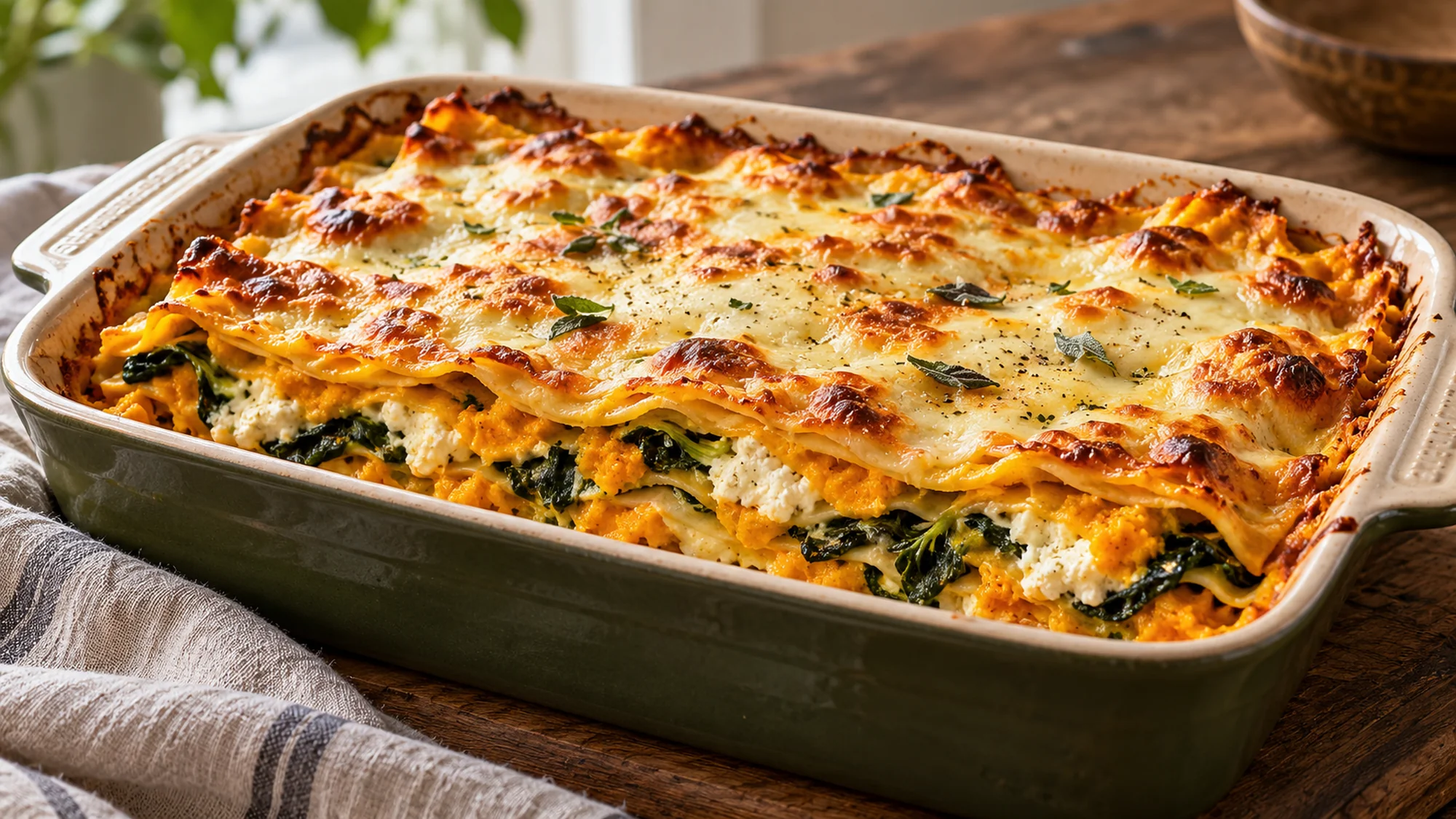
Variations for the Squash and Spinach Layers
Fresh spinach can be replaced with thawed frozen spinach that has been squeezed very dry, using a comparable prepared amount rather than the same loose cup measure. I prefer chopped greens here because long strands can pull through several layers when you lift a serving. Ricotta brands vary in moisture too; a watery tub benefits from draining.
Another sweet winter squash may work, but its water content and density can change the sauce. Use tenderness and a spreadable texture as your guide rather than assuming every orange squash behaves identically. Avoid a watery puree that floods the dish or a stiff mash that leaves exposed noodle corners.
- This card uses partly cooked regular lasagna sheets.
- Oven-ready sheets absorb moisture differently, so swapping them without adjusting the sauce is not a dependable shortcut.
- For a strictly vegetarian meal, check that all cheeses use vegetarian-suitable rennet.
- A dairy-free version needs a separate filling formula rather than simply omitting the cheese.
Moisture matters more than matching the color of a substitute ingredient.
Nutrition Benefits and Portion Balance
Squash and spinach bring vegetables into the main dish, while ricotta and mozzarella contribute protein. Pasta, milk, cheese and measured oil all belong in the nutrition estimate. Calling a dish meatless does not make its portions unlimited, and a vegetable-centered meal can still be substantial.
Choose a serving that leaves room for the crisp side rather than treating the cheese topping as an extra after the portion is decided. The card’s estimate is a practical guide, not an exact laboratory result: brands, drained ricotta and the amount of sauce left in the dish can all change it.
- Refrigerate leftovers within two hours, or one hour above 90°F (32°C), and use within three to four days following USDA guidance.
- Divide a large dish into shallow containers for cooling.
- Reheat the center to 165°F (74°C), covering the top if it dries before the middle is hot.
A balanced plate can include a rich vegetable bake without pretending the cheese and pasta disappear.
Bottom Line
Tender roasted squash, dry spinach and evenly covered noodles give this lasagna a reliable starting point. Keep the layers moderate, protect the dish while it heats through, and let it rest before serving. The reward is a vegetable-centered pasta bake with a clear contrast between mellow squash, savory cheese and green spinach.
Give the fillings the right texture before the oven brings them together.
Butternut Squash Lasagna Recipe

Ingredients
- 1000 g peeled butternut squash cut into 1-inch cubes
- 2 tablespoons olive oil 27 g
- 300 g fresh spinach
- 250 g regular dry lasagna sheets not oven-ready
- 400 g ricotta
- 200 g mozzarella shredded
- 40 g Parmesan finely grated
- 400 ml whole milk
- 3 cloves garlic minced, 9 g
- 5 g fine salt divided; about 3/4 teaspoon
- fresh thyme or sage optional garnish, not included in nutrition
Equipment
- 1 Large roasting tray
- 1 Large pot
- 1 9-by-13-inch baking dish
- 1 Mixing bowl
- 1 potato masher
Instructions
- Heat the oven to 425°F (220°C). Toss squash with oil and 2 g salt on a large tray. Roast 35–45 minutes, turning once, until a fork crushes the pieces easily.
- Meanwhile, wilt spinach in a covered pan with a splash of water, 3–4 minutes. Cool, squeeze very dry and chop. Mix with ricotta, half the Parmesan and 1 g salt.
- Cook regular lasagna sheets in unsalted boiling water about 2 minutes less than the package directs; drain and lay flat. Mash the tender squash with milk, garlic and remaining 2 g salt into a smooth, spreadable sauce.
- Lower oven to 375°F (190°C). Spread a thin layer of squash sauce in a 9-by-13-inch dish. Layer noodles, squash sauce and spinach ricotta, repeating in three layers and keeping every noodle edge covered. Finish with squash sauce, mozzarella and remaining Parmesan.
- Cover with foil and bake 30 minutes. Uncover and bake 15–20 minutes until bubbling in the center and lightly golden. Rest 15 minutes before cutting into eight portions. Add optional herbs if desired.
Nutrition
Video
Notes
Tried this recipe?
Let us know how it turned out!Hi, I’m Laura, the voice behind Tastiva. I’ve always believed that eating well should feel enjoyable, comforting, and realistic—not like another complicated rule to follow. I love creating recipes that fit into everyday life, sharing simple nutrition ideas, and finding small ways to make meals feel a little better without losing the pleasure of good food.