
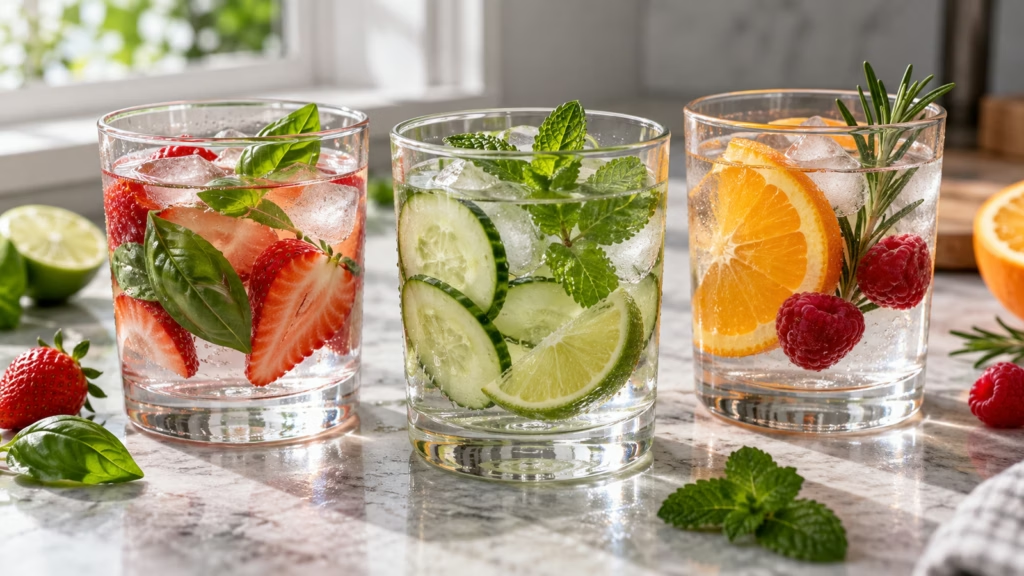
A few mint leaves can give plain water a reason to come out of the refrigerator. The best infused water recipes are the ones with a flavor you enjoy and a batch size you will actually finish: cucumber-lime-mint for a cool herbal glass, strawberry-lemon-basil for a fruitier option, or orange and blueberries for a small pitcher. These six combinations keep the choice practical.
Start with a small glass, let the fruit and herbs flavor it gently, and make a pitcher only when you know you like the combination.
Three small-glass combinations to try first
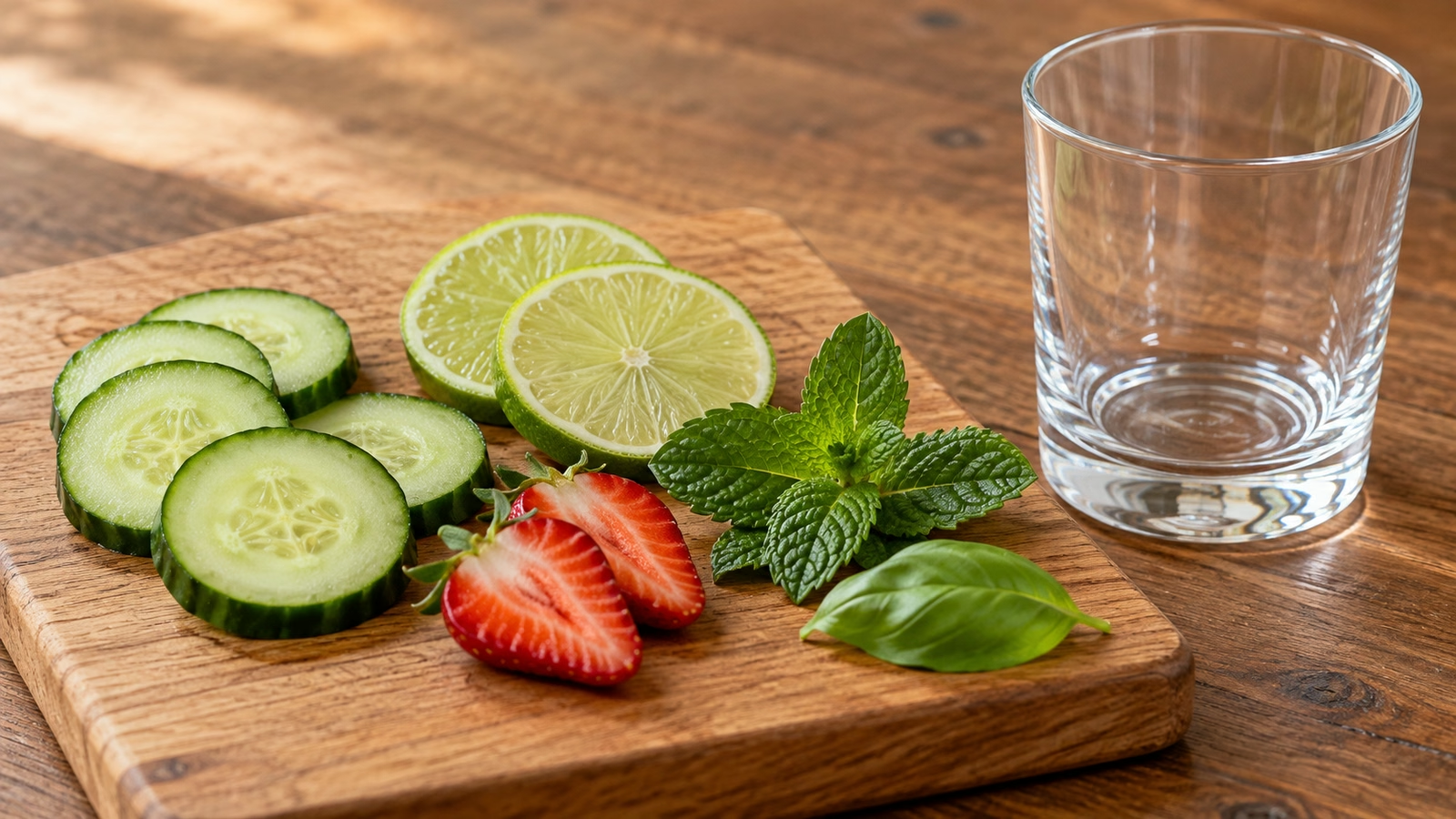
I’d begin with a single glass when an herb is unfamiliar. Rosemary can be lovely beside citrus, but you don’t need a whole pitcher to decide whether you enjoy it. The following quantities come from the University of Michigan’s MHealthy collection; use 12 fluid ounces of water for each combination.
- 1. Strawberry, lemon, and basil: add one sliced, stemmed strawberry, one lemon slice, and a few fresh basil leaves. Choose this when you want a familiar berry flavor with an herbal note.
- 2. Cucumber, lime, and mint: add two cucumber slices, one lime slice, and a few fresh mint leaves. The combination gives you a crisp vegetable-and-citrus starting point.
- 3. Orange, raspberry, and rosemary: add one orange slice, three raspberries, and a small fresh rosemary sprig. Keep the sprig small so you can judge the herb before adding more.
Cover and refrigerate to let the ingredients steep. These are lightly flavored waters, not juices: the fruit remains in the glass rather than being blended into the drink. A strainer is helpful if loose leaves or seeds make sipping less pleasant.
Three pitcher ideas for sharing
For a gathering or a shared refrigerator, a quart is a manageable step up. These amounts are quarter-batch adaptations of the University of Illinois Extension’s gallon-size combinations. Each begins with 4 cups of water; fruit size and personal preference will change the intensity.
- 4. Cucumber and mint: use half a cucumber, thinly sliced, and about four mint leaves. It is the simplest option here when you prefer to leave citrus out.
- 5. Orange and blueberry: use half an orange, sliced, and ¼ cup blueberries. This uses two ingredients, so the shopping list stays short.
- 6. Watermelon and basil: use ½ cup watermelon cubes, without rind, and about four basil leaves. It is a useful choice when a cut melon is already part of the meal.
Allow refrigerator time rather than expecting a strong flavor as soon as the ingredients touch the water. Clemson Extension’s infusion method uses four hours or overnight. I’d make a modest amount the evening before serving, then taste it cold before deciding whether it needs more water.
Prepare and refrigerate the water safely
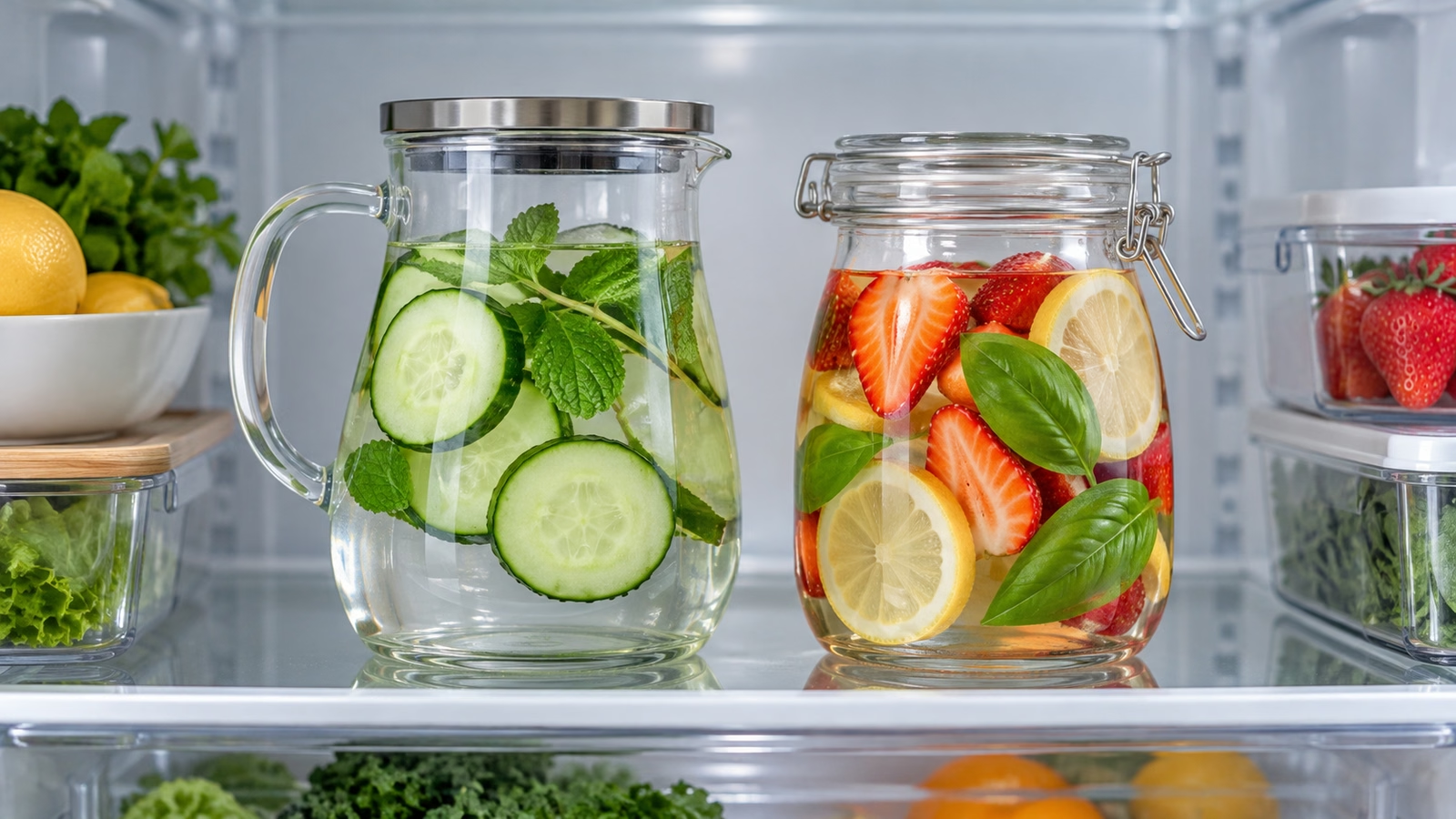
Fruit and herbs turn the pitcher into a prepared food. A lid and a refrigerator are more useful here than a special “detox” label. Start with safe drinking water, sound produce, clean equipment, and enough refrigerator space for the container.
- Wash before cutting. Follow FDA produce guidance: rinse under running water, including fruit whose peel will stay in the pitcher. Don’t wash produce with soap; scrub firm cucumbers and melons with a clean produce brush.
- Use a clean container. Wash the jar, lid, cutting board, and utensils. Keep ready-to-eat fruit away from tools used for raw meat.
- Keep it cold. Cover the infusion and refrigerate at 40°F (4°C) or below. For serving, pour small amounts and return the pitcher to the refrigerator rather than leaving it on a counter all afternoon.
- Remove the solids. Clemson advises straining out fruit and herbs after 24 hours. For this collection, I’d make only what you expect to drink within a day; that is a conservative planning choice, not a shelf-life test of every combination.
Don’t repeatedly top off an old jar with fresh water for days. Empty it, wash it, and start a new batch. Follow FoodSafety.gov’s chilling limits for perishable foods: no more than two hours out, or one hour above 90°F (32°C).
Choose your best infused water recipes by taste
“Best” here means easy to assemble, appealing to you, and practical to keep cold. It is an editorial shortlist, not a tasting contest or a promise of special health effects. I’d rather have one combination you enjoy than a pitcher full of expensive fruit you don’t want to drink.
- Too faint? Allow the refrigerated steeping time before changing the batch. If you adjust it, change one ingredient so you know what helped.
- Too herbal or sharp? Remove the solids and dilute with plain water. Start the next glass with a smaller herb sprig or less citrus.
- Too much fruit in each sip? Strain into a second clean container. You don’t need a special infuser bottle.
- Want bubbles? The University of Michigan also suggests sparkling water. Use plain, unsweetened sparkling water if that suits your taste.
Keep the benefit modest: flavor may make water more appealing. Infused water does not need detox or fat-burning claims to earn a place at lunch; our lemon-water guide separates the everyday drink from the bigger promises. The following demonstration by Dani Spies of Clean & Delicious offers additional fruit-water combinations.
Sources
- University of Michigan: Cool Infused Water
- University of Illinois Extension: Infused Water Combinations
- Clemson Extension: Water Infusion Recipes
- FDA: Selecting and Serving Produce Safely
- FoodSafety.gov: Four Steps to Food Safety

Hi, I’m Laura, the voice behind Tastiva. I’ve always believed that eating well should feel enjoyable, comforting, and realistic—not like another complicated rule to follow. I love creating recipes that fit into everyday life, sharing simple nutrition ideas, and finding small ways to make meals feel a little better without losing the pleasure of good food.