
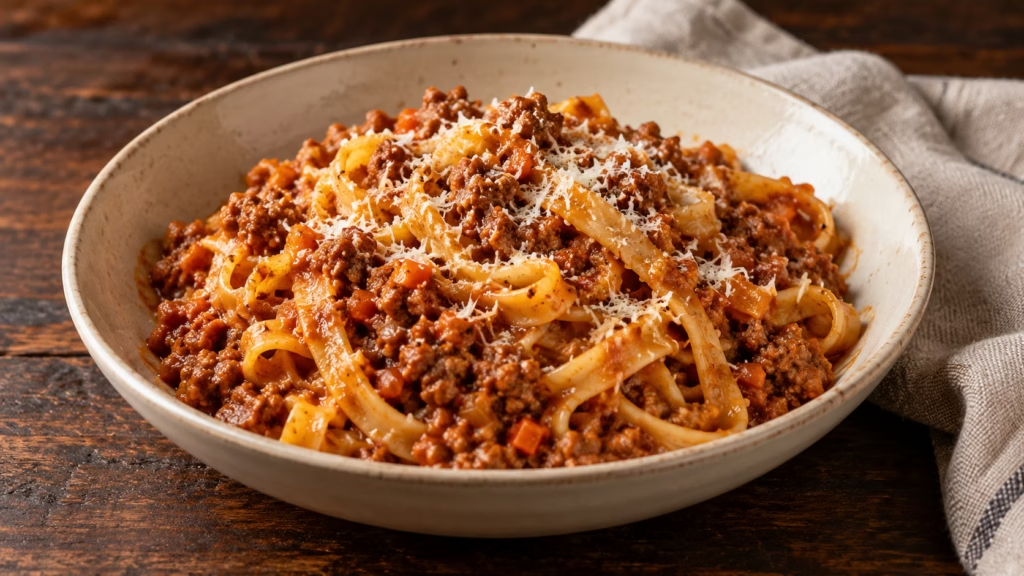
The pasta lands in the bowl, the meat stays on top, and a little puddle appears underneath. That is the Bolognese problem worth solving. This home-style beef and pork sauce takes a gentle, 90-minute simmer, then a brief toss with the pasta, so the sauce coats the ribbons instead of sliding away from them.
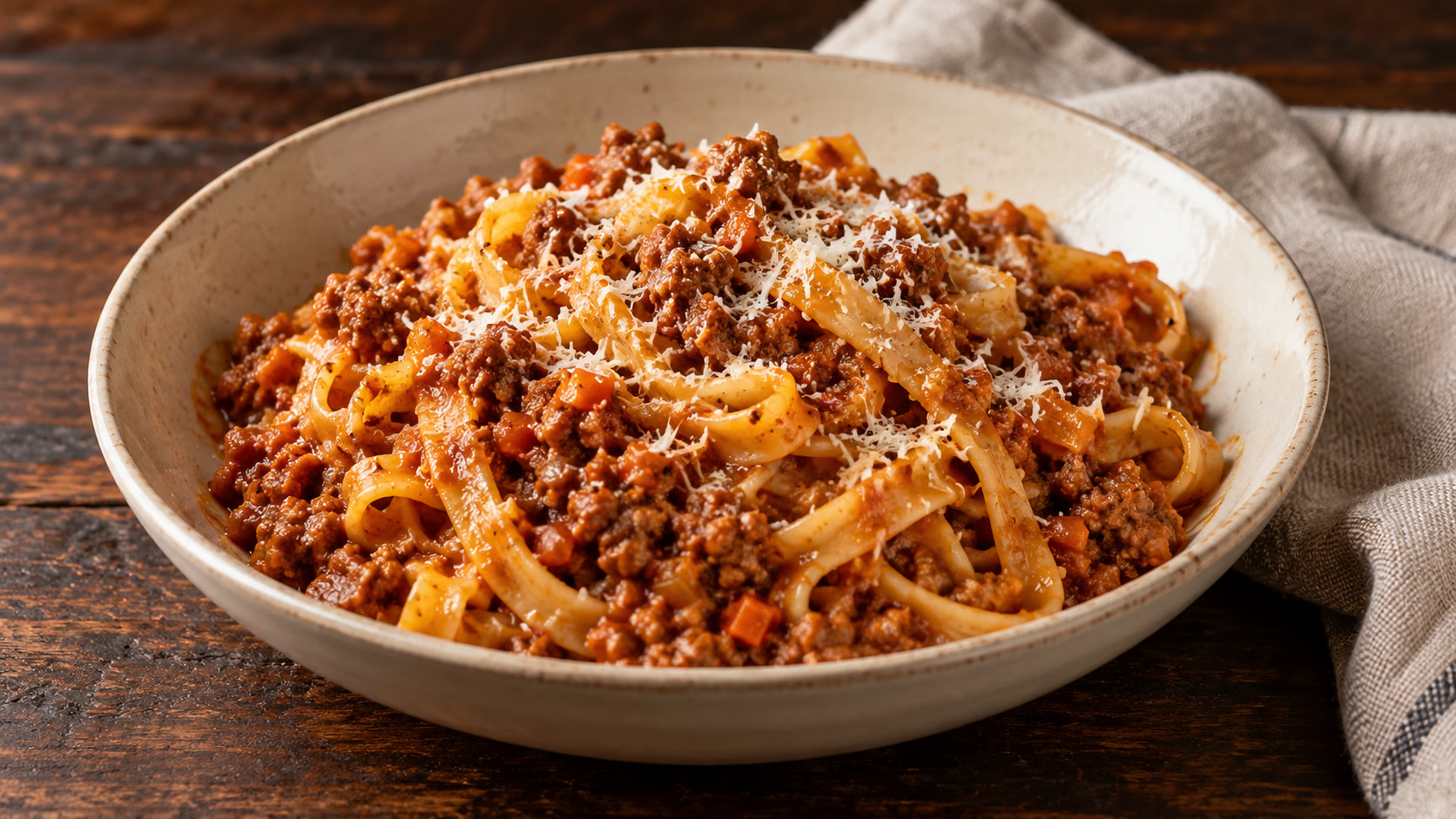
The useful finishing test is a spoon trail: thick enough to close slowly, loose enough to coat the pasta.
A Bolognese built around the meat
This version uses two parts beef to one part pork, finely chopped onion, carrot and celery, a modest amount of tomato, and milk. It is an Italian-inspired home recipe, not a claim to reproduce one definitive Bologna formula. There is no wine here; the flavor comes from browned meat, softened vegetables and patient reduction.
I would choose this for an afternoon when the stove can work in the background, not for a dinner that needs to appear in twenty minutes. Most of the time is gentle simmering, but the pot still needs checking. A timer is a better kitchen companion than optimism.
- Choose 90% lean beef for the stated nutrition estimate; a fattier blend changes both the richness and the amount of fat in the pot.
- Dice the vegetables small and fairly evenly. Large carrot cubes remain noticeable instead of blending into the meat sauce.
- Use whole peeled tomatoes with their juice and crush them before adding. Keep the liquid; the long simmer needs moisture.
- Milk is part of this formulation, not an optional garnish. Replacing it changes the flavor and texture, and the recipe has not been validated with plant-based alternatives.
Give the meat time to brown
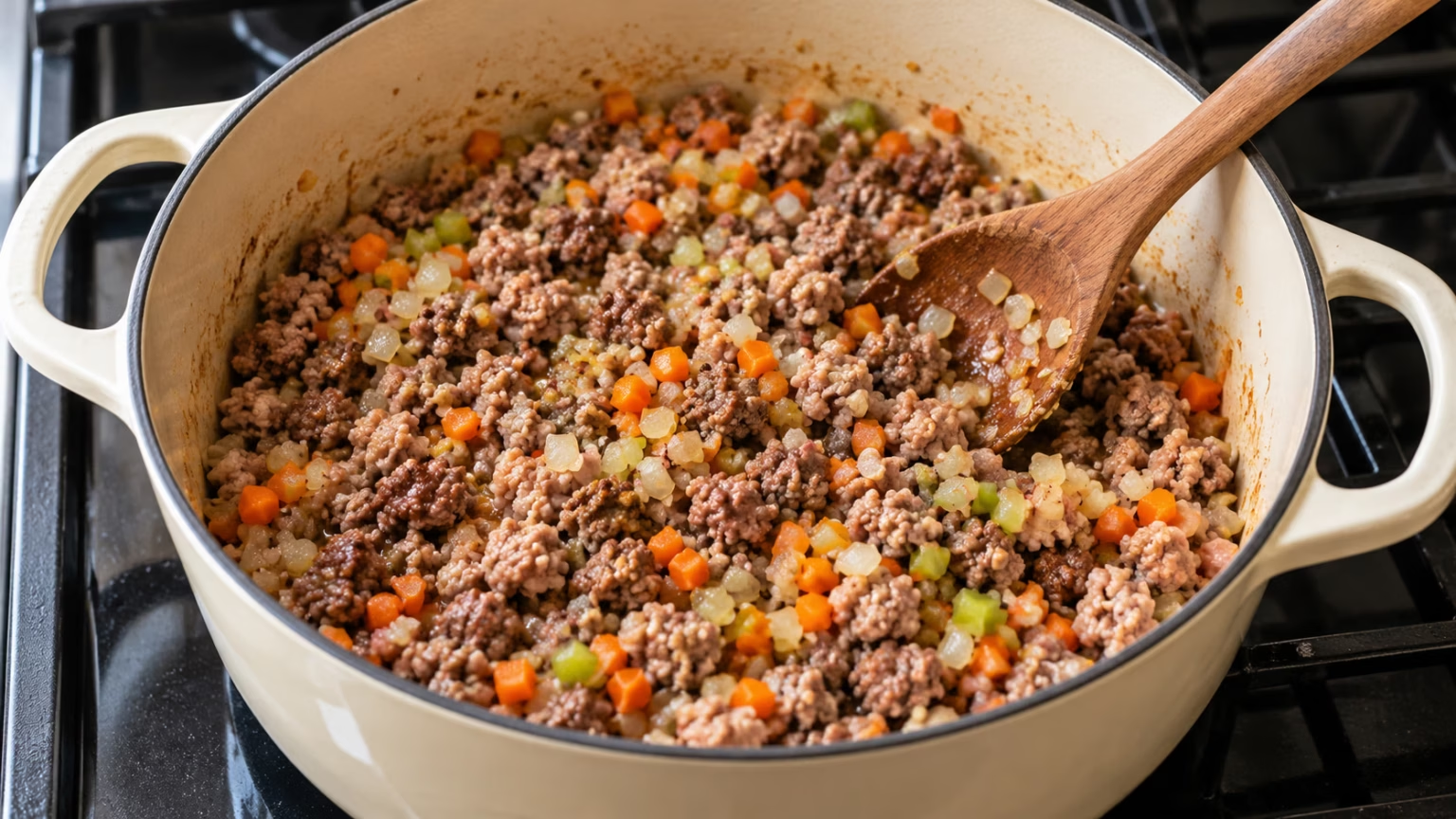
Start by softening the vegetables, then add the meat and break it into small pieces. At first the pot may look wet rather than brown. Let that released moisture cook away before deciding the heat is too low; stirring constantly can make it harder for the meat to stay in contact with the hot surface.
A few browned edges are useful. A scorched layer is not. I would watch the bottom of the pot rather than insist that every crumb become dark. The tomato paste gets a brief turn in the heat, and the milk then helps loosen the flavorful brown bits before the tomatoes go in.
- Use a heavy pot with room to stir; a narrow saucepan crowds this quantity.
- Lower the heat if the vegetables begin to blacken while the meat is cooking.
- Keep utensils that touched raw meat away from finished pasta and cheese. The ground-meat mixture must reach 160°F, measured with a food thermometer.
Read the sauce, not just the clock
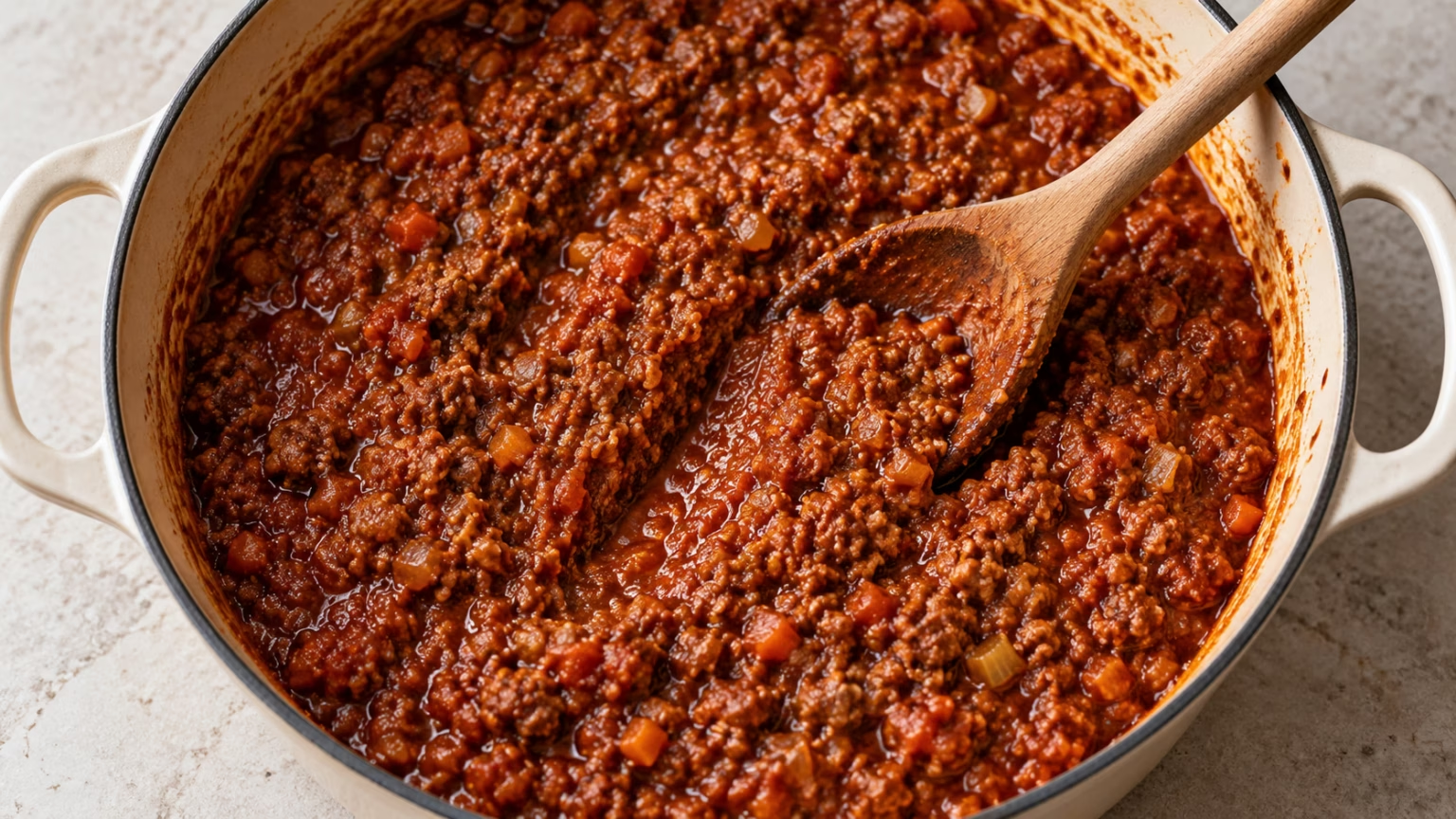
Leave the lid slightly ajar and maintain small, unhurried bubbles. A vigorous boil can drive away liquid before the vegetables and meat become tender. Stir along the bottom every fifteen to twenty minutes, and add a little water if the mixture starts catching. The sauce should stay moist throughout, not fry in its own fat.
| What you notice | Useful adjustment |
|---|---|
| Sauce catches on the bottom | Lower heat and add a small splash of water. |
| Liquid runs ahead of the meat | Simmer uncovered near the end, stirring. |
| A spoon trail closes slowly | Check tenderness; the consistency is close. |
| Pasta looks dry after tossing | Add reserved cooking water a spoonful at a time. |
Cook the pasta near the end, not at the beginning of the simmer. Reserve a mug of its cooking water, drain, and toss with the sauce while everything is hot. Start with very little added water: it is there to help the coating, not undo the reduction you just waited for.
Serve some now and save the sauce separately
Broad ribbons give this chunky sauce room to cling, though another pasta shape can work with its own package timing. A simple salad or Parmesan roasted frozen broccoli adds a different texture. For a faster beef-and-pasta dinner with garlic yogurt and paprika butter, try Turkish pasta instead.
For leftovers, I prefer storing sauce separately from pasta, which keeps absorbing moisture as it sits. The card estimates six portions including pasta, without optional Parmesan. It contains milk and wheat, and some tagliatelle contains egg; check the actual packages rather than assuming a different noodle makes the whole meal allergy-safe.
- Divide leftovers into shallow containers and refrigerate within two hours, or one hour above 90°F.
- Use refrigerated leftovers within three to four days. Freeze separate sauce portions for up to three months for best quality, then thaw in the refrigerator.
- Reheat leftovers to 165°F; bring sauce to a rolling boil and stir it well. Add water if it has thickened, then combine with freshly cooked pasta.
Bolognese Recipe

Ingredients
- 1 tablespoon olive oil 13.5 g
- 1 medium onion about 148 g, finely diced
- 1 carrot about 78 g, finely diced
- 2 celery stalks about 110 g, finely diced
- 1 pound 90% lean ground beef 450 g
- 1/2 pound ground pork 225 g
- 2 tablespoons tomato paste 32 g, no salt added
- 1 cup whole milk 240 ml
- 1 14-ounce can whole peeled tomatoes in juice 400 g, crushed by hand with all juices
- 1/2 cup water 120 ml, plus more as needed during simmering
- 1/2 teaspoon fine salt 3 g; adjust at the end if needed
- 1/2 teaspoon black pepper freshly ground
- 1 pound dried tagliatelle or fettuccine 450 g
- 1 cup reserved pasta cooking water use only as needed
- finely grated Parmesan optional, for serving
Equipment
- Large heavy pot or Dutch oven
- wooden spoon
- large pasta pot
- Kitchen scale
- Food thermometer
- Colander
Instructions
- Finely dice the onion, carrot and celery into similar small pieces. Heat the olive oil in a large heavy pot over medium heat. Add the vegetables and cook for 8 to 10 minutes, stirring, until softened without dark edges.
- Add the beef and pork. Increase the heat to medium-high and break the meat into small crumbles. Cook for about 8 to 10 minutes, stirring occasionally, until its liquid has largely evaporated and some meat develops brown edges. Do not drain the measured mixture.
- Stir in the tomato paste and cook for 1 minute. Pour in the milk, reduce to medium heat and simmer for about 5 minutes, stirring and scraping up brown bits. The milk will partly reduce; do not boil it dry.
- Add the crushed tomatoes and all their juices, 1/2 cup water, salt and pepper. Bring to a gentle simmer. Reduce the heat to low and leave the lid slightly ajar. Simmer for 90 minutes, stirring about every 15 to 20 minutes and adding a splash of water whenever the sauce begins to stick. Keep it gently bubbling, not boiling hard. Ensure the ground meat reaches at least 160°F (71°C).
- Uncover for the last 10 to 15 minutes if the sauce is loose. It is ready when the meat and vegetables are tender and a spoon pulled through the sauce leaves a shallow trail that closes slowly. If necessary, simmer a little longer; pot width and heat affect timing. Taste and adjust seasoning.
- Toward the end of the simmer, bring a separate large pot of water to a boil. Cook the pasta according to its package until just tender with a little resistance. Reserve 1 cup cooking water before draining.
- Add the drained pasta to the sauce, using a large warm bowl if the pot is too small. Toss gently, adding reserved water 1 to 2 tablespoons at a time only if needed for a coating that clings to the ribbons. Divide evenly into six portions. Serve with optional grated Parmesan.
Nutrition
Video
Notes
Tried this recipe?
Let us know how it turned out!Sources
- RecipeTin Eats: companion Bolognese demonstration and its different formulation
- USDA: safe temperatures, storage and reheating
- USDA beef data, ground pork data and dry pasta data used in the estimate
- Canned tomato data and unsalted tomato paste data
- FDA: raw vegetable nutrient reference
- Representative whole-milk nutrition label
Hi, I’m Laura, the voice behind Tastiva. I’ve always believed that eating well should feel enjoyable, comforting, and realistic—not like another complicated rule to follow. I love creating recipes that fit into everyday life, sharing simple nutrition ideas, and finding small ways to make meals feel a little better without losing the pleasure of good food.