
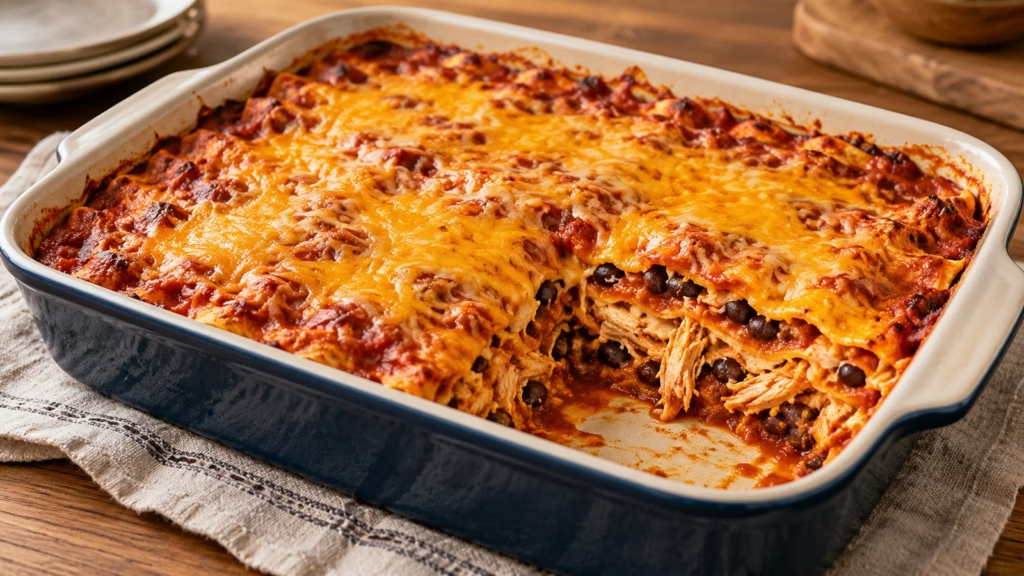
A stack of corn tortillas and a bowl of shredded chicken can point toward dinner, until the thought of rolling each tortilla slows things down. This chicken enchilada casserole takes the layered route: red sauce, chicken, black beans, and cheddar in a baking dish, with the tortillas tucked between them. I’d put the effort into distributing the sauce rather than making tidy little parcels.
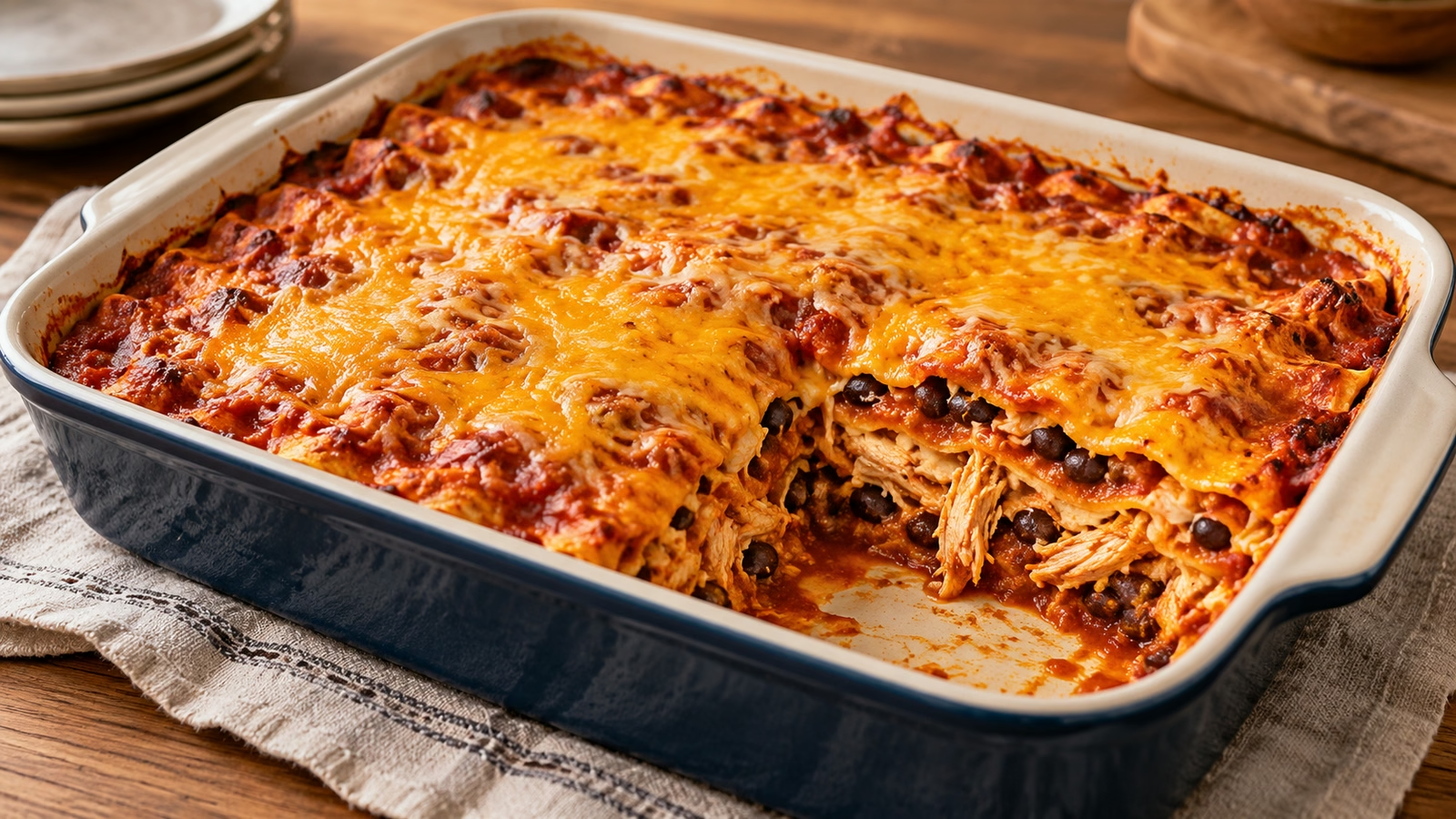
Give every tortilla layer some sauce, then give the finished casserole a few quiet minutes before serving.
What makes these layers work
This is a Tex-Mex-inspired casserole with the soft, saucy character of enchiladas. It is meant to be scooped or cut into generous portions, not lifted out in rigid squares. The tortillas soften as they absorb sauce, while the beans give the filling substance without requiring another pan.
- Corn tortillas: Their flavor belongs with the red chile sauce, and overlapping pieces form a more even layer than one thick stack.
- Cooked chicken: Shred it into short strands that distribute easily. Large chunks make the layers uneven and leave some bites mostly tortilla.
- Black beans: Drain them thoroughly. The filling needs moisture from the measured sauce, rather than a puddle of bean liquid.
- Cheddar: Divide it between the filling layers and the top so each portion gets cheese without a solid lid of it.
The short ingredient list makes your sauce choice important. Choose an enchilada sauce you already enjoy, with a heat level that suits the people eating. A mild sauce lets you offer hotter toppings separately; a hot sauce spreads its heat through the entire dish.
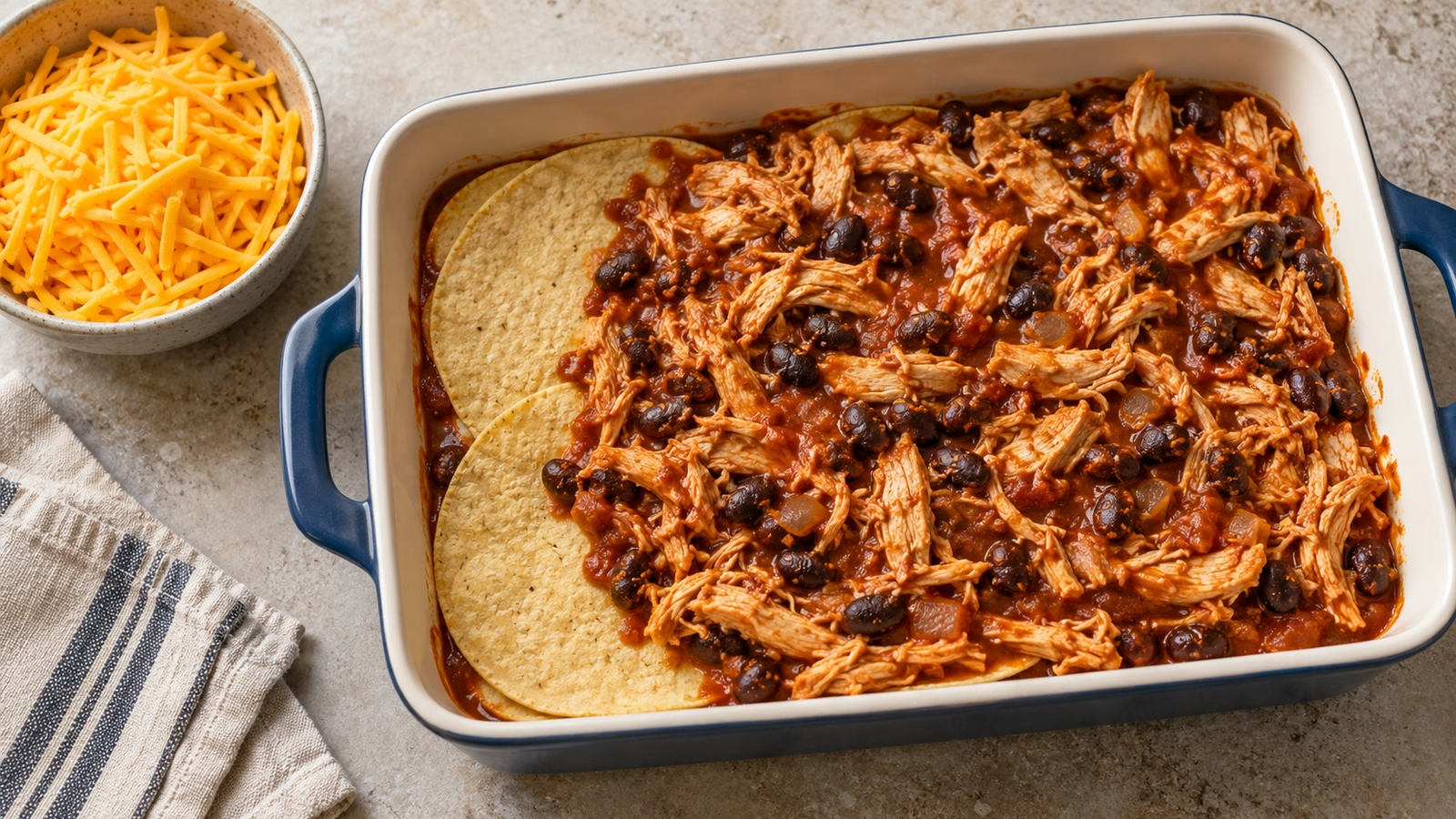
A sauce map for chicken enchilada casserole
I like a simple allocation here: some sauce on the dish, some mixed into the filling, and the rest across the top. It prevents the familiar problem of a handsome cheesy surface hiding dry tortillas underneath. Measure the sauce before assembling so the last layer does not have to survive on whatever remains in the can.
- Bottom: A thin coating separates the first tortillas from the baking dish and starts softening their undersides.
- Middle: Coat the chicken and beans together before dividing them between two layers. Spread the filling right to the corners.
- Top: Cover exposed tortilla edges with the remaining sauce before adding the final cheese. Bare corners tend to become tough.
- Rest: Wait 10 minutes after baking. The filling settles enough to portion, although the first serving may still require a spoon and a little optimism.
Use a 9-by-13-inch baking dish rather than squeezing everything into a smaller, deeper pan. A deep stack takes longer to heat through, and the stated baking range will no longer be a useful guide. A thermometer in the center, away from the dish itself, is the dependable final check.
Swaps that keep dinner practical
Plain cooked chicken is the starting point for the recipe and its nutrition estimate. Rotisserie chicken can save prep, but its seasoning and sodium vary. Remove the skin and bones, then weigh the meat rather than assuming every bird supplies the same amount.
- Beans: Cooked pinto beans can replace black beans by the same drained weight; their softer texture may blend more into the filling.
- Cheese: Monterey Jack can replace cheddar by weight for a milder finish. Pepper Jack adds another source of heat.
- Tortillas: Stick with similarly sized corn tortillas for this version. Flour tortillas absorb sauce differently and can make the layers heavier.
- Sauce: Avoid substituting thin salsa cup for cup. Its water content, acidity, and seasoning are different, so the finished texture is less predictable.
For serving, I’d choose something cool and crisp, such as shredded cabbage or sliced cucumber. Sour cream, avocado, and cilantro are optional finishes; add them to individual portions rather than baking them into the top. They are not included in the card’s nutrition estimate.
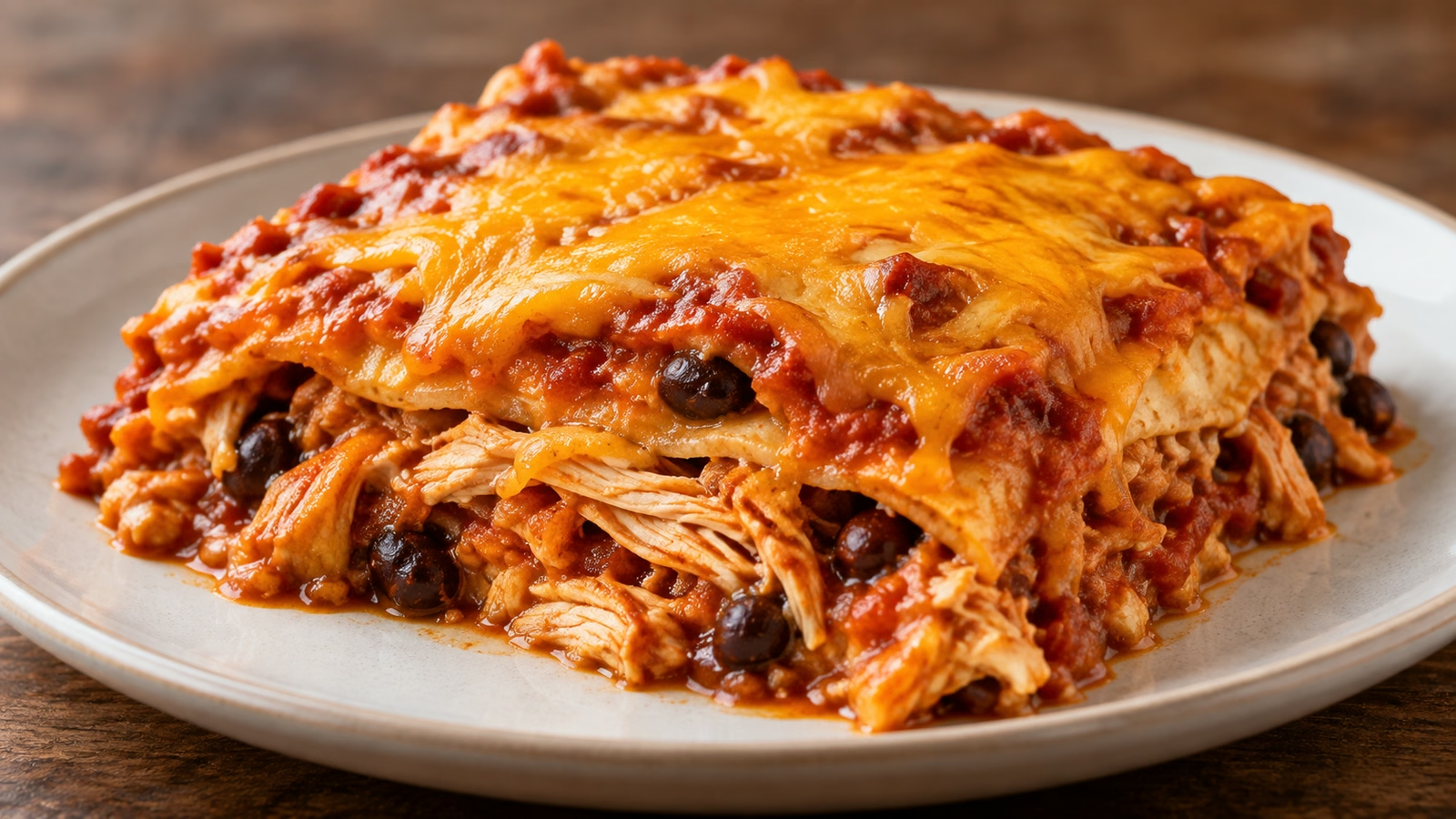
Bake, chill, and reheat with the center in mind
Bubbling edges show that the outside is hot, but they do not establish the temperature of the middle. FoodSafety.gov recommends 165°F (74°C) for casseroles. If the cheese looks ready first, loosely cover the top and keep baking until the center reaches that temperature.
- Refrigerate promptly: Divide leftovers into shallow covered containers within 2 hours, or within 1 hour when the surrounding temperature exceeds 90°F (32°C).
- Use within 3–4 days: Keep the refrigerator at 40°F (4°C) or below. Start with safely stored chicken and count its earlier storage time too.
- Reheat portions: Cover to retain moisture and heat the center to 165°F (74°C). In a microwave, rotate the plate and check more than one spot.
A chilled casserole needs more oven time than one assembled for immediate baking. Rather than promising a fixed extra number of minutes, cover it initially and use the same center-temperature check. Follow your baking dish manufacturer’s guidance about moving cold dishes into a hot oven.
Chicken enchilada casserole recipe
The recipe below makes six portions. It uses fully cooked chicken and beans, so their original cooking time is not included; have them ready before you start. Sauce and tortilla brands can change sodium and texture, and the listed nutrition is an estimate for the specified ingredients.
Chicken Enchilada Casserole Recipe

Ingredients
- 3 cups cooked shredded skinless chicken breast plain, 450 g
- 1.5 cups cooked black beans unsalted and drained, 258 g
- 2.5 cups red enchilada sauce divided, 600 mL
- 12 6-inch corn tortillas 28 g each, 336 g total
- 1.5 cups shredded cheddar cheese divided, 168 g
- cilantro, sour cream, avocado, or crisp cabbage optional; excluded from nutrition
Equipment
- 1 9-by-13-inch baking dish
- 1 Mixing bowl
- 1 Measuring cups
- 1 Kitchen scale
- 1 Aluminum foil
- 1 Instant-read food thermometer
Instructions
- Heat the oven to 375°F (190°C). Spread 1/2 cup enchilada sauce over the bottom of a 9-by-13-inch baking dish.
- Mix the cooked chicken and drained beans with 1 cup enchilada sauce. Divide this filling into two equal portions. Divide the cheese into three 56 g portions.
- Arrange 4 tortillas over the sauce, cutting and overlapping them to cover the dish. Spread with half the chicken-bean filling and one portion of cheese. Repeat with 4 tortillas, the remaining filling, and another portion of cheese.
- Top with the last 4 tortillas. Spread the remaining 1 cup sauce over them, including the edges, and scatter over the last cheese portion. Cover with foil, tenting it so it does not press into the cheese.
- Bake covered for 30 minutes. Uncover and bake about 10–15 minutes longer, until the center reaches 165°F (74°C) on an instant-read thermometer. If necessary, re-cover to prevent excessive browning and continue baking. Timing varies with ingredient temperature and dish material.
- Rest for 10 minutes, divide into 6 portions, and serve with optional toppings.
Nutrition
Video
Video: Foods101withDeronda demonstrates a layered chicken enchilada casserole with corn tortillas. Her version includes corn, green chiles, sour cream and Colby Jack, then a broiler finish; this recipe uses black beans and cheddar and finishes baking. Follow the ingredients, quantities and oven instructions above.
Notes
- Cooking time uses the upper end of the estimated baking range. Pre-cooking chicken and beans is not included.
- For nutrition, use plain cooked chicken and unsalted cooked black beans. Rotisserie chicken and canned beans can raise sodium.
- Refrigerate promptly in shallow containers and use within 3–4 days, accounting for prior chicken storage time. Reheat to 165°F (74°C).
- Contains milk. Check sauce and tortilla labels for wheat and other allergens; no gluten-free claim is made.
- Nutrition is estimated per one-sixth casserole from USDA SR28 and product labels. Optional toppings excluded; brands vary.
Tried this recipe?
Let us know how it turned out!Sources
Hi, I’m Laura, the voice behind Tastiva. I’ve always believed that eating well should feel enjoyable, comforting, and realistic—not like another complicated rule to follow. I love creating recipes that fit into everyday life, sharing simple nutrition ideas, and finding small ways to make meals feel a little better without losing the pleasure of good food.