
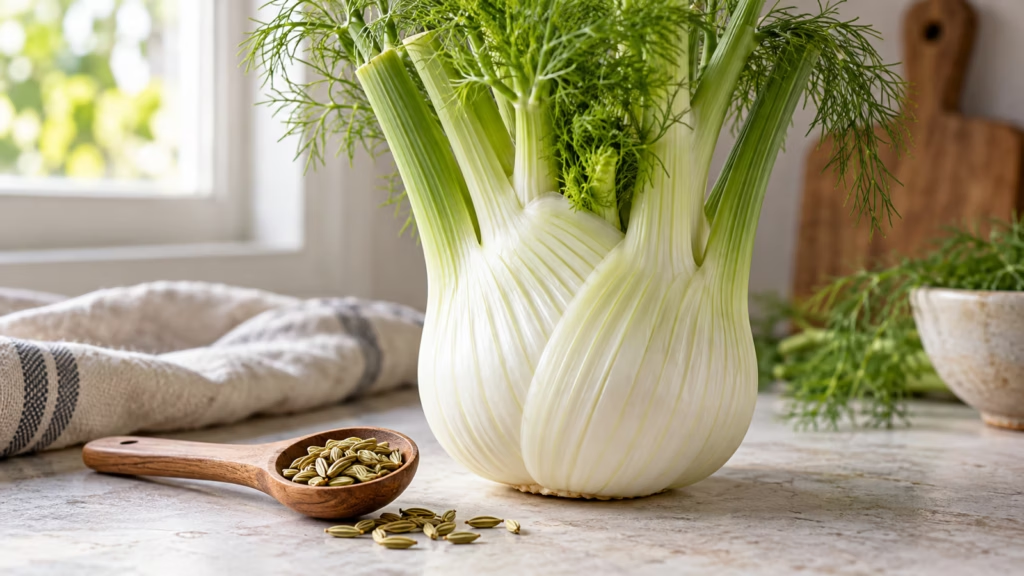
A fennel bulb in the vegetable drawer and a jar of fennel seeds can share the same sweet, anise-like aroma while doing very different jobs at dinner. Use the fresh bulb when you want a vegetable with crunch or tender layers; use the seeds when you want a measured spice. They are related ingredients, not cup-for-cup substitutes.
Let the bulb bring the bite, the fronds bring the finish, and the seeds bring the seasoning.
The feathery tops are useful too, so a fennel purchase can give you more than one cooking option. I would decide on the texture first: a crisp salad asks for a different cut from a tray of roasted wedges. That decision makes the unusually shaped vegetable much less mysterious.
Fennel and fennel seeds: know which part you need
Florence fennel is grown for its enlarged pale base, commonly called the bulb. Other fennel varieties are grown mainly for leaves or seeds. University of Wisconsin Extension explains that the familiar ridged “seeds” are botanically dried fruits, while the fresh feathery leaves have their own culinary uses.
- Bulb: a substantial fresh vegetable. Slice it thinly for raw dishes or cut wedges for cooking.
- Fronds: delicate green leaves used as an herb or finishing garnish. They cannot supply the bulk of the bulb.
- Stalks: firmer pieces that can contribute flavor to cooking; assess their texture before serving them in a raw salad.
- Seeds: a dried spice, used whole or crushed in small amounts. Read the recipe carefully when both bulb and seeds appear.
Anise and star anise are different plants, even though their aromas have something in common. A spice jar labeled fennel seed should not be treated as a generic replacement for any ingredient with a licorice-like flavor. The name on the ingredient line matters more than a family resemblance.
Choose a firm bulb and cut for the dish
Purdue Extension recommends a pale bulb that feels heavy for its size, without soft or discolored areas. If the tops remain attached, look for firm green stems. Rinse under cool running water before cutting, then inspect between the layers for trapped soil.
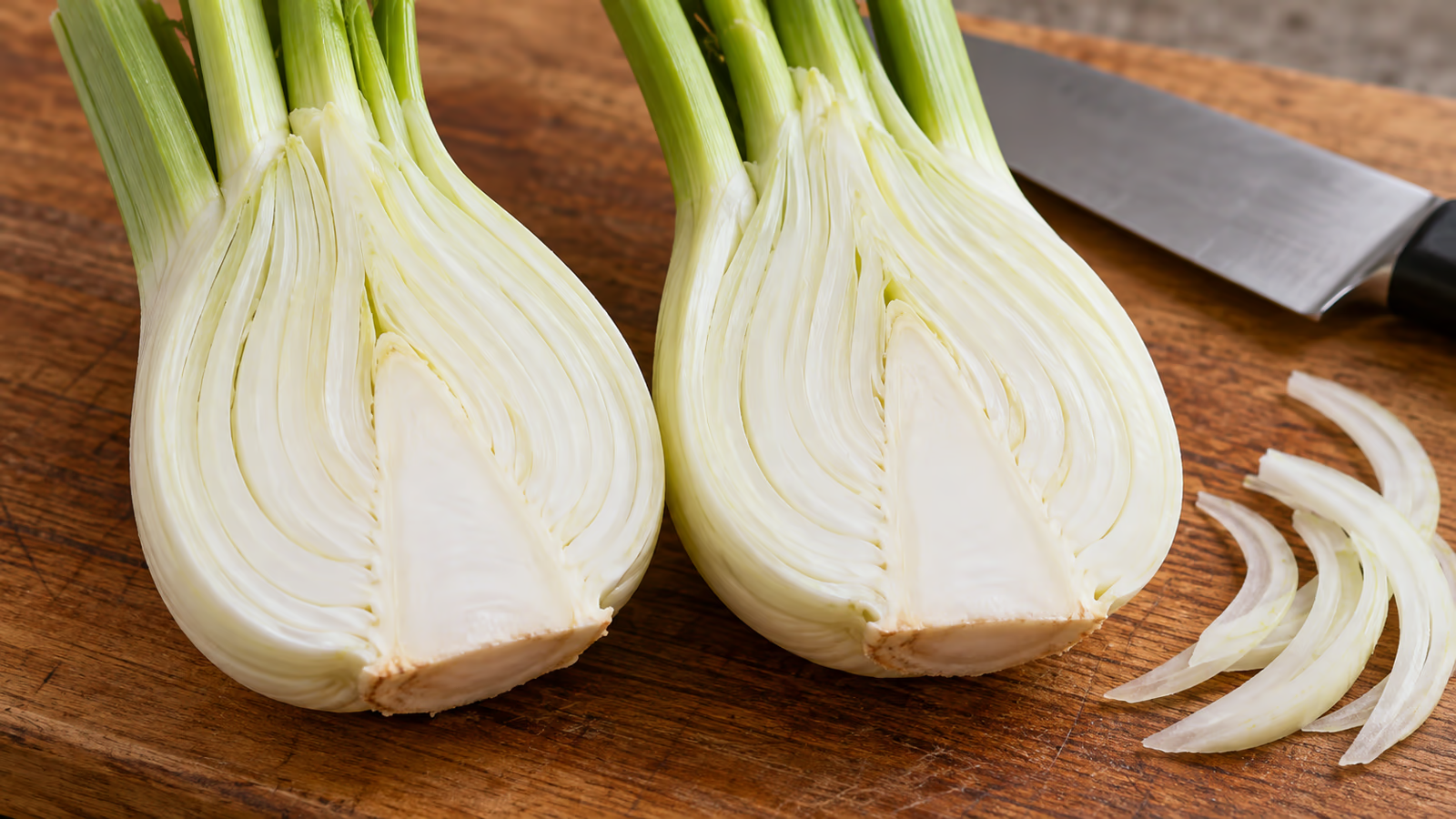
- For a raw salad, trim the base and stalks, halve the bulb lengthwise and remove any tough central core. Make thin slices with a sharp knife.
- For wedges, leave enough of the core attached to hold the layers together. Cut similar-sized pieces so one is not firm while another collapses.
- If using a mandoline, use its hand guard and stop before the remaining piece becomes awkward. Thin slices are useful; a risky final slice is not.
Set aside sound fronds before starting. Gennaro Contaldo’s preparation demonstration below shows the bulb-cutting step visually; it is a knife-skills reference rather than a claim that every fennel dish needs the same shape. I prefer to plan the cut around how the food will be eaten.
Choose crunch, tender wedges or a little spice
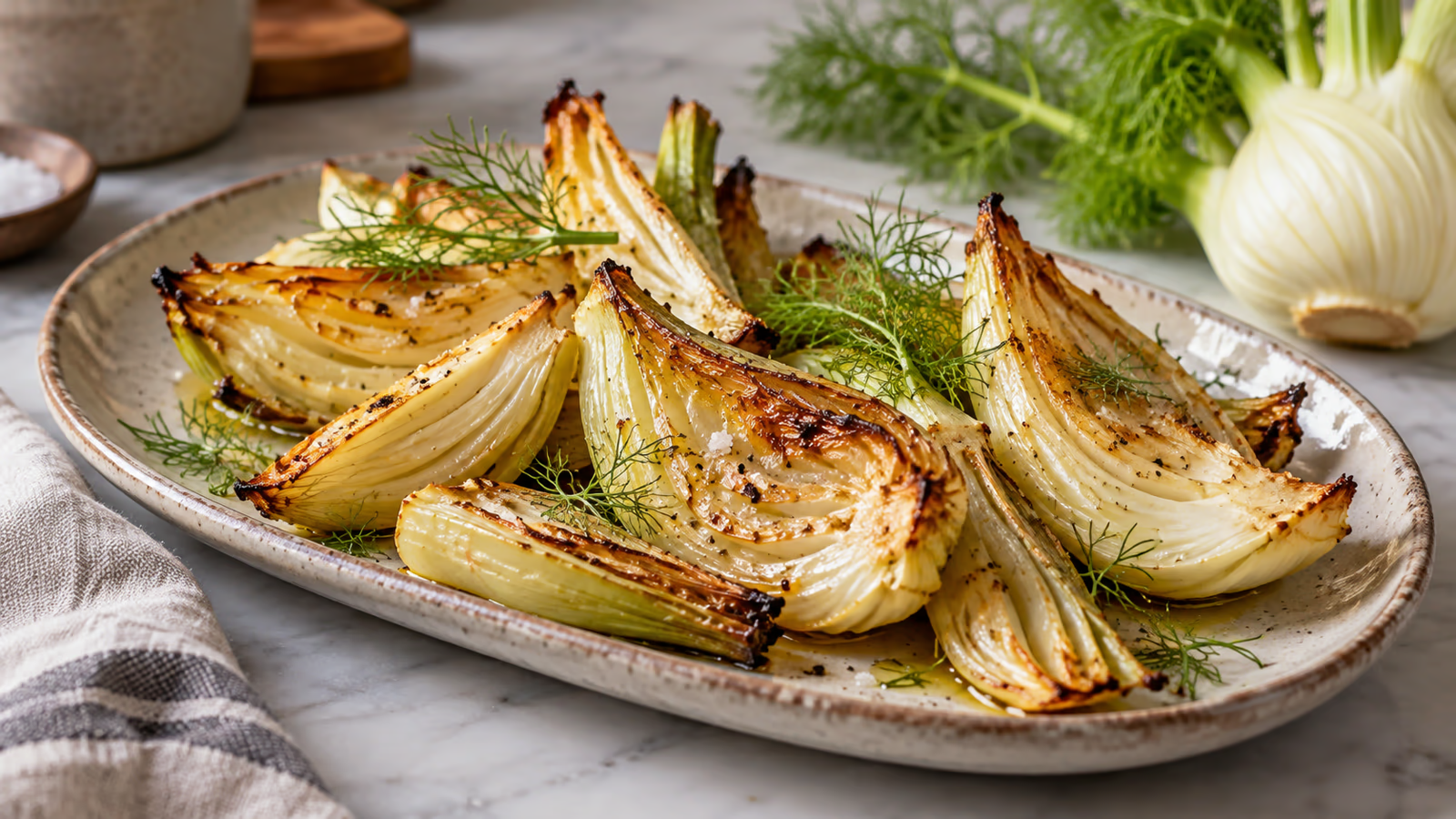
Raw fennel makes sense when you want a crisp element beside orange segments, apple or olives. Cooked fennel works as a vegetable alongside a main dish. Purdue’s roasting example uses 375°F and cooks wedges until fork-tender, about 45 minutes; thickness and the rest of the recipe still determine the finish.
- For a salad, begin with a modest amount of thinly sliced bulb and taste it with the dressing. You can add more without overwhelming the bowl.
- For roasted wedges, look for tender layers and browned edges. Spread them out so the tray has room for moisture to escape.
- For a spice-led dish, crush seeds with a mortar and pestle or spice grinder, as suggested by the Herb Society of America. Follow a recipe’s amount, then adjust a future batch to your taste.
The Herb Society’s cooking examples use fennel seeds in breads and vegetable dishes, sometimes alongside fresh fennel. That pairing is useful: the spice adds seasoning while the bulb remains a vegetable. A spoonful of seeds cannot replace the volume and moisture of a chopped bulb.
Keep the fresh parts and the spice on different shelves
Refrigerate the fresh bulb, loosely wrapped, and plan to use it within about five days, following Purdue’s guidance. Fronds are delicate, so give them an early place in the meal plan. Keep the dried seeds in their tightly closed spice container according to its label, away from a damp cooking area.
- Use fresh slices as an optional variation in a quinoa salad with crisp vegetables; expect a distinct anise-like flavor rather than cucumber’s milder taste.
- Chop a few sound fronds for a finishing sprinkle on fish or vegetables. Add them intentionally, not just because they came attached.
- Freezing changes the bulb’s texture. Reserve frozen fresh fennel for cooking rather than expecting its original salad crunch.
I would buy one bulb with a clear plan before buying several on enthusiasm alone. Use these ingredients for their flavor and culinary role; this guide does not recommend fennel tea, seeds or extracts as a treatment for digestive symptoms.
For the preparation step, Gennaro Contaldo demonstrates how to trim and cut fennel on Jamie Oliver’s official channel.
Sources
- University of Wisconsin Extension: fennel varieties and edible parts.
- Purdue Extension: choosing, preparing and storing fennel.
- Herb Society of America: fennel seed cooking examples.
- Jamie Oliver: Gennaro Contaldo’s fennel preparation demonstration.

Hi, I’m Laura, the voice behind Tastiva. I’ve always believed that eating well should feel enjoyable, comforting, and realistic—not like another complicated rule to follow. I love creating recipes that fit into everyday life, sharing simple nutrition ideas, and finding small ways to make meals feel a little better without losing the pleasure of good food.