
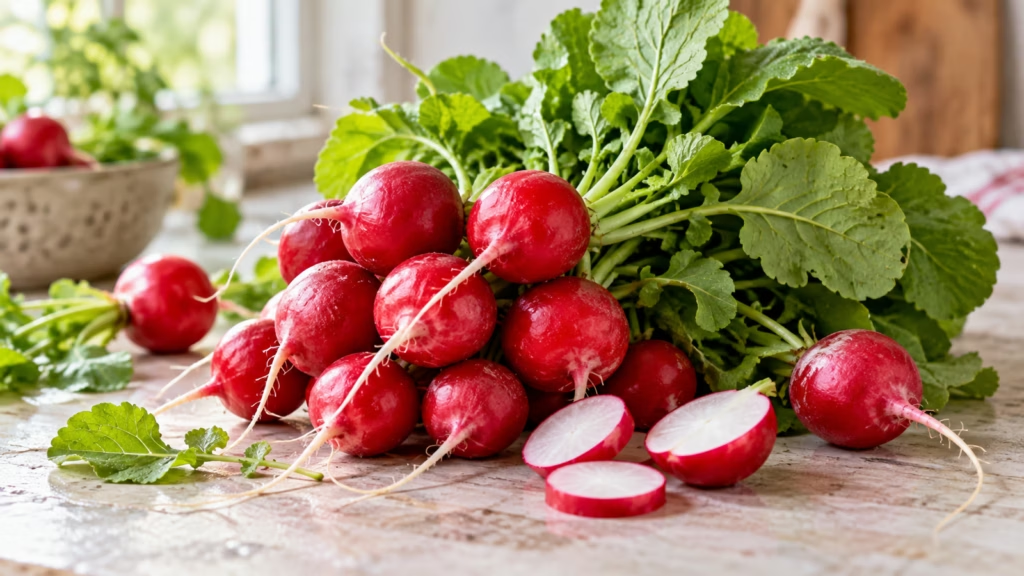
A red radish can be the sharp, crunchy thing beside a sandwich or a tender vegetable on the dinner plate. The difference is preparation: raw slices keep their peppery bite, while cooking changes the texture and softens their assertive character. Start with firm roots, separate any greens for storage, and give both parts a job.
A bunch of radishes can bring crunch today and a warmer, gentler side dish tomorrow.
This guide focuses on small garden radishes, including the familiar red globe types. Daikon belongs to the wider radish family, but its size and common uses deserve their own treatment. I would not let a recipe for a large white root dictate how to handle a handful of small red ones.
Choose a radish for the bite you want
University of Minnesota Extension describes garden radishes as crisp, juicy and spicy, with varieties in several shapes and colors. Growing conditions matter too: heat and drought stress can leave roots tougher or more assertive. Color alone cannot tell you exactly how peppery a particular bunch will be.
- Look for firm roots with smooth skin. Avoid soft, slimy or deteriorating specimens rather than planning to disguise them with dressing.
- If buying a bunch with tops, choose greens that look fresh. Brown, slimy leaves are not a bonus ingredient.
- Match the purchase to the plan: small roots suit raw slices or halves, while a mixed-size bunch needs more careful cutting for even cooking.
Taste a small piece of a properly washed, sound radish before dressing a large bowl. If it feels stronger than you want, use fewer slices or choose a cooked preparation. I prefer that quick taste decision to assuming every red radish behaves like the last bunch.
Separate the greens, then wash before preparing
Cut the leafy tops away from the roots for storage. University of New Hampshire Extension recommends keeping the roots unwashed in the refrigerator and washing them well under running water before use. A clean produce brush helps remove soil from the root surface.
- Keep roots and greens in separate refrigerator containers or bags. Inspect them before use, and do not leave excess water pooling around them.
- Plan to use the greens within two to three days. UNH suggests wrapping them in a damp paper towel in the refrigerator.
- Wash the leaves before eating or cooking, opening folds where grit can hide. Use clean hands, utensils and a clean preparation surface.
Storage estimates depend on freshness and handling. UNH notes that roots may keep up to two weeks, while Arizona Extension suggests using them sooner for the best flavor; I would shop for the next few meals rather than treat the longest estimate as a promise. Keep produce away from raw meat juices.
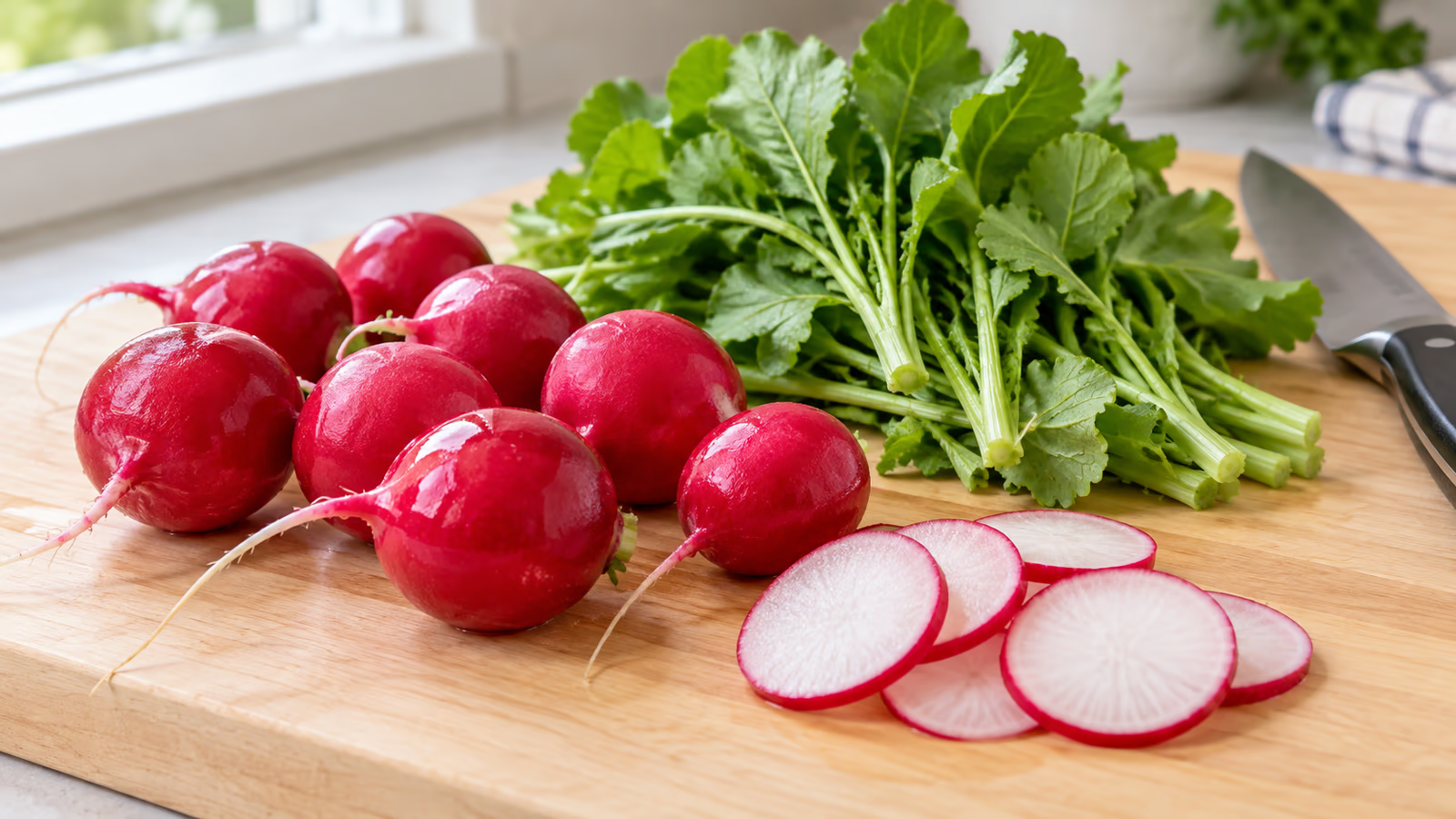
Keep them raw for crunch, or cook them for dinner
Thin slices make a peppery contrast to a creamy sandwich filling or a mild grain salad. Halves make a more substantial vegetable side. These are different eating experiences, so choose the cut and method together rather than expecting a roasted radish to have a raw radish’s snap.
- Raw: trim the tops and root tip, then slice or quarter washed small radishes. The thin skin of ordinary red garden radishes can stay on.
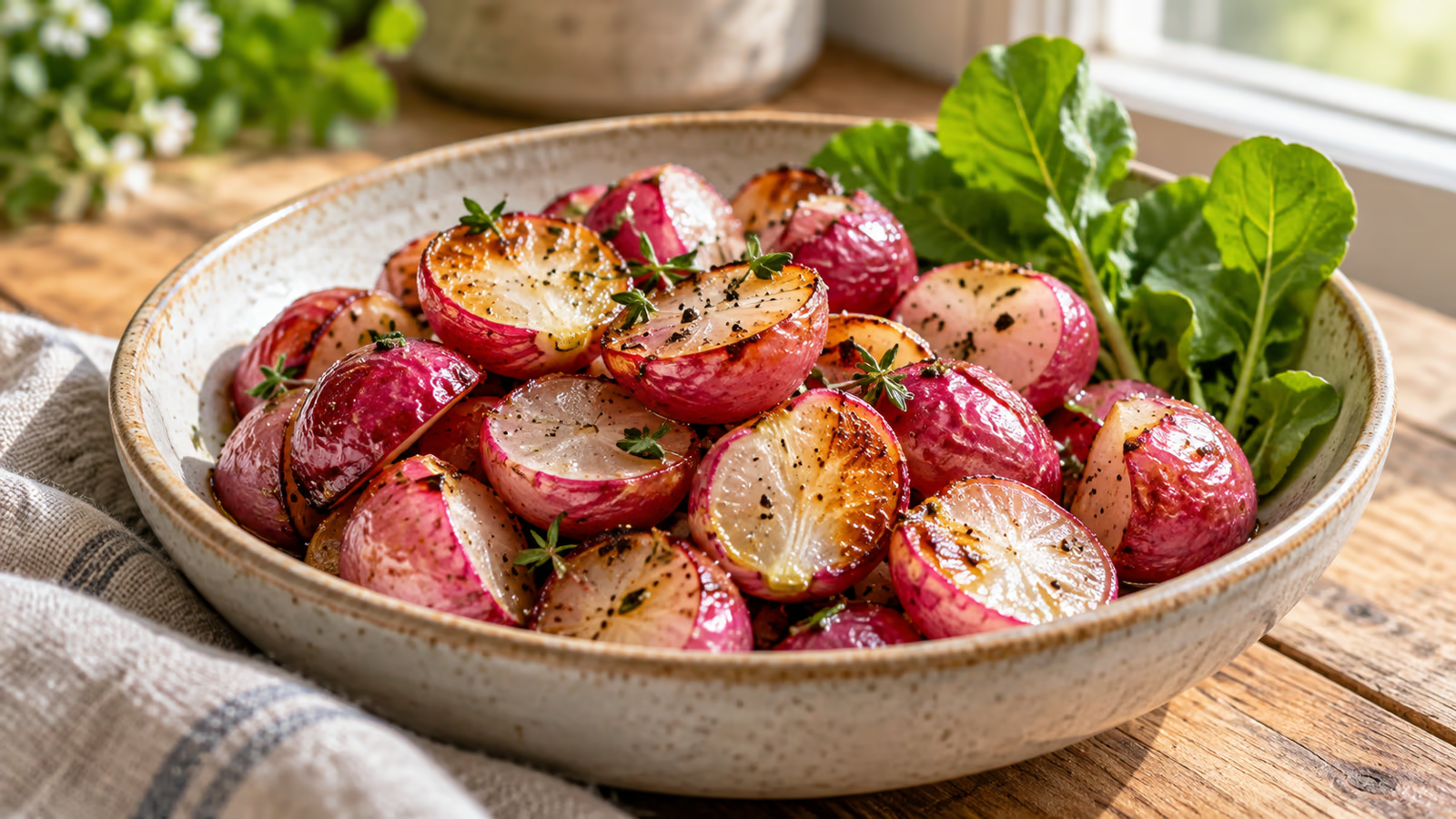
- Roasted: cut similarly sized pieces and use a recipe that gives them space on the tray. Purdue’s example uses 425°F for about 30–45 minutes, turning partway through.
- Sautéed: sliced radishes can go into a hot skillet with a little oil, then cook until the texture suits the dish.
- Greens: sound radish leaves are edible. UNH suggests steaming them or wilting them with a little oil and garlic.
For an easy flavor direction, put raw slices beside a plain-yogurt dip, or add a small handful to quinoa salad. Those are optional variations, not changes to the linked recipes’ nutrition estimates. Start with enough radish to notice, not enough to make every mouthful a dare.
Use the bunch without promising more than it offers
Radishes add vegetable variety, color and crunch. Purdue’s reference portion of one-half cup sliced raw radishes, 58 grams, supplies about 9 calories and 1 gram of fiber. Oil, butter, dips and other additions change the finished dish, so a raw-vegetable number is not a roasted-recipe calculation.
- For meal planning, reserve the tender greens for an early meal and keep the roots for later in the week.
- For quick pickles, use a reliable refrigerated-pickle recipe and keep them refrigerated. A splash of vinegar does not create a shelf-stable preserve.
- For freezing, expect disappointing raw-salad texture. Arizona Extension advises against freezing radishes because thawing leaves them soggy.
My first choice would be to split the bunch between two uses: a few raw slices for contrast, then cooked halves alongside dinner. That keeps the preparation interesting without buying a second vegetable or making a nutrition claim the radish cannot support.
For a cooked example, Becky Hays and Julia Collin Davison demonstrate roasted radishes with yogurt-tahini sauce on America’s Test Kitchen. The sauce is their recipe, not a required addition to every radish dish.
Sources
- University of Minnesota Extension: garden radishes and daikon.
- UNH Extension: radish roots, greens and cooking.
- Purdue Extension: radish preparation and nutrition.
- University of Arizona Extension: selecting and storing radishes.
- FDA: safe produce handling.

Hi, I’m Laura, the voice behind Tastiva. I’ve always believed that eating well should feel enjoyable, comforting, and realistic—not like another complicated rule to follow. I love creating recipes that fit into everyday life, sharing simple nutrition ideas, and finding small ways to make meals feel a little better without losing the pleasure of good food.