
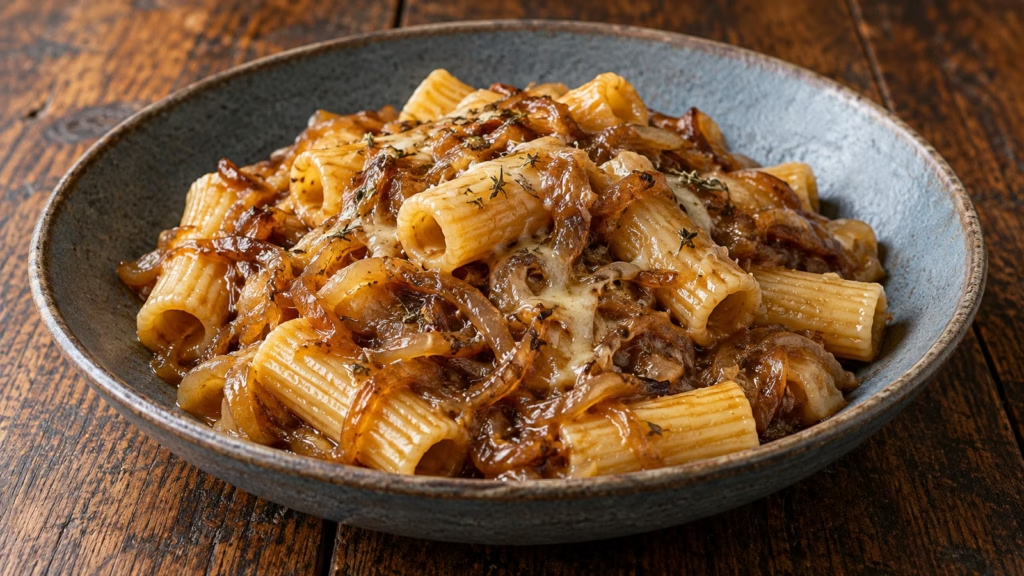
A pot full of sliced onions looks like far too much until it slowly becomes a small, golden tangle. That is the foundation of this French onion pasta: patient browning first, then rigatoni cooked in broth and finished with Gruyère. Allow about 80 minutes overall, with most of the attention going to the onions rather than an elaborate sauce.
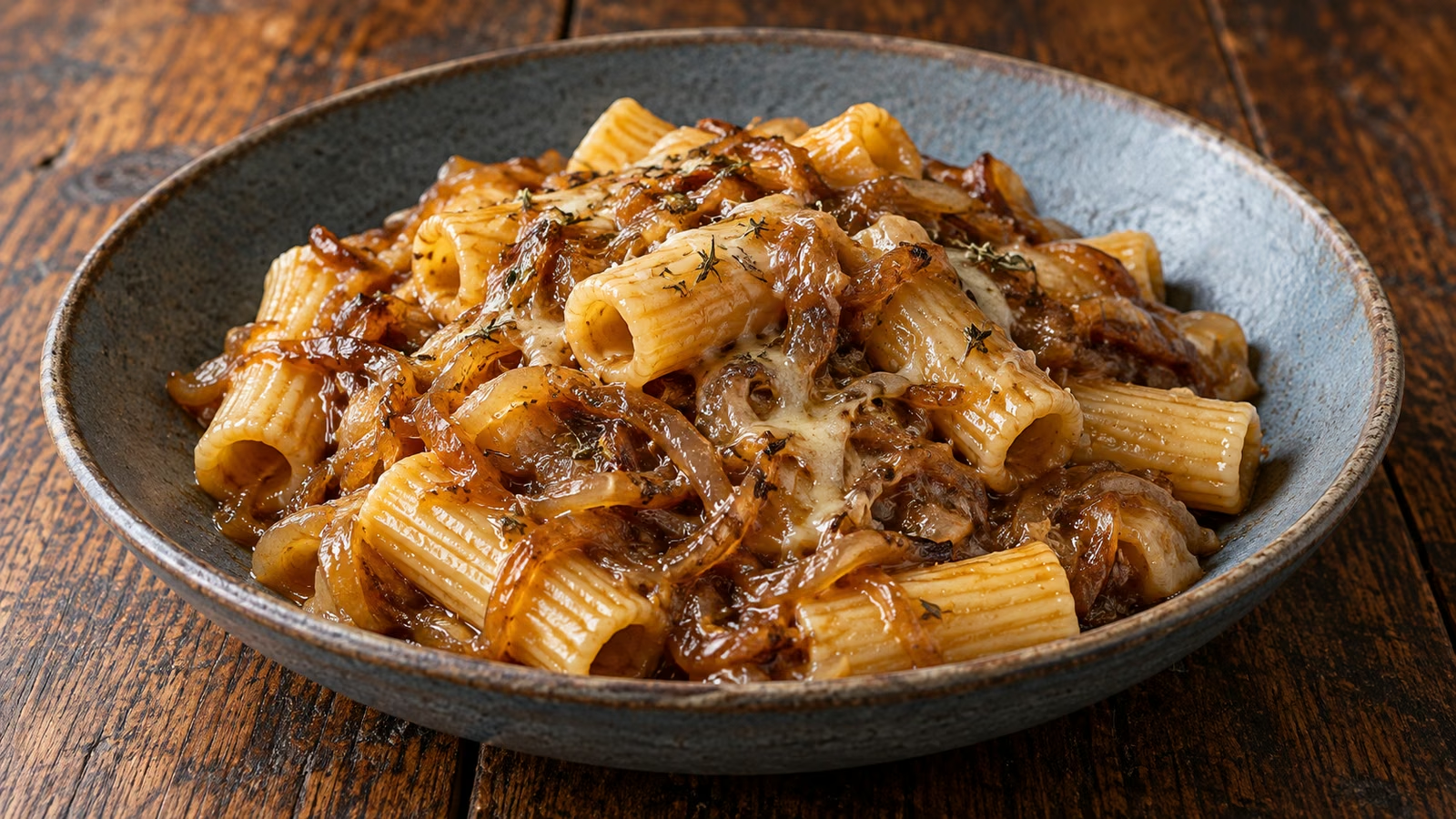
Let the onions set the pace; their color and softness tell you more than a hurried timer.
Start French onion pasta with the onions
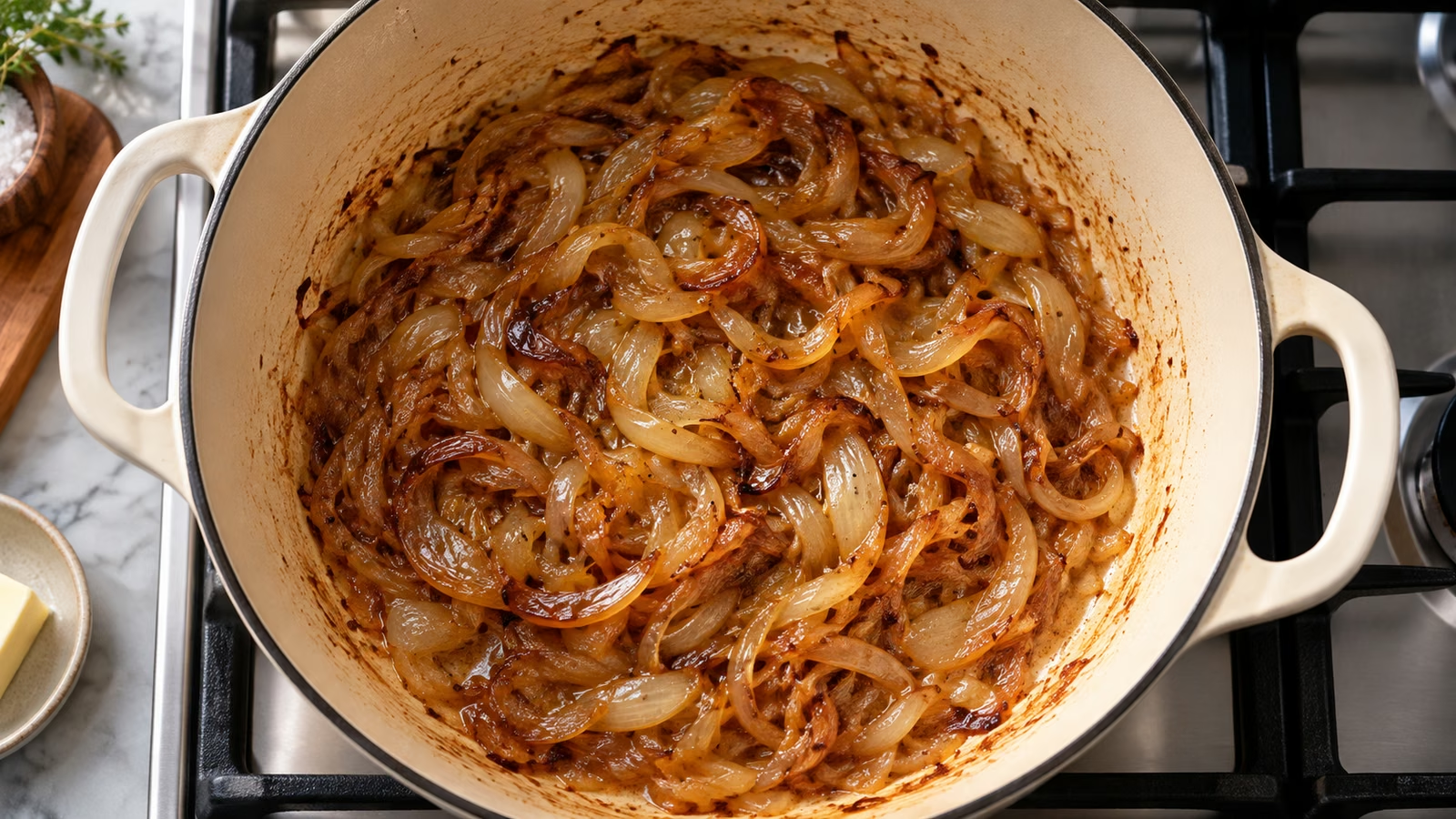
Yellow onions bring the familiar savory-sweet direction of French onion soup. Slice them evenly, about ⅛ inch (3 mm) thick, and use a wide, heavy pot. They need room to release moisture before they can develop color, although an initially full pan is normal.
The dish is an established social-media favorite; Parade’s French onion pasta coverage describes the one-pot format. This version uses Gruyère and a small vinegar finish rather than wine and cream. Its main promise is onion flavor, so I would not rush that first stage.
- Look for a deep golden color: Soft, translucent onions are only partway there. Continue until they are reduced and evenly golden-brown.
- Stir more as they darken: Early moisture offers some protection; later, the sugars and pan residue need closer attention.
- Loosen brown bits: A spoonful of water helps lift golden fond. Black, bitter patches call for lower heat rather than another spoonful of butter.
- Expect timing to vary: Onion water content, pot width and burner strength all matter. Plan on roughly 40–50 minutes for this quantity.
Manage the liquid as the rigatoni cooks
Once the onions are ready, garlic and thyme need only a brief turn in the pot. Add the broth and scrape the bottom before introducing the pasta. The liquid should move around the tubes when stirred; keep hot water nearby so you can adjust without changing the seasoning too much.
One-pot pasta requires attention because different brands and shapes absorb liquid at different rates. Start checking at the package’s earliest suggested time. The card gives a practical range, but a bite of pasta is the deciding test. A chalky center needs more cooking; tender pasta does not need extra time just because sauce remains.
- Stir down to the bottom: Rigatoni can settle against the pot. A gentle, regular stir keeps pieces moving without tearing softened onions.
- Add water gradually: Use small splashes if the pot dries while the pasta remains firm. Avoid pouring in a whole extra cup automatically.
- Keep the simmer steady: A hard boil evaporates liquid quickly and makes the bottom harder to manage.
- Choose substitutions carefully: Lentil pasta and regular pasta cook differently. Do not assume the same one-pot timing works for either.
Finish with cheese while the sauce is loose
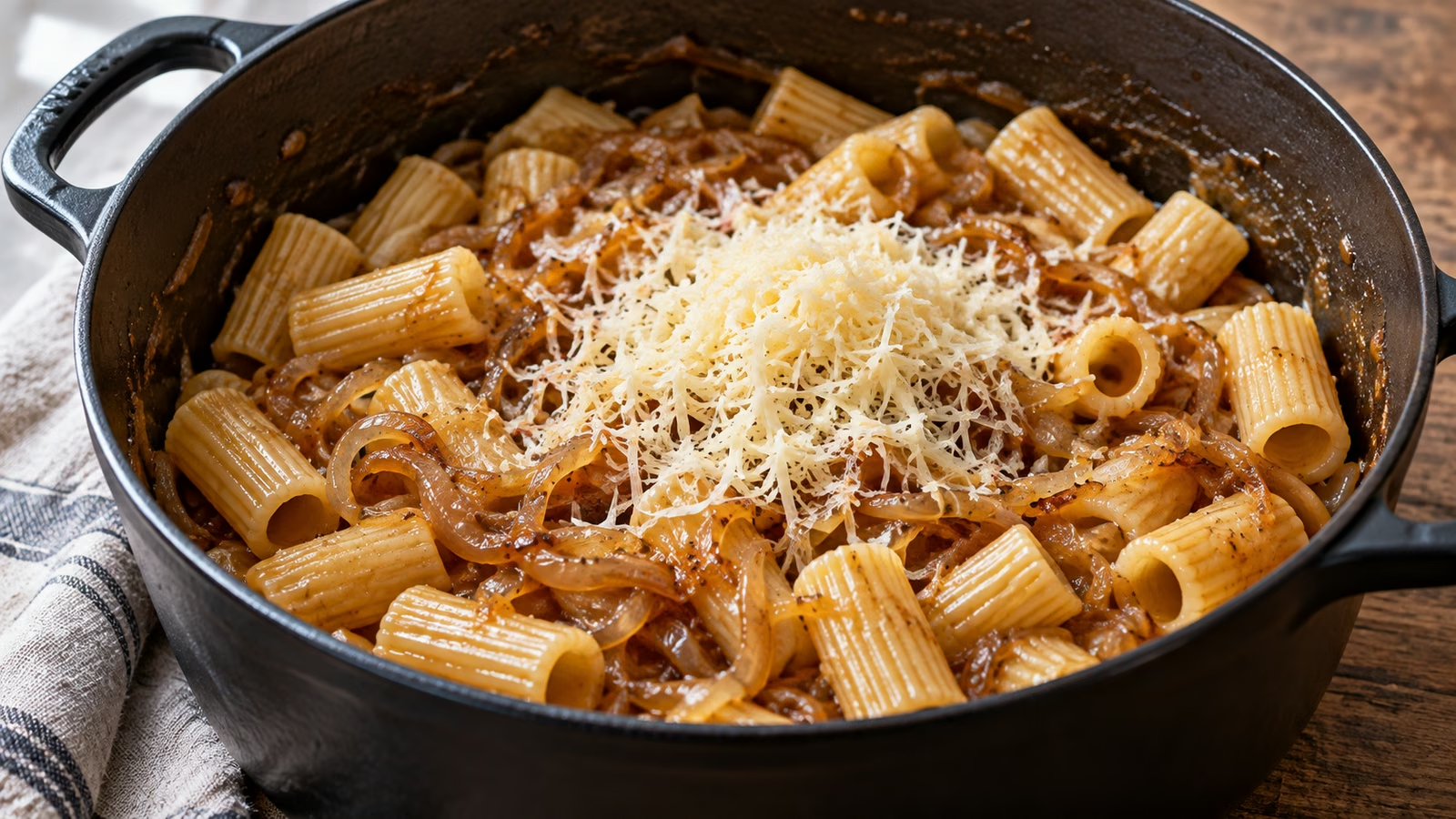
Finely grated Gruyère melts into the onion-coated pasta more readily than thick shreds. Take the pot off the heat before stirring it in, and keep a little liquid around the rigatoni. The cheese and the pasta will thicken the sauce as it stands, so a slightly loose finish is useful.
I’d serve this in shallow bowls while the sauce still coats each piece. Long cheese pulls are entertaining, but they are not the target: the onions, broth and cheese should settle into something you can spoon and eat comfortably.
- A clumpy finish: Very hot, dry pasta is harder to coat evenly. Add a splash of hot water and stir gently off the heat.
- A thin finish: Let the pot stand briefly after the cheese goes in. Avoid simmering it aggressively to force thickening.
- A heavy flavor: The measured red wine vinegar brightens the sauce. Stir it in near the end so you can judge the balance.
- Another cheese: Swiss-style cheese is a possible swap, with a milder result. Pre-shredded blends may melt less smoothly.
Serve a warm bowl and store it sensibly
The recipe makes four main-dish portions. A crisp green salad or simply cooked vegetables are useful alongside the rich onion sauce. There is no need to bake the finished pasta or add a bread-and-cheese lid; the grated cheese is already part of the sauce.
For leftovers, portion into shallow containers and refrigerate promptly. USDA recommends three to four days refrigerated for properly handled leftovers. Reheat the portion you need to 165°F (74°C), stirring and checking the center with a food thermometer.
- Allow for softer pasta: Rigatoni continues absorbing moisture in storage. Add a little water when reheating, then judge the sauce again.
- Keep the clock short: Refrigerate within two hours, or one hour when the surroundings exceed 90°F (32°C).
- For a meatless version: Use vegetable broth and cheese suitable for your dietary needs. Beef broth is used in the base recipe and nutrition estimate.
- Watch the broth label: Even reduced-sodium broth varies by brand. The estimate includes the measured salt and all the cheese; extra seasoning changes it.
French Onion Pasta Recipe

Ingredients
- 600 g yellow onions peeled weight, thinly sliced; about 3 large
- 2 tablespoons unsalted butter 28 g
- 1 tablespoon olive oil 13.5 g
- 2 cloves garlic 6 g, minced
- 1 teaspoon dried thyme 1 g
- 1/2 teaspoon black pepper 1 g
- 1/4 teaspoon fine salt 1.5 g
- 320 g dry rigatoni about 11.3 ounces
- 1000 ml reduced-sodium beef broth about 4 1/4 cups; use ready-to-serve broth
- 1 cup hot water 240 ml, plus more only as needed
- 80 g Gruyère cheese finely grated
- 2 teaspoons red wine vinegar 10 g
Equipment
- 1 wide heavy pot or Dutch oven
- 1 wooden spoon
- 1 cheese grater
- 1 Food thermometer
Instructions
- Melt butter with olive oil in a wide heavy pot over medium heat. Add onions and salt. Cook for 8–10 minutes, stirring, until starting to soften. Reduce to medium-low and continue for about 30–40 minutes, stirring more often as they color, until deeply golden and soft. Add a spoonful of water if brown fond sticks; lower heat if it blackens.
- Stir in garlic, thyme and pepper for about 1 minute. Pour in a little broth and scrape up the golden brown bits, then add the remaining broth, rigatoni and 1 cup hot water.
- Bring to a steady simmer and cook uncovered, stirring to the bottom frequently, for about 12–16 minutes or until the pasta is tender with a slight bite. Begin checking at the package’s earliest cooking time. Add small splashes of hot water if the liquid runs low before the pasta is ready.
- When the pasta is tender and a loose sauce remains, remove from the heat. Stir in vinegar, then Gruyère in several additions. Add a splash of hot water if needed so the sauce coats the pasta without clumping. Serve promptly.
Nutrition
Notes
Tried this recipe?
Let us know how it turned out!Sources
- Parade: established one-pot French onion pasta coverage
- USDA: leftovers and food safety
- USDA FoodData Central: ingredient-composition data
Hi, I’m Laura, the voice behind Tastiva. I’ve always believed that eating well should feel enjoyable, comforting, and realistic—not like another complicated rule to follow. I love creating recipes that fit into everyday life, sharing simple nutrition ideas, and finding small ways to make meals feel a little better without losing the pleasure of good food.