
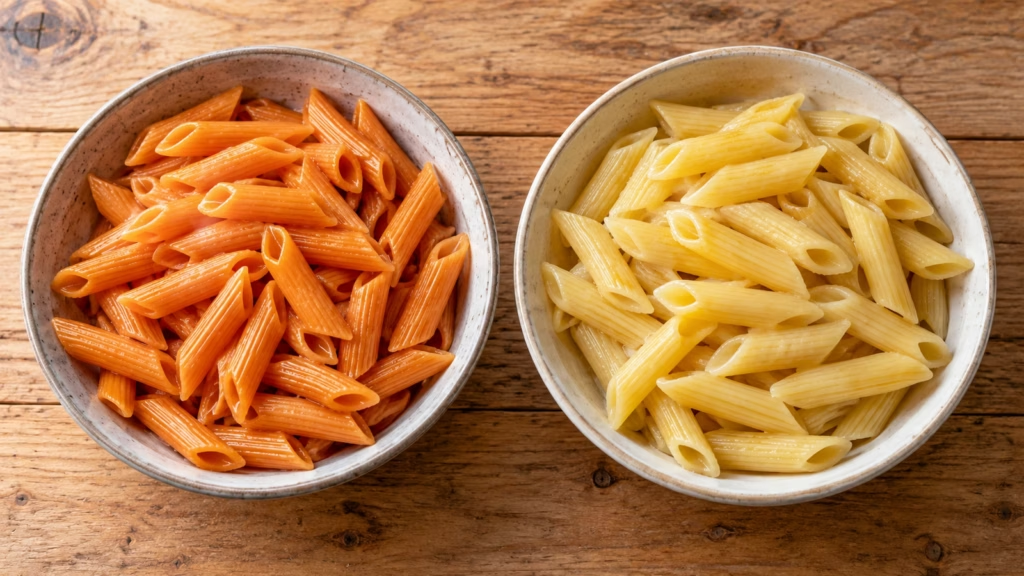
A familiar blue box and a red lentil box both promise pasta for dinner, yet lentil pasta vs regular pasta changes ingredients, nutrition, and texture. Pasta made mainly from lentil flour often offers more protein and fiber than refined wheat pasta; regular semolina pasta brings a mild flavor and familiar bite. The right choice depends on the label, the sauce, and what else is on your plate.
Choose the pasta for the meal you want, then compare matching dry portions before letting the front of the box make the decision.
Lentil pasta vs regular pasta starts with the ingredients
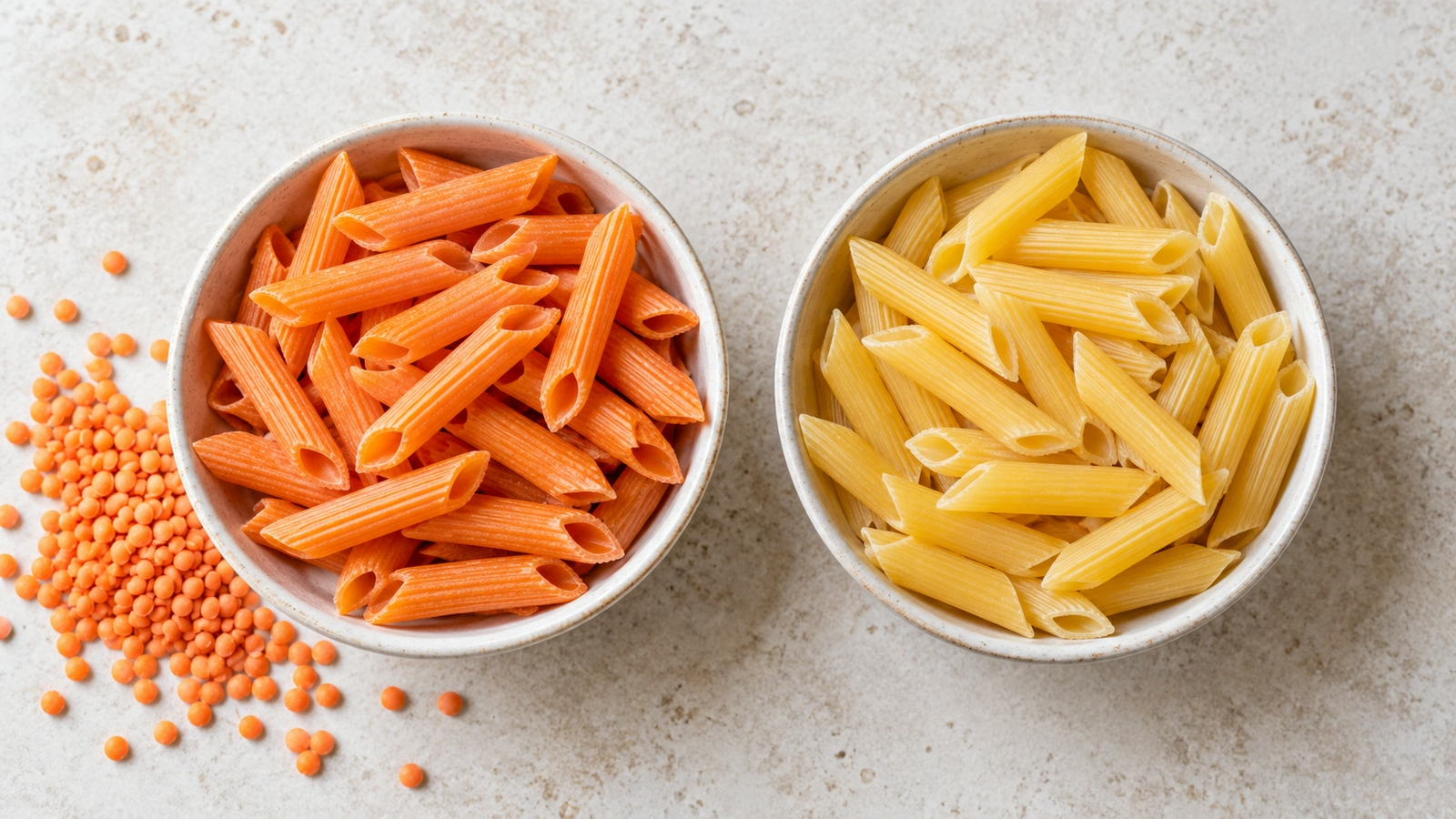
Lentil pasta is usually made with lentil flour, sometimes alongside other ingredients. For example, Barilla’s red lentil penne uses red lentils alone. Regular dried pasta commonly starts with durum wheat semolina, and enriched versions include added vitamins and minerals.
I’d turn the box over before deciding what its name means. Orange pasta is not necessarily all lentil, and a protein claim is not a gluten-free claim. If the wheat vocabulary is confusing, our durum wheat and semolina guide explains the distinction.
- Mostly lentil flour: A useful option when you want a legume-based noodle and are comfortable with its character.
- Refined semolina: A familiar starting point for delicate sauces and the classic springy pasta texture.
- Whole-wheat pasta: A separate comparison worth making if fiber is your priority; do not group every wheat pasta together.
- Blended protein pasta: Check the full ingredient list. Lentils in the formula do not make the wheat disappear.
Compare protein and fiber on equal dry portions
For a useful nutrition comparison, match the gram weights on the Nutrition Facts panels, using dry pasta against dry pasta. A cooked cup includes absorbed water, and different shapes do not pack into a cup identically. The FDA explains that serving sizes describe amounts typically eaten; they are not instructions about how much you personally must eat.
More protein or fiber can be a useful reason to try lentil pasta, but it does not turn the entire meal into something else. Lentil pasta still contains carbohydrate, and enriched wheat pasta also supplies nutrients. I’d compare the actual boxes you are considering rather than borrow numbers from a different shape, formula, or serving size.
| What to compare | Why it matters |
|---|---|
| Dry serving weight in grams | Make this match before comparing nutrients. |
| Protein and dietary fiber | Look at grams, not only front-label promises. |
| Total carbohydrate and calories | Higher protein does not automatically mean very low carb. |
| Ingredients and added nutrients | All-lentil, blended, enriched, and whole-wheat formulas differ. |
If one label uses 2 ounces and another uses 3.5 ounces, their headline numbers are not directly comparable. Use the panels’ gram weights and adjust consistently, or choose two products listing the same dry amount. Then consider the sauce and additions: vegetables, beans, tofu, fish, or chicken change the complete bowl more than a package slogan can.
Expect a different bite and give the pot your attention
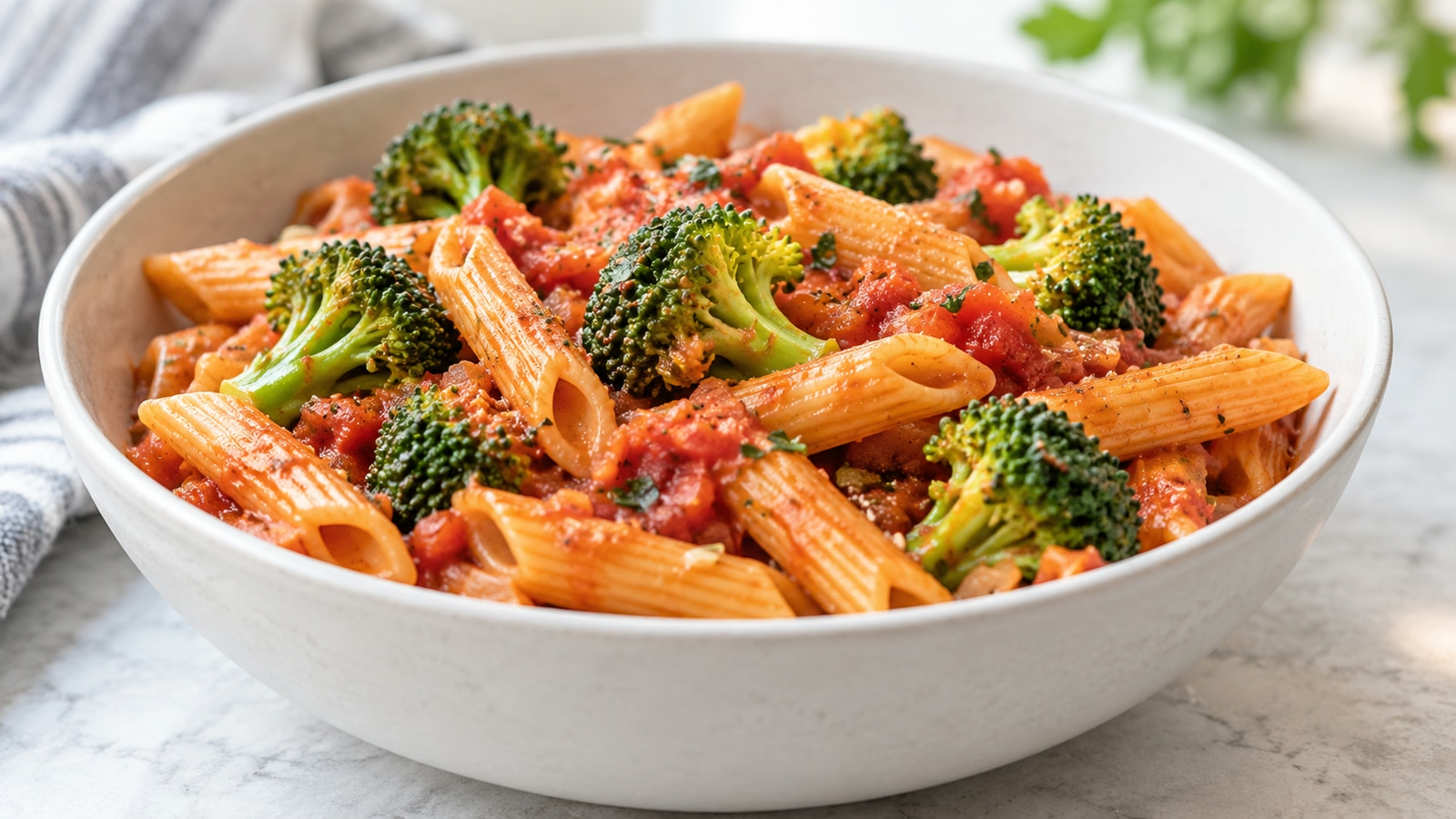
Lentil flour does not reproduce wheat pasta’s texture exactly, and flavor and firmness vary by brand. I’d start with a short shape and a sauce you already enjoy, so you are judging one change at a time. Tomato, mushrooms, and roasted vegetables are sensible flavor partners for an earthy noodle; a very subtle butter sauce puts that difference front and center.
Use the instructions for the box in your hand rather than the timing you remember for spaghetti. Barilla lists 8–10 minutes for its red lentil penne and 11–12 for its classic penne, illustrating why the name “penne” does not establish a universal cooking time. Start checking within the package’s suggested window and pay attention to the center and surface.
- Stir gently: Separate the pieces early, then avoid vigorous stirring that damages tender pasta.
- Have the sauce ready: Drain when the texture suits you and combine promptly rather than leaving a hot mound waiting.
- Reserve a little water: Add it gradually if the sauce needs loosening; its thickening effect can differ between formulas.
- Plan further cooking: A bake or a simmer in sauce adds heat. Follow a recipe designed for the pasta you use instead of assuming an unchanged swap.
Choose for your needs, budget, and the whole bowl
For celiac disease, look for an appropriate gluten-free claim on the actual product and manage kitchen cross-contact. The FDA’s gluten-free labeling rules concern gluten content, not whether a food has more protein or fiber. Our gluten-free noodle guide covers other bases when you need more options.
You also get to care about enjoyment and cost. Compare price per ounce and the portions you actually use; I would not pay extra for a pasta that leaves dinner unfinished simply because its label looks impressive. Choosing regular pasta and adding beans or another protein is a practical alternative, not a failed shopping decision.
- Want more protein and fiber in the noodle itself? Compare lentil and whole-wheat options against your usual box.
- Want the most familiar flavor? Regular semolina pasta may be the easier fit, with other ingredients rounding out the meal.
- Need strict gluten avoidance? Use labeling and preparation precautions; do not rely on “lentil” or “protein” alone.
- Want to try without committing? Buy one box and choose a forgiving sauce. Texture preferences are allowed to have a vote.
For a practical look at cooking lentil pasta, The Culinary Institute of America demonstrates red lentil penne with sofrito, chard, and chorizo. This Barilla-sponsored recipe is one serving idea, rather than a head-to-head nutrition comparison.
Sources
- Barilla: Red Lentil Penne
- Barilla: Classic Penne
- FDA: How to Understand and Use the Nutrition Facts Label
- FDA: Gluten and Food Labeling

Hi, I’m Laura, the voice behind Tastiva. I’ve always believed that eating well should feel enjoyable, comforting, and realistic—not like another complicated rule to follow. I love creating recipes that fit into everyday life, sharing simple nutrition ideas, and finding small ways to make meals feel a little better without losing the pleasure of good food.