
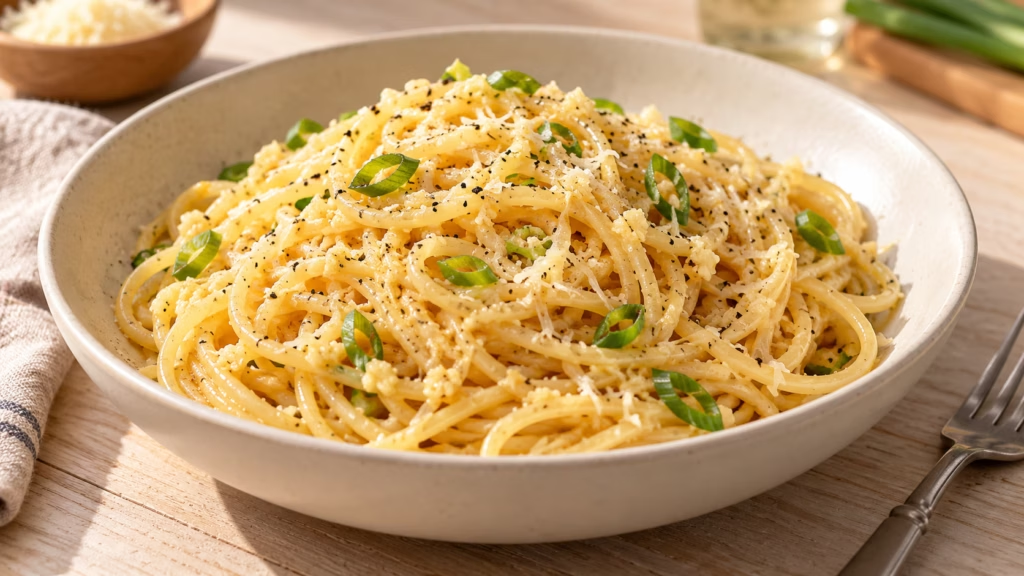
The noodles are ready, the butter smells inviting, and there is one small decision left: drain every drop of water, or save some? For these garlic butter noodles, keep a mugful. A little cloudy cooking water helps the buttery sauce cling to the spaghetti, while gentle heat keeps the minced garlic fragrant instead of harsh.
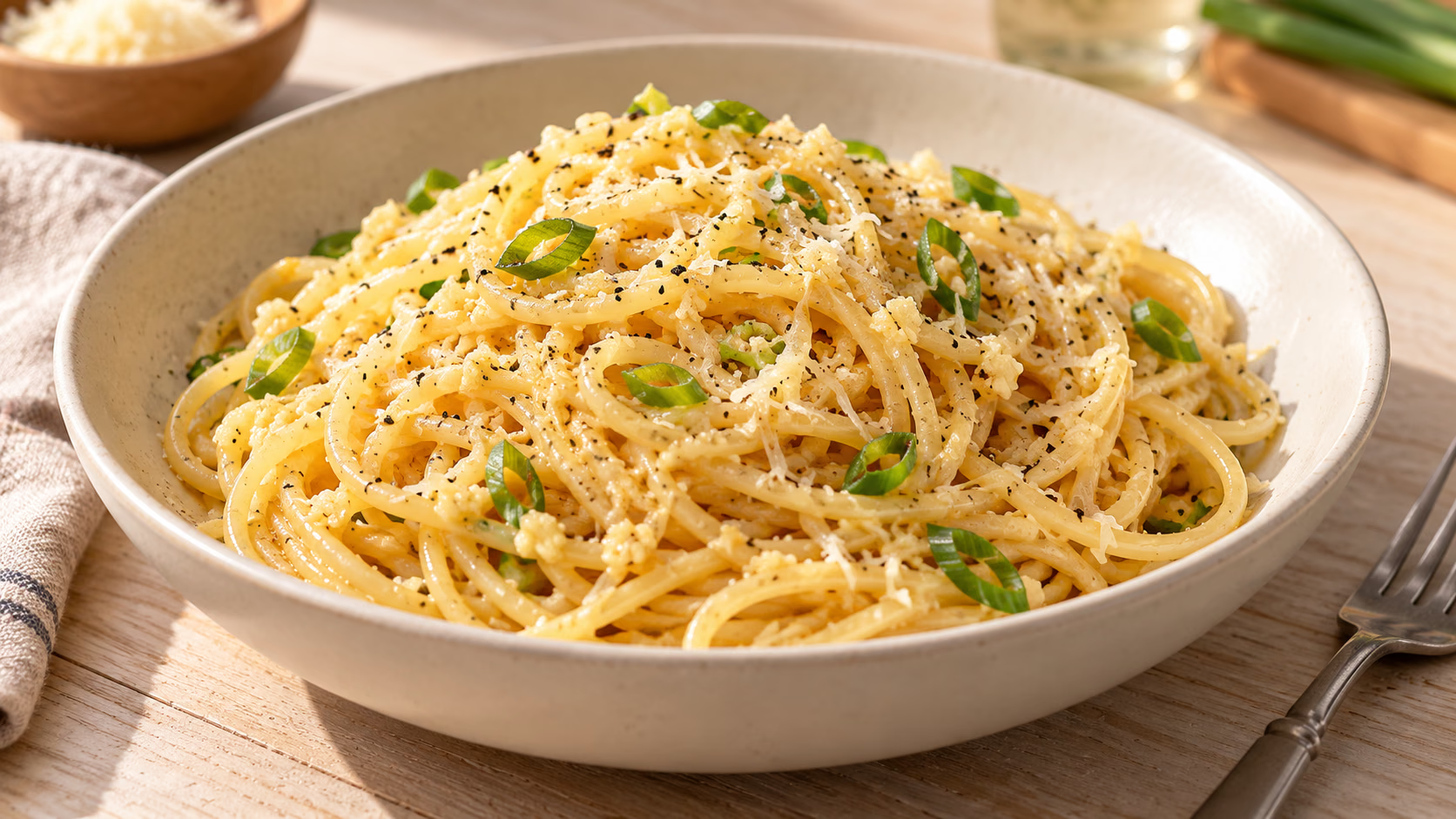
Keep the garlic gentle and a little pasta water nearby: the goal is noodles coated in sauce, not noodles sitting in butter.
Garlic butter noodles with a savory edge
This is the San Francisco-style branch of garlic noodles, with soy sauce, oyster sauce and Parmesan joining the butter, rather than a plain Italian buttered pasta. The card follows Chef John’s published Allrecipes ingredient proportions, divided into four side portions. It is an adaptation, not a claim to recreate a restaurant’s guarded formula.
I would choose this as the flavor-forward part of a simple dinner. Because several bottled sauces share the work, the useful restraint is at the salt shaker: finish the noodles before deciding whether they need any extra seasoning.
- Use spaghetti for the measurements below. If you choose another noodle, follow its package timing rather than assuming every strand cooks alike.
- Prepare the sauce before heating the butter. Once the garlic is in the skillet, measuring four bottles is an unnecessary juggling act.
- Measure the cheese after finely grating it, without packing the cup tightly. Thick shreds are less helpful when you want a light, even coating.
Let the garlic soften, not scorch
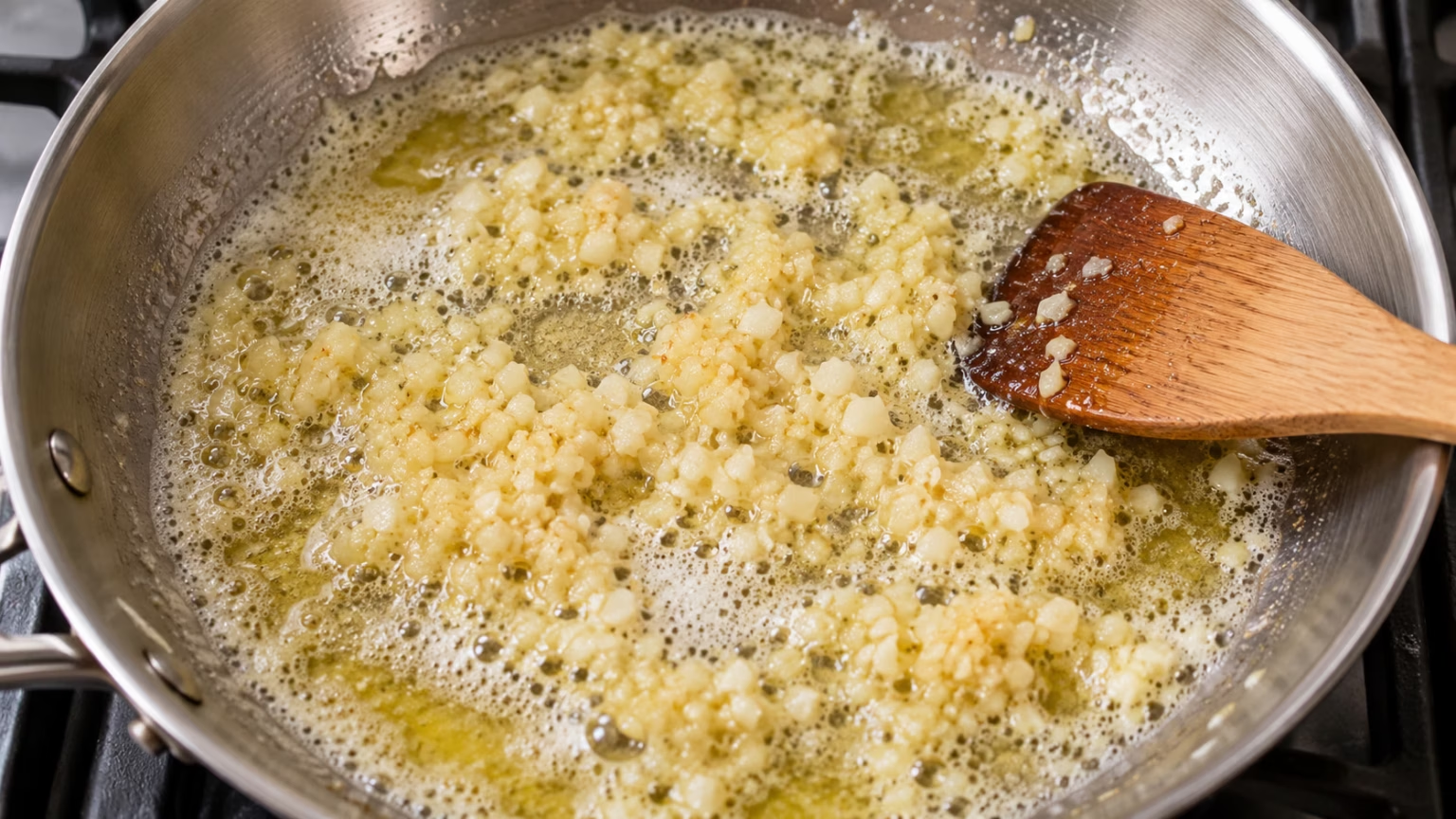
A wide skillet gives you space to move the garlic and later toss the noodles. Start with medium-low heat and watch the smallest pieces. You want a gentle sizzle and a fragrant, pale mixture; deep brown bits are a different flavor direction, and black specks mean it is time to start the butter-and-garlic base again.
Fresh garlic is worth the chopping here because it is the point of the dish, not a background seasoning. I prefer a fine, fairly even mince over a paste: small pieces distribute through the noodles, while a paste needs especially close attention in the pan.
- If the butter is smoking before the garlic goes in, move the pan off the burner and let it cool.
- Stir across the whole pan, including its edges, so tiny pieces do not sit in a hot spot.
- Once you add the prepared sauce, take the skillet off the heat. There is no benefit to reducing it into a salty glaze while the pasta finishes.
Finish with water before adding more butter
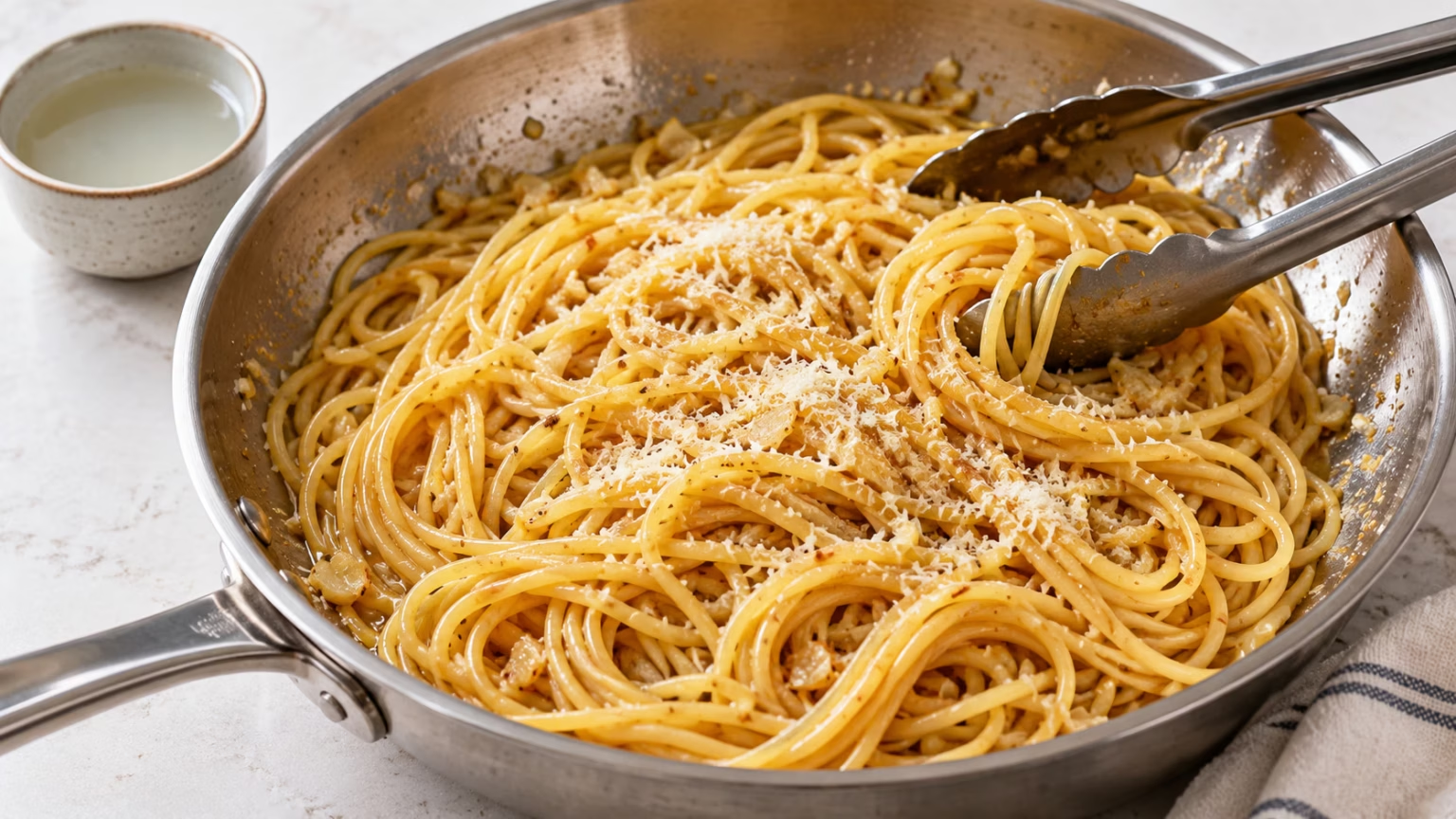
Transfer the cooked spaghetti while it is still wet, then toss before judging the sauce. Add the cheese with the pan off the heat and loosen the mixture a spoonful at a time. The noodles should separate easily when lifted, with a thin sheen rather than a deep pool beneath them.
| What you see | What to do |
|---|---|
| Dry, sticky strands | Add one tablespoon pasta water; toss again. |
| Butter collecting below | Toss with a little warm water before adding fat. |
| Very loose sauce | Toss briefly over low heat, watching closely. |
| Cheese gathering in clumps | Remove heat; loosen gently with warm water. |
Keep the reserved water until everyone has been served. Pasta can tighten as it stands, and a small splash is easier than trying to rescue a sticky skillet with another knob of butter. The stove does not need to be at full power to feel productive.
Make it a side, and store it safely
Serve four modest portions beside a simply cooked protein and vegetables. Tastiva’s Parmesan roasted frozen broccoli offers a contrasting golden crumb topping; start it first so the noodles can go straight to the table. With two larger portions instead, the estimated nutrition per portion doubles.
These noodles contain several common allergens, including wheat, milk, soy, fish, sesame and oyster ingredients. Check the sauce labels rather than treating a single substitution as an allergy-safe conversion. The card’s nutrition is a portion-adjusted source estimate, not a laboratory measurement; different brands and cooking-water salt change the result.
- Refrigerate leftovers in a shallow covered container within two hours, or within one hour when temperatures exceed 90°F.
- Use refrigerated leftovers within three to four days, following USDA guidance.
- Reheat with a little water until the noodles reach 165°F. Expect a softer texture than freshly tossed pasta.
Garlic Butter Noodles Recipe

Ingredients
- 2 tablespoons soy sauce
- 1 tablespoon oyster sauce
- 2 teaspoons Worcestershire sauce
- 2 teaspoons fish sauce
- 1/4 teaspoon sesame oil
- 1 pinch cayenne pepper
- 6 ounces dry spaghetti 170 g
- 4 tablespoons unsalted butter 56 g
- 8 garlic cloves finely minced
- 1/4 cup finely grated Parmigiano-Reggiano
- 1 tablespoon chopped green onion
- 1 pinch red pepper flakes or black pepper
- 1/2 cup reserved pasta cooking water use only as needed
Equipment
- Large pot
- wide skillet
- Tongs
- Fine grater
- small bowl
Instructions
- Combine the soy, oyster, Worcestershire and fish sauces with sesame oil and cayenne in a small bowl. Mince the garlic and finely grate the cheese before heating the skillet.
- Bring a pot of water to a boil. Cook the spaghetti according to its package, stopping when it is tender with a little resistance in the center. Reserve 1/2 cup of the cloudy cooking water.
- Meanwhile, melt the unsalted butter in a wide skillet over medium-low heat. Stir in the garlic for about 1 minute, just until fragrant and softened; lower the heat if it colors quickly. Stir in the mixed sauces, then take the skillet off the heat.
- Lift the cooked spaghetti into the skillet with tongs, allowing a little cooking water to come along. Toss thoroughly. Add the finely grated cheese in two additions, tossing between each, with the skillet off the heat.
- If the noodles look dry or greasy rather than lightly coated, add the reserved water 1 tablespoon at a time while tossing. Use only enough for a glossy coating. Divide into four side portions and finish with green onion and a pinch of red pepper flakes or black pepper. Serve promptly.
Nutrition
Video
Notes
Tried this recipe?
Let us know how it turned out!Sources
- Chef John at Allrecipes: ingredient formula and nutrition estimate
- Food Wishes: garlic-noodle background and companion video
- USDA: leftover storage and reheating guidance
Hi, I’m Laura, the voice behind Tastiva. I’ve always believed that eating well should feel enjoyable, comforting, and realistic—not like another complicated rule to follow. I love creating recipes that fit into everyday life, sharing simple nutrition ideas, and finding small ways to make meals feel a little better without losing the pleasure of good food.