
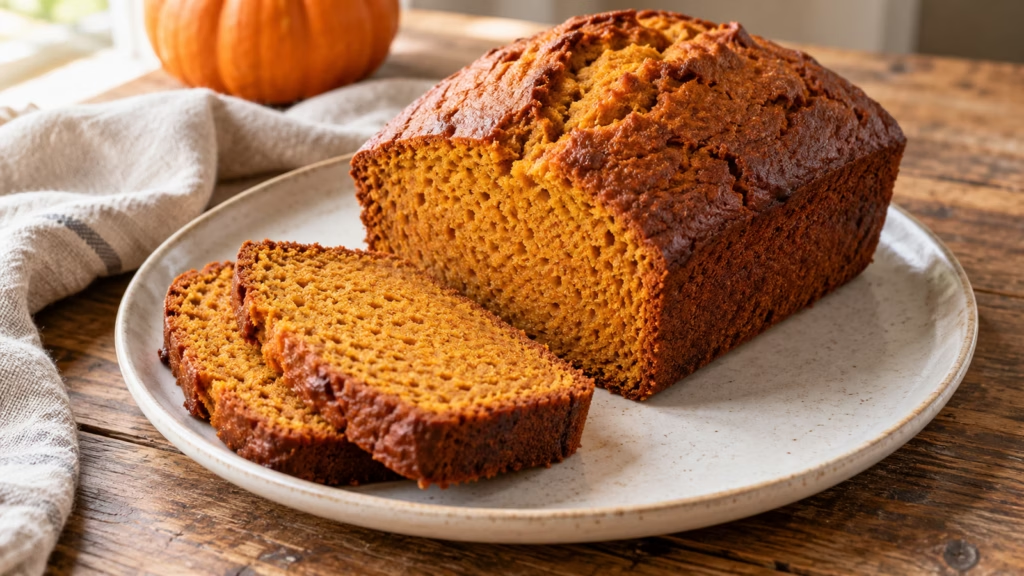
Pumpkin bread can look ready long before its middle catches up. The top is brown, the kitchen smells like cinnamon, and the temptation is to call it done. Give the center the deciding vote instead: check for unbaked batter before the loaf leaves the oven, then let it cool before slicing.
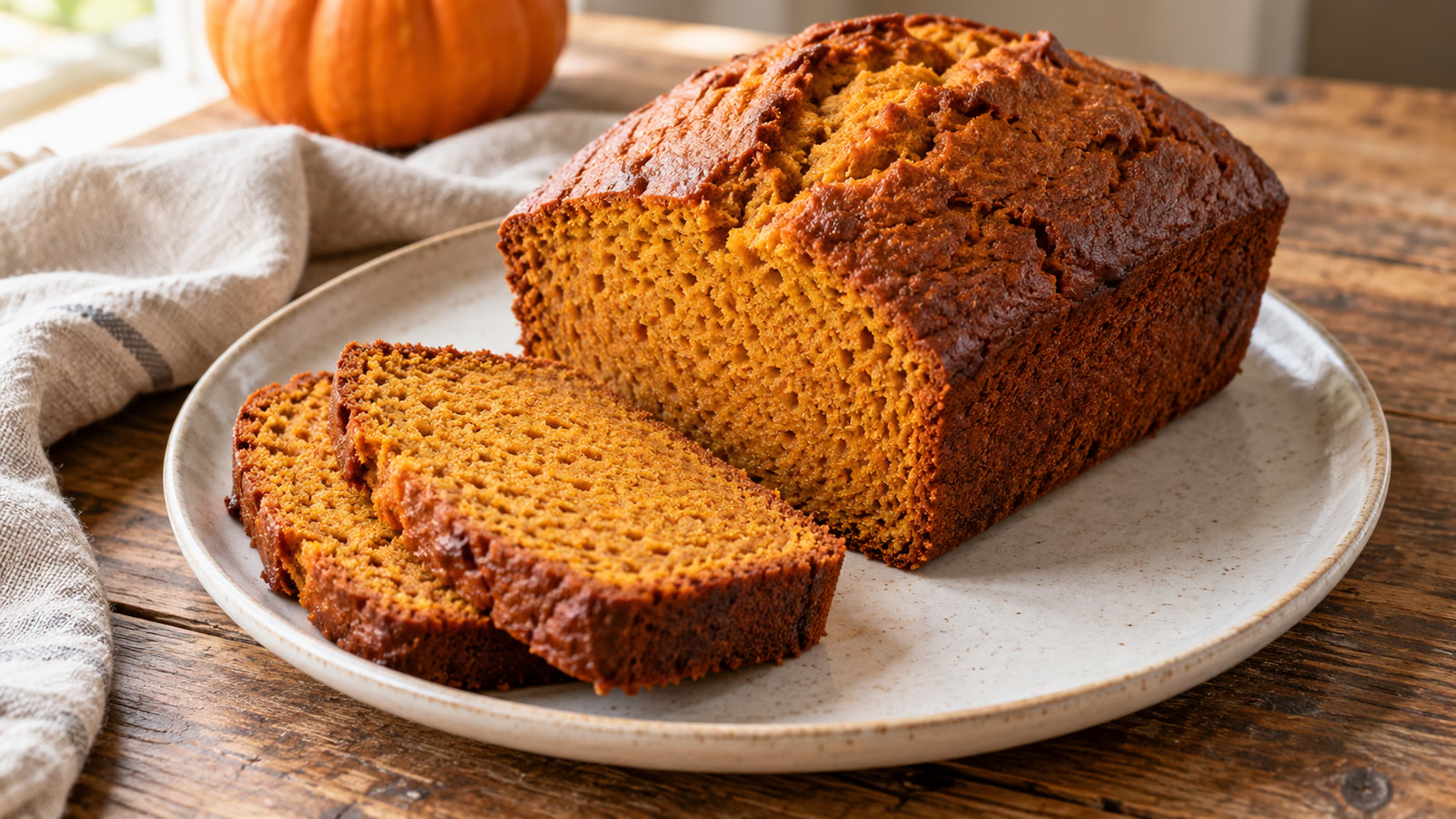
A browned crust tells you about the outside. A check through the center tells you whether pumpkin bread is ready to come out.
Choose plain pumpkin and measure before mixing
Start with the can’s ingredient list, not the pie pictured on its label. Plain pumpkin and sweetened pumpkin pie mix are different products; the mix already contains sugar and spices. Using it in a recipe written for plain purée changes what goes into the bowl before you have measured anything else.
I would keep this first loaf straightforward rather than trying to solve several substitutions at once. Use the listed ingredients, keep the seasonings separate, and save experiments for another bake. Our guide to canned pumpkin versus pumpkin pie filling can help if the labels look confusing.
- Measure the pumpkin the recipe requests, rather than assuming a can equals one portion.
- Keep unused purée covered and refrigerated promptly. USDA’s guidance for opened canned pumpkin is 3 to 4 days in the refrigerator; follow any shorter package instruction.
- Label saved pumpkin with the amount and date. That small step makes it useful for a later recipe instead of a mystery orange container.
- Freeze portions you will not use in time, leaving expansion space. Small measured portions are easier to use than one large frozen block.
Set up the pan before the batter
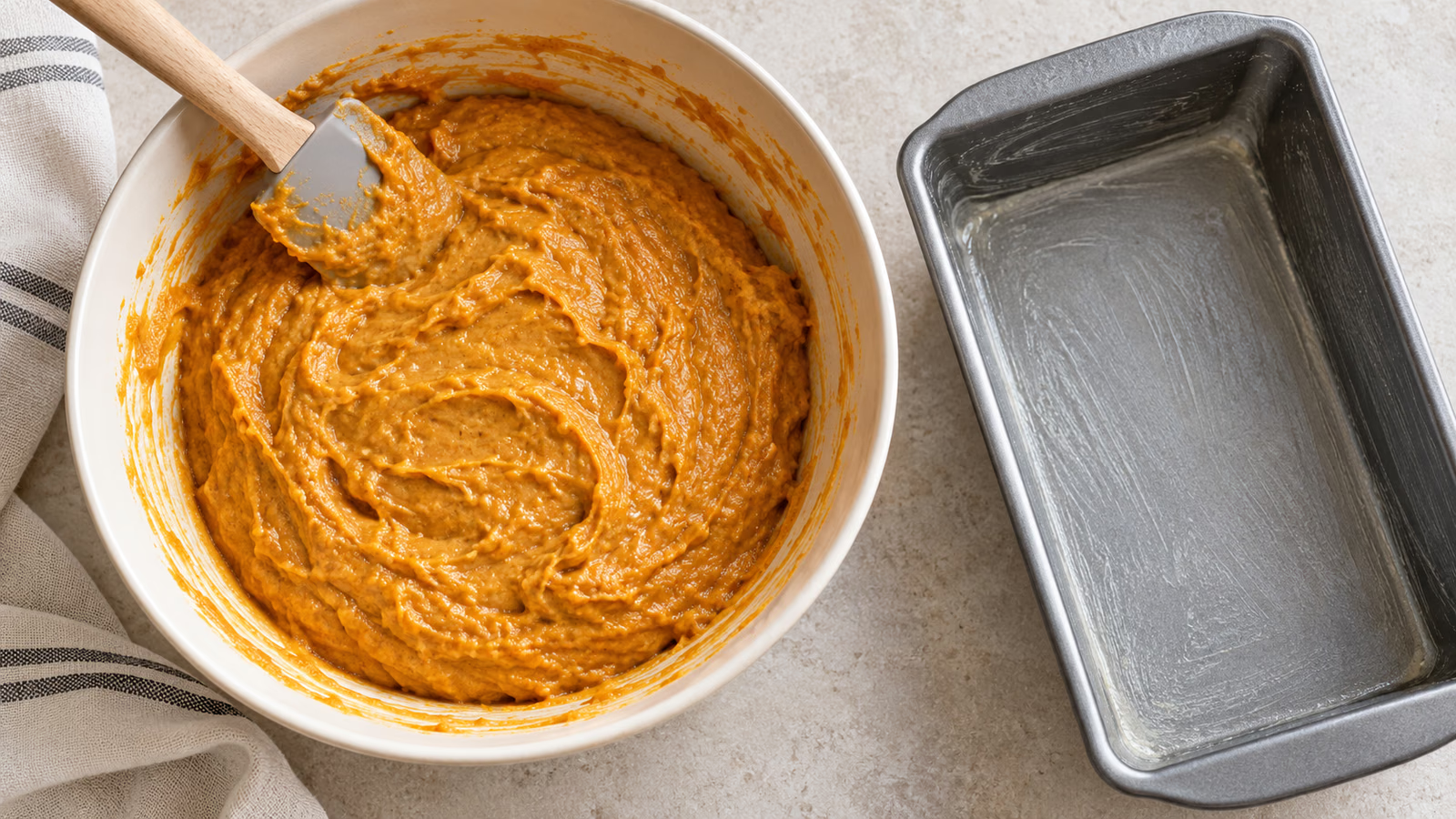
Read through the card once, then put the pan, bowls, whisk, spatula, and measuring tools within reach. I’d rather notice a missing ingredient now than with wet ingredients waiting on the counter. A little organization is especially useful when both baking powder and baking soda appear in the same list.
Use the pan dimensions specified below instead of judging by how similar two pans look. King Arthur’s recipe guidance recommends matching the stated pan and ingredients; changes can affect the result. This is not the moment to turn one loaf into an improvised tray bake and expect the same timing.
- Weigh flour when possible. Otherwise spoon it gently into a dry measuring cup and sweep the top level.
- Read liquid measurements at eye level, with the cup resting on a level surface.
- Keep teaspoons and tablespoons distinct, and use level measures where the recipe does not say otherwise.
- Grease the pan thoroughly, including the corners, before filling it.
- Combine the ingredients as directed rather than treating mixing, beating, and whipping as interchangeable instructions.
Check the middle, not just the color
Near the expected finishing time, test the center rather than a shallow spot beside the edge. King Arthur’s pumpkin-bread recipe also checks just beneath the top for uncooked batter. That second location matters when the outside looks convincing but the upper middle still needs time.
For another check, King Arthur’s quick-bread guidance gives 200–205°F (93–96°C) as a finished-center range for standard quick breads. Treat that as supporting guidance alongside the recipe’s visual checks, not a reason to stop examining the loaf. A thermometer touching the pan is not measuring the center.
- Wet batter on the tester: keep baking, then check again.
- A top getting too dark: shield it loosely with foil while the middle finishes.
- Repeatedly unexpected baking times: check actual oven temperature with a separate oven thermometer.
- A successful bake: note the pan and actual time for your next loaf.
Cool, slice, and plan the leftovers
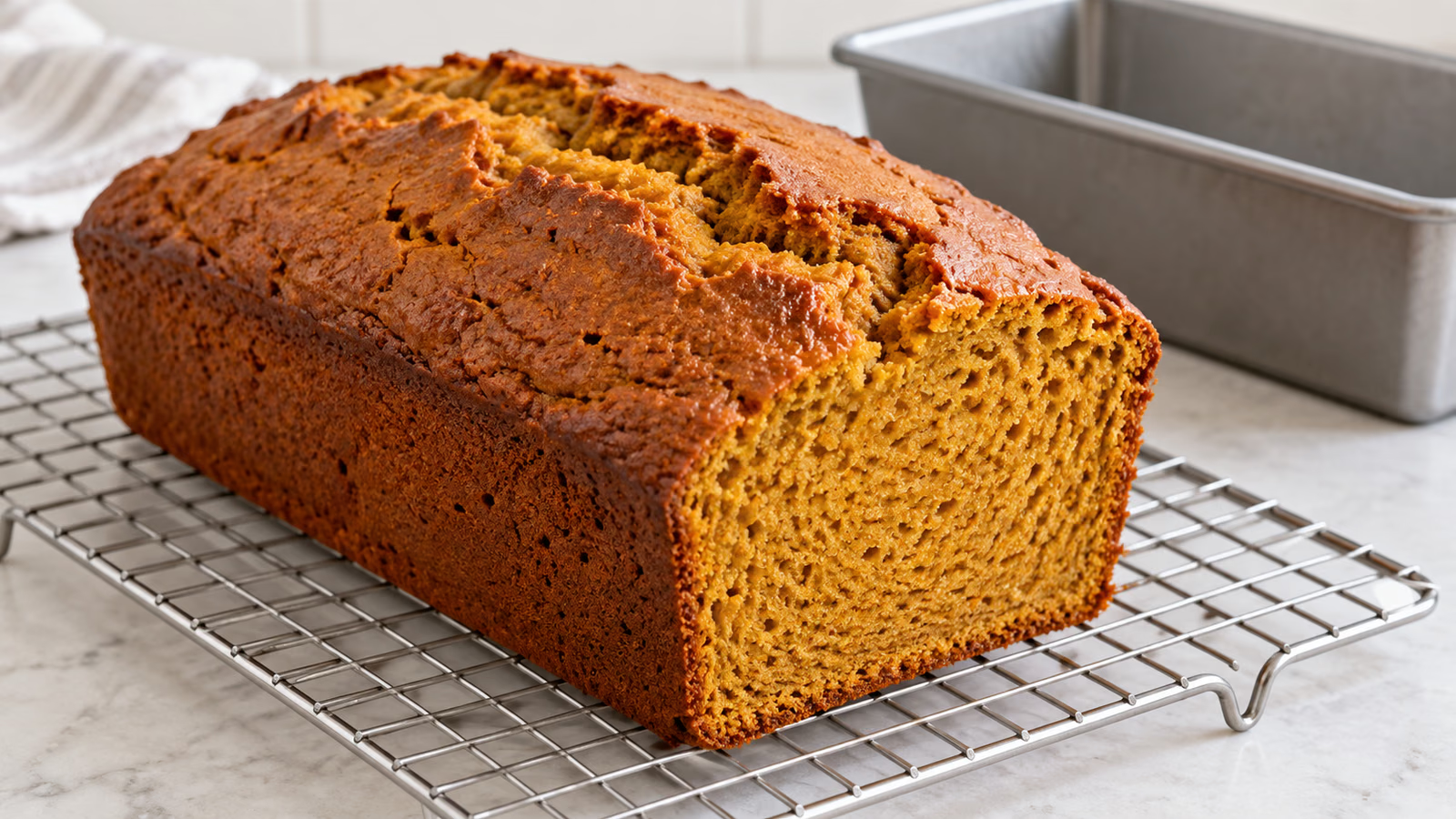
Let the loaf cool completely before wrapping it. King Arthur recommends this for its pumpkin bread and notes that resting can help the texture settle. If you are baking for tomorrow, there is no need to rush straight from oven to serving plate.
For serving, I’d start with a plain slice and put any extras on the table. Butter, a spoonful of yogurt, or fresh fruit can be separate choices rather than additions everyone has to share. Coffee or tea needs no elaborate pairing plan; the loaf can stay the main event.
- Wrap cooled bread well for short-term storage; freeze what you will not use soon.
- Divide the loaf into portions that fit how you eat it, not just how neatly it fits a container.
- Remember that the nutrition estimate below is for the plain bread. Toppings and larger slices change the numbers.
Pumpkin Bread Recipe

Ingredients
- 1 3/4 cups all-purpose flour 210 g
- 1 teaspoon baking soda
- 1/2 teaspoon baking powder
- 1/2 teaspoon salt
- 2 teaspoons ground cinnamon
- 1/4 teaspoon grated nutmeg
- 1 1/3 cups plain pumpkin purée 300 g; not pumpkin pie filling
- 1 1/4 cups granulated sugar 250 g
- 2/3 cup vegetable oil 160 ml
- 2 large eggs
- 1 teaspoon vanilla extract
- baking spray for the pan
Equipment
- 9×5-inch loaf pan
- Mixing bowls
- Whisk
- Spatula
- cooling rack
Instructions
- Heat oven to 350°F (175°C). Grease a 9×5-inch loaf pan.
- Whisk flour, baking soda, baking powder, salt, cinnamon and nutmeg in one bowl. In another, whisk pumpkin, sugar, oil, eggs and vanilla.
- Fold wet mixture into dry until incorporated; transfer to pan.
- Bake approximately 60 minutes. Check for moist crumbs without wet batter and a springy center. Shield a darkening top loosely with foil.
- Rest in pan 15 minutes. Unmold onto a rack; cool completely before slicing.
Nutrition
Video
Notes
Tried this recipe?
Let us know how it turned out!Sources
- Preppy Kitchen: pumpkin bread formula and nutrition estimate
- USDA: opened canned-food storage
- King Arthur: recipe measurements and equipment
- King Arthur: pumpkin bread, cooling, and storage
- King Arthur: checking quick-bread doneness
Hi, I’m Laura, the voice behind Tastiva. I’ve always believed that eating well should feel enjoyable, comforting, and realistic—not like another complicated rule to follow. I love creating recipes that fit into everyday life, sharing simple nutrition ideas, and finding small ways to make meals feel a little better without losing the pleasure of good food.