
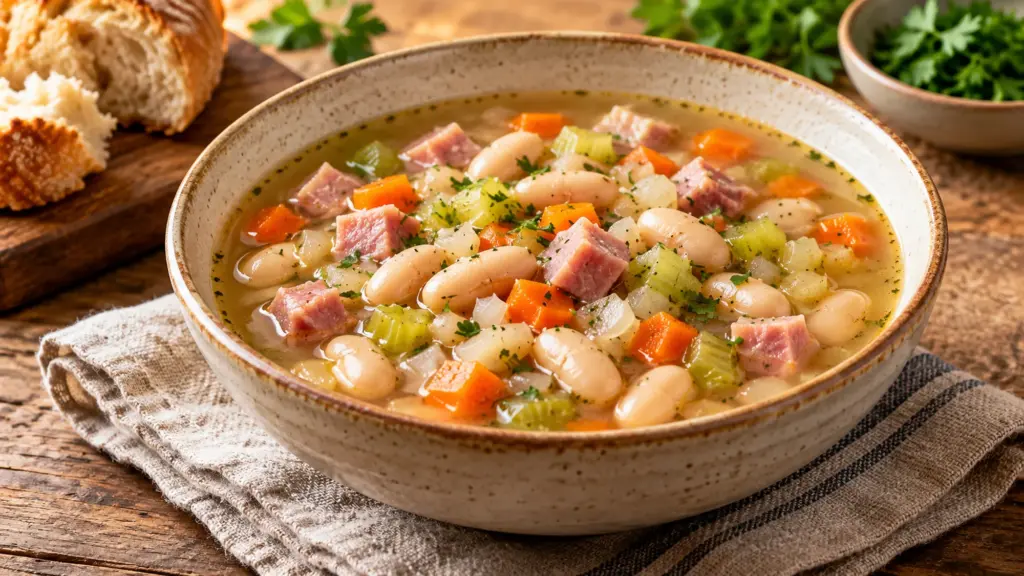
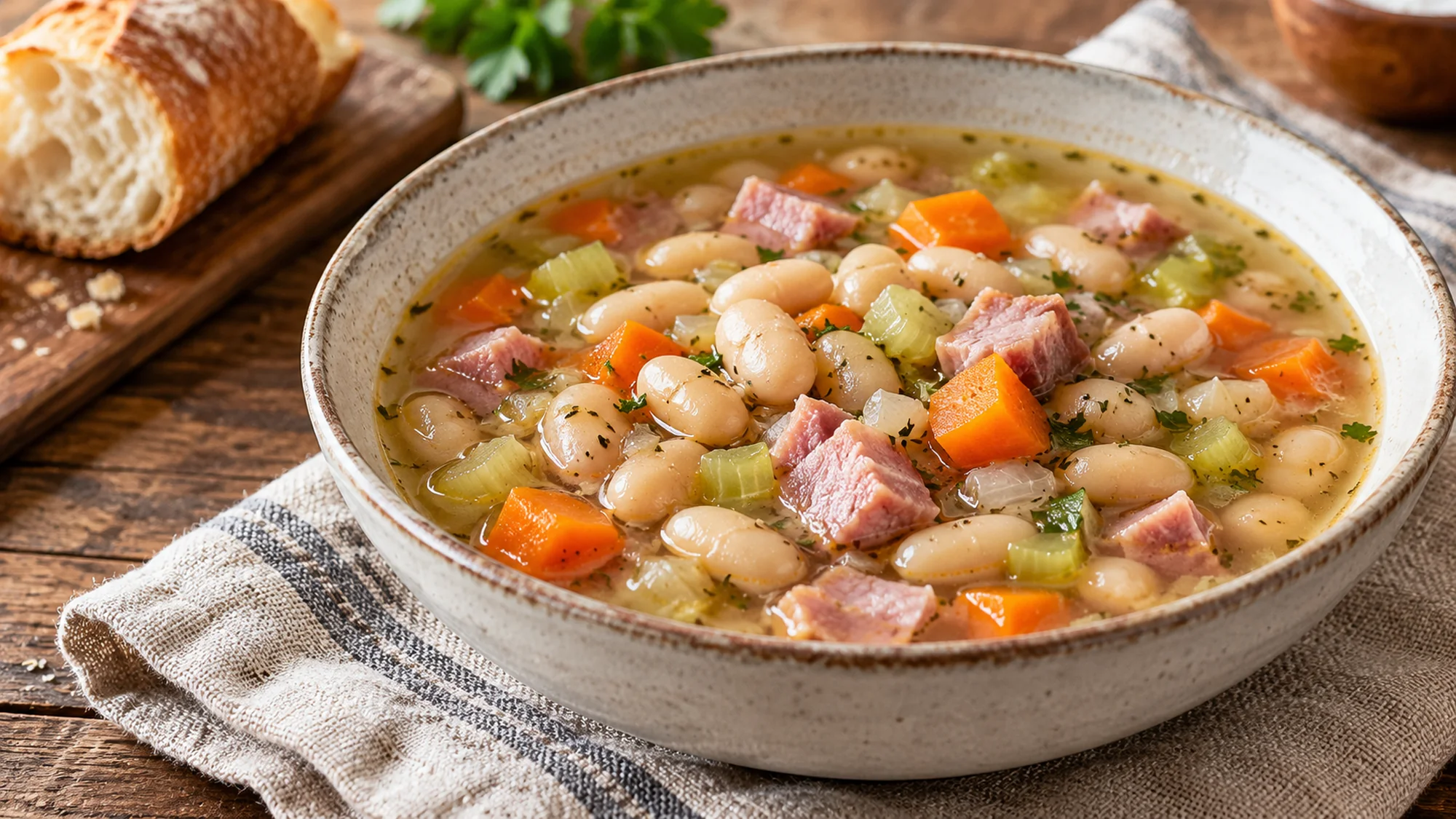
Ham and bean soup is a useful answer to a small piece of cooked ham and a few cans of white beans. Carrot, celery and onion give the broth a familiar savory base, while some mashed beans add body without cream. The ham should be noticeable in each bowl, but it does not need to outnumber the beans.
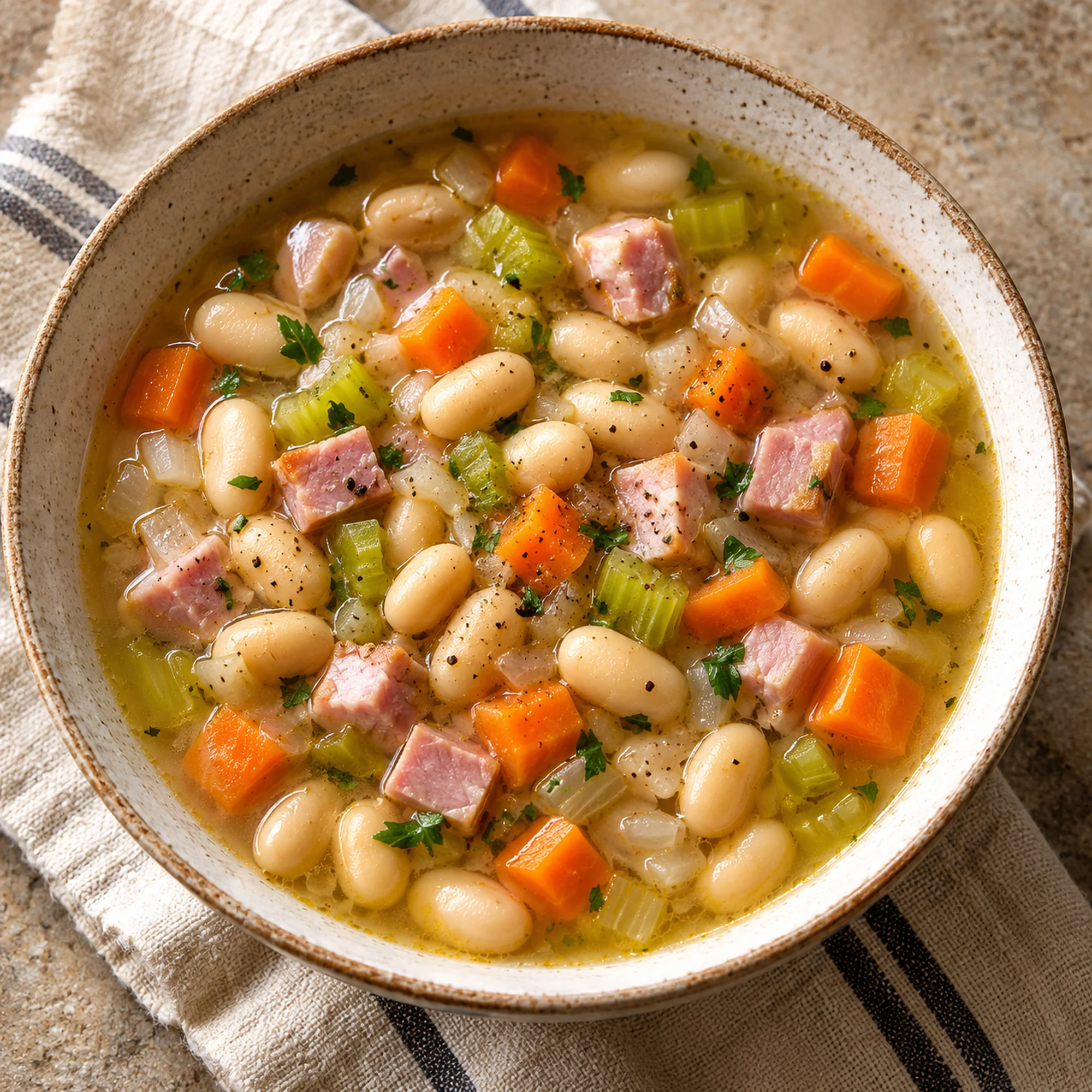
Use the ham to season the soup, then decide whether the pot needs any extra salt.
I would choose this version when I want a comfortable soup without soaking dried beans or simmering a ham bone all afternoon. It starts with fully cooked beans and cooked ham, so the main work is softening the vegetables and bringing the flavors together.
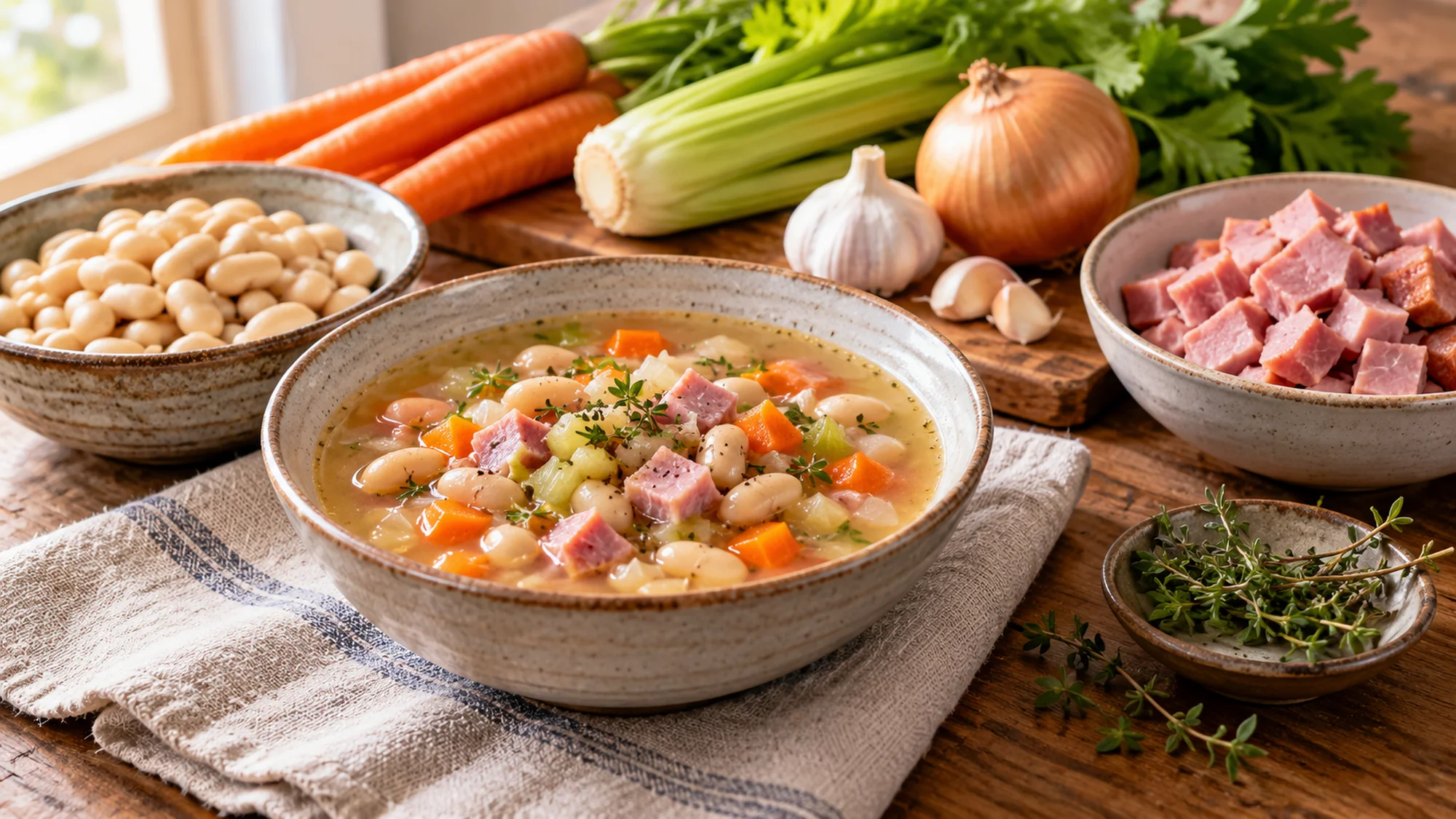
Serving Ham and Bean Soup
A piece of toast or a small green salad can round out the bowl. I would keep the side simple rather than add another rich main: the beans already make the soup substantial. A little parsley is optional, and a small cucumber and chickpea salad offers a cool contrast when you want something beyond bread.
Stir gently before ladling so the ham and beans are distributed evenly. Wide, shallow bowls show the vegetables well, while deeper bowls retain warmth longer. Neither choice needs a large garnish; the pleasant part is finding tender carrot, celery and small ham pieces in each spoonful.
- For lunch, serve a smaller bowl with toast.
- For dinner, a fuller bowl and a crunchy side may be enough.
- I like leaving bread separate rather than placing it underneath, where it can absorb most of the broth before you finish eating.
- These pairings offer different textures without changing the soup itself.
| Side | Serving role |
|---|---|
| Toast | Crunch and extra starch |
| Green salad | Fresh contrast |
| No side | A straightforward soup meal |
Let the sides add contrast while the soup remains straightforward and savory.
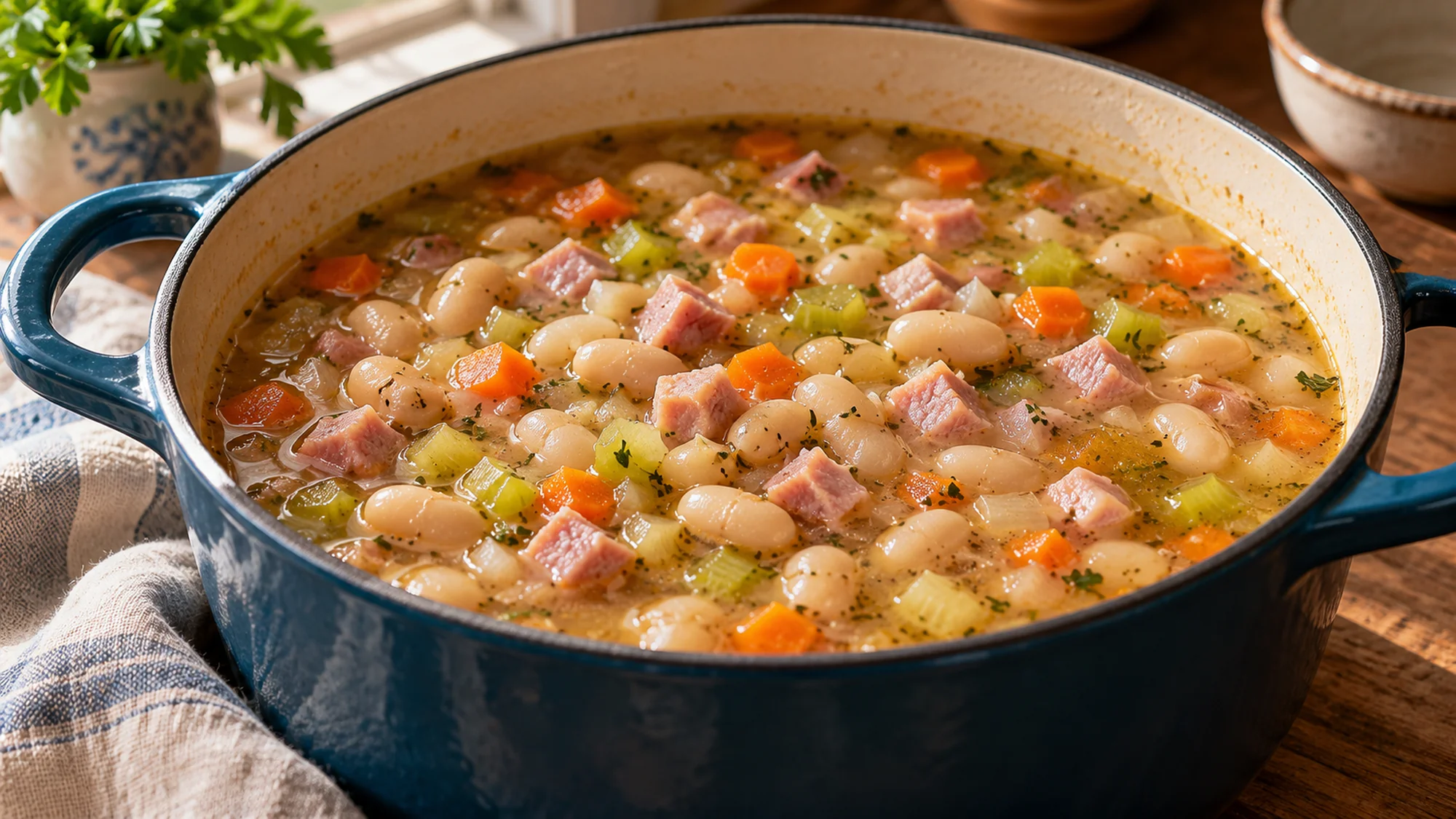
White Bean and Ham Variations
Cannellini, navy and great northern beans can all work when fully cooked, though their sizes and tendency to break down differ. This card is not a direct method for dry beans. Cook dry beans separately until tender before measuring the cooked amount, or choose canned beans for the shorter version.
A thicker soup can use a few more mashed beans; a brothier one can keep more beans whole and add a little water. Make that adjustment gradually because the pot thickens as it stands. There is no need to puree everything just to create a creamy-looking broth.
- Smoked cooked ham gives the soup its particular flavor.
- Unsalted cooked pork or chicken would make a different soup and need its own seasoning decisions.
- Avoid adding a ham bone casually to this quick formula: it changes the simmering requirements and makes the amount of meat and salt harder to predict.
- Thyme can be reduced for a milder herbal note.
Choose already-tender beans and make texture adjustments a little at a time.
Nutrition Benefits and Safe Leftovers
White beans contribute fiber and protein, while ham adds more protein along with sodium. The estimate uses generic smoked cooked ham and unsalted broth; your package can differ considerably. No added salt is included, but that does not mean the soup is low in sodium or suitable for every dietary restriction.
A measured portion with vegetables you enjoy is more informative than calling the whole pot healthy without qualification. The bean variety also changes the fiber estimate. Bread, butter and any extra garnish should be considered separately rather than assumed to disappear because they sit beside the bowl.
- Check how long leftover ham has already been refrigerated before using it.
- Cooking it into soup does not reset its storage history.
- Follow USDA guidance: refrigerate promptly in shallow containers, use within three to four days while accounting for starting ingredients, and reheat to 165°F (74°C).
- Add water if the refrigerated soup becomes thick.
The word homemade does not tell you the sodium content or make older ham new again.
Bottom Line
Cooked beans make this a manageable stovetop soup, while a little ham supplies a clear savory note. Cut the vegetables for the spoon, mash only enough beans to give the broth body, and taste before reaching for salt. The result should be a comfortable bowl with whole beans, tender vegetables and small pieces of ham throughout.
Keep the texture gentle and the seasoning deliberate.
Ham and Bean Soup Recipe

Ingredients
- 750 g cooked white beans drained and rinsed; about three cans after draining
- 350 g fully cooked smoked ham diced, tough rind removed
- 200 g carrots small dice
- 150 g celery small dice
- 150 g onion diced
- 3 cloves garlic minced, 9 g
- 1 tablespoon olive oil 13.5 g
- 1200 ml unsalted chicken broth 5 cups
- 1 g dried thyme about 1 teaspoon
- 1 g ground black pepper about 1/2 teaspoon
- 1 bay leaf remove before serving
- chopped parsley optional garnish, not included in nutrition
Equipment
- 1 large soup pot
- 1 potato masher
- 1 ladle
Instructions
- Heat oil in a large pot over medium heat. Add carrots, celery and onion and cook 7–8 minutes, stirring, until the onion softens. Add garlic and stir 30 seconds.
- Add broth, ham, beans, thyme, black pepper and bay leaf. Bring to a simmer, then cook gently 18–20 minutes until carrots are tender and the ham is thoroughly hot.
- Transfer about 1 cup beans with a little broth to a bowl and mash. Stir back into the pot and simmer 2–3 minutes. Add water if you prefer a thinner soup.
- Remove the bay leaf. Taste before adding any salt; none is included in this recipe’s estimate. Divide into six portions and add optional parsley. If using refrigerated leftover ham, heat the soup to 165°F (74°C).
Nutrition
Video
Notes
Tried this recipe?
Let us know how it turned out!Hi, I’m Laura, the voice behind Tastiva. I’ve always believed that eating well should feel enjoyable, comforting, and realistic—not like another complicated rule to follow. I love creating recipes that fit into everyday life, sharing simple nutrition ideas, and finding small ways to make meals feel a little better without losing the pleasure of good food.