
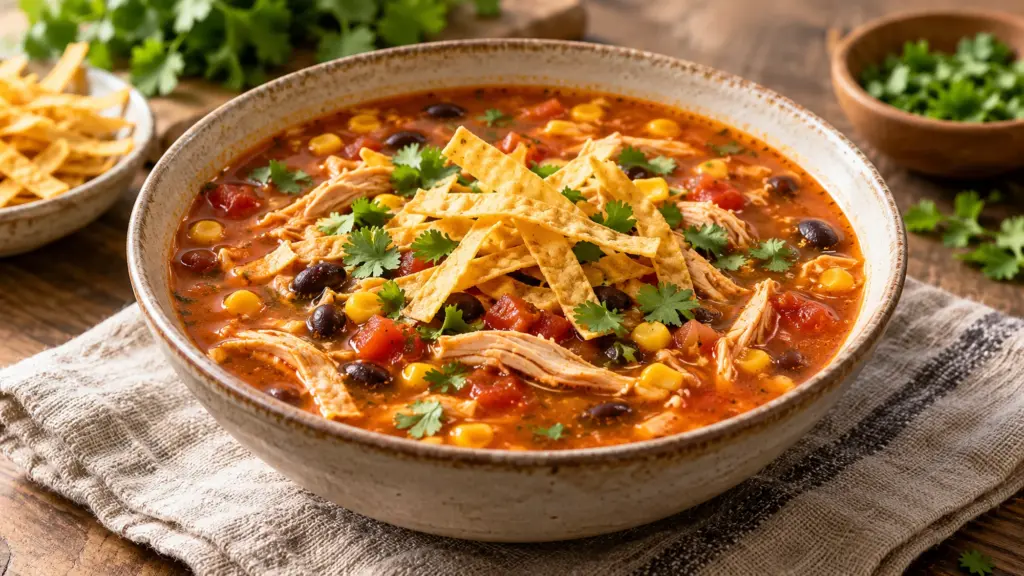
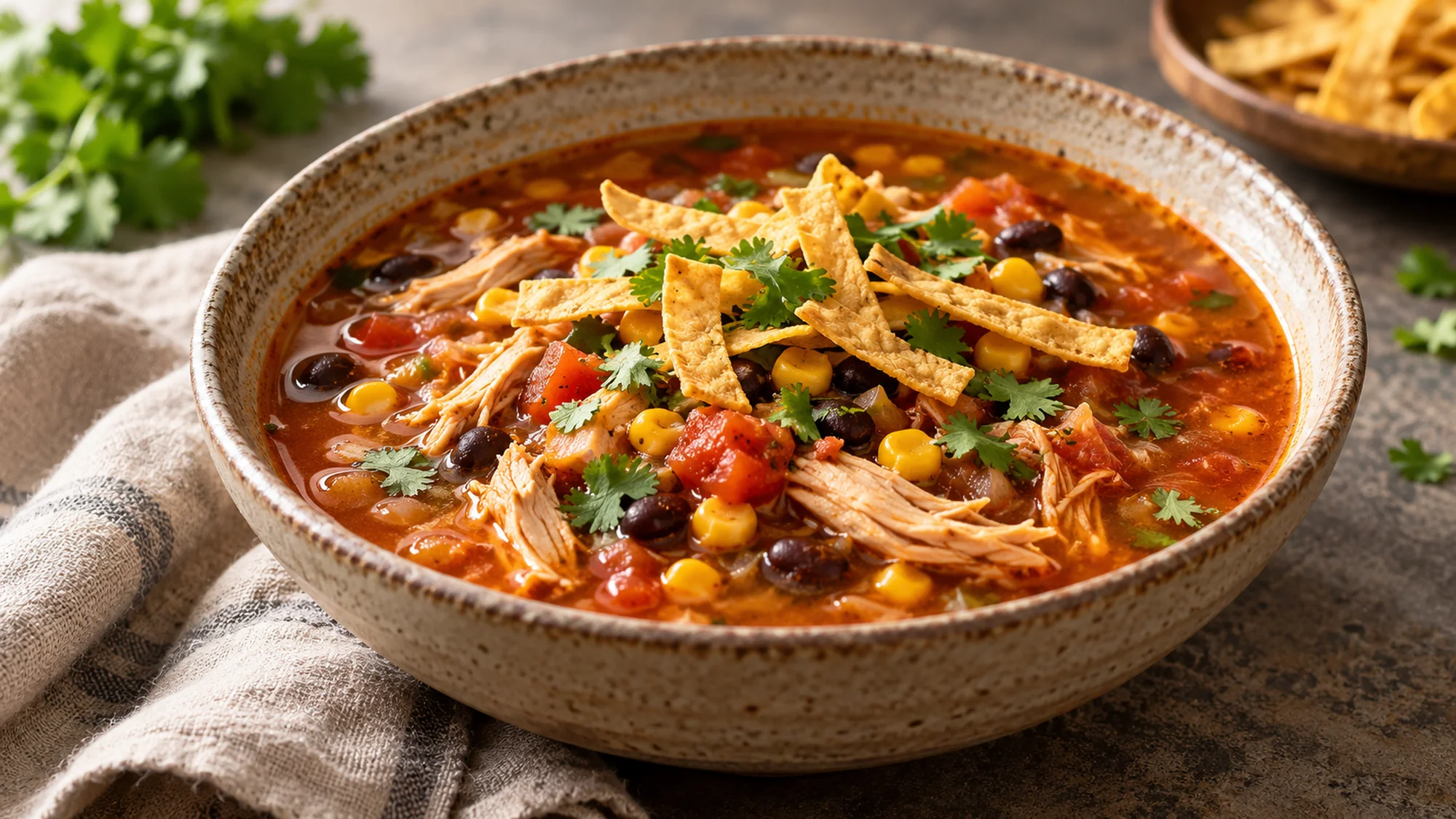
Chicken tortilla soup is a tomato-rich pot of shredded chicken, black beans and corn, finished with strips of crisp corn tortilla. The toppings are not just decoration: they give a spoonful of soft beans and tender chicken something crunchy to meet. Keep them beside the bowls until you are ready to eat rather than stirring the whole tray into the pot.
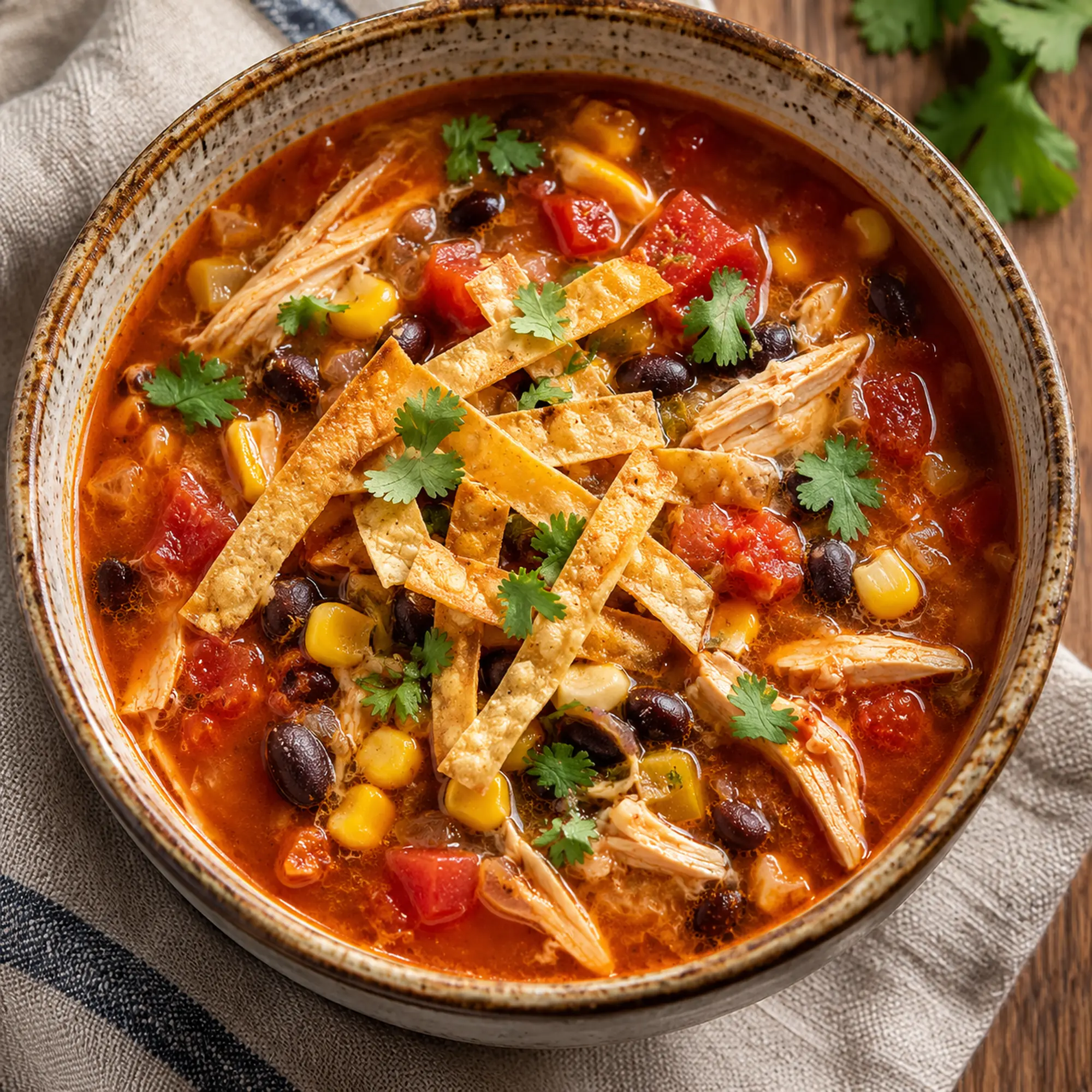
Build the soup first and save the crunch for the moment you serve it.
This version poaches chicken breast directly in the broth instead of asking you to cook a second pan of meat. It is a practical approach, but the chicken still needs attention. Once it reaches a safe temperature, lift it out; boiling it for the rest of the evening will not improve its texture.
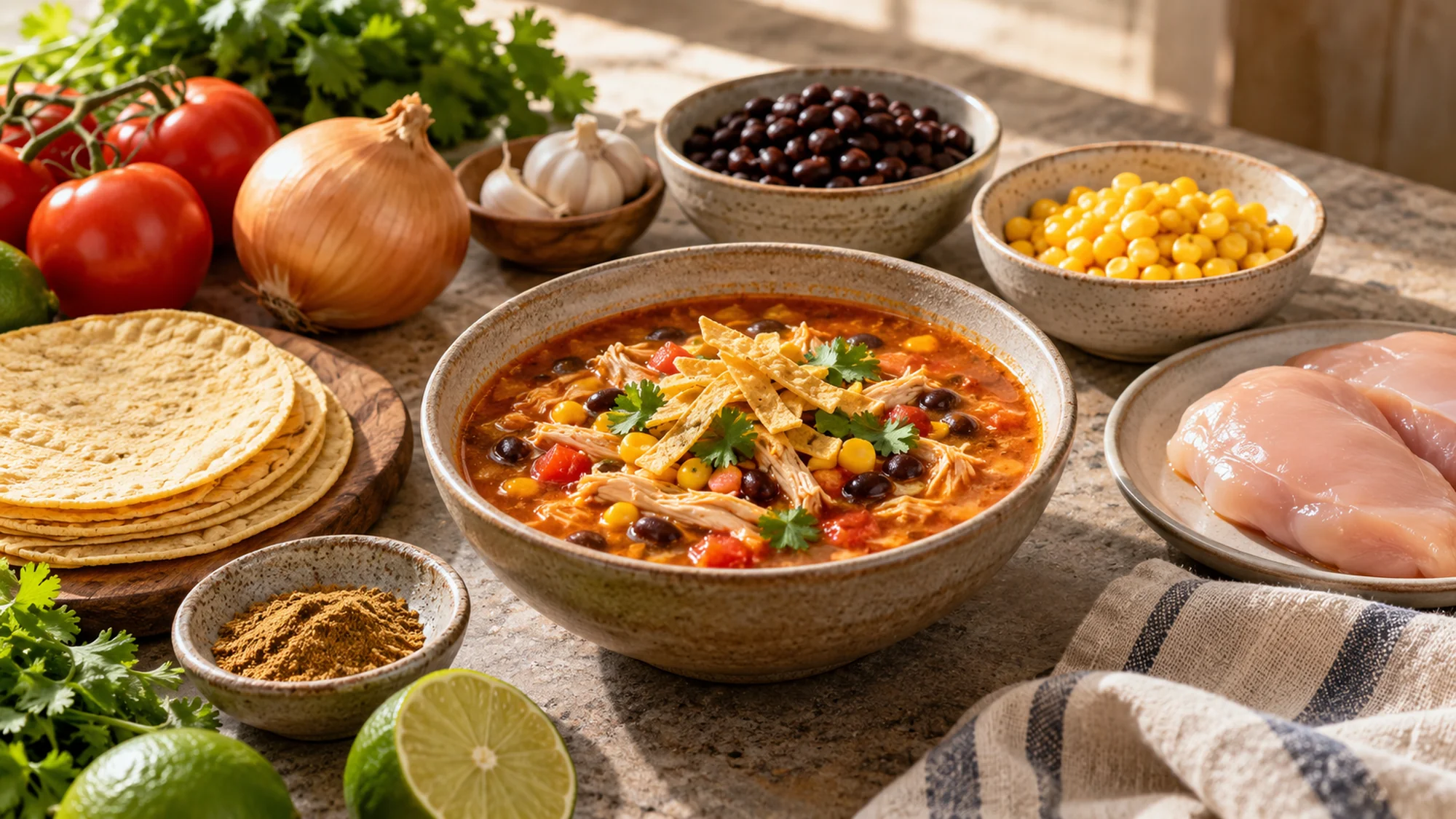
Serving Chicken Tortilla Soup
Bring the crisp tortilla strips to the table separately and add them immediately before eating. I prefer a small handful that stays crunchy to a large mound that softens before the bowl reaches the table. Lime wedges and cilantro make simple finishing choices, with sour cream, avocado or cheese offered as optional extras.
Use bowls with enough room for both broth and toppings, and give the soup a gentle stir before ladling so chicken, beans and corn are distributed evenly. A ladle of broth alone followed by a second bowl full of solids is an easy serving problem to avoid. Keep the strips away from rising steam while everyone helps themselves.
- The soup can stand alone, or you can add a small chickpea cucumber salad for a fresh contrast.
- Bread is not essential when tortillas already provide crunch and starch.
- The serving choices below make it easy to adjust the meal without changing the whole pot.
| Addition | What it changes |
|---|---|
| Tortilla strips | Crunch; add at serving |
| Lime | Sharper finish |
| Avocado or sour cream | Extra richness; optional |
Build the bowl around hot soup, then add the cool and crisp extras.
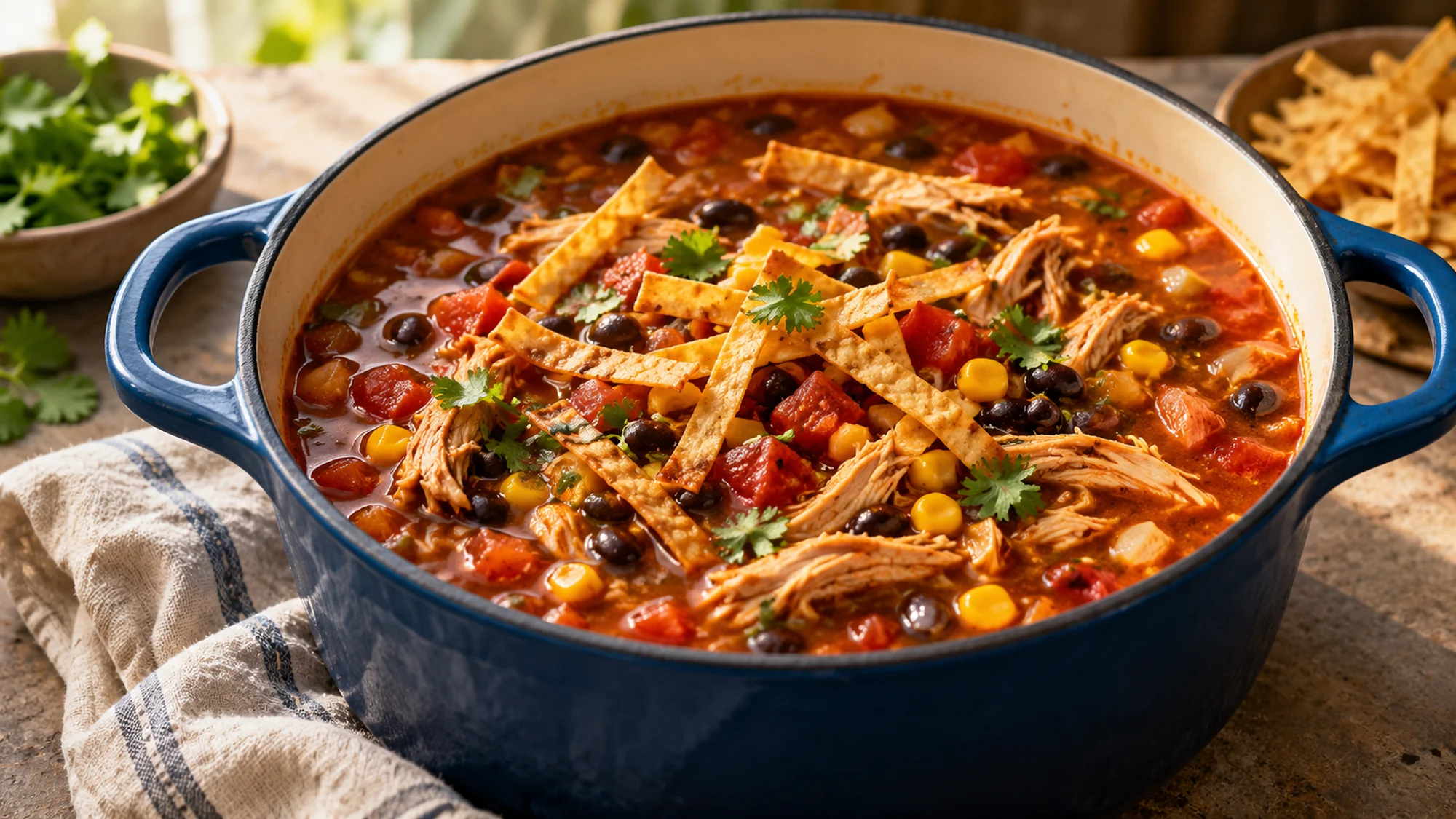
Variations for Heat, Beans and Toppings
For milder bowls, leave out the jalapeño or remove its seeds and pale ribs. Chili heat varies, so I would rather offer a hotter condiment at the table than make the whole batch too fiery for one person. Paprika and cumin still give the broth a clear savory character without relying on intense heat.
Pinto beans can replace black beans in a similar drained weight, with a different color and slightly softer texture. This is a recipe for already-cooked beans, not dry beans added directly to a short simmer. Canned corn can replace frozen if drained; check its salt level before seasoning.
- The card poaches raw chicken breast.
- Fully cooked leftover chicken is a different timing option: add it near the end and heat to 165°F (74°C), taking its existing storage age into account.
- Optional dairy toppings change the meal’s allergens and nutrition.
- Choose corn tortillas labeled gluten-free when that matters, rather than assuming every package is suitable.
Change the ingredient and its timing together, especially when switching from raw to cooked chicken.
Nutrition Benefits and Leftover Care
Chicken supplies protein, while black beans contribute fiber and make the soup substantial without requiring more meat. Corn, tomatoes and aromatics add variety, but the bowl’s sodium still depends on broth, canned goods and toppings. The estimate includes the baked strips and measured oil, not optional cheese or sour cream.
I like keeping the toppings visible because it makes portions easier to choose. A spoonful of avocado or cheese can be enjoyable without becoming an uncounted second meal on top. Rinsing beans and choosing unsalted broth give you more control, though they do not make the recipe sodium-free.
- Refrigerate in shallow containers within two hours, or one hour above 90°F (32°C), and use within three to four days under USDA guidance.
- Reheat soup to 165°F (74°C).
- Keep tortilla strips dry and separate; add water if the refrigerated soup has thickened.
The beans and chicken give the bowl substance; toppings and portion size still count.
Bottom Line
This chicken tortilla soup works best when the broth, chicken and topping each get the attention they need. Soften the aromatics, simmer the breast gently, and finish with lime after tasting. Then bring the tortilla strips to the table separately for a bowl that stays bright, hearty and genuinely crunchy at the edges.
Tender chicken and crisp tortillas should meet in the bowl, not wait together in the pot.
Chicken Tortilla Soup Recipe

Ingredients
- 600 g boneless skinless chicken breast
- 800 g canned chopped tomatoes with juice
- 300 g cooked low-sodium black beans drained and rinsed
- 200 g frozen corn
- 150 g onion diced
- 3 cloves garlic minced, 9 g
- 20 g jalapeño seeded and finely chopped; omit for milder soup
- 2 tablespoons olive oil 27 g, divided
- 4 g ground cumin about 2 teaspoons
- 4 g paprika about 2 teaspoons
- 960 ml unsalted chicken broth 4 cups
- 120 g corn tortillas cut into thin strips
- 30 ml lime juice 2 tablespoons
- 3 g fine salt about 1/2 teaspoon
- fresh cilantro optional garnish, not included in nutrition
Equipment
- 1 large soup pot
- 1 Baking sheet
- 1 Instant-read thermometer
- 1 Two forks
Instructions
- Heat the oven to 400°F (200°C). Toss tortilla strips with 1 tablespoon oil on a baking sheet. Bake in one layer 10–15 minutes, tossing once, until crisp and golden; cool on the tray.
- Heat remaining oil in a large pot over medium heat. Cook onion and jalapeño 5–6 minutes. Add garlic, cumin and paprika; stir 30 seconds. Add tomatoes, broth and salt and bring to a gentle simmer.
- Add chicken breasts and simmer gently 15–20 minutes, turning as needed, until the thickest part reaches 165°F (74°C). Lift onto a clean plate. Larger breasts may need longer; check with a thermometer.
- Add beans and corn to the pot and simmer 5 minutes. Shred chicken into bite-size strands, return it to the soup and heat through. Stir in lime juice and taste before adding any extra salt.
- Divide into six bowls. Add the baked tortilla strips immediately before serving, with optional cilantro. Keep strips separate when storing leftovers.
Nutrition
Video
Notes
Tried this recipe?
Let us know how it turned out!Hi, I’m Laura, the voice behind Tastiva. I’ve always believed that eating well should feel enjoyable, comforting, and realistic—not like another complicated rule to follow. I love creating recipes that fit into everyday life, sharing simple nutrition ideas, and finding small ways to make meals feel a little better without losing the pleasure of good food.