
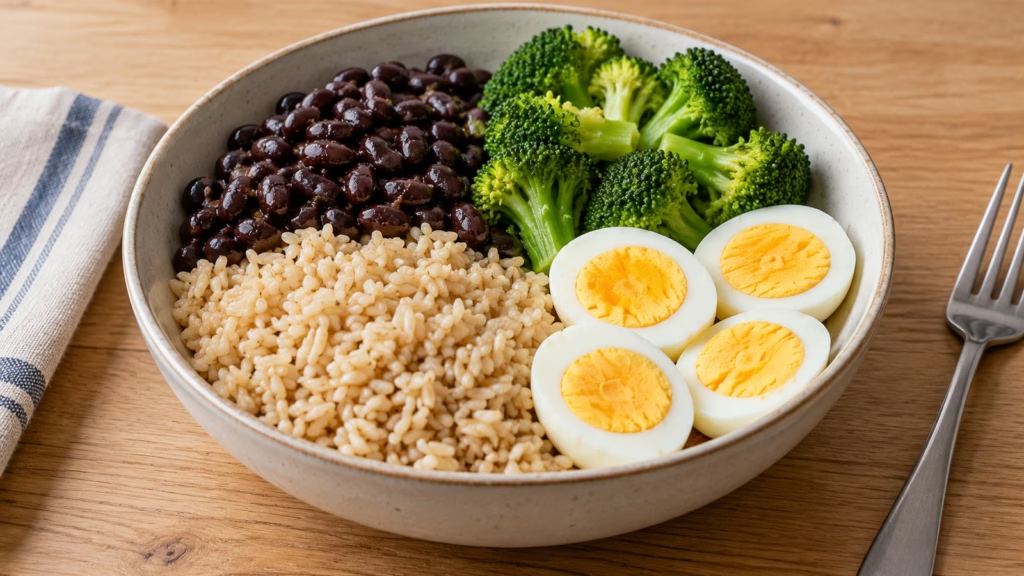
Buying oats, beans, and a bag of broccoli is the easy part; getting them into meals without turning dinner into a fiber-counting exercise takes a little planning. This five-day high fiber meal plan uses familiar foods and measured portions that add up to roughly 26–29 grams a day. The grocery list reuses ingredients, and the gentler options let you start below those totals if that better fits how you eat now.
Make a few familiar foods do more of the fiber work, and give your routine time to adjust.
Fit the plan to your appetite and starting point
The menu is an example for one adult, not an individualized daily requirement. The FDA uses 28 grams as the Daily Value for fiber on a 2,000-calorie label reference; that number is useful for comparison, not a personal prescription. NIDDK advises increasing fiber a little at a time and drinking appropriate fluids as it increases.
I’d start with the meals you already enjoy. If a half-cup of beans is a big change, begin with a quarter-cup and keep the rest of the meal satisfying. People following a prescribed low-fiber diet or managing a digestive condition should ask their clinician or dietitian before adopting this menu.
- Keep enough food on the plate: These portions make the fiber calculation clear. Scale meals and add snacks for your appetite, activity, and energy needs; this is not a calorie target.
- Keep protein and fats in the meal: The menu includes chicken, salmon, eggs, yogurt, nut butter, and olive oil. Fiber is one part of eating well, not the entire assignment.
- Choose your pace: Change one meal first rather than jumping to the full menu and a fiber supplement at the same time.
A 5-day high fiber meal plan with counted portions
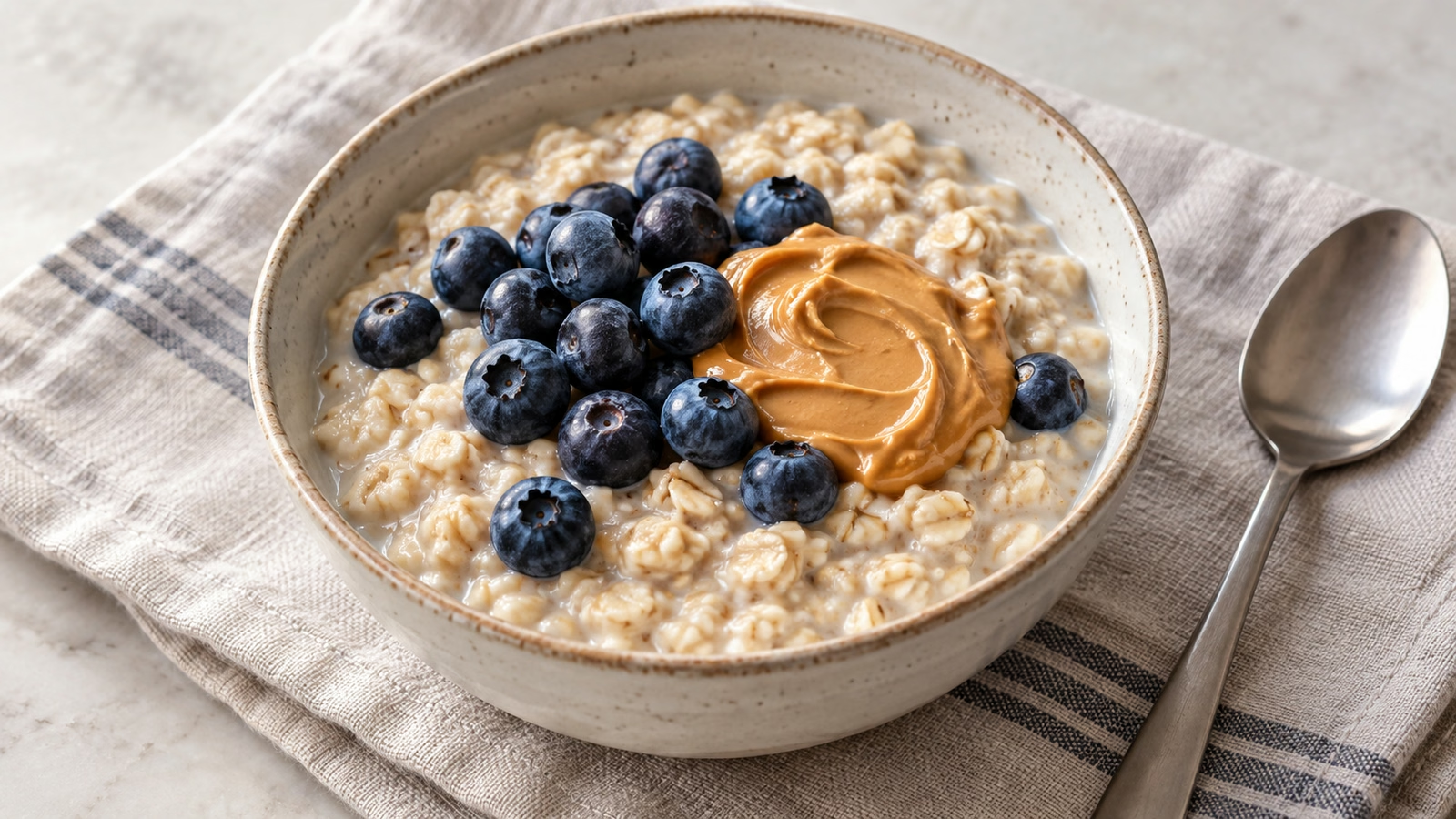
All grain and bean measures below are cooked, except the dry oats. Chicken portions are about 4 ounces cooked; salmon portions are one 4–6-ounce fillet; each egg-and-bean bowl uses two eggs. Prepare oats with milk, dress salads with olive oil and lemon or vinegar, and season to taste. Those additions are included as meal components but contribute little or no fiber.
The estimates come from USDA ingredient data and are rounded. Bread brands, fruit size, drained beans, and cooking methods vary; use your package label where it gives a more specific amount. Each cell shows its approximate fiber so you can move a meal without losing track of the total.
| Day | Breakfast | Lunch | Dinner | Counted snack | Estimated daily fiber |
|---|---|---|---|---|---|
| 1 | ½ cup dry oats,½ cup blueberries,1 tbsp peanut butter,½ cup milk (6.6g) | Chicken with ½ cup chickpeas,1 medium tomato,⅓ cucumber and 1 slice bread (9.9g) | Salmon,1 medium skin-on baked potato,1 cup cooked broccoli (9g) | 1 orange (3.1g) | 29g |
| 2 | 170g Greek yogurt,1 medium pear,½oz almonds (7.3g) | Chicken sandwich on 2 bread slices,⅓ cucumber and 1 raw carrot; mustard/olive oil (5.6g) | 2 eggs,½ cup black beans,¾ cup brown rice and 1 cup broccoli (15g) | Add a snack to appetite; not counted | 28g |
| 3 | ½ cup dry oats,1 orange,1 tbsp peanut butter and ½ cup milk (8g) | 2 eggs,½ cup black beans,¾ cup brown rice and ½ cup broccoli (12.4g) | Chicken, ½ cup quinoa and 122g cooked carrots (about ¾ cup; 6.3g fiber) | Add a snack to appetite; not counted | 27g |
| 4 | 2 bread slices,2 tbsp peanut butter,½ cup blueberries and 1 cup milk (6.7g) | ½ cup chickpeas,½ cup quinoa,1 tomato,⅓ cucumber and 170g Greek yogurt (10.8g) | Salmon,1 medium skin-on baked potato and ½ cup broccoli (6.4g) | 1 orange (3.1g) | 27g |
| 5 | 170g Greek yogurt,1 pear and ½oz almonds (7.3g) | Chicken sandwich on 2 bread slices,1 raw carrot and 1 tomato; mustard/olive oil (6.5g) | 2 eggs,½ cup black beans,¾ cup brown rice and ½ cup broccoli (12.4g) | Add a snack to appetite; not counted | 26g |
Shop once, with the portions in view
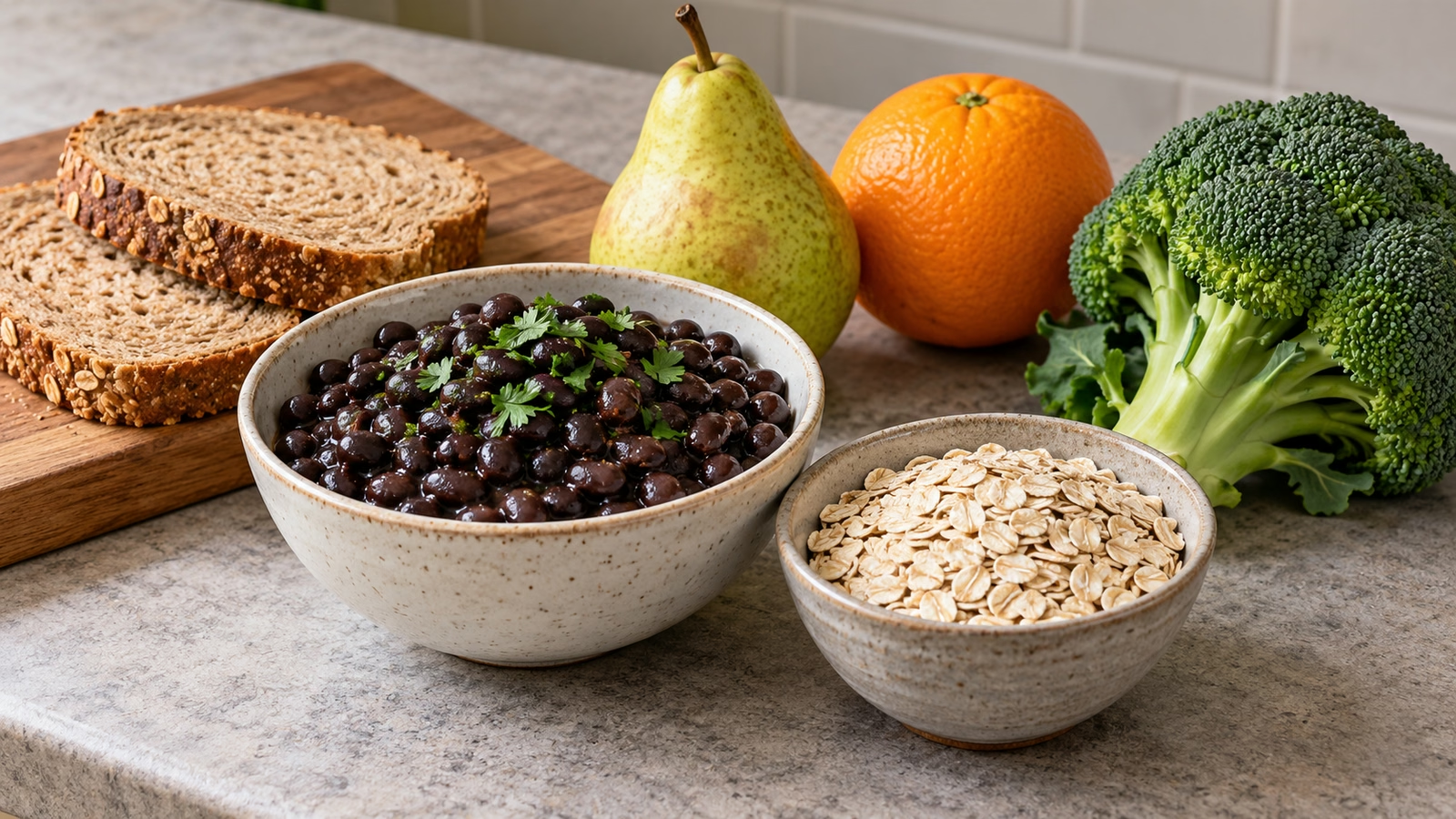
The list covers the menu for one person, with common package sizes where useful. Check the pantry first; you need small amounts of several staples. For two people, double the food amounts rather than assuming the same can will stretch through both sets of meals.
- Fruit: Two medium pears, three medium oranges, and a small pack of blueberries (at least 150g; about 1 cup).
- Vegetables: Two medium baking potatoes with edible skins; about 1½lb/680g broccoli, fresh or frozen; one large cucumber (about 300g); three medium tomatoes; and four medium carrots.
- Grains: Old-fashioned oats (1 cup/80g dry), brown rice (enough for 2¼ cups/438g cooked), quinoa (enough for 1 cup/186g cooked), and seven slices whole-wheat bread. Follow the rice and quinoa packages for their dry-to-cooked yields.
- Beans: One 15-ounce can chickpeas and two 15-ounce cans black beans. You need 1 cup/164g drained chickpeas and 1½ cups/258g drained black beans; can yields vary, so measure and freeze the unused beans.
- Protein and dairy: Chicken for four cooked 4-ounce portions (roughly 1½–2lb raw, depending on cut and yield), two salmon fillets, six eggs, plain Greek yogurt (three 170g portions; one 24-ounce/680g tub covers them), and at least 2 cups milk.
- Pantry: Peanut butter (4 tablespoons/64g), almonds (1 ounce/28g), olive oil, lemon or vinegar, mustard, and seasonings you enjoy. Extra snacks are separate from these counted amounts.
Prep the ingredients, then adjust the fiber gently
Cook the chicken, rice, and quinoa ahead if that makes the week easier. Keep the Day 5 chicken and rice portions in the freezer from the start; don’t plan to hold every cooked component in the refrigerator for five days. Freeze the second raw salmon fillet promptly and thaw it in the refrigerator before cooking on Day 4.
I’d save most chopping for the day a vegetable is used. A whole cucumber travels through the week more gracefully than five wet containers of slices, and frozen broccoli can be cooked a portion at a time.
- Cook safely: Chicken reaches 165°F (74°C), fish 145°F (63°C), and eggs have firm whites and yolks. Follow grain packages, drain beans, and cook broccoli and carrots to the texture you like.
- Chill promptly: Put cooked food in shallow containers and refrigerate within two hours, or one hour above 90°F (32°C). Keep the refrigerator at 40°F (4°C) or below. Use refrigerated leftovers within three to four days; reheat cooked meals to 165°F (74°C).
- Make the bean bowl gentler: On Day 2, using ¼ cup beans and ½ cup broccoli instead of ½ cup and 1 cup reduces that meal’s estimate from about 15g to about 9g. Keep the rice and eggs, and adjust the rest of your food to appetite.
- Make one breakfast change: Try the oats on one day before changing all your bread and fruit choices too. Add water and other fluids as appropriate for you; follow any medical fluid restriction.
- Use what you learn: If a swap causes uncomfortable symptoms, step back and reconsider the portion. The foods high in fiber guide offers other food choices; you don’t need to make every meal a bean bowl.
For a short explanation of dietary fiber, Mayo Clinic dietitian Kate Zeratsky discusses food sources and daily needs in the video below. It offers background for this menu rather than a personalized fiber target.
Sources
- USDA FoodData Central: ingredient weights and dietary-fiber data for the calculations
- FDA Nutrition Facts label guide: dietary-fiber Daily Value
- NIDDK: Eating, diet, and nutrition for constipation: gradual fiber changes and fluids
- FoodSafety.gov safe cooking temperatures
- USDA leftovers and food safety

Hi, I’m Laura, the voice behind Tastiva. I’ve always believed that eating well should feel enjoyable, comforting, and realistic—not like another complicated rule to follow. I love creating recipes that fit into everyday life, sharing simple nutrition ideas, and finding small ways to make meals feel a little better without losing the pleasure of good food.