
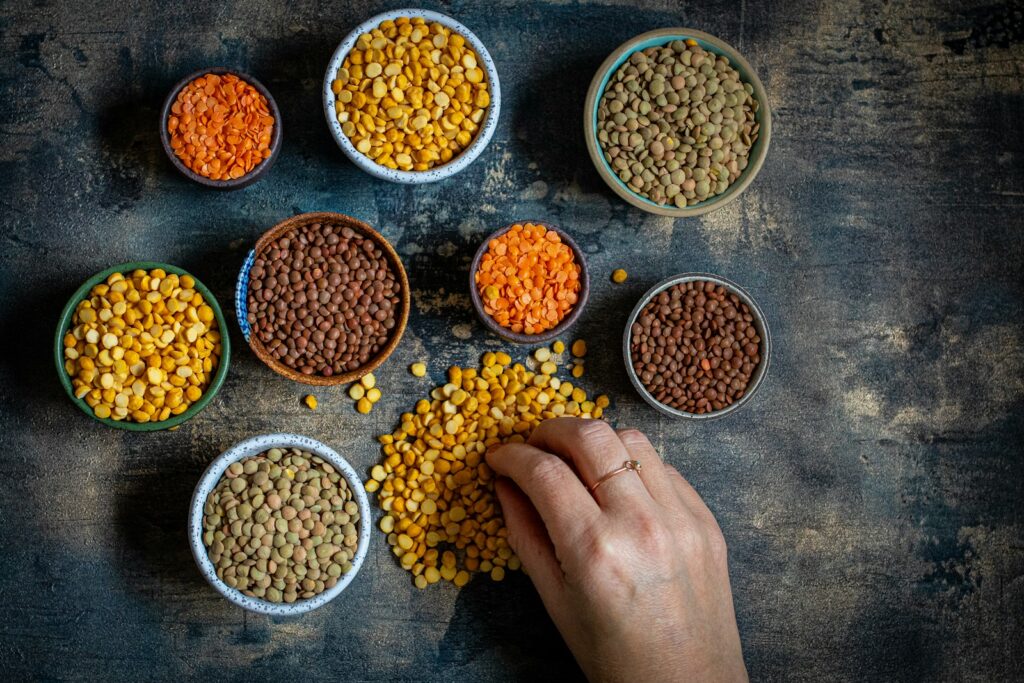
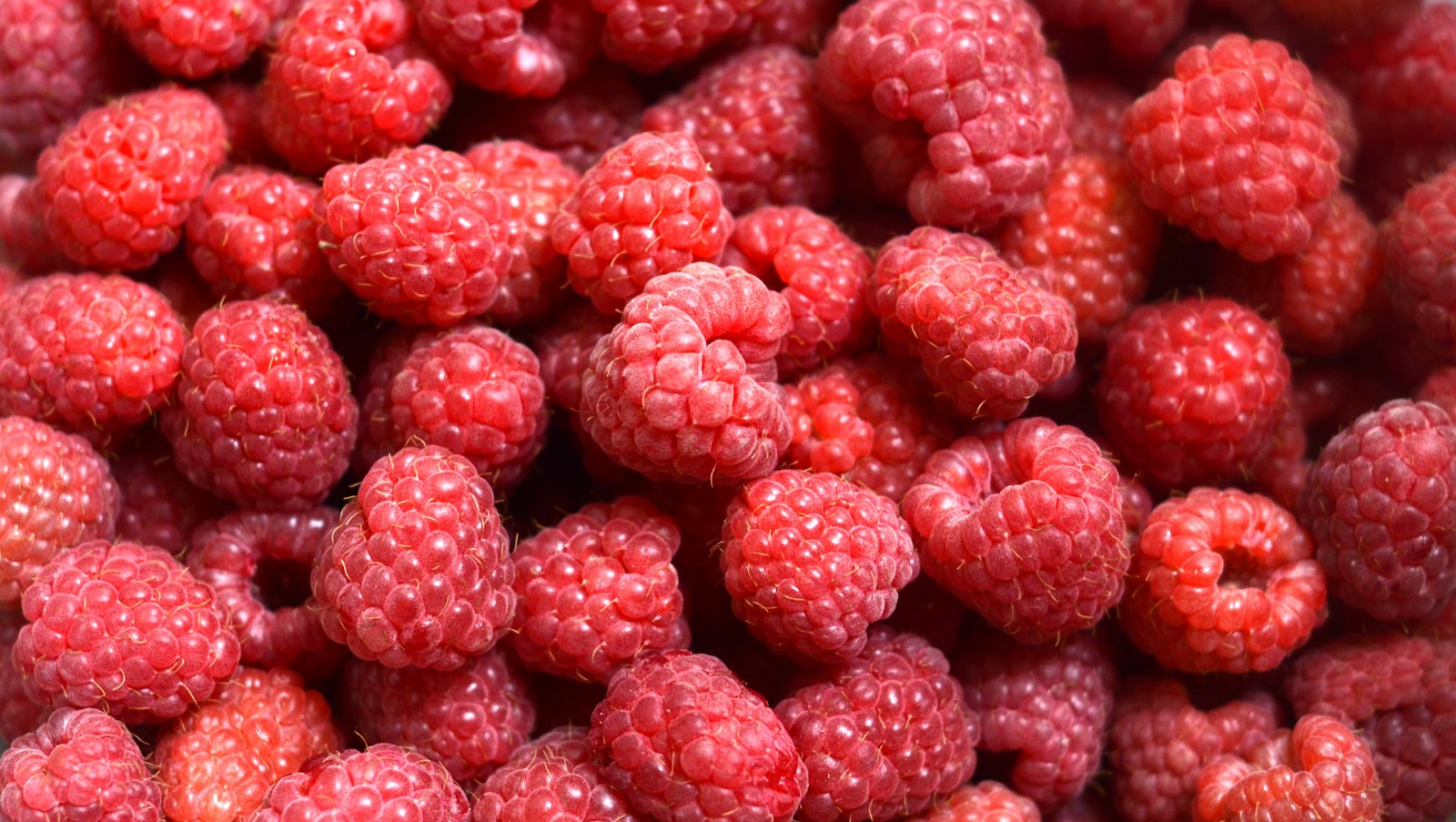
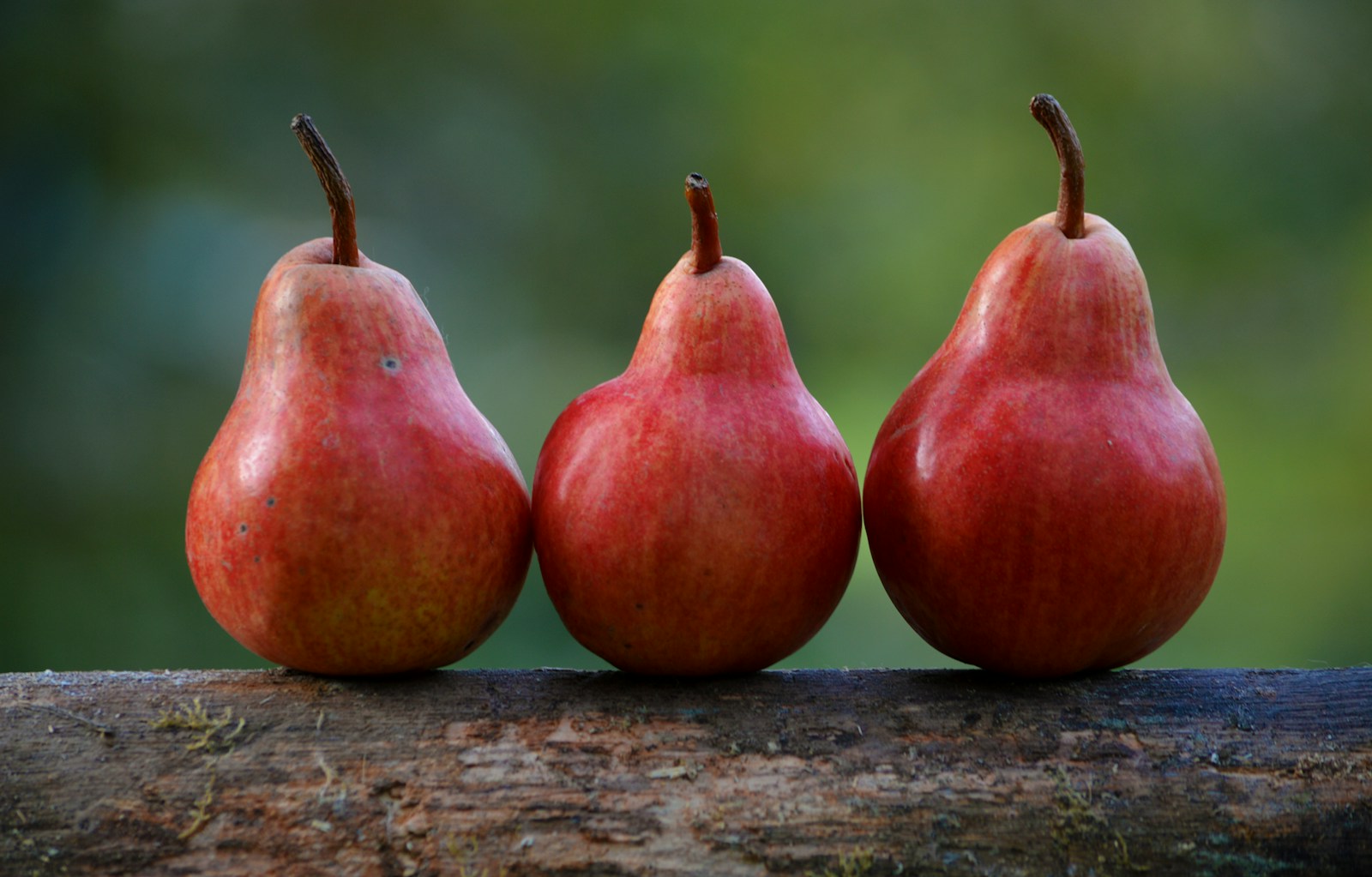
A bowl of berries, a scoop of lentils, the pear you can eat on the way out: foods high in fiber don't have to arrive in a special package. Beans, lentils, whole grains, vegetables, fruit, nuts, and seeds all contribute. The most useful choice is one you can comfortably add to a meal you already enjoy.
Build fiber into familiar meals a little at a time, and let variety do more of the work than any single “superfood.”
Foods high in fiber, in portions you might actually eat
Lists ranked per 100 grams can make ordinary grocery decisions surprisingly awkward. A hundred grams of cooked lentils is a modest serving; a hundred grams of bran is a very different breakfast. I prefer a comparison that shows the portion beside the number, so you can picture it on your plate.
These approximate amounts come from USDA FoodData Central's standard food records. The beans, lentils, and vegetables are cooked without added salt; the fruit is raw. Actual values vary with variety, preparation, and portion size, and canned products can differ from these cooked-from-dry examples.
| Food | Practical portion | Approximate fiber | Easy place to use it |
|---|---|---|---|
| Cooked lentils | ½ cup, 99 g | 7.8 g | Soup, rice bowls, or a warm salad |
| Cooked black beans | ½ cup, 86 g | 7.5 g | Tacos, eggs, or a baked potato |
| Raspberries | 1 cup, 123 g | 8 g | Yogurt, oatmeal, or a snack |
| Pear with skin | 1 medium, 178 g | 5.5 g | Alongside cheese or nut butter |
| Cooked green peas | ½ cup, 80 g | 4.4 g | Pasta, rice, or vegetable soup |
| Cooked broccoli | ½ cup chopped, 78 g | 2.6 g | A side dish or mixed into noodles |
The table isn't a ranking of better and worse foods. Broccoli can earn its place at dinner without matching lentils gram for gram. Different foods also bring different flavors and nutrients, which is a good reason to keep several options in rotation.
What fiber does, and how much to aim for
Dietary fiber is carbohydrate your body doesn't fully digest. Some types dissolve in water; others add bulk. Foods usually contain a mixture, so dividing the entire grocery store into “soluble” and “insoluble” boxes isn't necessary for everyday eating. A varied selection is a more practical starting point.
NIDDK gives a general adult range of 22–34 grams a day, depending on age and sex. Your individual needs may differ, especially if a clinician has prescribed a specific diet. Fiber helps support bowel regularity, but eating a larger amount all at once doesn't necessarily make it work better or feel better.
Fiber and probiotics aren't interchangeable, either. Probiotics are live microorganisms; certain fibers can serve as food for beneficial gut microbes. Our guide to prebiotics versus probiotics explains that distinction without turning every breakfast into a supplement decision.
Add fiber without rebuilding your entire menu
Start with the meal that offers the easiest opening. If breakfast is already yogurt, fruit is a natural addition. If dinner includes a pot of rice, some beans or peas can fit right in. There's no requirement to begin with a food you dislike just because its fiber number looks impressive.
- At breakfast: add berries or a chopped pear to oatmeal or yogurt. For packaged cereal, compare fiber at the same serving size instead of relying on brown packaging or the word “grain.”
- At lunch: spoon lentils into soup, tuck beans into a wrap, or use whole-grain bread when it suits your needs. Check the ingredients for a named whole grain.
- At dinner: let vegetables take up a little more space, or replace part of a rice or pasta portion with beans. You can keep the original meal recognizable.
- For snacks: choose whole fruit, nuts, or seeds that fit your preferences and allergies. Keeping an edible peel adds fiber, but washing produce still matters.
- For convenience: keep a few canned beans and frozen vegetables available. Useful food doesn't have to be prepared entirely from scratch to count.
For perspective, half a cup of lentils, a medium pear, and half a cup of peas provide about 18 grams combined. That's an illustration of how separate foods add up, not a complete day's menu or a prescription to eat them together. The rest of your meals contributes too.
I like an addition that improves dinner in two ways: peas bring little sweet pops to rice, and beans give a thin soup more substance. For help choosing among beans and lentils, see what legumes are and how to use them.
Make the increase comfortable and sustainable
Add fiber gradually and drink adequate fluids. A sudden jump from very little fiber to large servings of beans, bran, and fiber supplements can bring gas or bloating. NIDDK recommends increasing it a little at a time so your body can adjust; there isn't one mandatory schedule that fits everyone.
- Choose one manageable change first, then see how you feel before adding another.
- Spread fiber-containing foods across meals instead of trying to catch up in one oversized bowl.
- Use the Nutrition Facts panel for packaged foods; check both fiber and the serving you actually eat.
- If you've been told to limit fiber for a medical reason, follow that plan rather than a general high-fiber list.
Persistent constipation, significant pain, or a new digestive change deserves medical advice. For ordinary meal planning, though, the next step can stay small: choose one food from the table, give it a place in a meal, and build from there.
Sources
- USDA FoodData Central: food composition database
- NIDDK: eating, diet, and nutrition for constipation
- MedlinePlus: dietary fiber

Hi, I’m Laura, the voice behind Tastiva. I’ve always believed that eating well should feel enjoyable, comforting, and realistic—not like another complicated rule to follow. I love creating recipes that fit into everyday life, sharing simple nutrition ideas, and finding small ways to make meals feel a little better without losing the pleasure of good food.