
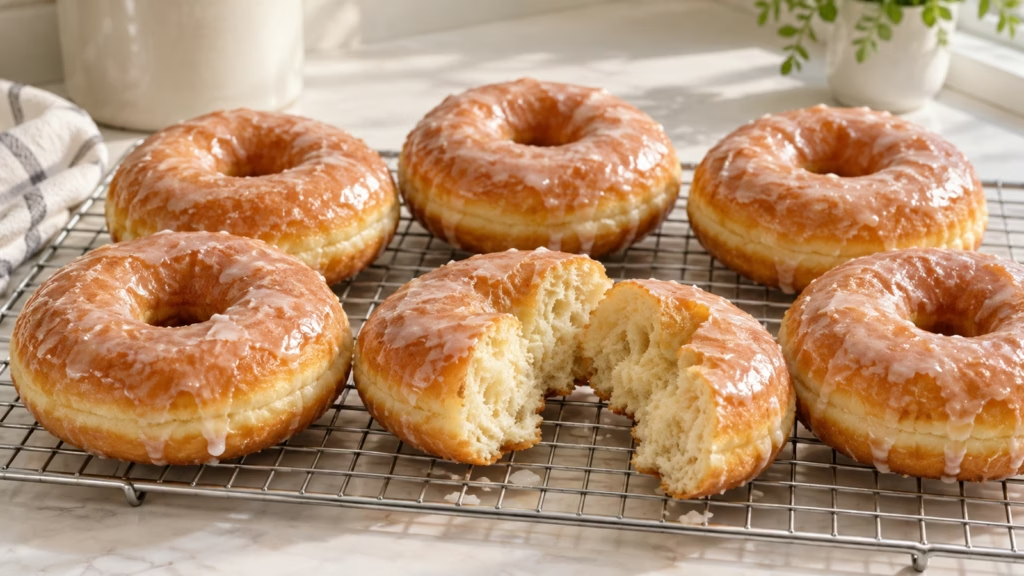
A homemade donut should feel light when you pick it up, with a thin golden surface and a soft center beneath the glaze. Getting there is less about a special cutter than giving the yeast time to work. These vanilla-glazed donuts use a milk-and-butter dough shaped into twelve rings by hand.
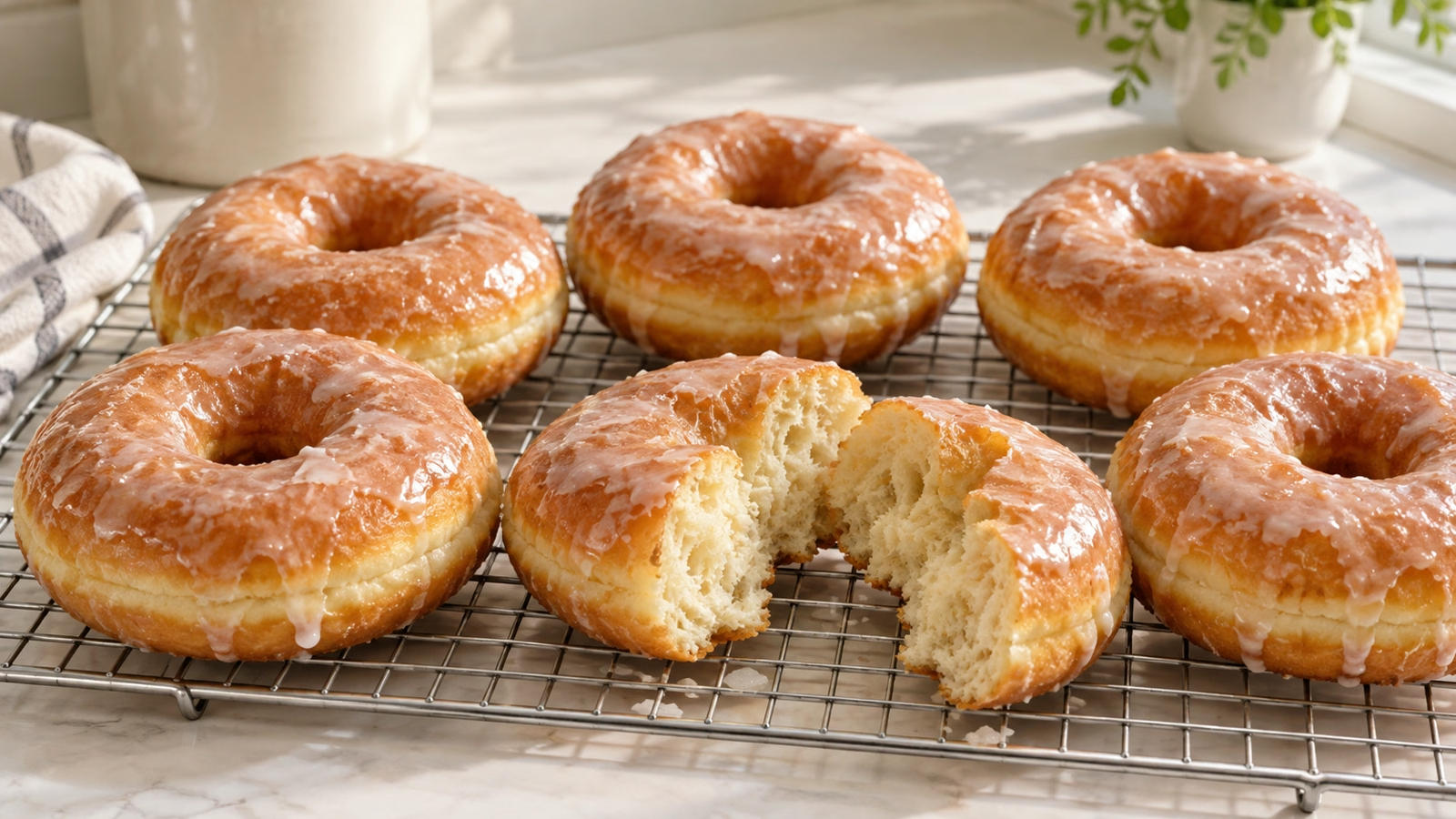
Watch the dough, then watch the oil: a puffy ring and steady frying temperature matter more than a perfect circle.
I would save this recipe for a morning or afternoon when you can stay near the kitchen. Most of the waiting is hands-off, but frying deserves your full attention. Set out the draining rack, thermometer, and glaze bowl before heating the oil so the final stretch feels organized rather than hurried.
Keep the dough soft enough to rise
All-purpose flour gives these rings structure without aiming for the chew of a bagel. Milk, egg, and butter make the dough richer, while a modest amount of sugar leaves room for the sweet glaze. Use instant baker’s yeast; nutritional yeast is a different ingredient and will not raise the dough.
- Weigh the flour: A tightly packed measuring cup can add enough extra flour to make the dough stiff. The gram amount in the card is the reliable starting point.
- Warm gently: Milk should be lukewarm, about 100°F, rather than hot. Melted butter needs to cool before it joins the egg and yeast.
- Knead before correcting: A shaggy mixture becomes smoother as you work it. Add dusting flour sparingly instead of trying to make the surface completely dry.
The finished dough should feel soft and slightly tacky, with enough stretch to pull a small piece into a thin patch before it tears. If it fights your hands, cover it for a few minutes and return to kneading. Rest is useful here; another handful of flour is not always the answer.
Let the rings become visibly puffy
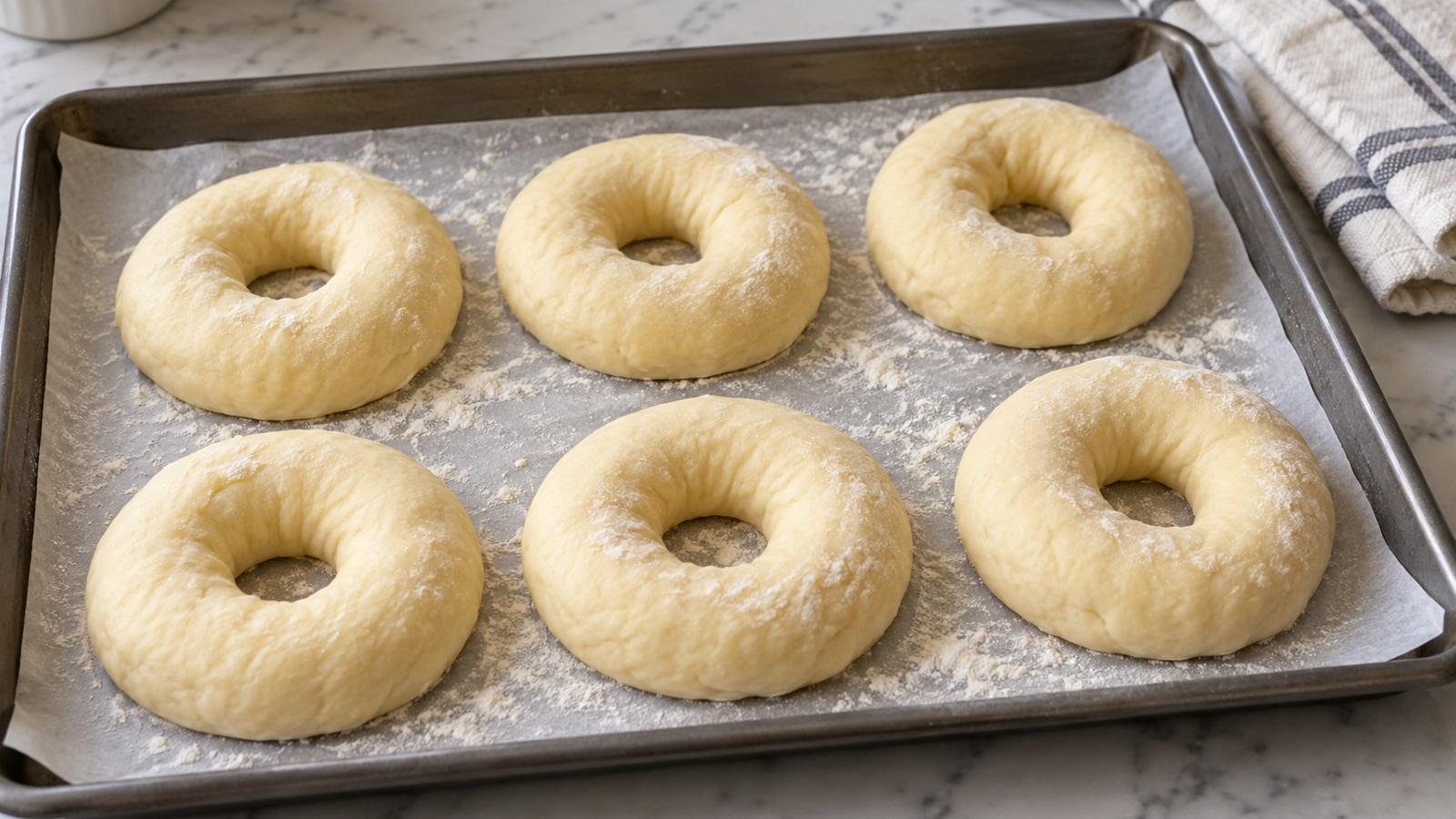
After the first rise, divide the dough into twelve equal pieces and round them gently. A short rest relaxes them before shaping. Poke a hole through the center of each piece, then ease it open into a ring with an opening wider than you want in the finished donut. The hole narrows as the dough expands.
Set the rings on lightly floured parchment with room between them and cover loosely. They should look noticeably fuller before frying. A gentle touch should leave an indentation that returns slowly, rather than snapping straight back. A cool kitchen can stretch the timing, so use those changes alongside the clock.
- Dense, heavy rings: Check whether the first or second rise was rushed before blaming the flour.
- Rings shrinking as you shape: Cover and rest them briefly, then widen the holes gently.
- Fragile dough that collapses: It may have risen too far. Handle carefully; the next batch needs an earlier check.
Fry a few at a time
Use a deep, heavy pot and a thermometer suited to frying. Add enough oil for the rings to float, while keeping the pot no more than half full. Bring the oil to 350°F and keep it around 350–360°F as you work. Lower two or three rings in gently, leaving space for them to expand and turn.
- Too dark too quickly: Reduce the heat and let the oil settle before the next batch; a brown surface can hide uncooked dough.
- Pale and greasy: Check the temperature and avoid crowding. Give the oil time to recover between batches.
- Check the first donut: Let it cool enough to handle, then split it. The center should be set and airy, with no wet, raw dough.
Stay at the stove, keep children and pets away, and keep water out of the hot oil. Have a metal lid nearby. For a small pan fire, turn off the heat and slide the lid over the pot only if you can do so safely; never use water or carry a burning pot. Leave and call emergency services if the fire is not immediately contained.
Glaze while warm, then let the coating set
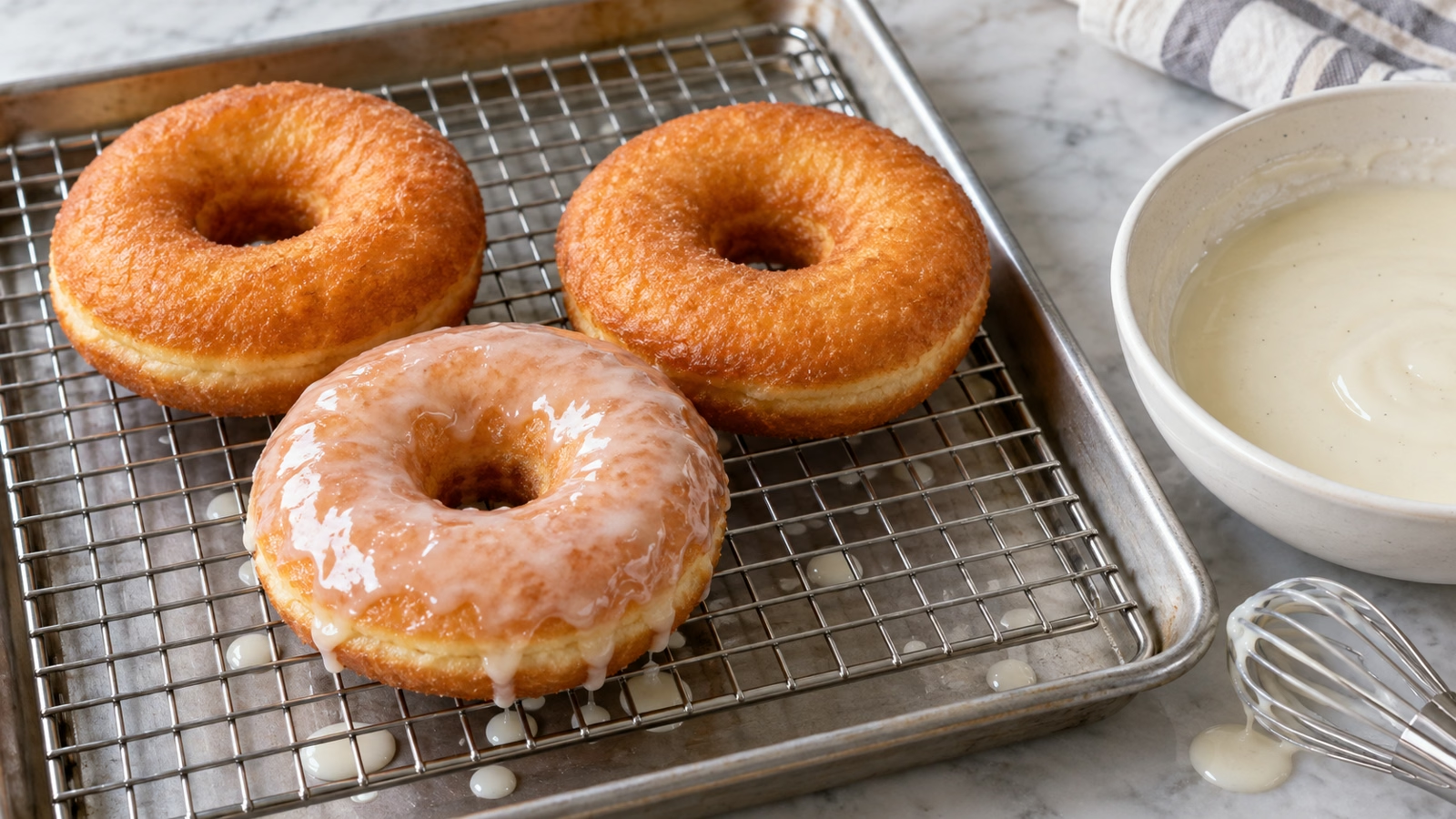
Whisk the powdered sugar, milk, and vanilla until smooth. Dip the warm, drained rings, let excess glaze fall back into the bowl, and return them to the rack over a tray. The coating should settle into a thin shell rather than pool underneath. Our pure vanilla extract guide helps if you are choosing a bottle for this simple flavor.
These are best the day they are fried. Let any leftovers cool completely before covering, and freeze unglazed rings for longer storage. Frying-oil uptake varies, so the nutrition estimate is a model using 10 grams of absorbed oil per donut and all the glaze; neither amount was measured in a cooking test.
Donuts Recipe

Ingredients
- 400 g all-purpose flour plus a little for dusting
- 50 g granulated sugar
- 7 g instant yeast about 2 1/4 teaspoons; not nutritional yeast
- 5 g fine salt
- 200 g whole milk lukewarm, about 100°F
- 1 large egg 50 g without shell
- 50 g unsalted butter melted and cooled
- 4 g vanilla extract 1 teaspoon
- 1.5 liters canola oil approximately, for a 2-inch depth; pot must be no more than half full; most oil remains unused
- 240 g powdered sugar sift if lumpy
- 60 g whole milk for glaze
- 4 g vanilla extract 1 teaspoon, for glaze
Equipment
- 1 Kitchen scale
- 1 large mixing bowl
- 1 Deep heavy 5–6 quart pot
- 1 Deep-fry thermometer
- 1 Slotted spoon or spider
- 1 Wire rack and rimmed tray
Instructions
- Mix flour, sugar, instant yeast, and salt in a large bowl. Stir in lukewarm milk, egg, cooled melted butter, and vanilla until a shaggy dough forms. Rest covered for 5 minutes, then knead 8–10 minutes by hand, or about 6–8 minutes with a dough hook on low, until smooth, elastic, and slightly tacky. Dust lightly only as needed.
- Return to the bowl, cover, and let rise in a comfortably warm spot until roughly doubled, about 60–90 minutes. Use the dough’s expansion rather than the clock alone.
- Gently deflate the dough and divide into 12 equal pieces, about 64 g each. Round each piece into a ball, cover, and rest 10 minutes. Poke a hole through each center and gently stretch into a 3 1/2–4 inch ring with a hole about 1 1/2 inches wide. Set on lightly floured parchment, leaving space between rings.
- Cover loosely and let rise 30–45 minutes, until noticeably puffy and a gentle indentation springs back slowly. Do not rush this rise. Keep the rings covered until ready to fry.
- Set a wire rack over a rimmed tray. Add about 2 inches of canola oil to a deep, heavy pot, keeping it no more than half full. Clip on a frying thermometer and heat to 350°F. Keep a metal lid nearby and never leave heating oil unattended.
- Lift 2–3 rings carefully with a broad floured spatula and lower gently into the oil. Fry about 1–2 minutes per side, until evenly golden. Maintain 350–360°F and allow the oil to recover between batches. Lift with a slotted spoon onto the rack. Cool the first donut enough to split it and check that its center is fully set with no wet dough; adjust subsequent frying time as needed.
- Whisk powdered sugar, 60 g milk, and 4 g vanilla until smooth. Once the donuts are warm rather than piping hot, dip both sides in glaze, let excess drip off, and return to the rack. Let the coating set for about 10–15 minutes before serving.
Nutrition
Video
Notes
Tried this recipe?
Let us know how it turned out!Sources
- King Arthur Baking: yeast doughnut technique
- Preppy Kitchen: frying and glazing cues
- U.S. Fire Administration: cooking fire safety
- USDA FoodData Central: ingredient nutrition
Hi, I’m Laura, the voice behind Tastiva. I’ve always believed that eating well should feel enjoyable, comforting, and realistic—not like another complicated rule to follow. I love creating recipes that fit into everyday life, sharing simple nutrition ideas, and finding small ways to make meals feel a little better without losing the pleasure of good food.