

The first sip can feel like a small reset button: warm mug, familiar aroma, and a few quiet minutes before the day gets loud. So, is coffee bad for you? For most healthy adults, moderate coffee intake is not inherently harmful. The better question is whether the amount, timing, and way you drink it work for your body.
Coffee can fit beautifully into a healthy day—the sweet spot is the cup that gives you pleasure and energy without borrowing from your sleep or comfort.
The short answer: coffee is not bad for most people
Coffee is a complex drink, not just a delivery system for caffeine. It contains plant compounds, including polyphenols, and large reviews of observational research have linked moderate coffee drinking with several favorable health outcomes. Those findings do not prove that coffee prevents disease, but they do give us a much more balanced picture than the old idea that every cup is a guilty habit.
Caffeine is the part most likely to cause trouble. The U.S. Food and Drug Administration says up to 400 milligrams of caffeine per day is an amount not generally associated with negative effects for most adults. That is a reference point, not a target. Some people feel wonderful with far less, while others notice jitters or poor sleep after one strong cup.
It also helps to separate coffee from what travels with it. A plain brewed coffee and a very large drink loaded with syrup, cream, and whipped topping are nutritionally different choices. I would not blame the coffee bean for everything in the cup.
How caffeine amount and timing change the answer
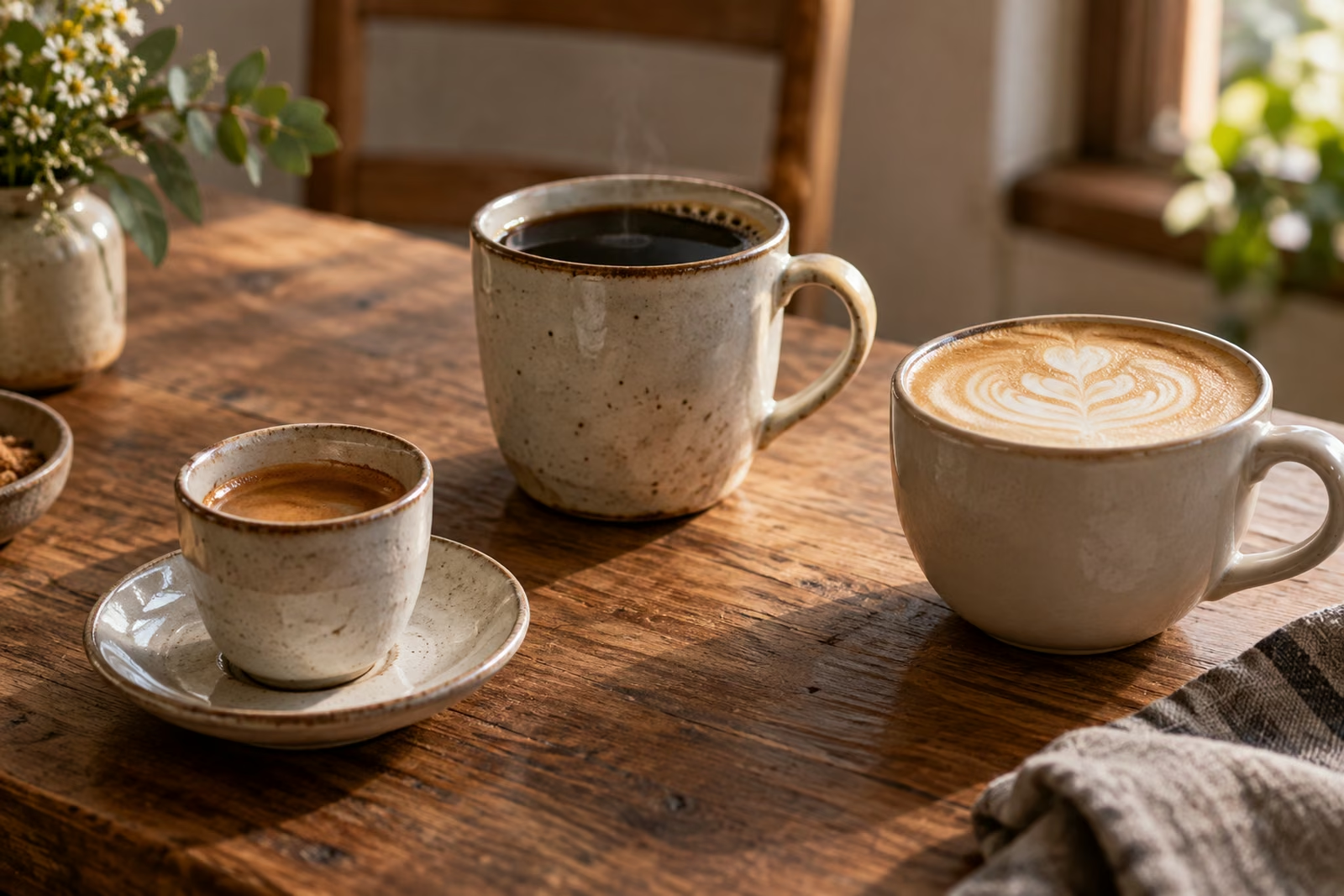
Cup size is where many coffee conversations go sideways. An eight-ounce home brew, a double espresso, and a large café coffee can contain very different amounts of caffeine. The FDA notes that a 12-ounce brewed coffee may contain roughly 113 to 247 milligrams. Check the café’s published nutrition information when you can, and remember that “one coffee” is not a standard dose.
Timing matters just as much. Caffeine can stay in the body for hours, so an afternoon coffee may still be working when you want to wind down. If falling asleep has become harder, try moving your last caffeinated drink earlier for a week before giving up coffee completely. Protecting sleep is often the most useful experiment.
- Count the real serving size, including refills and concentrated drinks.
- Notice whether caffeine affects your sleep, anxiety, digestion, or heartbeat.
- Try half-caf or decaf when you want the ritual without the same caffeine load.
- Avoid using extra coffee to repeatedly cover for too little sleep.
Signs your coffee routine may need an adjustment
Your body usually gives clues before coffee becomes a miserable habit. Too much caffeine may contribute to a racing or pounding heart, higher blood pressure, insomnia, anxiety, shakiness, nausea, stomach upset, or headaches. A sudden stop can also cause withdrawal headaches, which is why gradually reducing intake is often gentler than quitting overnight.
Coffee can aggravate reflux or a sensitive stomach for some people, especially on an empty stomach. Others do well with a smaller serving alongside breakfast. Pregnancy is another season when the limit changes: the American College of Obstetricians and Gynecologists advises keeping caffeine below 200 milligrams per day. Certain medicines and health conditions may also make individual guidance important.
If coffee triggers chest pain, severe palpitations, faintness, or symptoms that worry you, do not treat that as a lifestyle puzzle to solve alone. Speak with a qualified healthcare professional.

A gentler way to enjoy your daily cup
Start with the smallest change that answers your actual problem. If sleep is the issue, change the timing. If you feel jittery, reduce the strength or size. If the drink has quietly become dessert, use less syrup or choose a smaller version. There is no prize for making coffee joyless.
I like a simple rhythm: drink some water, have coffee with or after food if your stomach prefers it, and pause before an automatic refill. If you love the flavor, a good decaf can keep the cozy ritual intact. You can also explore more practical nutrition guidance in Tastiva’s Nutrition section.
The honest answer is wonderfully ordinary: coffee is not “good” or “bad” in isolation. A moderate cup that feels good, leaves sleep alone, and fits your overall eating pattern can be part of a healthy life.
Sources
- U.S. Food and Drug Administration: Spilling the Beans—How Much Caffeine Is Too Much?
- American College of Obstetricians and Gynecologists: Caffeine and Pregnancy
- The BMJ: Coffee Consumption and Health—Umbrella Review

Hi, I’m Laura, the voice behind Tastiva. I’ve always believed that eating well should feel enjoyable, comforting, and realistic—not like another complicated rule to follow. I love creating recipes that fit into everyday life, sharing simple nutrition ideas, and finding small ways to make meals feel a little better without losing the pleasure of good food.