
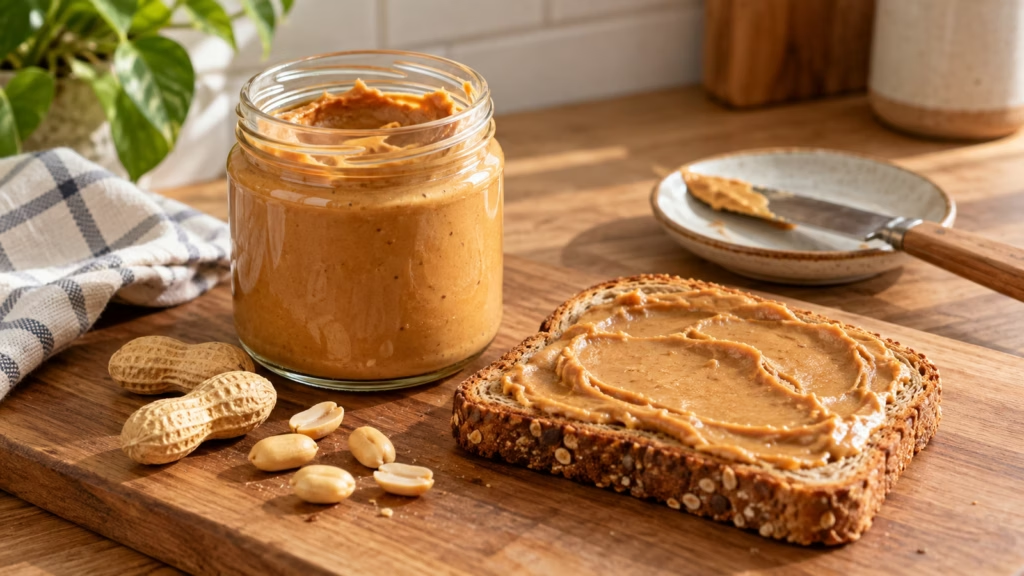
Peanut butter can make a slice of toast feel like breakfast, but the nutrition conversation around it gets oddly complicated. Is peanut butter good for you? For people who can safely eat peanuts, it can be a nutritious part of a varied diet. It supplies mostly unsaturated fat, some protein, and fiber. The useful details are the portion, the ingredients in your jar, and the foods you eat with it.
I wouldn’t judge peanut butter by its fat content alone. I’d look at what that spoonful contributes, what is added to the jar, and how it fits the meal.
What a spoonful contributes
Peanuts are legumes, although we often group them with nuts in the kitchen. Their fat is mostly monounsaturated and polyunsaturated, according to Harvard’s nutrition researchers. Peanut butter keeps much of that nutritional profile while making peanuts easy to spread, stir, or blend into a sauce. It is energy-dense, so a small amount can contribute a meaningful amount of food energy.
- For one concrete reference: Health Canada’s 2008 generic natural peanut butter entry lists 184 calories, 7 grams of protein, 16 grams of fat, 7 grams of carbohydrate, and 2.5 grams of fiber per 30 mL, about 2 tablespoons weighing 31 grams.
- For your own jar: use its current Nutrition Facts label. Formulations and serving weights differ, so the reference above is an example rather than a brand-specific estimate.
- For a smaller portion: a thin spread contributes less than the reference serving. A rounded eating spoon is not the same measurement as a level tablespoon.
That combination explains both sides of the answer: peanut butter provides useful nutrients, and it is not a low-calorie way to get a large amount of protein. You do not need to make it the main protein source at every meal. It can simply add flavor, fat, and some protein alongside other foods. More of a nutritious food is not automatically more useful for your particular appetite or needs.
Read the label beyond “natural” or “reduced fat”
A jar made with peanuts, with or without salt, is a straightforward starting point. Cleveland Clinic dietitian Kristin Kirkpatrick notes that “natural” peanut butter can still include added oil or sugar. The word on the front does not replace the ingredient list. At the same time, an extra ingredient does not turn an otherwise ordinary food into something to fear.
- Compare added sugars. Look at the added-sugars line rather than assuming that all sugars on the label were added. Peanuts contain small amounts of naturally occurring sugar.
- Compare sodium. Salted and unsalted products can be quite different. Choose in the context of your preferences and any sodium advice you follow.
- Look at saturated fat. The American Heart Association recommends checking it along with sodium and added sugars; some spreads include palm or coconut oil.
- Check the serving size first. A lower number is less meaningful if the manufacturer is describing a smaller portion.
- Read reduced-fat versions individually. Less fat does not guarantee a large calorie reduction or a product that better suits your needs. Compare the complete label rather than choosing by that claim alone.
Creamy versus crunchy is mostly a texture decision, not a shortcut to a healthier jar. Price and convenience matter too. If an affordable product you enjoy fits your needs, there is no requirement to replace it with a costly specialty nut butter. The goal is an understandable choice you can use, not a perfect label you have to hunt down.
Let it improve the rest of the meal
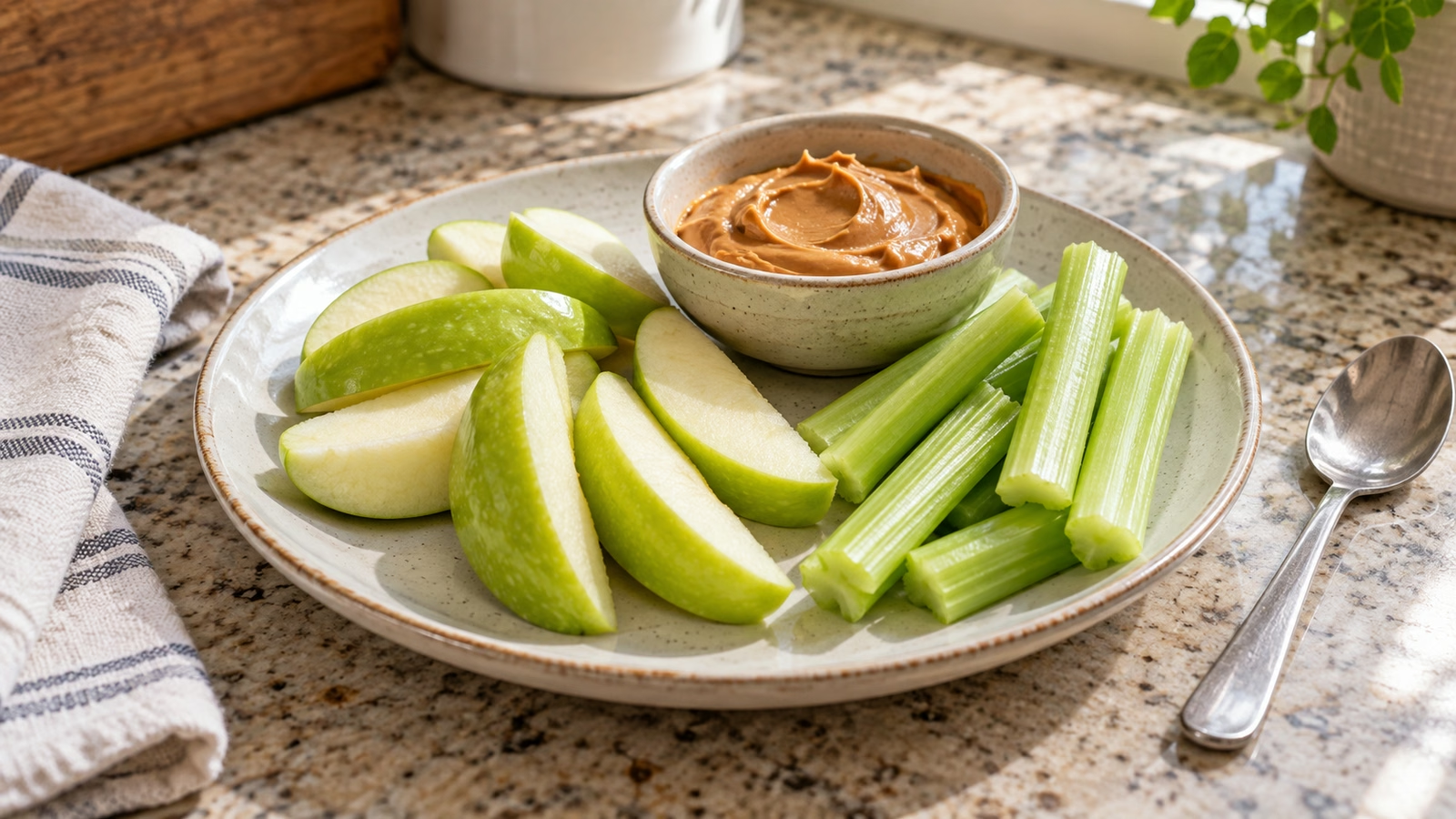
Peanut butter is useful when it helps make other everyday foods more appealing. The American Heart Association suggests pairings such as fruit, celery, whole-grain bread, and yogurt. Think of it as one component of the snack or meal, rather than a reason to skip everything else on the plate.
- With fruit: spread some on apple slices or serve a portion alongside a banana. Put what you plan to use in a small dish if dipping straight from the jar makes portions hard to judge.
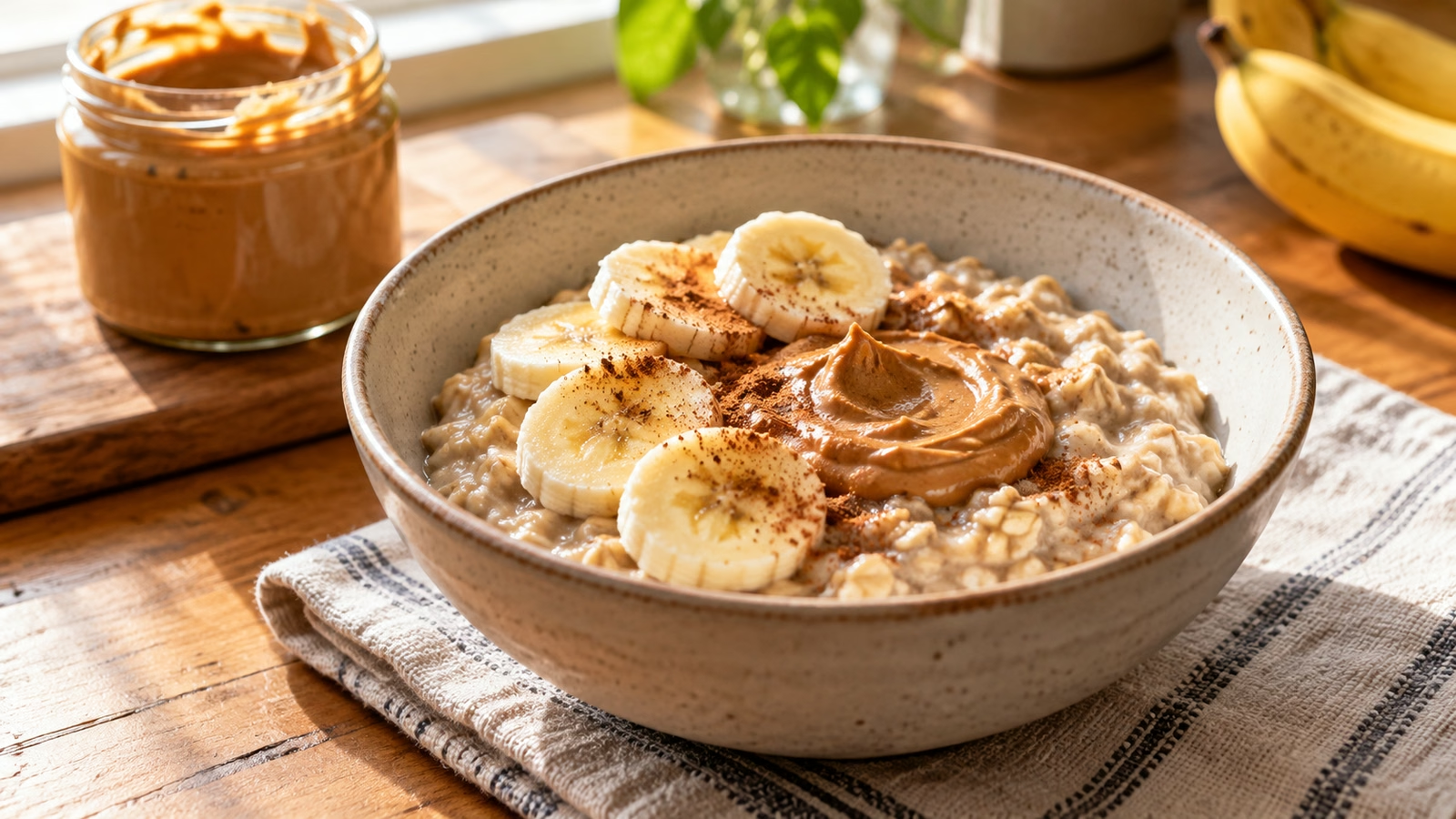
- With oats: stir a spoonful into warm oatmeal, then add fruit. It contributes richness without needing to become a thick topping over the entire bowl.
- With toast: spread it evenly on whole-grain bread and add fruit alongside if you like. A familiar breakfast does not need a supplement label to be useful.
- In a savory sauce: whisk it with suitable liquid and seasonings for vegetables, tofu, or noodles. Follow a recipe so the sauce has a balanced consistency rather than becoming a heavy paste.
If you are using it to help meet a nutrition goal, consider the whole meal. A spoonful in oatmeal and several large spoonfuls added to a sweet smoothie have different effects on the total amount of food and energy. Neither needs a moral label; they simply are not the same portion or the same meal.
The important exceptions are allergy and individual needs
Peanut butter is not a suitable choice for someone with a peanut allergy. Read the ingredients and allergen information, and follow your allergy care plan. A different nut or seed spread is not automatically safe: its ingredients and potential cross-contact matter too. Do not test whether a small amount of peanut butter is tolerable on your own.
- For shared kitchens: use clean utensils and take allergy-related cross-contact seriously. A knife used in peanut butter should not go into a shared jar intended for someone avoiding peanuts.
- For a prescribed eating plan: ask your clinician or registered dietitian how peanut butter fits if your medical care involves specific nutrient limits. A general article cannot set that portion for you.
- For storage: follow the directions on your exact jar. Our guide to whether peanut butter needs refrigeration explains why product-specific instructions matter.
The practical answer is yes, peanut butter can belong in a nourishing diet when it is safe for you. Choose a jar with an ingredient list and nutrition profile that suit you, use a portion that works for the meal, and enjoy it alongside other foods. It does not need to be a miracle food to earn its place on the shelf.
In this WSLS Healthwatch segment, Cleveland Clinic registered dietitian Kristin Kirkpatrick discusses peanuts and what to check when choosing peanut butter.
Sources
- Health Canada: Nutrient Value of Some Common Foods, 2008 — natural peanut butter reference serving.
- Harvard T.H. Chan School of Public Health: Peanuts and peanut butter.
- American Heart Association: Nut butters and nutrients.
- Cleveland Clinic: Dietitian guidance on peanuts and peanut butter.
- FDA: Food allergies and label reading.
- WSLS: Healthwatch video and report.

Hi, I’m Laura, the voice behind Tastiva. I’ve always believed that eating well should feel enjoyable, comforting, and realistic—not like another complicated rule to follow. I love creating recipes that fit into everyday life, sharing simple nutrition ideas, and finding small ways to make meals feel a little better without losing the pleasure of good food.