
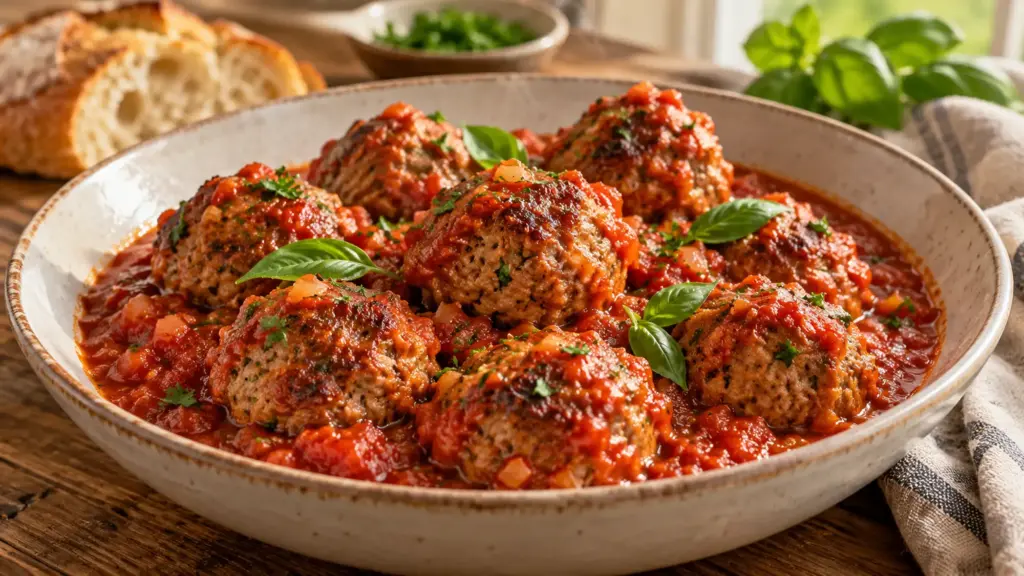
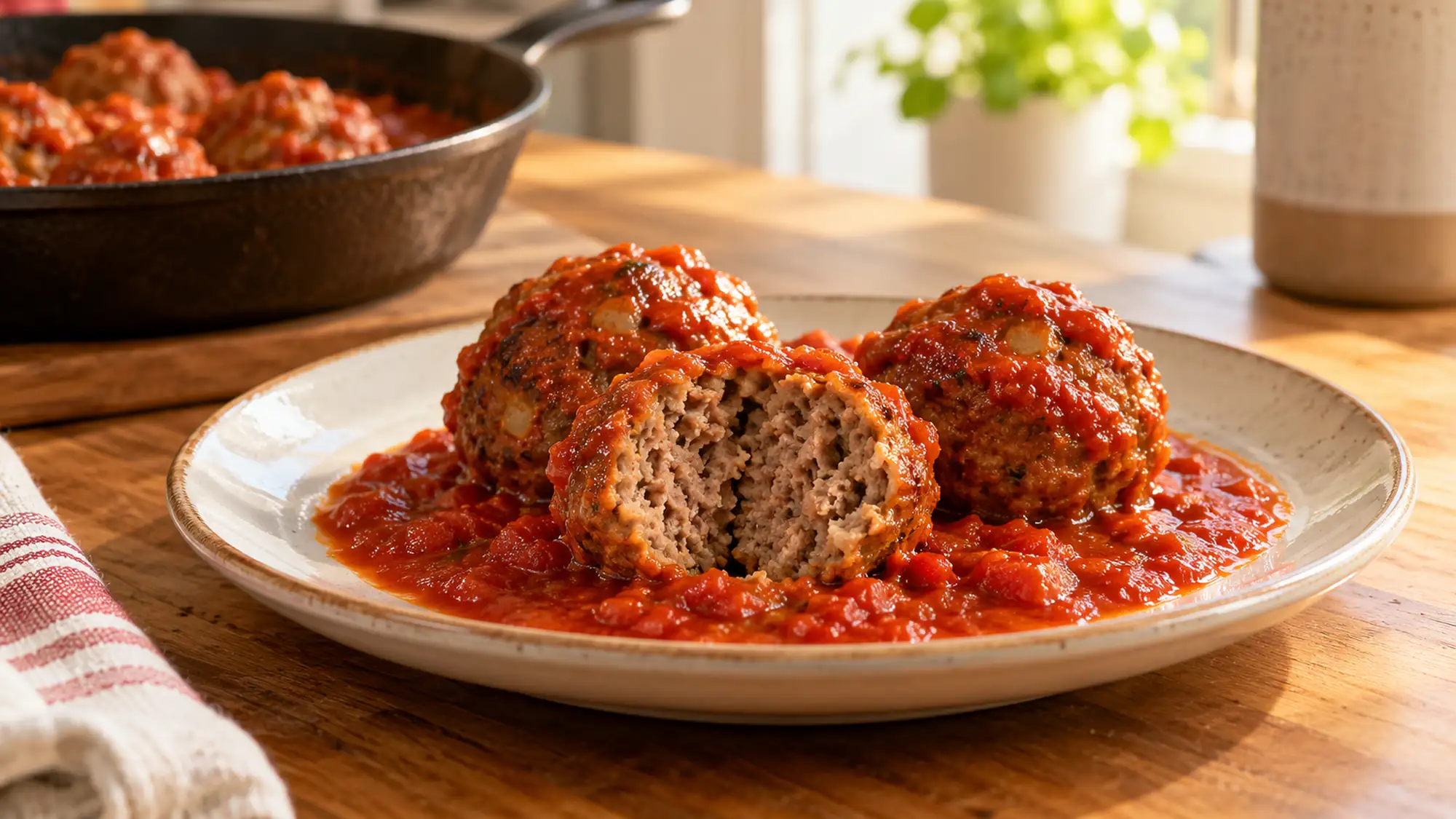
A meatball should hold together without feeling tightly packed. Italian beef meatballs get there through gentle mixing, a little softened breadcrumb and a sauce that simmers rather than boils hard. The aim is a tender center with enough structure to lift cleanly from the pan.
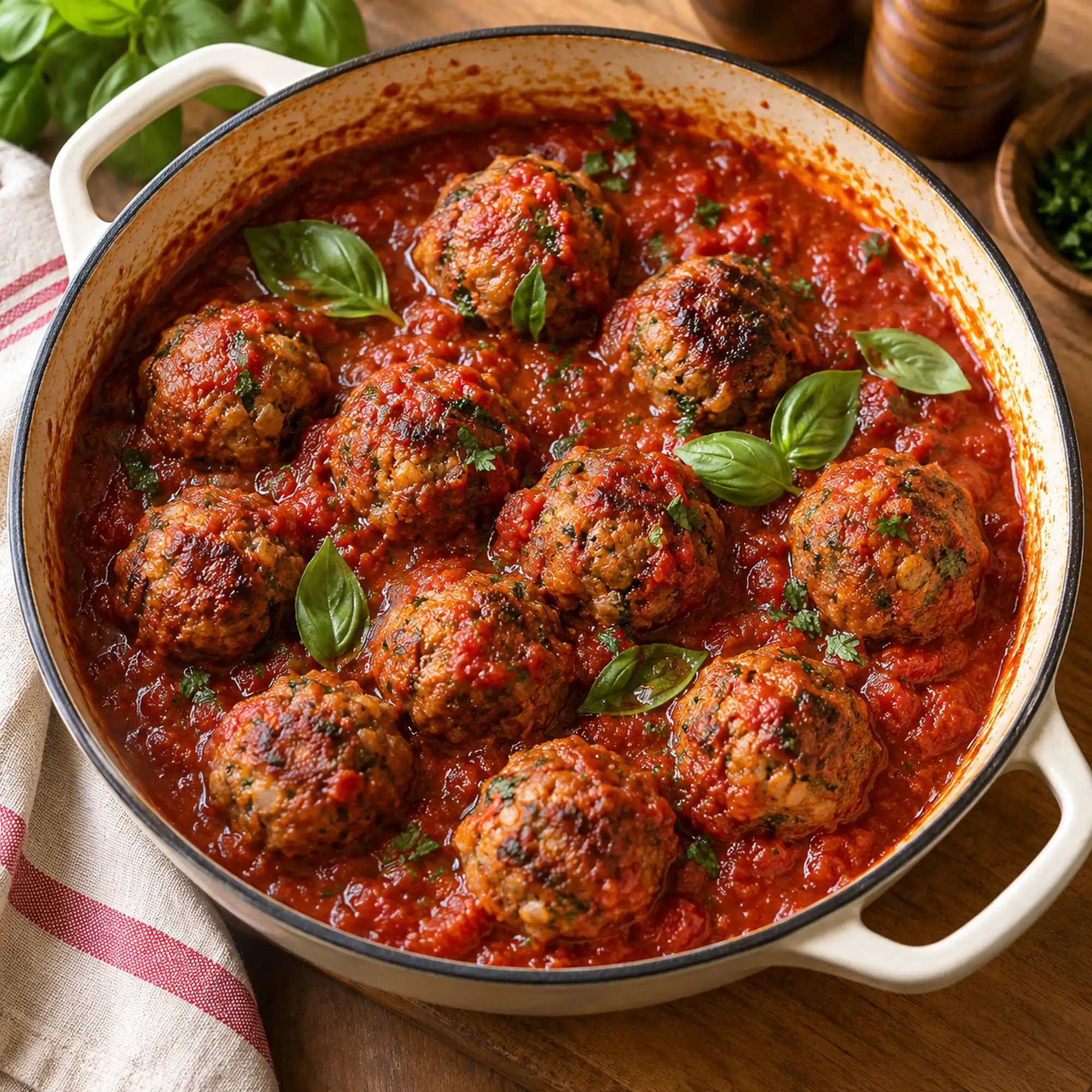
These Italian beef meatballs combine ground beef, Parmesan and softened breadcrumbs, then finish in tomato sauce. Shape similar-size portions and check their centers; a browned outside does not tell you whether the middle is cooked.
The recipe adapts The Cooking Foodie’s current tomato-sauce version, including its Parmesan addition. I prefer a spoonful of sauce beside the first bite so the meatball’s texture does not disappear beneath a mountain of pasta.
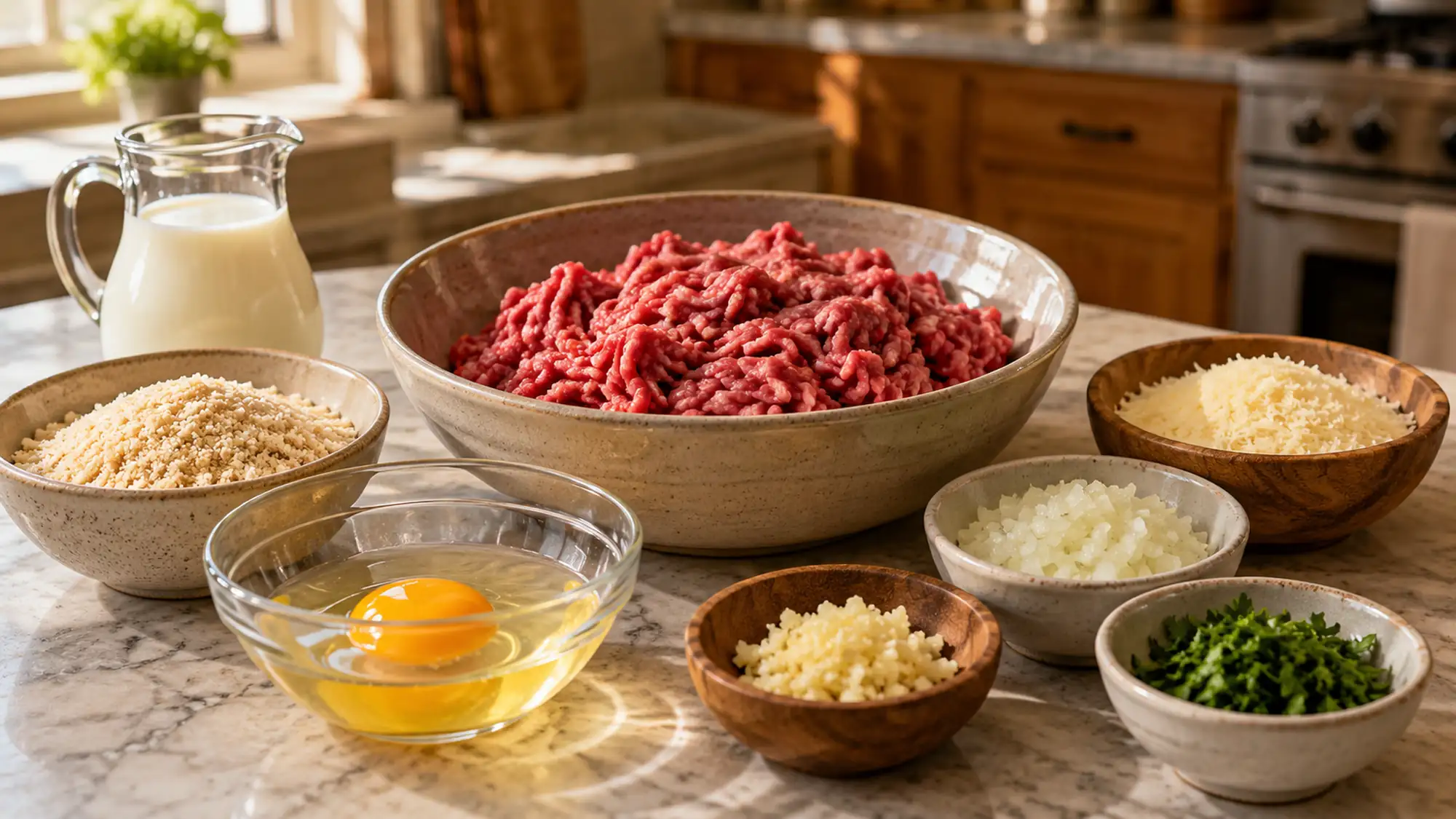
Serving Italian Beef Meatballs
The card makes about eighteen meatballs, divided into six servings with sauce. Three per person is a useful starting point, not a universal appetite rule. Keep the sauce loose enough to spoon, especially if the meatballs will sit briefly while everyone gathers.
Pasta is a familiar companion, but it is not built into this estimate. Rice, mashed potatoes or a piece of bread can also work. Choose one main starch rather than automatically putting bread beside a large pasta portion, and add vegetables if you want more variety on the plate.
- For a classic plate: serve over a modest portion of pasta.
- For a soft base: mashed potatoes catch the tomato sauce.
- For a fresh contrast: a crisp salad keeps the meal from feeling uniformly soft.
| Base | Why it works | Small adjustment |
|---|---|---|
| Pasta | Carries the tomato sauce | Reserve some cooking water |
| Mashed potatoes | Makes a soft, comforting plate | Keep extra butter modest |
| Bread | Useful for a smaller meal | Serve sauce in a shallow bowl |
Choose the accompaniment deliberately; the recipe’s estimate covers meatballs and sauce, not every possible side.
Italian Beef Meatballs Variations
Ground beef with some fat is a practical choice here. A much leaner product changes both tenderness and the amount of moisture lost in cooking. If you switch the meat, do not assume the original estimate or timing will describe the new batch exactly.
I would resist pressing the mixture repeatedly to make every ball perfectly smooth. A gentle hand gives a better starting texture than a polished appearance. Slightly irregular surfaces are not a problem, provided the portions are close enough in size to cook evenly.
- Beef and pork: the source permits a mixture; it changes flavor and nutrition.
- No chile: this version already leaves optional chile out for a mild sauce.
- Oven browning: the source offers baking before the sauce finish; use an appropriate tray.
- Different crumbs: fine dry breadcrumbs absorb differently from large panko flakes.
- A tighter sauce: add a little water rather than stirring aggressively and breaking the meatballs.
Change the meat or cooking method thoughtfully, but keep gentle mixing and a quiet simmer.
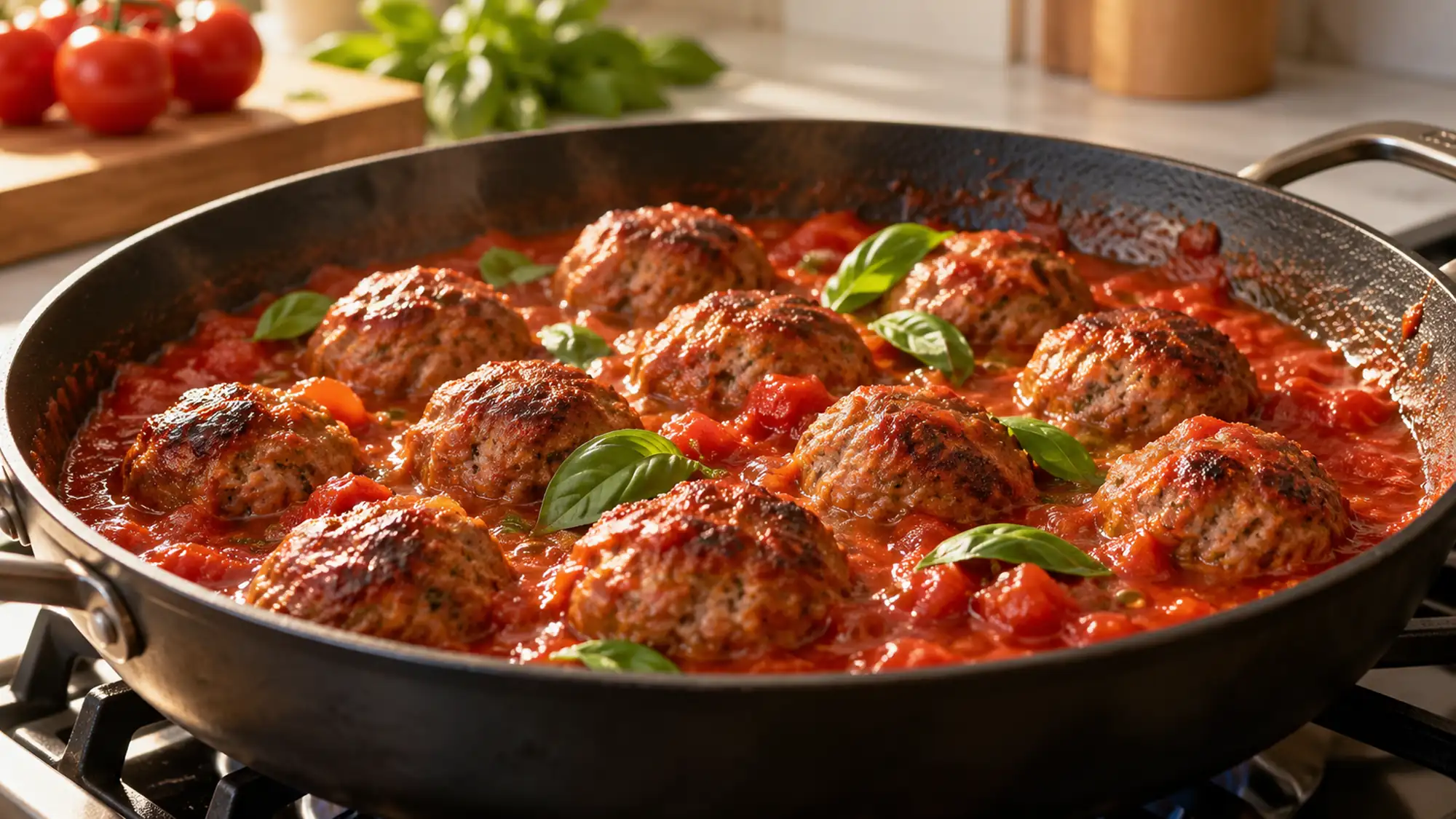
Nutrition and Safe Cooking
Beef, egg and Parmesan contribute protein, while the sauce brings tomato and onion. The recipe also includes fat and salt, so it should not be described as automatically light simply because it is homemade. Portion size and the chosen accompaniment remain part of the overall meal.
The estimate includes all measured cooking oil and the full sauce. Plain passata is used rather than an already seasoned jar sauce, which helps make the salt addition more predictable. Brand differences still matter, especially for cheese and breadcrumbs.
- Check the center: ground beef should reach160°F.
- Use clean utensils: do not put a cooked meatball back on a plate that held raw mixture.
- Keep portions similar: larger meatballs need longer, even when the smaller ones are ready.
- Reheat gently but thoroughly: loosen the sauce if needed and bring leftovers to165°F.
A thermometer and an honest portion estimate are more useful than relying on the meatballs’ color or a homemade label.
Bottom Line
Italian beef meatballs are satisfying because the method leaves room for a tender center and a sauce that stays distinct. Mix gently, brown without crowding and give the tomato sauce a calm simmer. Then choose the side that fits your dinner rather than treating pasta as an automatic requirement.
Gentle handling before cooking and gentle heat afterward are the two habits worth keeping.
Italian Beef Meatballs Recipe

Ingredients
- 560 g 85% lean ground beef
- 150 g onion finely minced for meatballs
- 12 g fresh parsley chopped
- 6 g garlic minced for meatballs
- 1 large egg about 50 g without shell
- 42 g fine dry breadcrumbs
- 30 ml whole milk to soften crumbs
- 2 g paprika divided
- 6 g fine salt divided
- 2 g ground black pepper divided
- 30 g Parmesan finely grated
- 30 ml olive oil total for browning and sauce
- 200 g onion diced for sauce
- 9 g garlic minced for sauce
- 600 g plain strained tomatoes passata
- 45 g tomato paste
- 480 ml water adjust to sauce thickness
- 4 g fresh basil
Equipment
- 1 Mixing bowl
- 1 Large deep skillet
- 1 Instant-read thermometer
Instructions
- Soak breadcrumbs in milk briefly. Gently combine beef, 150 g minced onion, parsley, 6 g garlic, egg, crumbs, Parmesan and half each of paprika, salt and pepper. Shape about 18 similar-size meatballs without packing tightly.
- Heat the measured oil in a deep skillet. Brown meatballs in batches, turning gently; they need not cook through yet. Transfer to a clean plate.
- Soften the remaining onion in the same pan, then add remaining garlic. Stir in passata, tomato paste, water, basil and remaining seasoning; bring to a gentle simmer.
- Return meatballs, partly cover and simmer 20–30 minutes, stirring carefully, until their centers reach 160°F (71°C). Add a little water if sauce thickens before they cook. Serve six portions of meatballs and sauce; pasta or bread is optional.
Nutrition
Video
Notes
Tried this recipe?
Let us know how it turned out!Hi, I’m Laura, the voice behind Tastiva. I’ve always believed that eating well should feel enjoyable, comforting, and realistic—not like another complicated rule to follow. I love creating recipes that fit into everyday life, sharing simple nutrition ideas, and finding small ways to make meals feel a little better without losing the pleasure of good food.