
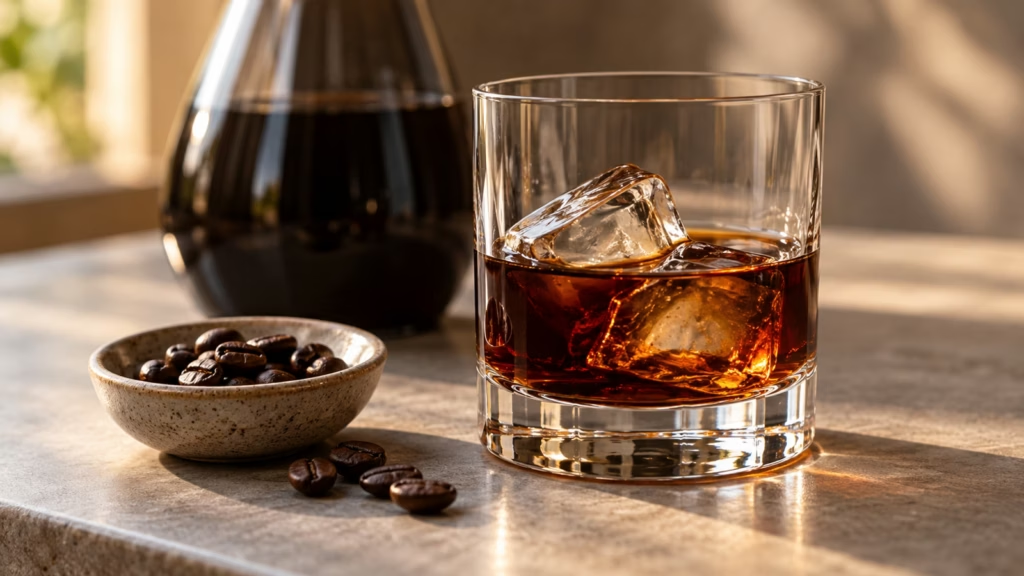
A dark coffee cocktail and a pale cream liqueur can both carry the Kahlúa name, but they are not interchangeable bottles. Kahlúa Original is a sweet rum-and-coffee liqueur. The wider U.S. range also includes creamy products with different ingredients and alcohol levels, so the exact product name matters before you pour.
Read the whole name on the bottle. “Kahlúa” identifies the brand; it does not give every product the same ingredients.
I would start by deciding what you want the bottle to do: bring coffee flavor to a cocktail, add a little sweetness to a dessert, or serve as a ready-to-pour creamy drink. That choice makes the label much easier to read. This guide uses the manufacturer’s U.S. information checked in October 2026; your actual bottle remains the final reference.
Original is a coffee liqueur, not bottled coffee
Kahlúa Original combines rum and Arabica coffee with a sweet coffee profile. It contributes alcohol and sweetness as well as coffee flavor, which is why pouring it into a recipe is different from adding an equal amount of espresso. I would measure it rather than treating it like a casual splash of cold brew.
The current U.S. Original product page lists 20% alcohol by volume, or ABV. The U.S. site footer also identifies a 21.5% version available only in Ohio. Other countries and other products can have different strengths, so a search result saying 16% does not necessarily describe the U.S. Original bottle in your cupboard.
- Read the product name: Original, a flavored cream liqueur, and a ready-to-drink cocktail have different roles.
- Check the ABV: Use the percentage on your bottle rather than a remembered number from another market.
- Keep the label: A decorative decanter makes ingredient and storage questions harder to answer later.
Creamy variants need their own ingredient check
Two current U.S. examples make the distinction clear. Kahlúa Dunkin’ Caramel Swirl Cream Liqueur contains real cream and milk proteins and is 16% ABV. Chocolate Sips Smooth Chocolate is also 16% ABV and contains milk proteins. Those are product-specific facts, not a rule that everything under the brand is a cream liqueur.
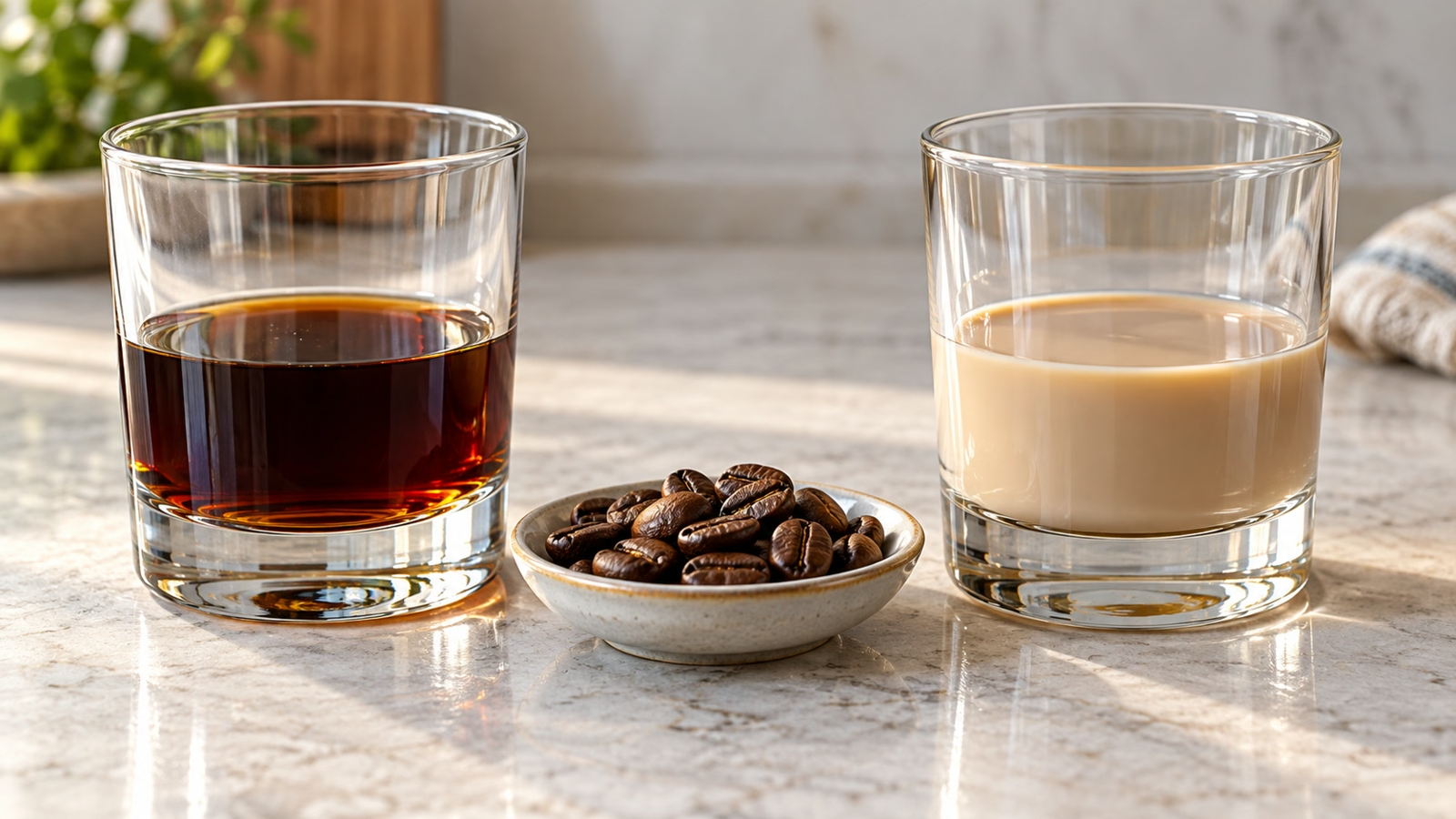
Do not use color or a creamy-looking cocktail as an allergy test. A White Russian gets cream from a separate ingredient in the drink, while a cream liqueur already has dairy in the bottle. For a milk allergy, check the current U.S. ingredient and allergen information for the exact product and ask the manufacturer if anything is unclear.
- Original versus cream products: Do not transfer a dairy statement from one bottle to another, or from another country’s product page.
- Vegan suitability: The U.S. Original page says the maker cannot call it vegan or vegetarian because of a sugar supplier’s processing method. That is a separate question from whether cream was added.
- Availability: The U.S. range page now lists several older flavors and canned drinks as discontinued. An old cocktail article may still name them; check current availability before planning around one.
Count the coffee in the whole drink
The brand’s U.S. information gives approximately 5 milligrams of caffeine in a 1.5-fluid-ounce serving of Kahlúa Original. That figure describes the liqueur portion, not an espresso martini containing additional coffee. The caffeine in the espresso or cold brew you add depends on its preparation and serving size.
Coffee flavor, sweetness, and a small glass do not tell you how much caffeine a finished drink contains. The same distinction appears with nitro cold brew: texture and appearance are not caffeine measurements. If you are trying to avoid caffeine, choosing decaf coffee does not remove the caffeine already present in a coffee liqueur.
Caffeine also does not cancel alcohol’s effects. The CDC notes that feeling more alert does not make an alcoholic drink less impairing. Keep coffee cocktails for adults of legal drinking age, do not use them as an energy boost, and do not drive after drinking. An alcohol-free coffee drink is the appropriate alternative when you are avoiding alcohol.
Use it deliberately, then store the right bottle
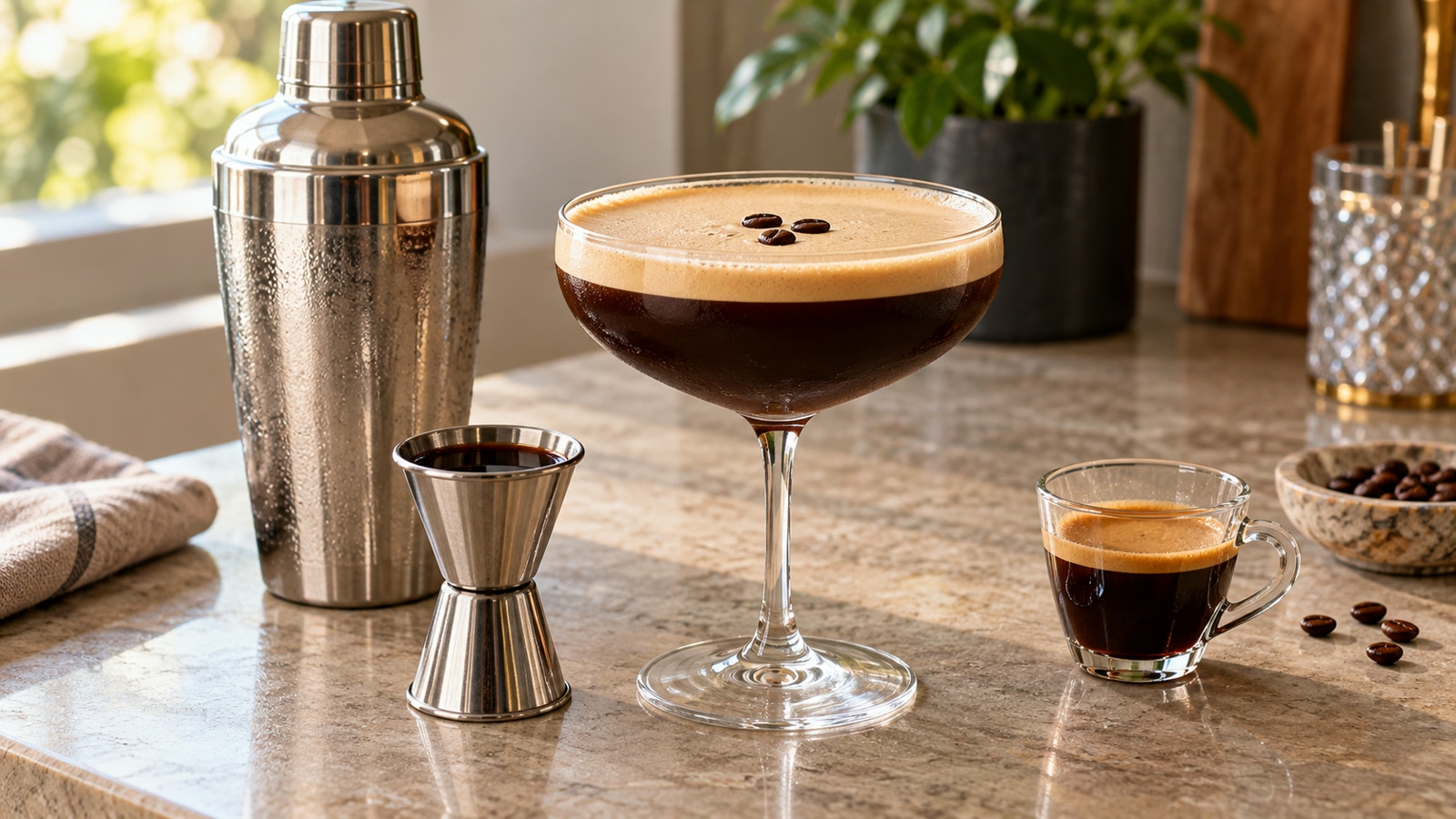
An espresso martini combines coffee liqueur with vodka and espresso; a White Russian adds cream to coffee liqueur and vodka. These are different textures and flavor balances, not simply two names for the same drink. The brand’s instructional video below illustrates the espresso version, including measuring and shaking.
- For cocktails: Follow a complete recipe first and taste before adding extra syrup; the liqueur already contributes sweetness.
- For desserts: Use a recipe designed for coffee liqueur. It adds liquid and alcohol, so replacing all the coffee or milk with it changes more than flavor.
- For an alcohol-free option: Choose a coffee-based recipe without liqueur rather than assuming cooking or a small serving makes the original alcohol-free.
For Original, the U.S. FAQ recommends a cool, dry place away from sunlight and says refrigeration is unnecessary. Its four-year recommendation is for an unopened bottle and concerns the coffee flavor’s quality. Cream products have their own instructions: Dunkin’ and Chocolate Sips list different, shorter quality windows. Follow the exact label rather than applying Original’s storage advice to the whole range.
Sources
- Kahlúa U.S.: Original Coffee Liqueur
- Kahlúa U.S.: caffeine and storage questions
- Kahlúa U.S.: Dunkin’ Cream Liqueur
- Kahlúa U.S.: Chocolate Sips
- Kahlúa U.S.: current and discontinued products
- CDC: alcohol and caffeine

Hi, I’m Laura, the voice behind Tastiva. I’ve always believed that eating well should feel enjoyable, comforting, and realistic—not like another complicated rule to follow. I love creating recipes that fit into everyday life, sharing simple nutrition ideas, and finding small ways to make meals feel a little better without losing the pleasure of good food.