
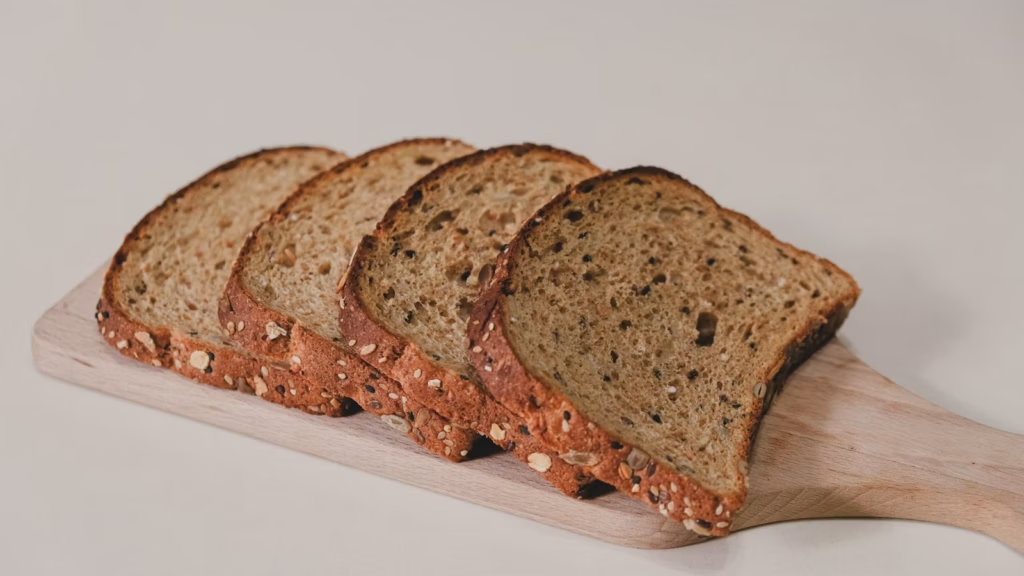
Low carb bread asks ingredients to do jobs that wheat usually handles quietly. Almond flour brings tenderness, eggs build structure, and whole psyllium husk holds water so the loaf bends instead of crumbling. When those pieces are measured carefully, the result is a sturdy everyday slice—not an eggy sponge pretending to be toast.
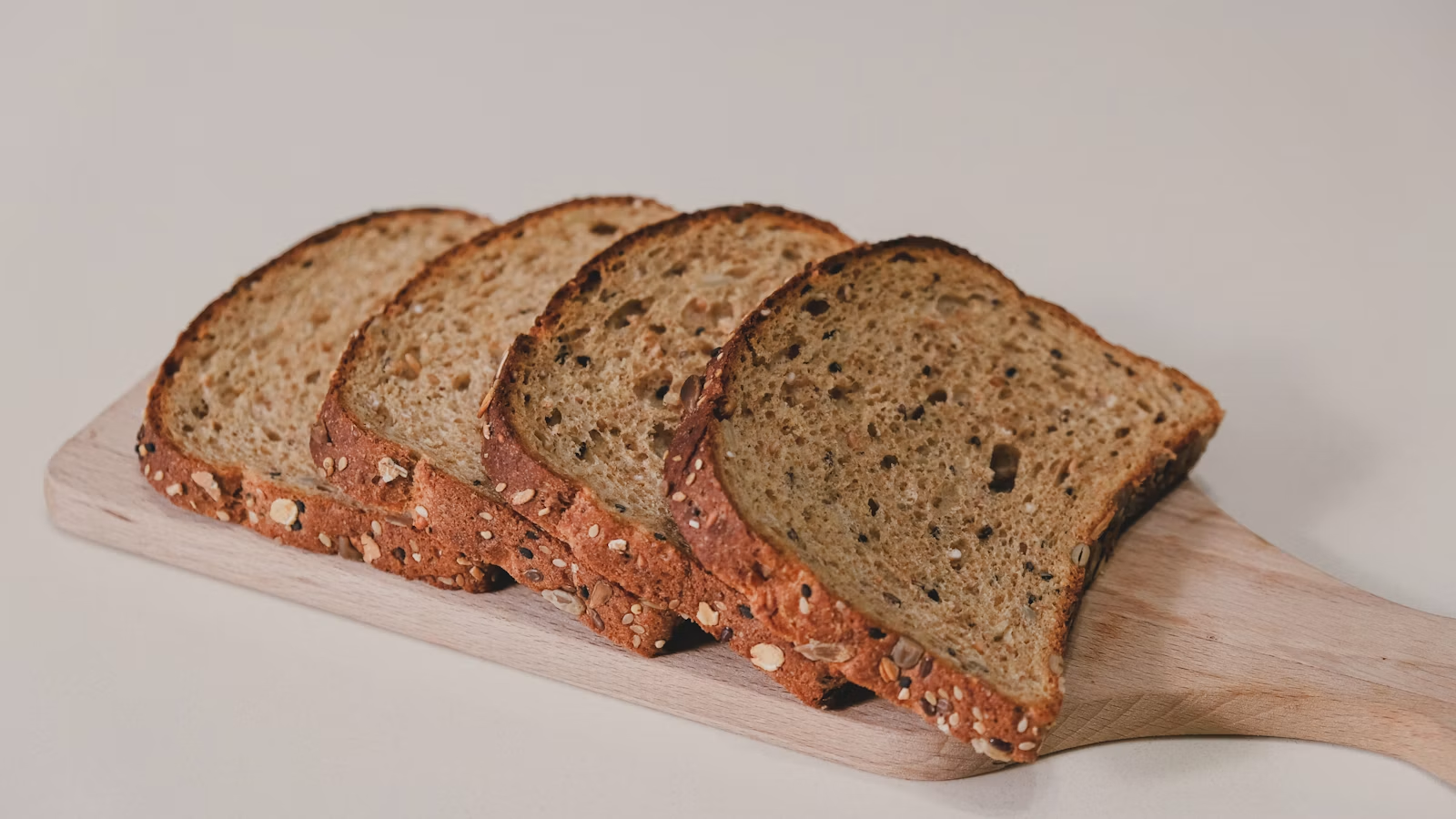
A low-carb loaf needs time to hydrate before it needs another spoonful of flour.
What makes this low carb bread hold together
Wheat dough stretches because gluten forms an elastic network. Almond flour has no gluten, so this recipe builds a different kind of support. Eggs set as the loaf bakes. Psyllium absorbs water and forms a gel that holds the almond particles together. Baking powder provides lift, while a little vinegar supports the leavening and keeps the flavor balanced.
Use fine blanched almond flour, not coarse almond meal. Measure by weight when possible because a packed cup can add much more flour than a lightly filled one. Use whole psyllium husk rather than powder: powder absorbs differently and may produce a dense, gummy loaf. Substituting coconut flour is not a one-for-one option; it needs a separately tested formula.
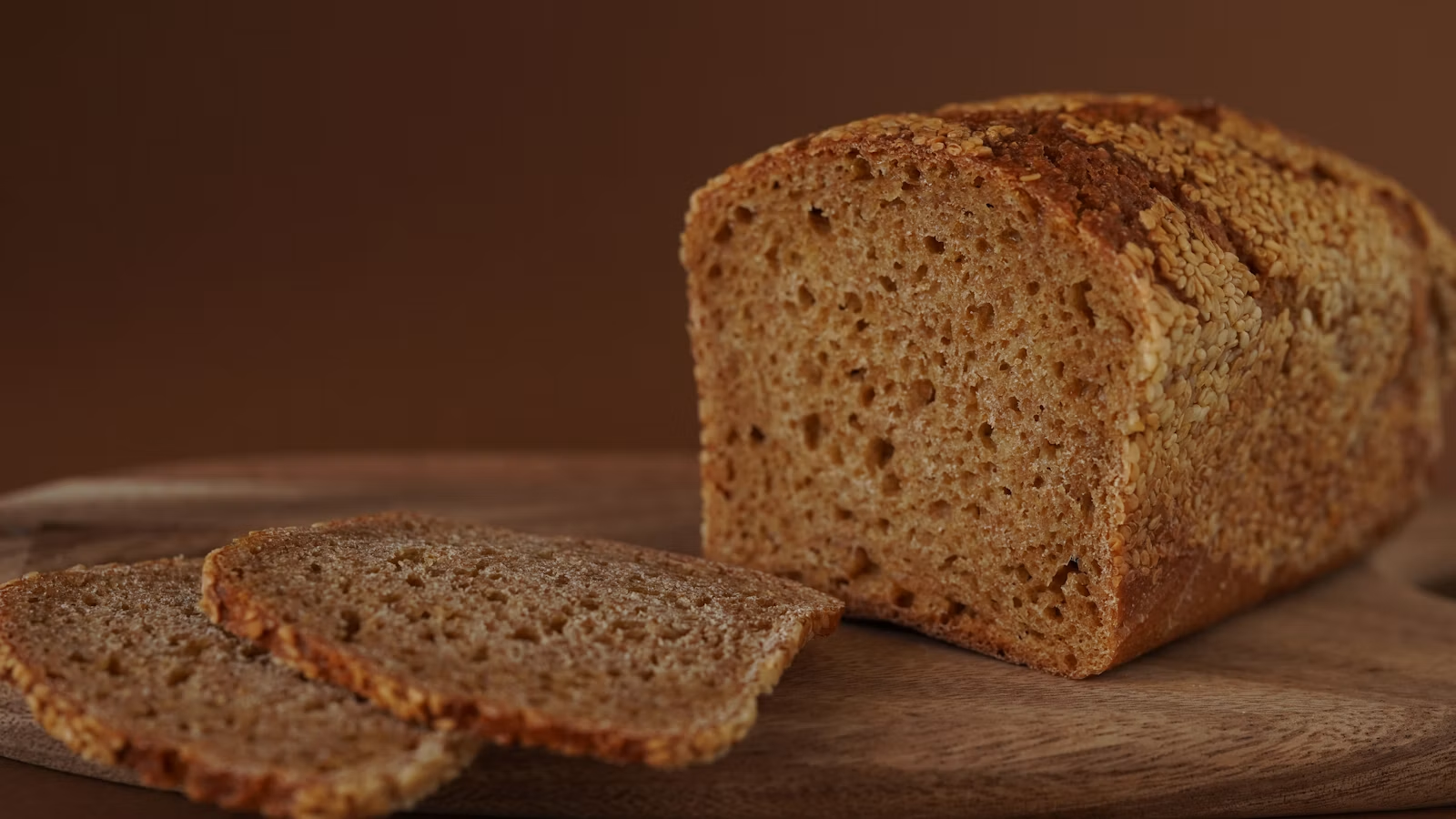
The mixing order prevents gummy pockets
Whisk the dry ingredients until the psyllium and baking powder are completely dispersed. In another bowl, whisk the eggs, oil, warm water, and vinegar. Combine them, then stir firmly until no dry streaks remain. The mixture will thicken as it sits, which is exactly what should happen. Give it about five minutes before shaping.
Transfer the dough to the prepared pan and smooth the top with damp fingers or a spatula. Do not keep adding almond flour because the dough seems soft; the husk is still hydrating. Bake until the center feels set and an instant-read thermometer registers about 200°F (93°C). A deeply colored crust is more reassuring than a pale one here.
Cooling is part of the recipe
The loaf continues to set after it leaves the oven. Cool it in the pan briefly, then lift it onto a rack and wait until it is completely cool before slicing. Cutting while warm compresses the crumb and can make a properly baked loaf look underdone. A thin serrated knife gives the cleanest slices.
- Dense bottom: the batter sat too long before baking or the leavener was old.
- Wet center: the loaf needed more oven time or was sliced while warm.
- Large eggy pockets: the wet mixture was not whisked evenly.
- Purple-gray crumb: some psyllium products change color when baked; it is harmless but surprising.
- Crumbly slices: weigh the almond flour and make sure the psyllium is fresh.
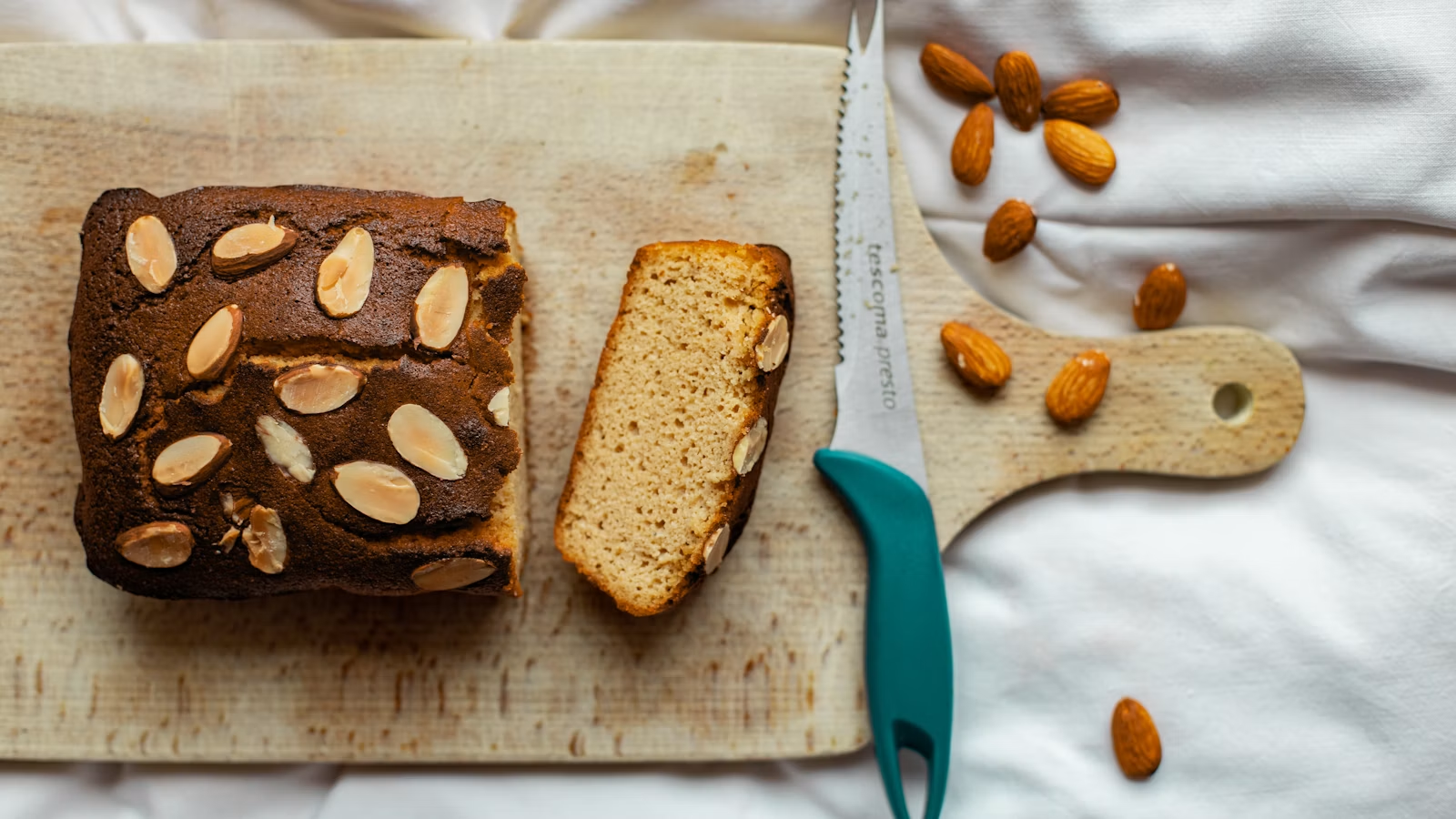
Low-carb does not automatically mean gluten-free
This loaf contains no wheat ingredients as written, but that alone does not guarantee it is safe for someone with celiac disease. Almond flour, psyllium, baking powder, and other packaged ingredients can encounter gluten during processing. Use products labeled or certified gluten-free when needed. Tastiva’s gluten-free bread guide explains the distinction in more detail.
Carbohydrate claims also deserve precision. The nutrition card lists estimated total carbohydrate and fiber per slice from the specified ingredients. Some people calculate “net carbs” by subtracting fiber, but that term is not defined by the FDA. Compare labels, serving sizes, and your own dietary needs rather than relying on a large claim on the front of a package.
Storing and serving the loaf
Because almond flour is rich in fat and moisture, this bread keeps best in the refrigerator after the first day. Cool it completely, wrap it well, and refrigerate for up to five days. For longer storage, place parchment between slices and freeze them in a sealed bag for up to two months. Toast straight from frozen or thaw only what you need.
The flavor is gently nutty and savory. Use it for avocado toast, open-faced sandwiches, or a crisp side for soup. Thinner slices toast more evenly; thicker ones make better sandwiches. If you change the pan size, begin checking early because loaf depth controls baking time.
Low carb bread recipe
The editable recipe card below includes weights and volume measures, plus the cooling time that protects the crumb. Follow the ingredient forms closely on the first bake. Once you know the loaf’s normal texture, small flavor additions such as dried herbs or seeds are easier to judge.
Tender Low Carb Almond Bread

Ingredients
- 2 cups fine blanched almond flour 224 g
- 1/4 cup whole psyllium husk 28 g; not psyllium powder
- 1 tablespoon baking powder
- 1/2 teaspoon fine salt
- 5 large eggs
- 1/3 cup olive oil
- 1/2 cup warm water
- 1 teaspoon apple cider vinegar
Instructions
- Heat the oven to 350°F (175°C). Line an 8½-by-4½-inch loaf pan with parchment, leaving overhang on the long sides.
- Whisk the almond flour, whole psyllium husk, baking powder, and salt in a large bowl until completely even.
- In a second bowl, whisk the eggs, olive oil, warm water, and vinegar. Pour into the dry ingredients and stir firmly until no dry streaks remain.
- Let the dough stand for 5 minutes to hydrate. Transfer it to the pan and smooth the top with damp fingers or a spatula.
- Bake for 50 to 55 minutes, until deeply golden, firm in the center, and about 200°F (93°C) internally.
- Cool in the pan for 10 minutes, then lift onto a rack. Cool completely before slicing with a serrated knife.
Nutrition
Video
Notes
- Use whole psyllium husk, not powder; the forms absorb differently and are not interchangeable here.
- For gluten-free needs, verify that every packaged ingredient is certified gluten-free.
- Refrigerate the fully cooled loaf, well wrapped, for up to 5 days or freeze individual slices for up to 2 months.
- Nutrition is an estimate calculated from USDA FoodData Central values. Per slice: about 6 g total carbohydrate and 4 g fiber. “Net carbs” is not an FDA-defined term.
Tried this recipe?
Let us know how it turned out!Sources
- FDA: Questions and Answers on Dietary Fiber
- FDA: How to Understand and Use the Nutrition Facts Label
- USDA FoodData Central
Hi, I’m Laura, the voice behind Tastiva. I’ve always believed that eating well should feel enjoyable, comforting, and realistic—not like another complicated rule to follow. I love creating recipes that fit into everyday life, sharing simple nutrition ideas, and finding small ways to make meals feel a little better without losing the pleasure of good food.