
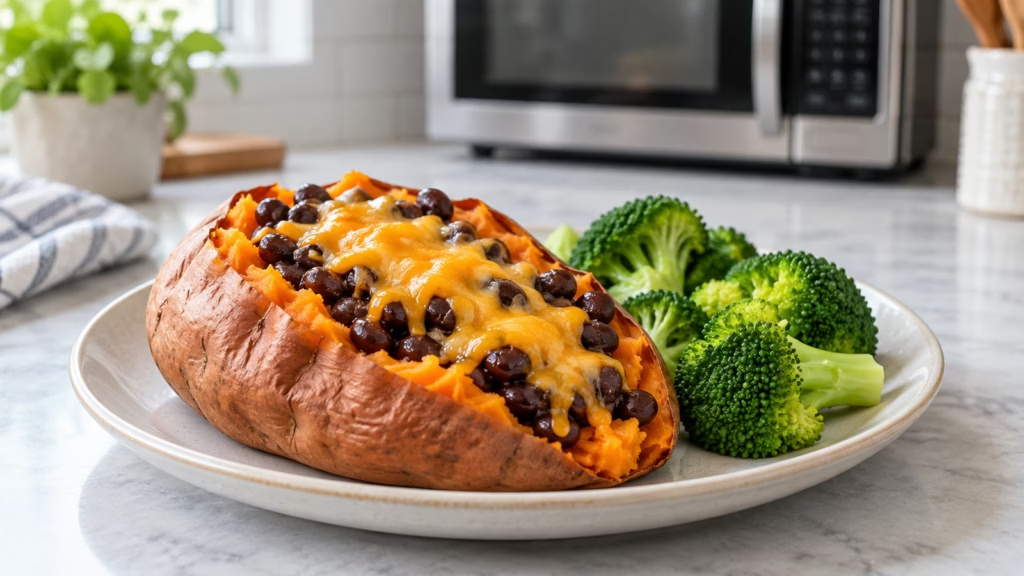
A meal plan can say “no stove” and still quietly ask for a pot of cooked rice or yesterday’s roast chicken. This microwave meal plan starts with foods you can actually use: microwave-ready grains and pasta, fully cooked chicken, canned fish and beans, frozen vegetables, and a few cold meals. Five days are covered without a hidden pan, oven, toaster, or Sunday cooking session.
Buy the food in the form your kitchen can handle, then check the heating instructions before you need dinner.
Check the kitchen and the package first
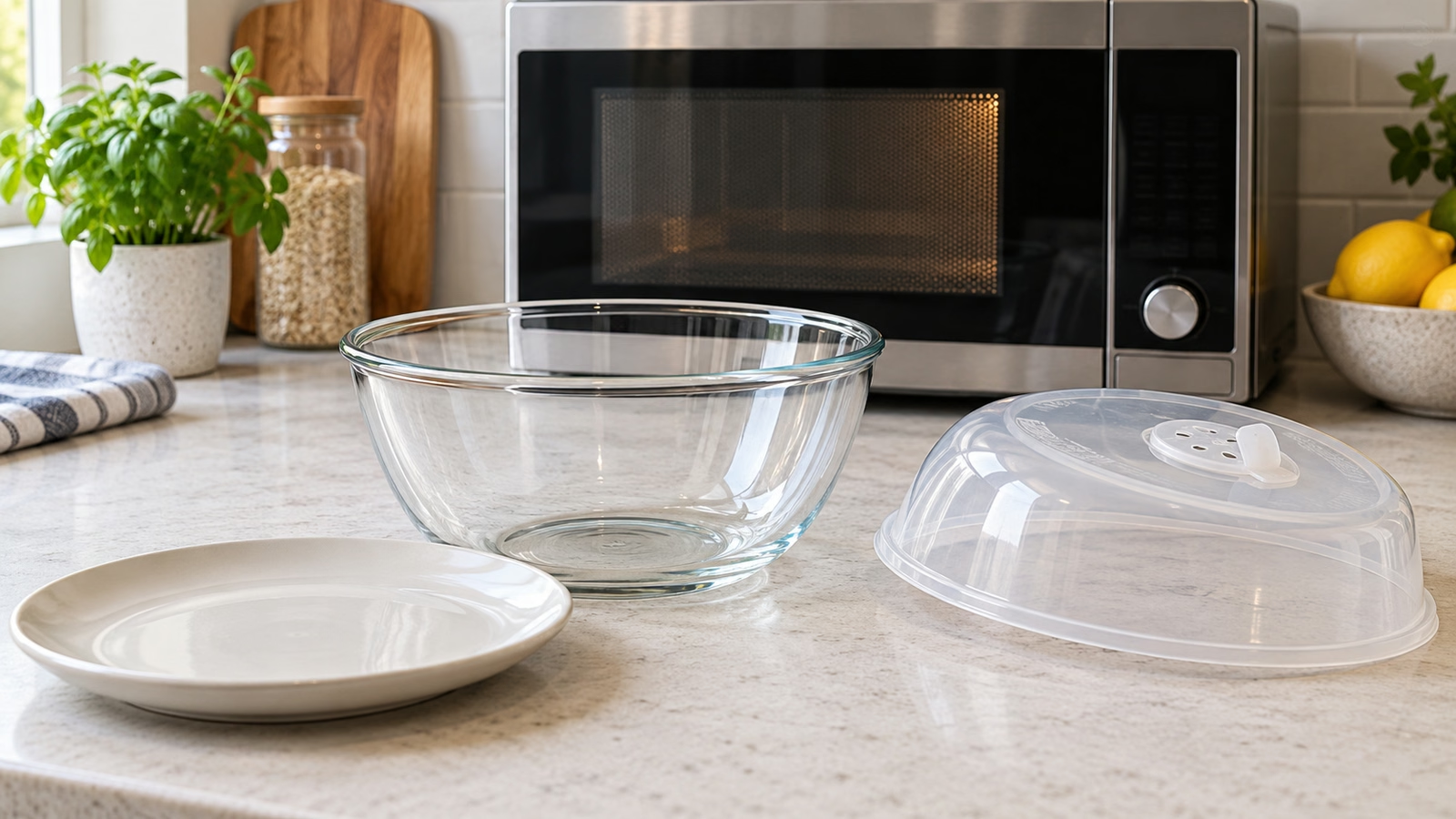
This plan is for one adult with a microwave, a working refrigerator, and a freezer. It is not a shelf-stable plan for a room without cold storage. You also need a roomy microwave-safe bowl, a vented cover, a plate, a knife, a can opener if needed, and a food thermometer.
I’d pay particular attention to the word “cooked.” A pouch of ready-to-heat rice and a bag of dry rice are different starting points; raw frozen chicken is not a substitute for the fully cooked chicken below. Follow package storage and microwave directions, including the stated wattage and standing time.
- Choose microwave-ready: Rice and pasta must already be cooked and have microwave instructions. Use ordinary canned beans, not dried beans.
- Give food room: Oatmeal and soup can bubble up. Use a bowl larger than the portion and leave space under the cover.
- Use suitable containers: Choose containers labeled microwave-safe. Transfer food out of cans and ordinary storage tubs; only heat a pouch or tray if its own directions permit it.
- Expect soft textures: The microwave can soften a potato and melt cheese. It does not give this menu crisp roasted skin or a toasted wrap.
A 5-day microwave meal plan
Portions are examples to adjust to your appetite. Add snacks and more food as needed; there is no calorie prescription. The rice shopping amount makes four roughly 125g servings. Split the fully cooked chicken between Day 2 dinner and Day 3 lunch, and cook frozen vegetables according to their own microwave directions before combining them with the meal.
| Day | Breakfast | Lunch | Dinner |
|---|---|---|---|
| 1 | Microwave oats, milk, banana, peanut butter | Canned-salmon wrap with cucumber and yogurt dressing; carrots | Microwaved sweet potato with ½ can black beans and 1oz cheddar; broccoli |
| 2 | 170g Greek yogurt, fruit, and nuts | ½ can chickpeas with cucumber and cherry tomatoes;2 bread slices | Half the first rice pouch, half the fully cooked chicken, and broccoli |
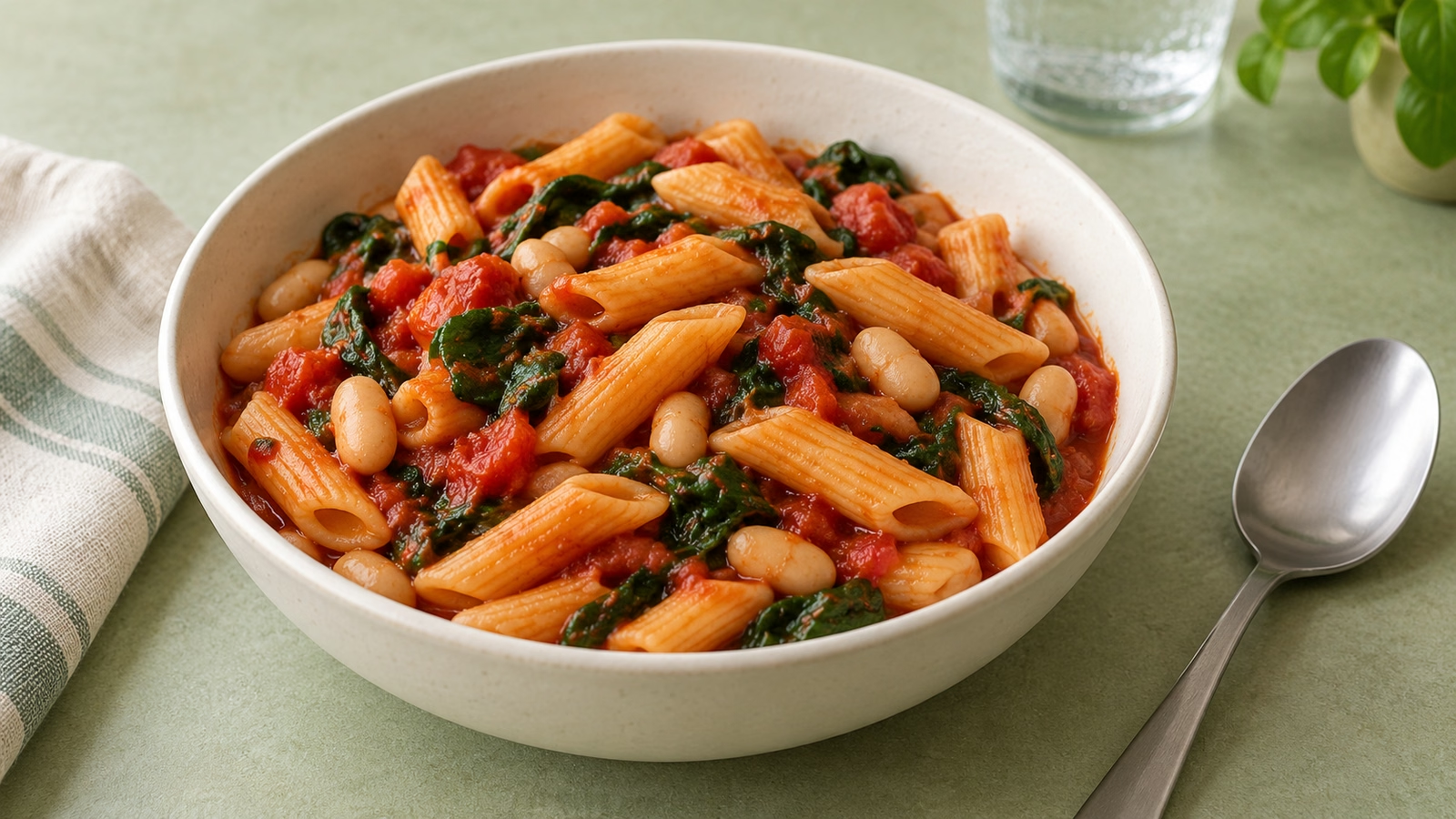
| 3 | Microwave apple-cinnamon oats with milk | Remaining Day 2 rice/chicken/broccoli bowl, reheated safely | Microwave-ready pasta,½ can white beans,½ can tomato sauce, and ½ bag spinach |
| 4 | 2 bread slices with peanut butter and banana | White-bean, tomato, and spinach soup using the reserved halves;2 bread slices and 1oz cheddar | Half the second rice pouch, reserved black beans,½ cup cooked corn, and 1oz cheddar |
| 5 | 170g Greek yogurt, fruit, and nuts | Reserved chickpeas in a tortilla with cucumber, tomatoes, and yogurt dressing; carrots | Remaining rice,1 cup cooked edamame and ½ cup cooked corn, finished with olive oil and lemon |
The grocery list that avoids extra cooking
The list below covers the meals for one person. Look for plain or lightly seasoned versions that suit your preferences, then compare serving sizes and sodium on the labels. I’d keep a little olive oil, lemon, and a familiar seasoning nearby; convenience foods still benefit from a finish you enjoy.
- Ready-to-heat grains: Two microwave-ready rice pouches, about 250g each; one cooked microwave-ready pasta pouch, about 8–9 ounces; six slices whole-grain bread; and two whole-grain tortillas. Freeze unused bread or tortillas from larger packs.
- Protein foods: One small can of salmon, about 5 ounces;6–8 ounces fully cooked chicken; one 15-ounce can each of black beans, chickpeas, and white beans; and enough frozen shelled edamame for 1 cooked cup.
- Cold foods: One 16-ounce/454g tub plain Greek yogurt,1 cup milk for oats, and at least 3 ounces cheddar. Two 170g yogurt breakfasts leave roughly 110g to divide between the salmon and chickpea wraps as dressing.
- Produce: One medium sweet potato, one large cucumber, one small pack cherry tomatoes, carrots for crunchy sides, and fruit for five breakfasts plus any snacks you want.
- Freezer and pantry: About 1lb frozen broccoli, one 10-ounce bag frozen spinach,1 cup frozen corn,1 cup dry rolled oats, peanut butter, nuts, one 8-ounce can prepared tomato sauce, olive oil, lemon, and seasoning.
Use half the black beans on Day 1 and the rest on Day 4; use half the chickpeas on Day 2 and the rest on Day 5. Open the white beans and tomato sauce on Day 3, then finish them in Day 4’s soup. Date opened containers and freeze a later portion promptly if your schedule shifts. The meal plan for one has another useful package-use checklist.
Heat the meal evenly, then check it
The key step is often a pause, not another long burst on high. Stir or rearrange the food midway, keep an appropriate vented cover on it, and allow the package’s standing time before checking several spots with a thermometer. USDA explains that microwaves can leave cold areas even when the edge of the bowl feels very hot.
- Oats: On Days 1 and 3, cook ½ cup dry oats with ½ cup milk and ½ cup water in a large microwave-safe bowl, following the oat package’s microwave timing. Stir and watch for overflow. Add banana and peanut butter on Day 1; add diced apple and cinnamon on Day 3.
- The sweet potato: Scrub and pierce the skin several times. Food Hero’s medium-potato method uses 5 minutes on high, a turn, then 5 more minutes and a 2-minute rest. Check tenderness carefully and adjust for size and wattage. Split it and add separately heated black beans and cheese; briefly heat again to melt the cheese. Cook the broccoli separately according to its package.
- Rice bowls and pasta: Heat each packaged component as directed, then combine in a microwave-safe bowl. Cook the frozen vegetables fully; thawing them is not automatically enough. Reheat leftover rice/chicken bowls to 165°F (74°C), checking several spots after stirring and standing.
- Day 4 soup: Combine the remaining half-can of white beans, half-can tomato sauce, and cooked remaining spinach. Add water until spoonable, cover loosely, and heat in short intervals, stirring between them. Bring reheated leftovers to 165°F (74°C). Serve with bread and cheddar.
- Cold meals: Drain canned fish and beans, rinse produce, and assemble wraps or salads with clean utensils. Bread can be served as it is; no toaster is needed. Add the yogurt dressing only when serving.
Keep refrigerated foods at 40°F (4°C) or below. Refrigerate leftovers within two hours, or one hour above 90°F (32°C), in shallow covered containers; use cooked leftovers within three to four days or freeze them. Open covers away from your face, and remove an ordinary instant-read thermometer before putting a dish back in the microwave.
USDA Food Safety explains microwave convenience-food safety in this ASL video. Use it alongside the package directions and temperature checks above; it covers safe heating rather than this exact five-day menu.
Sources
- USDA: Cooking with microwave ovens
- Food Hero, Oregon State University: Microwave vegetables and potatoes
- USDA leftovers and food safety
- FoodSafety.gov safe cooking temperatures

Hi, I’m Laura, the voice behind Tastiva. I’ve always believed that eating well should feel enjoyable, comforting, and realistic—not like another complicated rule to follow. I love creating recipes that fit into everyday life, sharing simple nutrition ideas, and finding small ways to make meals feel a little better without losing the pleasure of good food.