
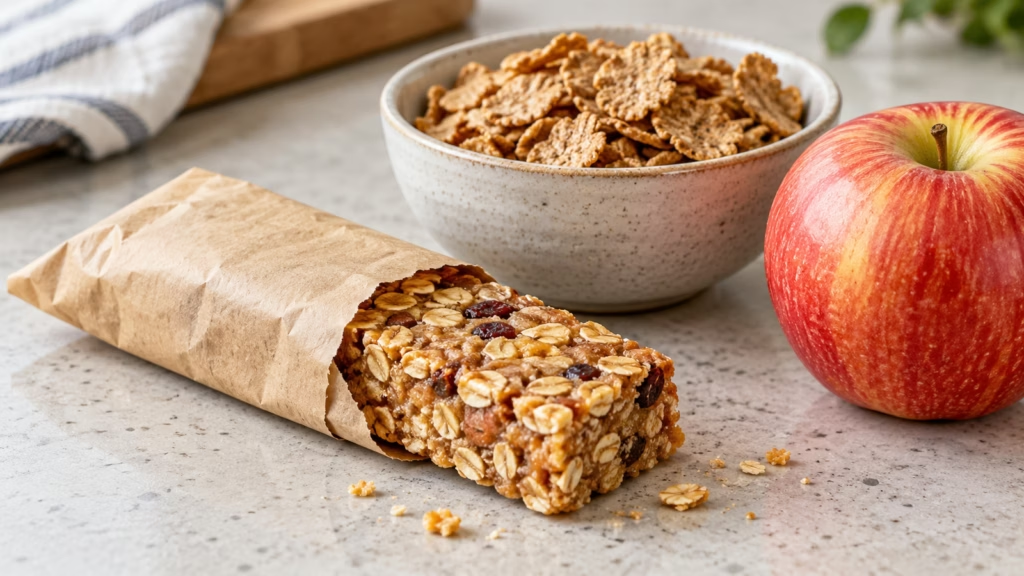
A cereal box or snack bar with a surprisingly large fiber number can make the shopping decision look settled. Added fiber can contribute to that number, but the useful question is what the label actually tells you: the total fiber in a serving, clues about its ingredients, and the rest of the food’s nutrition. Extra grams can be useful without turning one number into a verdict on the whole package.
Read the portion and the ingredients together, then choose a food that fits both your meals and your comfort.
What added fiber means on a U.S. label
FDA’s dietary-fiber definition includes fiber that remains naturally present in plant foods and certain isolated or synthetic nondigestible carbohydrates with demonstrated beneficial physiological effects. In plain language, being difficult to digest is not enough by itself for every added carbohydrate to count as dietary fiber on a U.S. Nutrition Facts label.
I wouldn’t sort the shelf into “natural equals useful” and “added equals pointless.” The distinction explains where an ingredient comes from and how it can be counted. It does not tell you that every type has the same effects, or that a food becomes a balanced meal simply because its fiber total is higher.
- Naturally present fiber: Examples include fiber within beans, fruits, vegetables, and whole-grain foods.
- Isolated or synthetic fiber: These ingredients can be incorporated into foods such as bars, cereals, breads, and drinks, provided the applicable labeling requirements are met.
- One combined number: The dietary-fiber line generally reports the qualifying total. It does not give a separate mandatory “added fiber” amount the way the label separates added sugars.
Ingredient names worth recognizing
FDA’s current Q&A distinguishes fibers already included in its definition from additional types it permits manufacturers to count under an enforcement-discretion policy while rulemaking is pending. The table gives selected examples from that guidance, not a ranking or an exhaustive list. A familiar ingredient name helps you ask a better question; it does not disclose the number of grams of that ingredient in the food.
| Ingredient name | FDA Q&A status | What the name does not establish |
|---|---|---|
| Psyllium husk | Included in FDA’s definition, with the specified conditions | A food containing it is not automatically equivalent to a separately studied dose or supplement. |
| Cellulose | Included in FDA’s definition | Its presence does not tell you how much of the food’s total fiber it supplies. |
| Inulin and inulin-type fructans | Listed under FDA’s enforcement-discretion policy | “Chicory root fiber” can be a clue, but check the exact ingredient information. |
| Resistant maltodextrin/dextrin | Listed under FDA’s enforcement-discretion policy | The full ingredient name matters; do not shorten it to any ingredient ending in “dextrin.” |
| Acacia (gum arabic) | Listed under FDA’s enforcement-discretion policy | A plant-derived ingredient name does not mean the product has the same composition as an intact plant food. |
“Prebiotic” is a separate claim to consider. The ISAPP scientific consensus describes a prebiotic through its use by host microorganisms and a resulting health benefit; not every dietary fiber meets that definition. A large fiber number alone does not establish a particular prebiotic effect, and it certainly does not prove that a specific food will resolve someone’s digestive symptoms.
Five label checks that make comparison fair
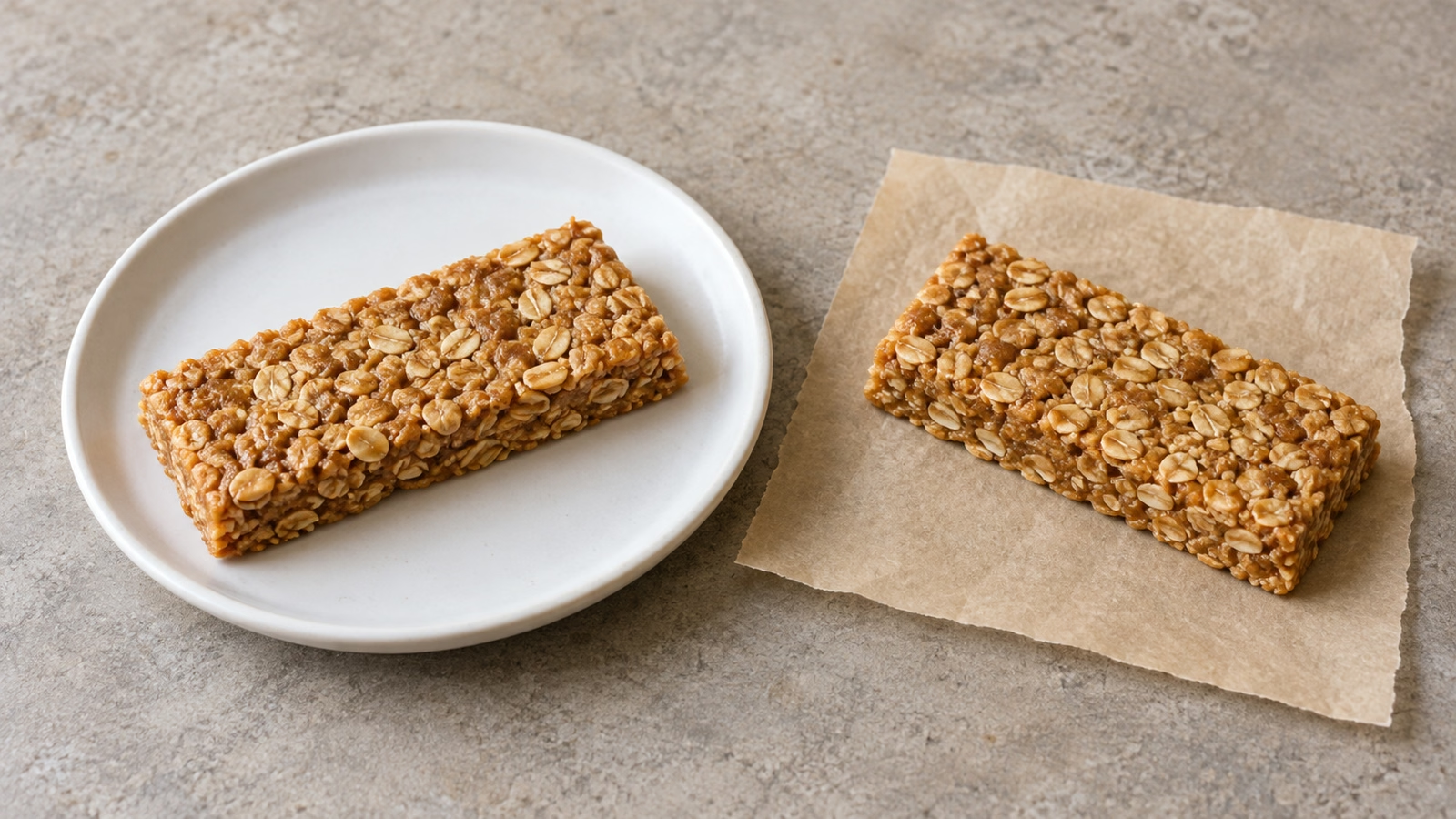
Imagine a hypothetical bar labeled 8g fiber per one-bar serving. That is about 29% of the FDA’s 28g Daily Value; eating two bars would provide 16g. Those figures describe total qualifying fiber, not necessarily 8g of added fiber in each bar. The Daily Value is a label reference, not everyone’s individual daily target.
- Start with the serving: Match the number to the amount you actually eat. A small bar, a large bar, and a measured bowl of cereal are different portions.
- Read fiber and %DV together: The grams help with a portion calculation; the percentage gives a common comparison point. FDA’s general guide calls 5% DV or less low and 20% DV or more high.
- Look for ingredient clues: Inulin, psyllium, cellulose, and other named fibers may explain some of the total. Ingredient order alone will not tell you the fiber contribution from each one.
- Keep the rest of the label: Protein, sodium, saturated fat, added sugars, and allergens still matter. Adding fiber does not subtract those other components.
- Choose for the job: A portable snack, a breakfast cereal, and a meal replacement need different scrutiny. For a bar-specific comparison, see the plant-based protein bars guide.
I’d use the number to narrow the choice, then consider taste, portion, and whether the food actually fits the day. Buying the biggest fiber total is not much help if the serving is impractical or you dislike eating it.
Make room for tolerance and food variety
Some people notice gas or bloating when they increase fiber quickly. NIDDK explains that certain carbohydrates reach the large intestine without being fully digested, where bacteria can break them down and produce gas. The response varies with the person, the food, and the amount; digestive discomfort does not automatically identify one ingredient as the cause.
- Change one thing first: Try one new higher-fiber food in a manageable portion rather than replacing breakfast, snacks, and drinks all at once. Build intake gradually.
- Notice the combination: A high-fiber cereal, two bars, and a fiber-added drink can add up quickly. Count the servings before assuming each product is a small change.
- Check other ingredients too: Some sugar alcohols and other carbohydrates can also contribute to gas symptoms. A brief food-and-symptom note can help you discuss a pattern with a clinician or dietitian without guessing.
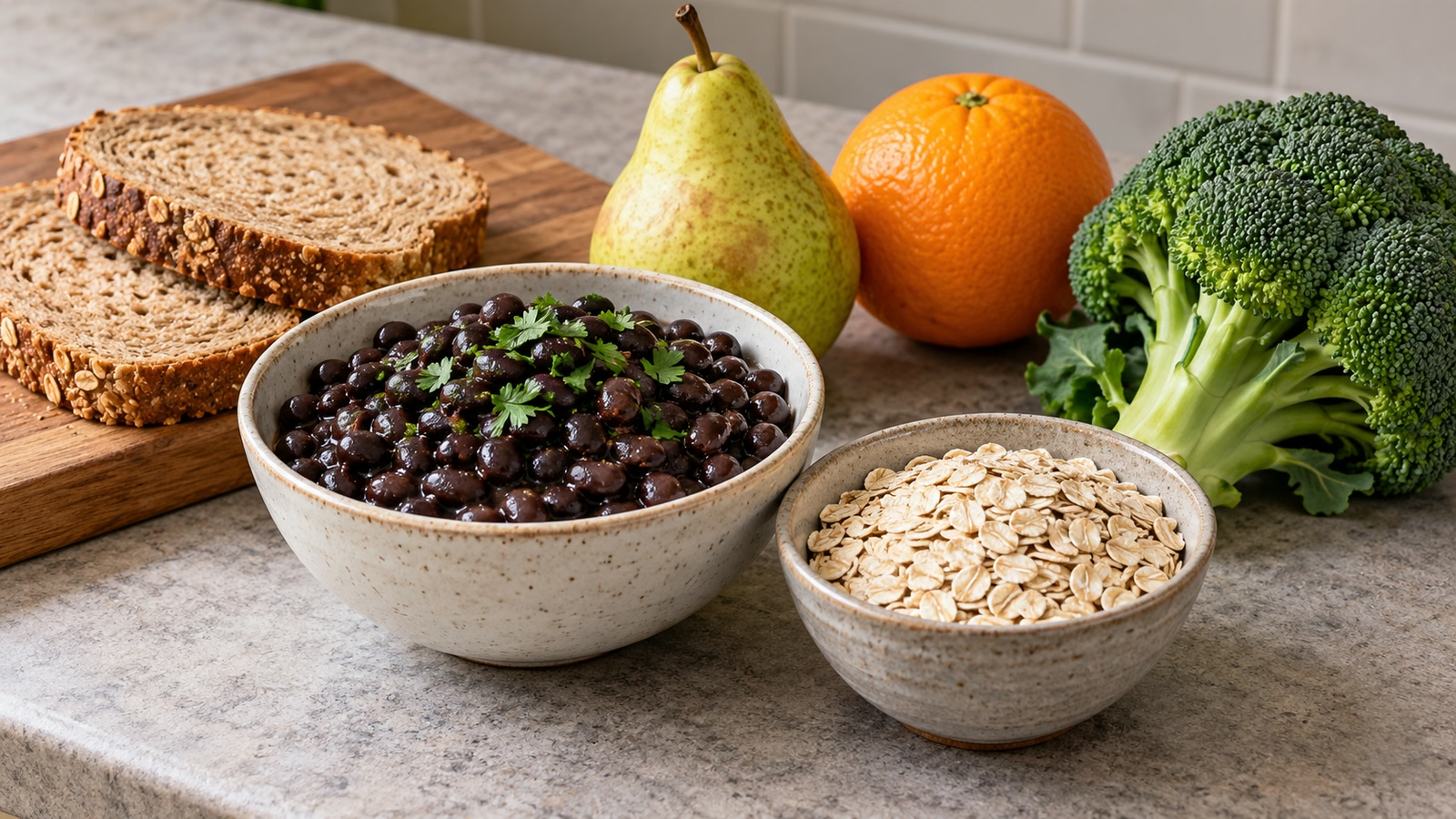
- Keep ordinary foods in the rotation: Beans, whole grains, fruit, vegetables, nuts, and seeds offer different textures and nutrients. Our high-fiber meal plan shows how familiar foods contribute across meals.
For me, the useful middle ground is simple: an added-fiber food can earn its place, while the rest of the diet still deserves variety. If symptoms are persistent, suddenly different, or accompanied by pain, diarrhea, constipation, or unexplained weight loss, talk with a health professional rather than continuing to increase fiber on your own. Follow individualized advice if you have a digestive condition or fluid restriction.
Sources
- FDA: Questions and answers on dietary fiber
- FDA: Understanding the Nutrition Facts label
- ISAPP consensus: Definition and scope of prebiotics
- NIDDK: Diet and gas symptoms
- NIDDK: Gradual fiber changes and fluids

Hi, I’m Laura, the voice behind Tastiva. I’ve always believed that eating well should feel enjoyable, comforting, and realistic—not like another complicated rule to follow. I love creating recipes that fit into everyday life, sharing simple nutrition ideas, and finding small ways to make meals feel a little better without losing the pleasure of good food.