
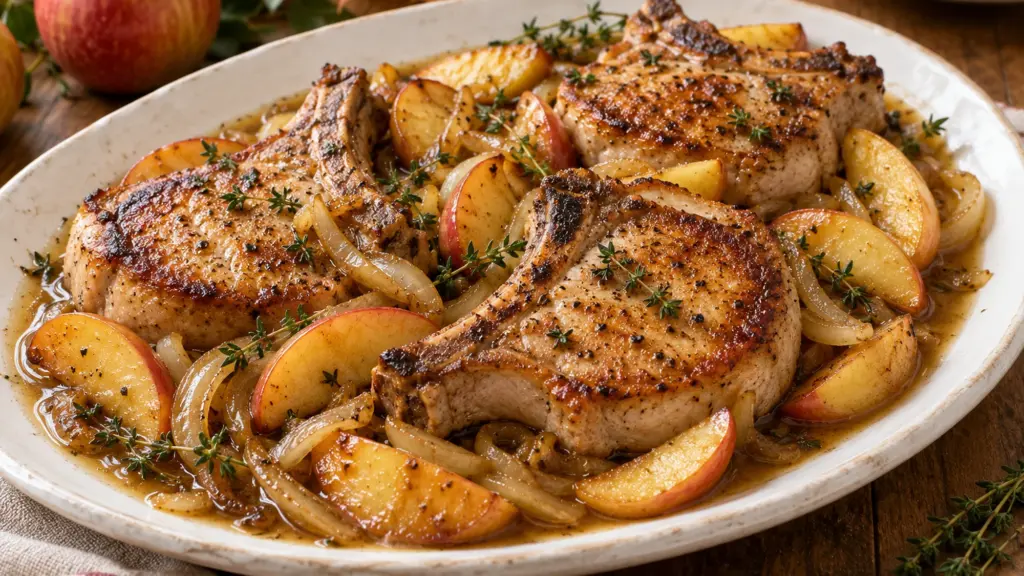
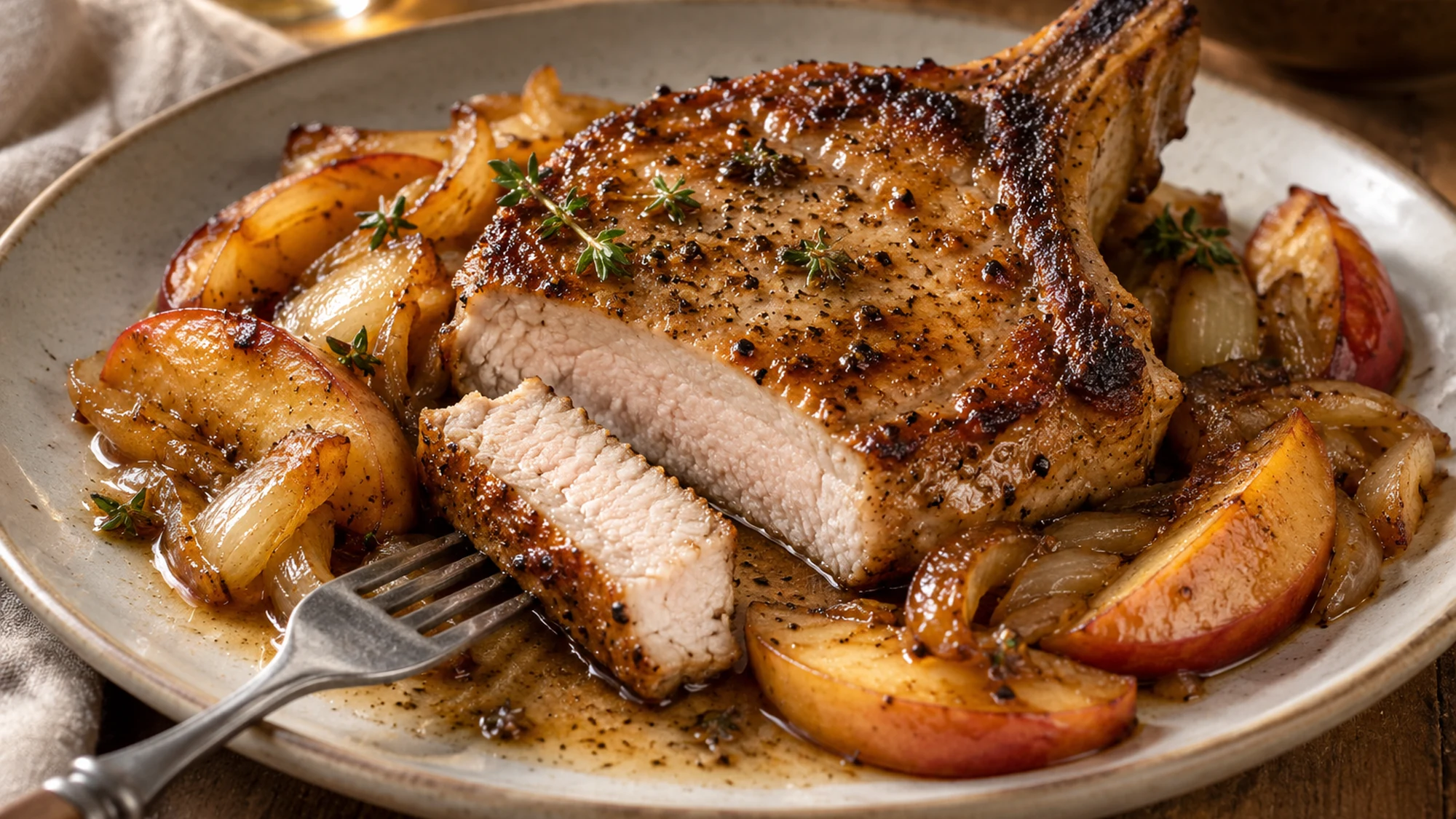
Pork chops with apples make a good autumn dinner because the sweet and savory parts share the same pan. Brown the chops first, soften apple wedges and onion in the remaining juices, then use cider and mustard to bring everything together. You get tender fruit with a little shape left, rather than applesauce beside a dry chop.
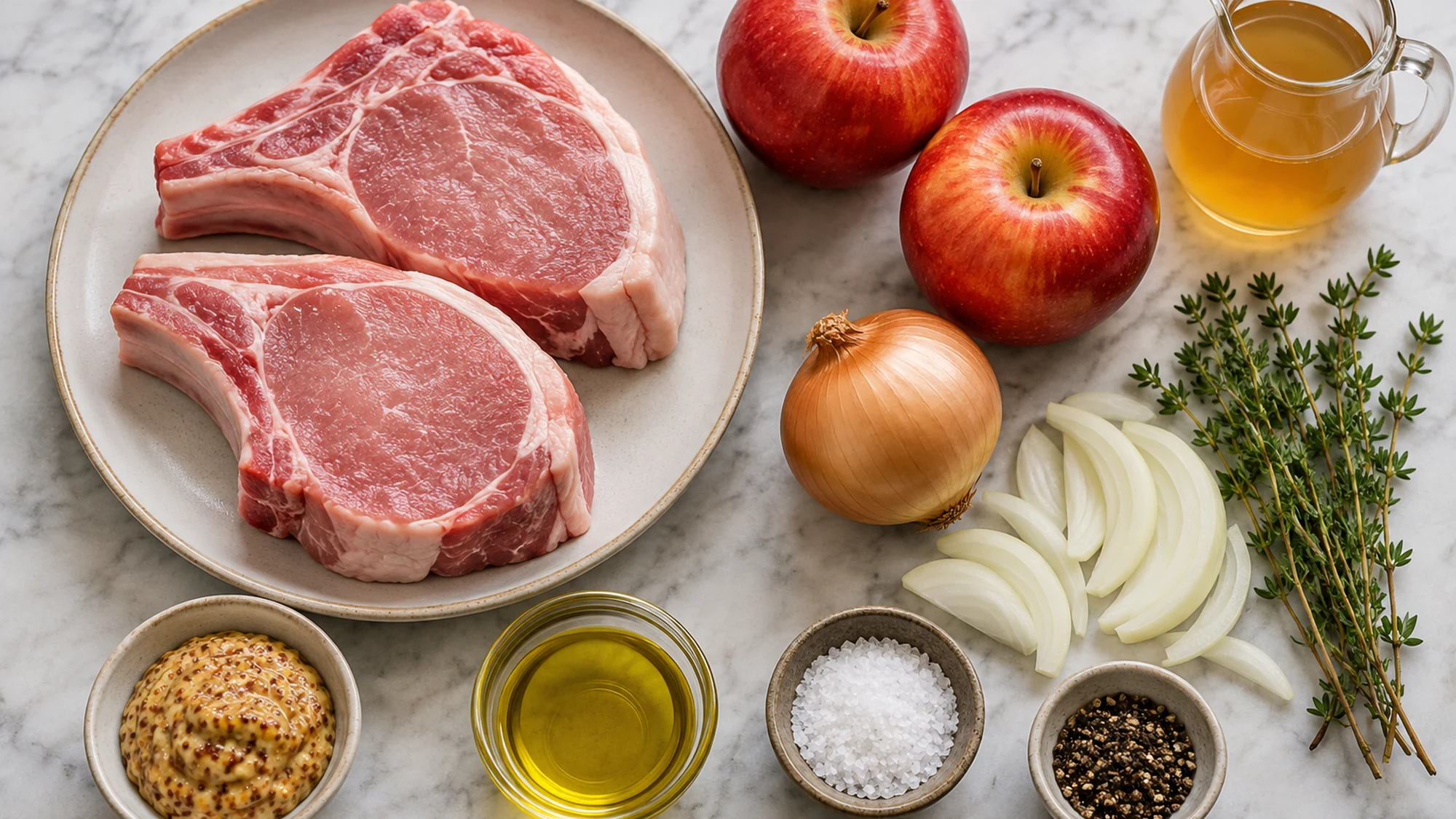
Choose chops of similar thickness and apples that hold their shape. Those two decisions make the cooking more predictable than any elaborate seasoning blend.
A one-inch bone-in chop gives you time to build a golden surface without immediately overcooking the center. Pat the meat dry before seasoning. Slice the apples into sturdy wedges rather than paper-thin pieces; they need to survive a few turns in the skillet while the onion softens.
How to Serve Pork Chops with Apples
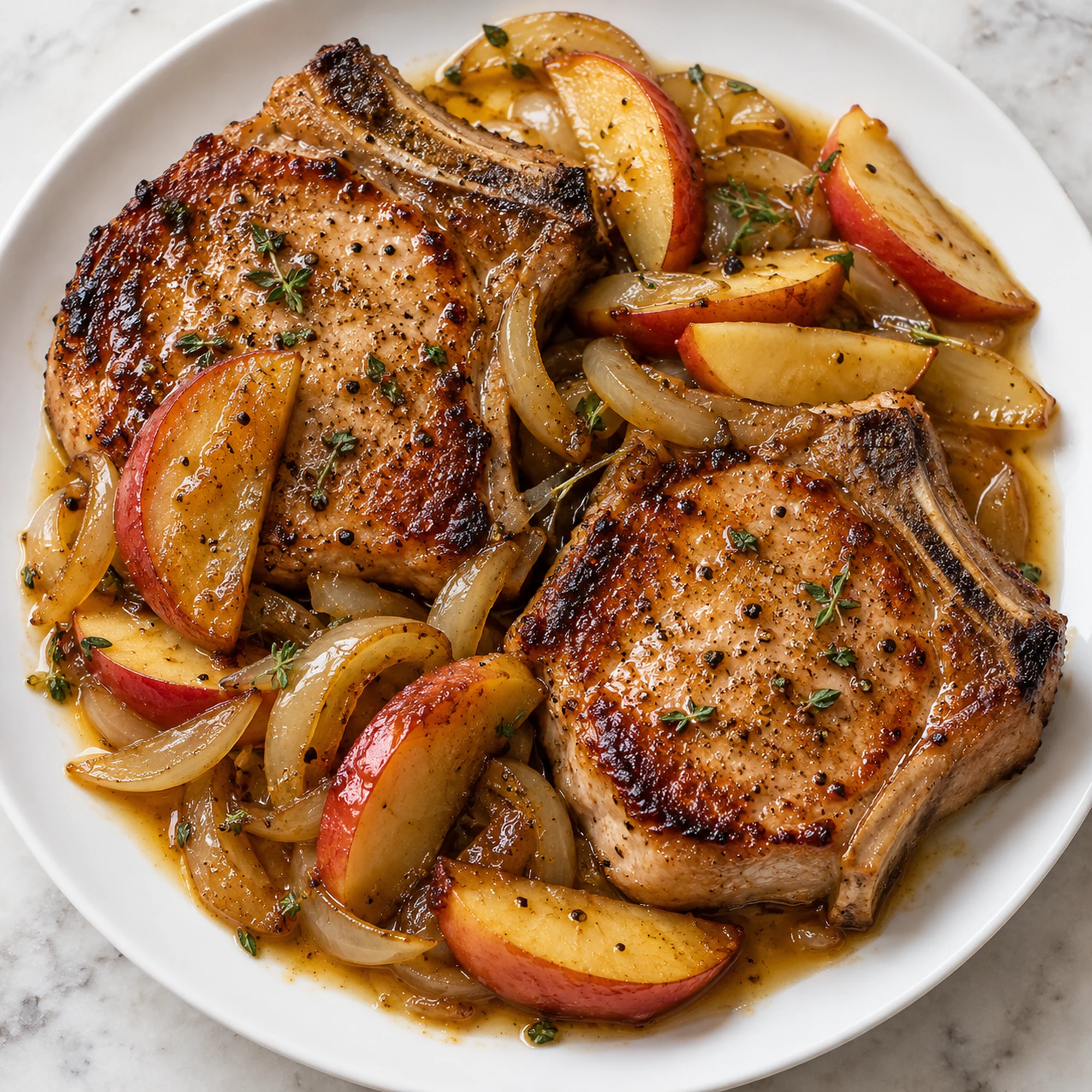
The pan sauce is light enough for mashed potatoes, rice, or a small piece of crusty bread. There is no need to make a separate gravy. Divide the apples and onions among the plates, then spoon the remaining sauce over the pork so every serving gets both the fruit and the savory juices. I prefer a tangy green salad beside the apples to keep the sweetness balanced.
A sharp cabbage salad balances the apples especially well. Roasted broccoli or sautéed greens are other straightforward choices. If your apples are particularly sweet, taste the sauce before adding anything extra; the mustard should provide enough edge for a savory plate, not a dessert-like glaze.
Let the chops rest before serving. Use that short pause to taste the sauce and finish a green vegetable, not to keep the meat simmering until everything else catches up.
Variations and Practical Fixes
Use firm eating apples such as Pink Lady, Honeycrisp, or Granny Smith. A mix of a sweet apple and a tart one gives a little contrast, but a single variety is fine. Keep the skin on if you like the color and texture, and remove the cores thoroughly before slicing. I’d choose firm apples over very soft varieties because the slices keep more shape beside the pork.
| Situation | Useful adjustment |
|---|---|
| Thin chops | Begin checking temperature early and remove each when ready. |
| Very sweet apples | Keep the mustard and skip added sugar. |
| No fresh cider | Use unsweetened apple juice, not vinegar. |
| Apples soften early | Lift them out and return just before serving. |
Unsweetened apple juice can replace fresh cider. Do not use cider vinegar in the same quantity: it is much more acidic. For a less fruity sauce, replace half the cider with unsalted stock. Thyme can be swapped for a small amount of sage, but add strong herbs sparingly so the apple flavor remains clear.
- If the skillet is too small for all four chops, work in two batches.
- Crowding releases moisture into the pan and makes browning slower.
- Keep the first batch on a clean plate while the second cooks, then finish each chop in the sauce only as long as it needs.
- Do not judge the entire batch by the thinnest piece.
Thickness changes cooking time more than the label bone-in or boneless. A thin chop will finish much sooner, so remove it when ready and let the apples catch up separately.
Nutrition and Safe Cooking
Pork contributes protein, while the apples and onion bring fruit and vegetables into the skillet. The meal still benefits from another vegetable on the side. Leaving the apple skins on retains their texture and some fiber, but it does not turn the dish into a special remedy or make portion size irrelevant.
FoodSafety.gov recommends a minimum of 145°F for pork chops followed by a three-minute rest. Insert the thermometer into the thickest meat without touching the bone. Refrigerate leftovers within two hours, use within three to four days, and reheat to 165°F. Add a small splash of water when reheating so the cider sauce does not scorch.
The most useful cooking safeguard is a thermometer. A browned crust and a slightly rosy center can both be misleading if they are used instead of checking the temperature.
Bottom Line
Pork chops with apples need a good sear, a gentle finish, and enough patience to let the meat rest. Keep the apple wedges substantial and the sauce savory. The result is a skillet dinner with a clear contrast between browned pork, tender fruit, and onions, rather than a sweet sauce covering everything up.
Pork Chops with Apples Recipe

Ingredients
- 4 bone-in pork loin chops about 900 g total, 1 inch thick
- 1/2 teaspoon fine salt 3 g
- 1/4 teaspoon black pepper
- 2 tablespoons olive oil
- 1 tablespoon unsalted butter 14 g
- 1 medium onion 150 g, sliced
- 2 medium firm apples 350 g cored weight, cut into thick wedges
- 3/4 cup unsweetened apple cider 180 ml; not cider vinegar
- 2 teaspoons Dijon mustard 10 g
- 4 sprigs fresh thyme
Equipment
- 1 Large skillet
- 1 Food thermometer
Instructions
- Pat pork chops dry and season both sides with salt and pepper. Core apples and cut into sturdy wedges, leaving skins on if desired. Slice the onion.
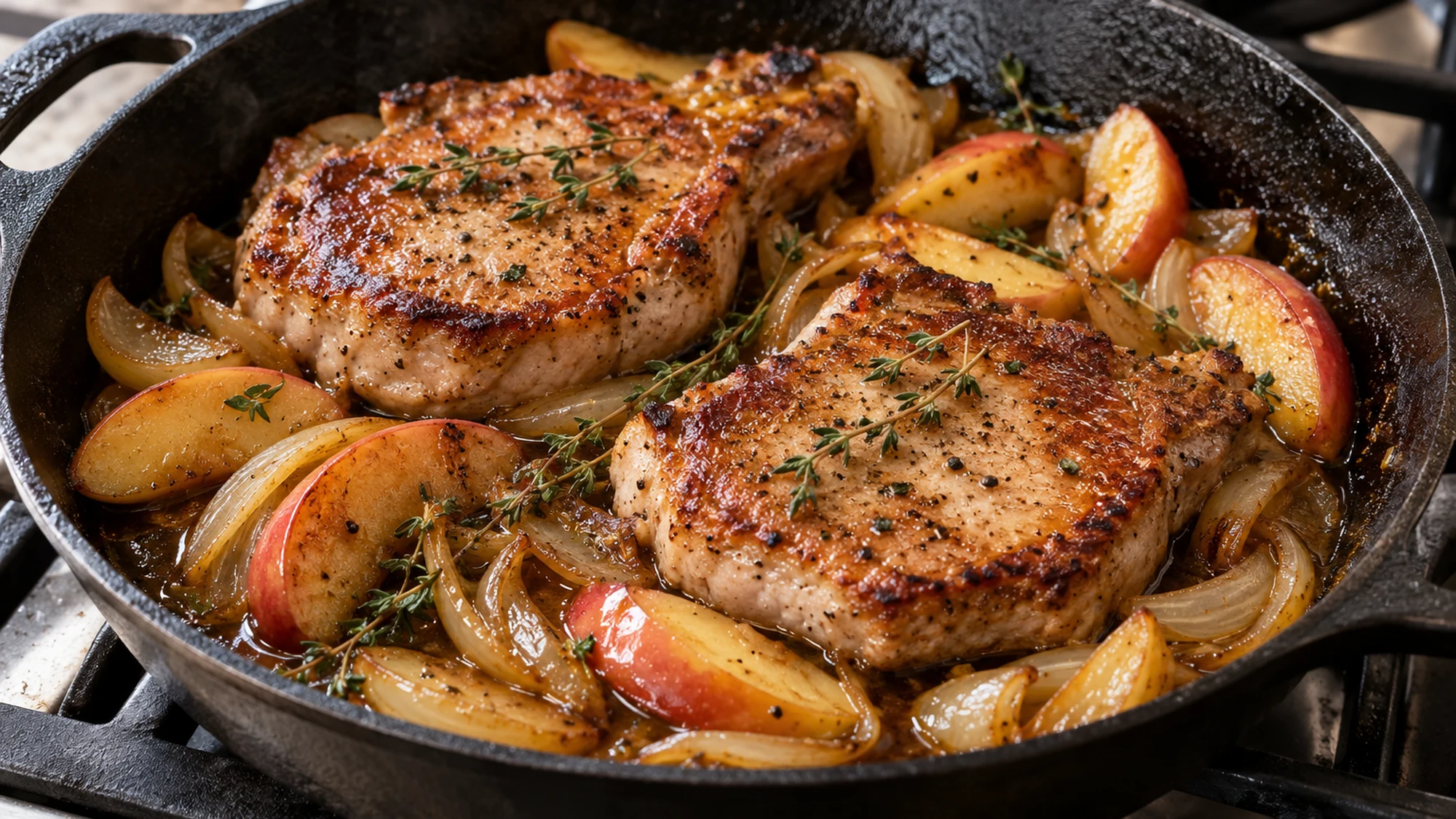
- Heat oil in a large skillet over medium-high heat. Brown chops 3–4 minutes per side, working in batches if necessary. Transfer to a clean plate; they will finish cooking in the sauce.
- Reduce heat to medium. Add butter, onion and apples. Cook 6–8 minutes, turning occasionally, until onion softens and apple edges turn golden but still hold their shape.
- Stir cider and mustard together, then pour into the skillet with thyme. Scrape up golden bits and simmer 2 minutes. Return pork and its juices. Cover loosely and cook gently about 3–7 minutes, turning once, until the thickest meat reaches 145°F (63°C), avoiding the bone with the thermometer.
- Transfer chops to plates and rest at least 3 minutes. Meanwhile simmer sauce uncovered briefly if needed. Remove thyme stems, taste sauce, then spoon apples, onion and sauce over the pork.
Nutrition
Video
Notes
Tried this recipe?
Let us know how it turned out!Hi, I’m Laura, the voice behind Tastiva. I’ve always believed that eating well should feel enjoyable, comforting, and realistic—not like another complicated rule to follow. I love creating recipes that fit into everyday life, sharing simple nutrition ideas, and finding small ways to make meals feel a little better without losing the pleasure of good food.