
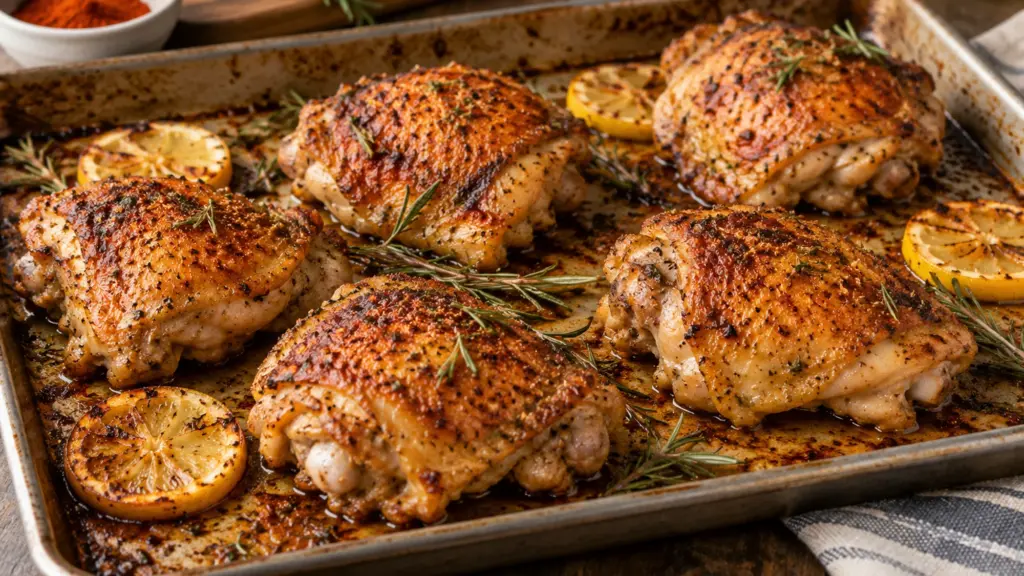
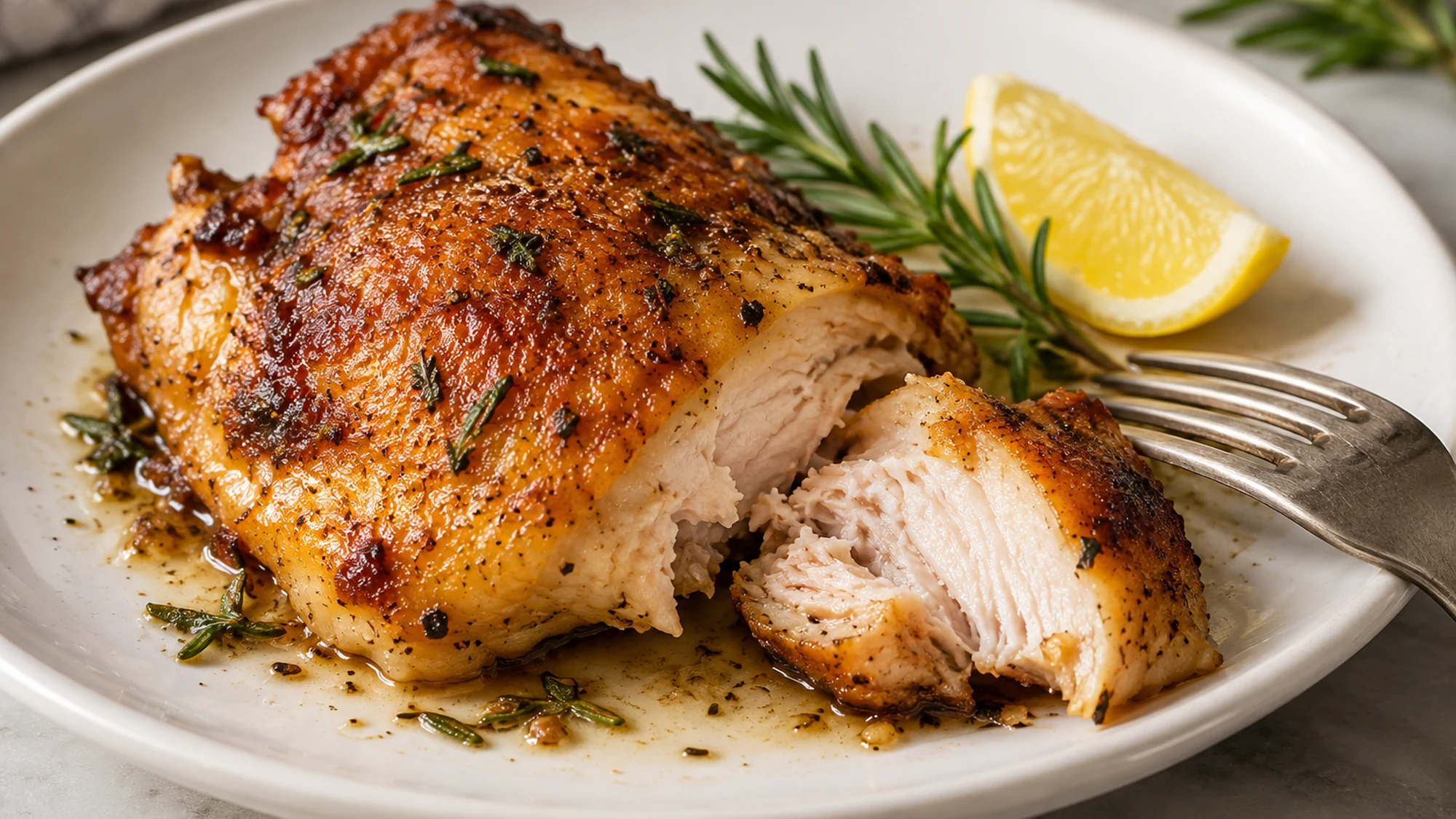
The tray comes out fragrant with rosemary, but the real question is whether the skin has any crunch. These baked chicken thighs use a dry surface, a light coating of oil and an uncrowded pan to give the oven a fair chance. Bone-in thighs stay skin-side up throughout, with paprika and garlic adding savory warmth rather than a sticky glaze.
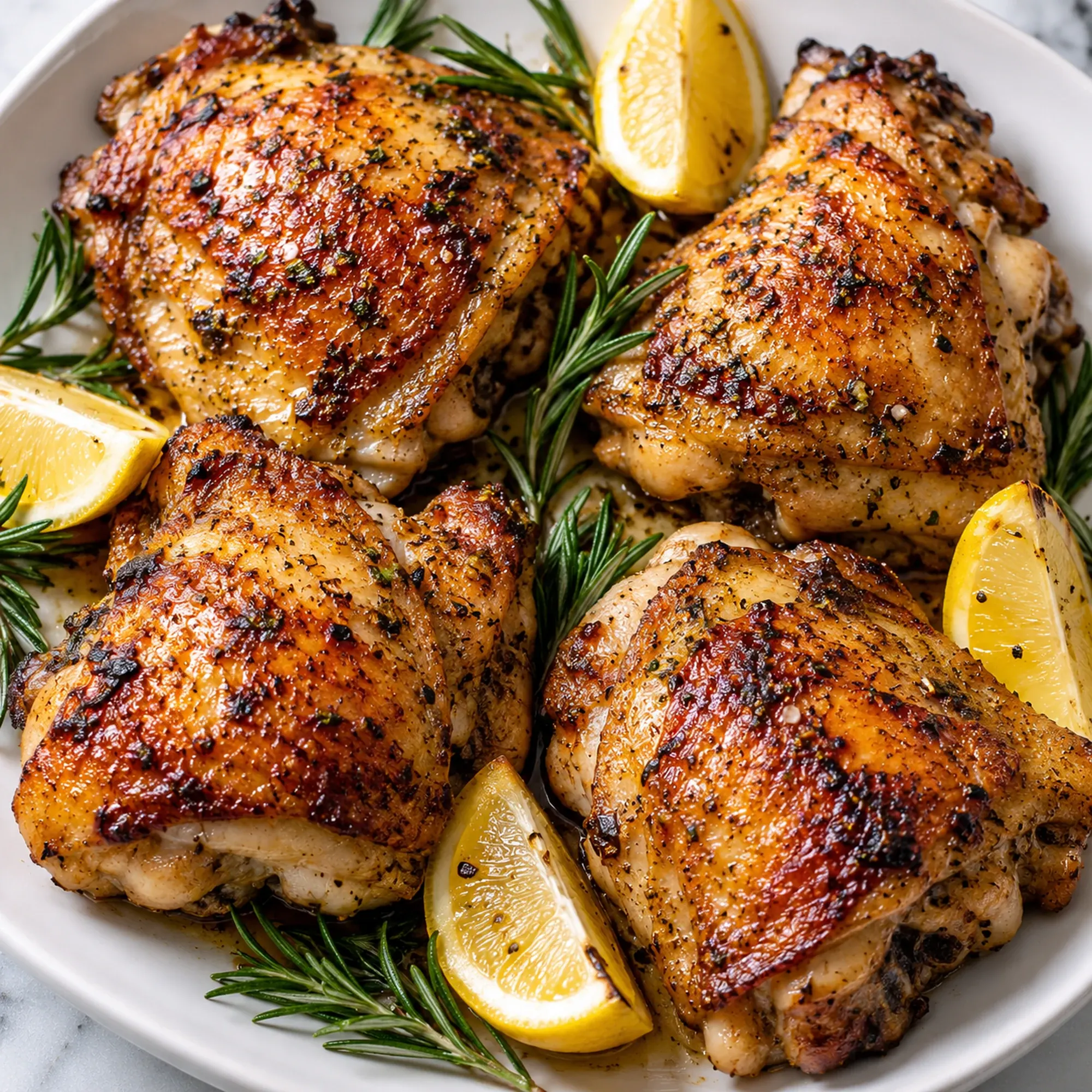
Dry skin and a little breathing room do more for this dinner than an elaborate marinade.
I would choose similarly sized thighs over the biggest pieces in the package. They are easier to cook evenly, and you can remove a smaller piece when it is ready instead of waiting for the whole tray to agree. The recipe makes four generous servings; the photographs show serving and preparation arrangements, not a required tray count.
Serving Baked Chicken Thighs
A crisp-skinned thigh works particularly well beside something that can catch the savory juices. I would pair it with brown rice and a green vegetable, then squeeze lemon over the meat rather than drenching the skin. The seasoning is deliberately mild enough to share the plate with stronger sides.
For leftovers, follow USDA storage guidance: refrigerate within two hours, or one hour above 90°F (32°C), and use within three to four days. A covered container protects the meat in the refrigerator; an uncovered oven reheat helps the skin more than a microwave does.
- On a shared platter, keep the chicken above the juices instead of letting the skin sit in them.
- A slotted serving utensil helps.
- For a smaller appetite, one thigh with vegetables may be enough; larger pieces vary considerably, so the number of pieces alone is not a reliable portion measure.
Let the chicken rest briefly, but leave it uncovered so trapped steam does not undo the crisp edges.
Changing the cut or seasoning
The recipe is written for bone-in, skin-on thighs, not every piece in the chicken case. Boneless thighs cook faster and do not have the same protective layer. Skinless thighs can still make a good dinner, but promising the same crackly top would be a bit much.
Sweet paprika gives a gentle, warm color. Smoked paprika makes the tray taste more assertive, while hot paprika can turn two teaspoons into a surprisingly lively dinner. The rosemary is dried and finely crushed so no one has to negotiate a twig at the table.
- If you want less herbal flavor, reduce the rosemary rather than replacing it with a large handful of another dried herb.
- Keep the seasoning dry for the same surface texture.
- A wet glaze or marinade needs its own timing and browning decisions, especially if it contains sugar that can scorch.
| Reheating choice | What to expect |
|---|---|
| Oven at 350°F (175°C) | Warm on a tray until the center reaches 165°F (74°C); check rather than relying on a fixed time. |
| Microwave | Convenient for the meat, but the skin will soften. Check several places for 165°F (74°C). |
Change the flavor freely; change the timing carefully when the cut changes.
A practical nutrition and safety check
Chicken supplies protein, while the skin and added oil contribute much of the fat. Removing the skin after cooking changes both the texture and the nutrition estimate. There is no need to label one choice virtuous; decide what fits your meal, then add vegetables or a grain for the balance you want.
The safe minimum for poultry is 165°F (74°C). Check each large thigh separately. The card’s nutrition is an estimate using ANSES Ciqual ingredient data, an assumed 700 grams of edible meat and skin from one kilogram of bone-in thighs, and all the oil; actual bone size and discarded drippings change the result.
- I prefer thinking about the whole plate rather than judging dinner by whether the skin stays on.
- Vegetables, a measured grain portion and the amount of drippings served all affect the result.
- The estimate cannot know which pieces were bonier or how much fat remained on the tray.
A browned surface is a cooking clue, not a replacement for a thermometer.
Bottom Line
This is a straightforward tray dinner with a few details worth protecting: dry the chicken, spread it out, and let the thermometer make the final call. Keep the lemon on the side and serve promptly, while the contrast between the crisp surface and tender meat is at its best.
Simple seasoning leaves room for the chicken itself, provided the tray is not crowded.
Baked Chicken Thighs Recipe

Ingredients
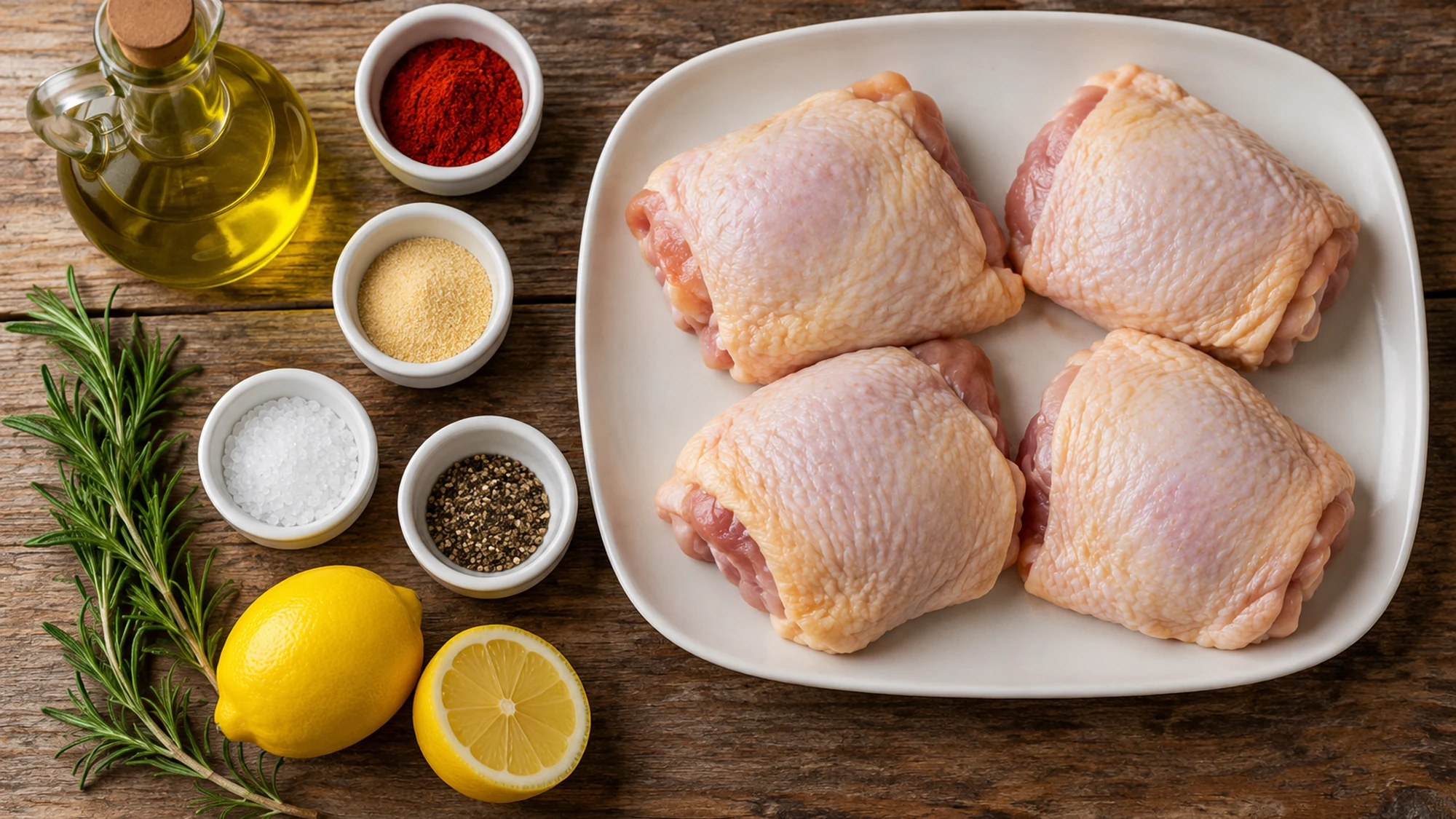
- 4 large bone-in skin-on chicken thighs about 1 kg / 2.2 lb total; similar size
- 1 tablespoon olive oil
- 2 teaspoons sweet paprika
- 1 teaspoon garlic powder
- 1 teaspoon dried rosemary finely crushed
- 4 g fine salt about 2/3 teaspoon; weigh if possible
- 1/2 teaspoon black pepper
- 1/2 lemon cut into wedges, for serving
Equipment
- 1 Rimmed metal sheet pan
- 1 Instant-read thermometer
- 1 Small seasoning bowl
Instructions
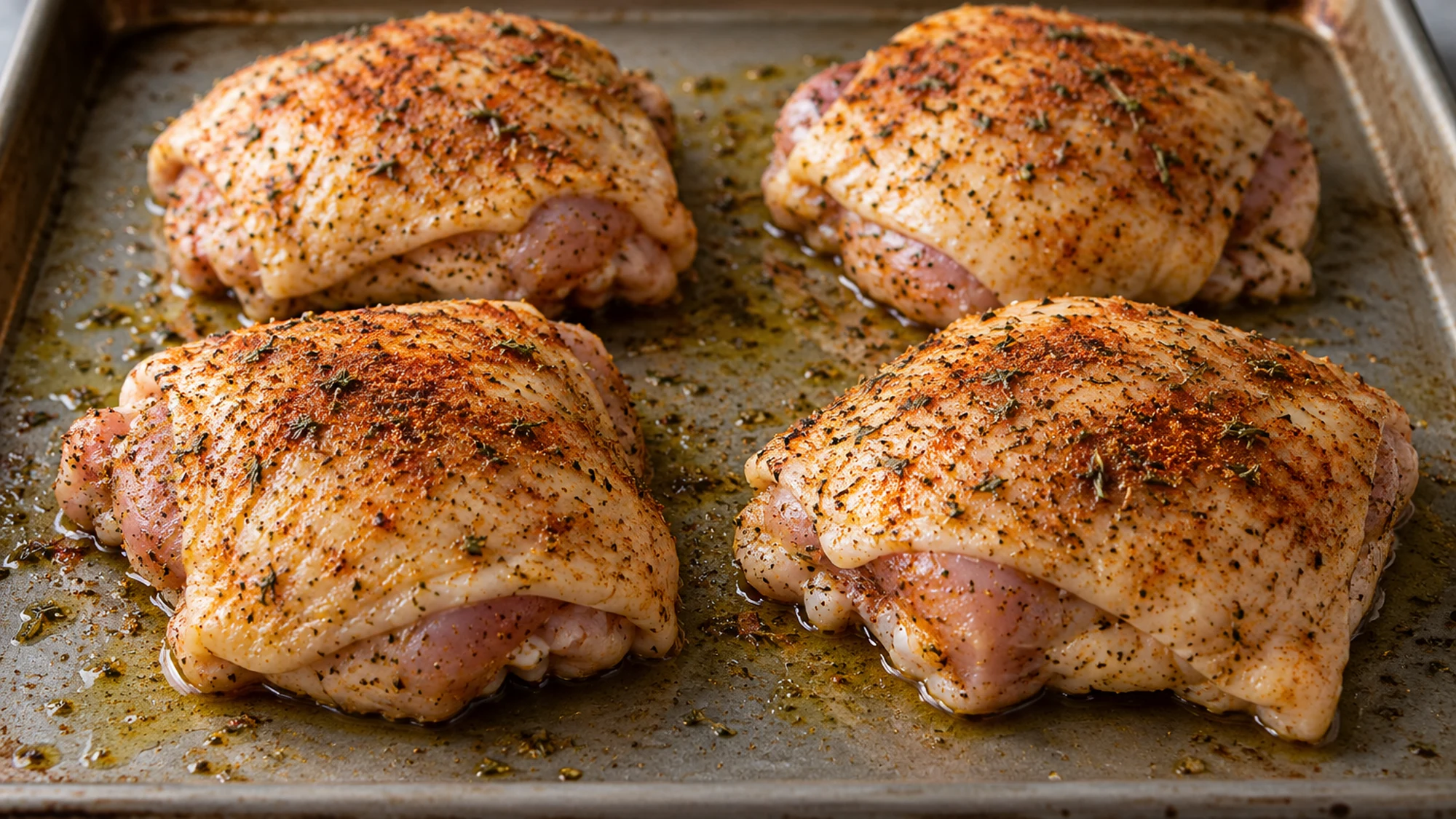
- Heat the oven to 400°F (200°C). Pat the chicken dry thoroughly; do not rinse it. Place skin-side up on a rimmed metal sheet pan with space between the pieces.
- Mix the paprika, garlic powder, crushed rosemary, salt and pepper. Rub the oil over the chicken, then distribute the seasoning over both sides, returning each piece skin-side up.
- Roast for 35–45 minutes, starting to check at 35 minutes. Insert an instant-read thermometer into the thickest meat without touching bone. Every thigh must reach at least 165°F (74°C); larger pieces may need longer.
- Rest uncovered for 5 minutes. Serve with lemon wedges, squeezing them over the meat as desired. Keep the skin above pooled juices for the best texture.
Nutrition
Video
Notes
Tried this recipe?
Let us know how it turned out!Hi, I’m Laura, the voice behind Tastiva. I’ve always believed that eating well should feel enjoyable, comforting, and realistic—not like another complicated rule to follow. I love creating recipes that fit into everyday life, sharing simple nutrition ideas, and finding small ways to make meals feel a little better without losing the pleasure of good food.