
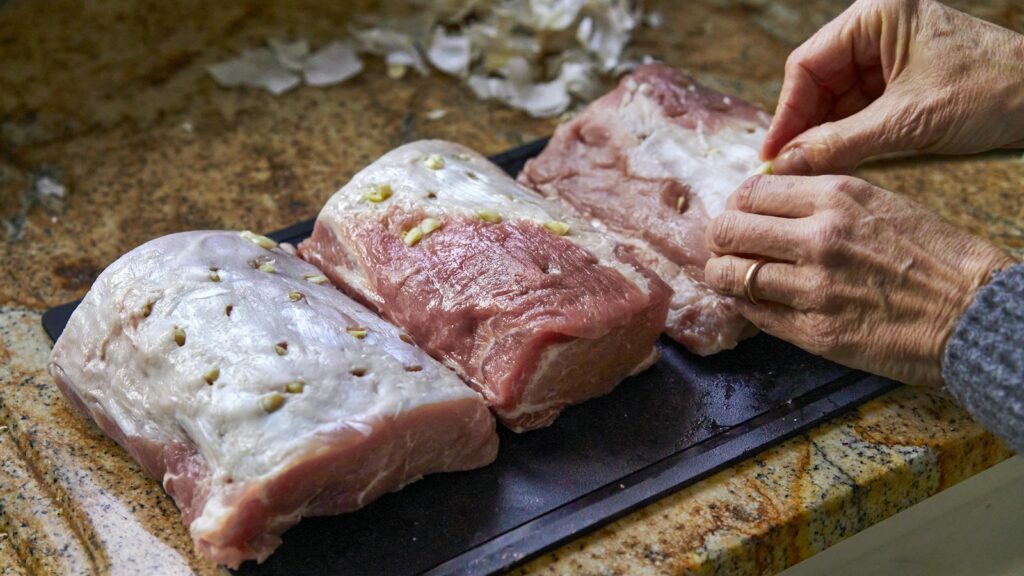
For pork loin temp, the number I keep close is 145°F (63°C) in the thickest part, followed by a three-minute rest. That is the USDA minimum for a whole cut of pork. It is an internal temperature, so an oven setting or a cooking time cannot take its place.
A thermometer gives you the answer for the roast in front of you, whether it is small, large, tied, or cooking a little faster than expected.
The safe pork loin temperature
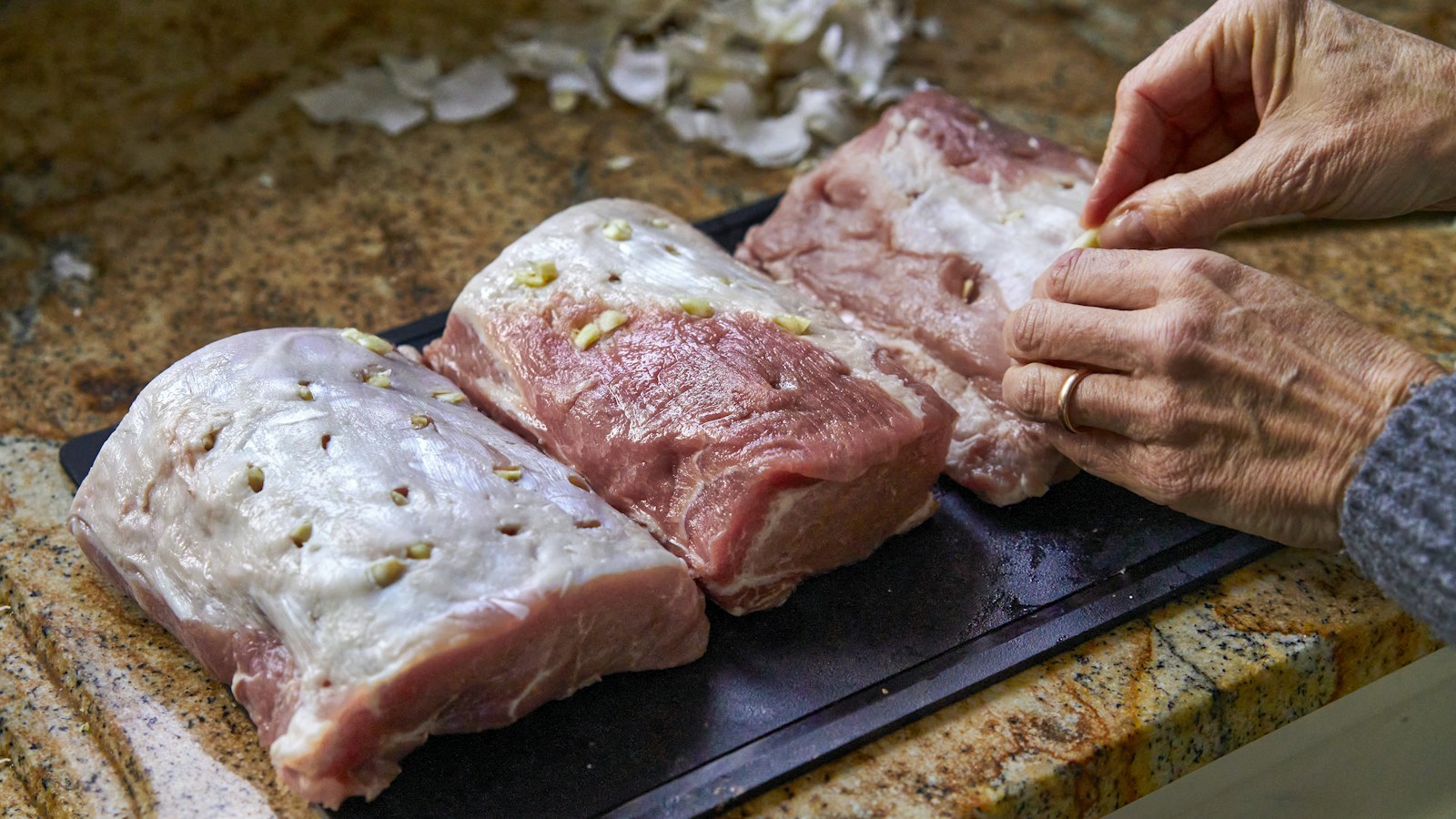
A pork loin is a whole cut. USDA guidance calls for 145°F (63°C) at the center and at least three minutes of rest before carving. The rest is part of the food safety instruction, and it also lets the juices settle. I would start checking before the recipe’s suggested finish time so there is room to stop cooking when the center reaches the target.
Do not use the same number for every kind of pork. Ground pork needs 160°F (71°C), according to the USDA chart. A stuffed roast can bring separate food safety questions, so follow a tested recipe and check the stuffing as directed. For a plain boneless pork loin, focus on the thickest part of the meat.
The USDA also notes that safely cooked pork can still look pink. Color alone cannot tell you whether a roast has reached its safe temperature. That is especially useful to remember when a rosy slice makes you wonder whether to put it back in the oven.
Where to place the thermometer
Insert a food thermometer into the thickest portion, away from bone, fat, and gristle. For a thin piece, insert from the side so the sensing area sits in the center. A roast can cook unevenly, so I check a second spot as well, especially near the thick end. Give an instant-read thermometer a moment to settle before you decide.
If the reading is below 145°F, keep cooking and check again. If it has reached the target, remove the loin from the heat and time the three-minute rest. A roast may rise a little as it rests, but there is no need to guess how much. The safe reading should be established before the rest begins.
Clean the thermometer probe after it touches raw meat and before using it on cooked food. Keep the raw-meat board and utensils away from the finished roast. These small steps matter just as much as a precise number.
Cooking time is a guide, not the finish line
A recipe can give a useful starting window, but two pork loins of the same weight may have different thicknesses. Oven accuracy, pan material, and whether the meat began cold also affect timing. I like to set a timer to remind me when to begin checking, then let the thermometer decide the finish.
For even slices, let the rested roast sit on a clean board and cut across the grain. If you want a browned exterior, sear or roast at a temperature suited to your recipe while still measuring the center. Browning is about flavor and texture; it does not replace the internal reading.
The name can be confusing at the butcher counter. Pork tenderloin is a smaller, narrower cut that usually cooks faster than a pork loin roast. Both are whole cuts covered by the same USDA minimum and rest time, but their recipe timings are not interchangeable. Check the package or ask the butcher which cut you have.
Serving and storing leftovers
After the rest, slice and serve with the sides you enjoy. If dinner is delayed, keep hot food hot rather than leaving it on the counter. Refrigerate leftovers promptly in shallow containers so they cool more quickly. FoodSafety.gov lists three to four days in the refrigerator for cooked meat leftovers at 40°F (4°C) or colder.
When reheating leftovers, USDA’s chart calls for 165°F (74°C). A quick, gentle reheat can help preserve moisture, but check the center. If you will not eat the leftovers in that refrigerator window, freeze them. Labeling the container with the date makes an ordinary weeknight lunch easier to plan.
So the short answer to pork loin temp is 145°F in the thickest part, then three minutes of rest. Keep a thermometer handy, and let the cut itself tell you when it is ready.
Sources
- USDA FSIS, Safe Minimum Internal Temperature Chart
- USDA FSIS, Fresh Pork From Farm to Table
- USDA FSIS, Food Thermometers
- FoodSafety.gov, Cold Food Storage Chart

Hi, I’m Laura, the voice behind Tastiva. I’ve always believed that eating well should feel enjoyable, comforting, and realistic—not like another complicated rule to follow. I love creating recipes that fit into everyday life, sharing simple nutrition ideas, and finding small ways to make meals feel a little better without losing the pleasure of good food.