
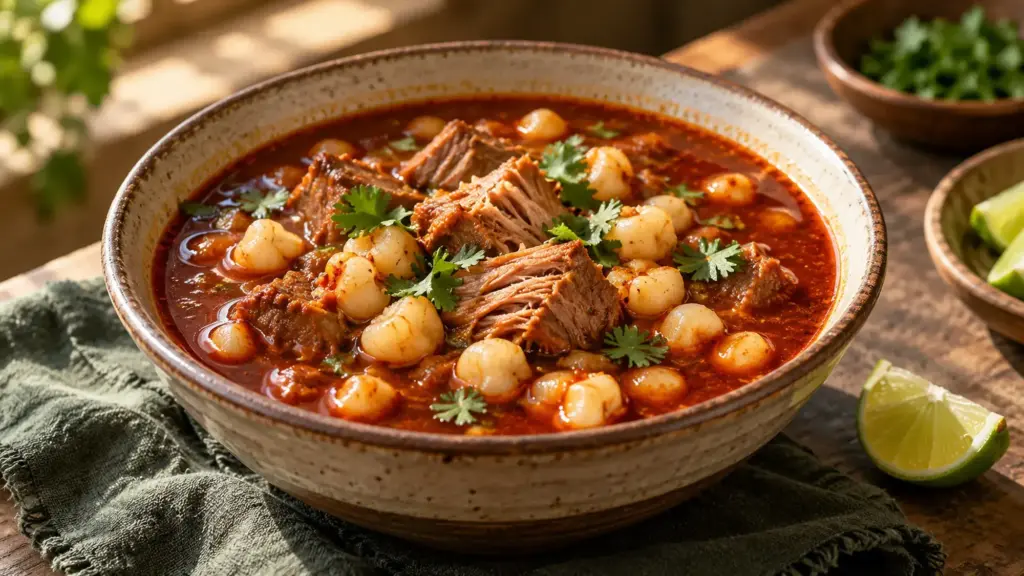
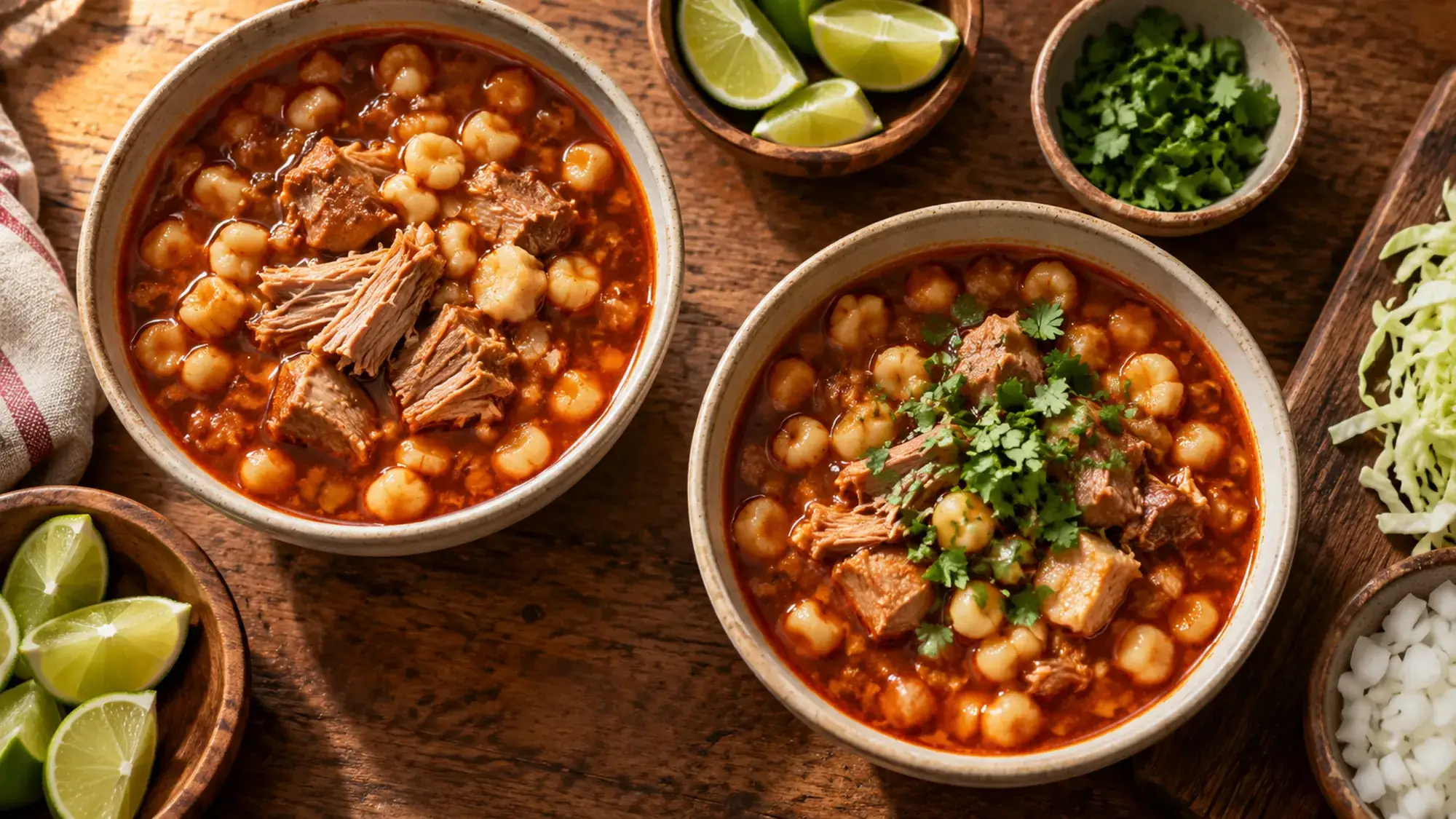
A bowl of pork pozole should give you something to notice before the first spoonful: the red broth, the pale hominy and the generous pieces of tender meat. This is a patient pot of food, not a quick soup disguised by an ambitious cooking time.
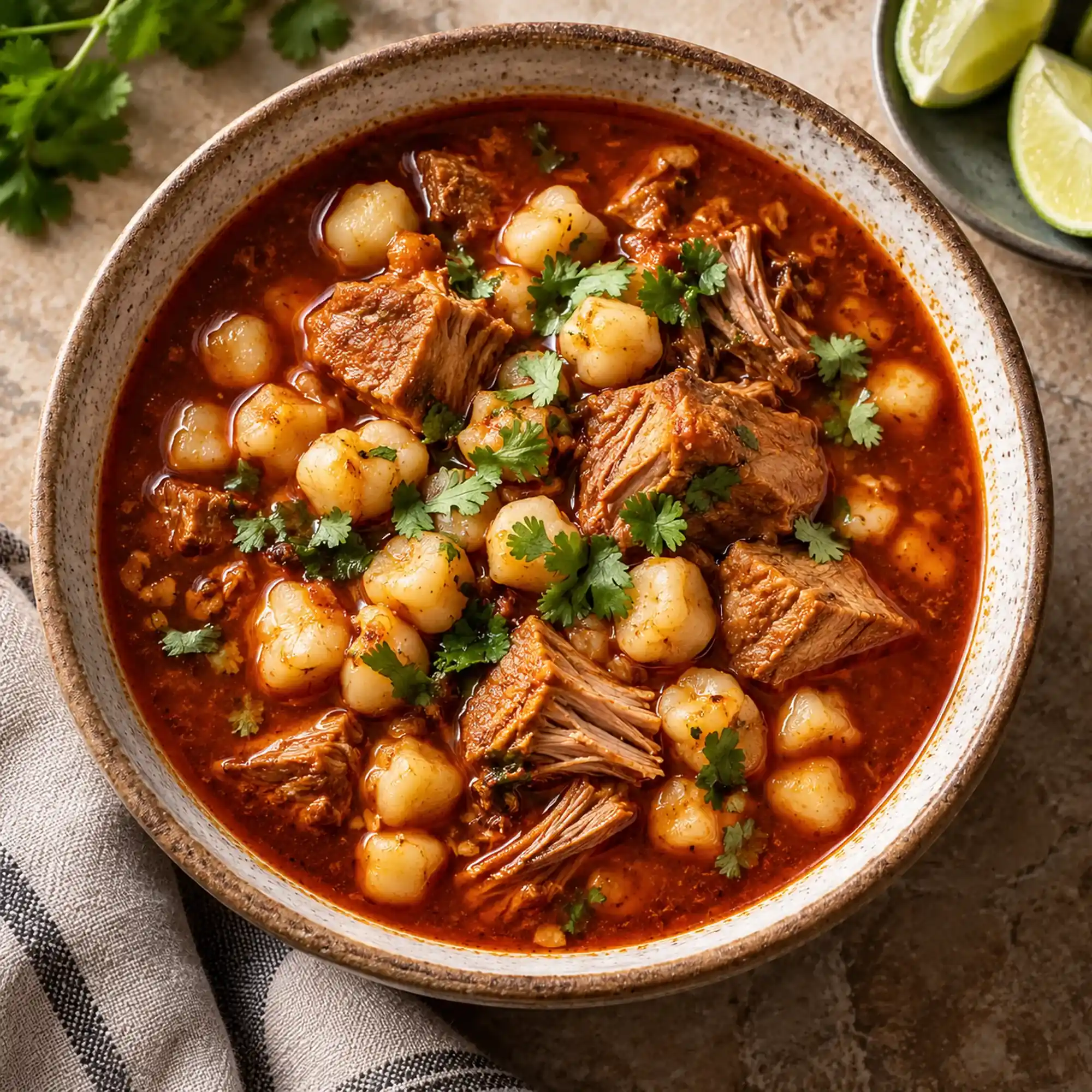
This pork pozole uses boneless shoulder in a guajillo-ancho broth with white hominy. Gentle simmering softens the meat, while a strained chile sauce gives the broth its color and rounded flavor.
It is an all-shoulder adaptation of Chef John’s red pozole, a variation he permits. I like the simpler shopping list here, while recognizing that a shoulder-only pot will not have exactly the same texture as one made with feet and shanks.
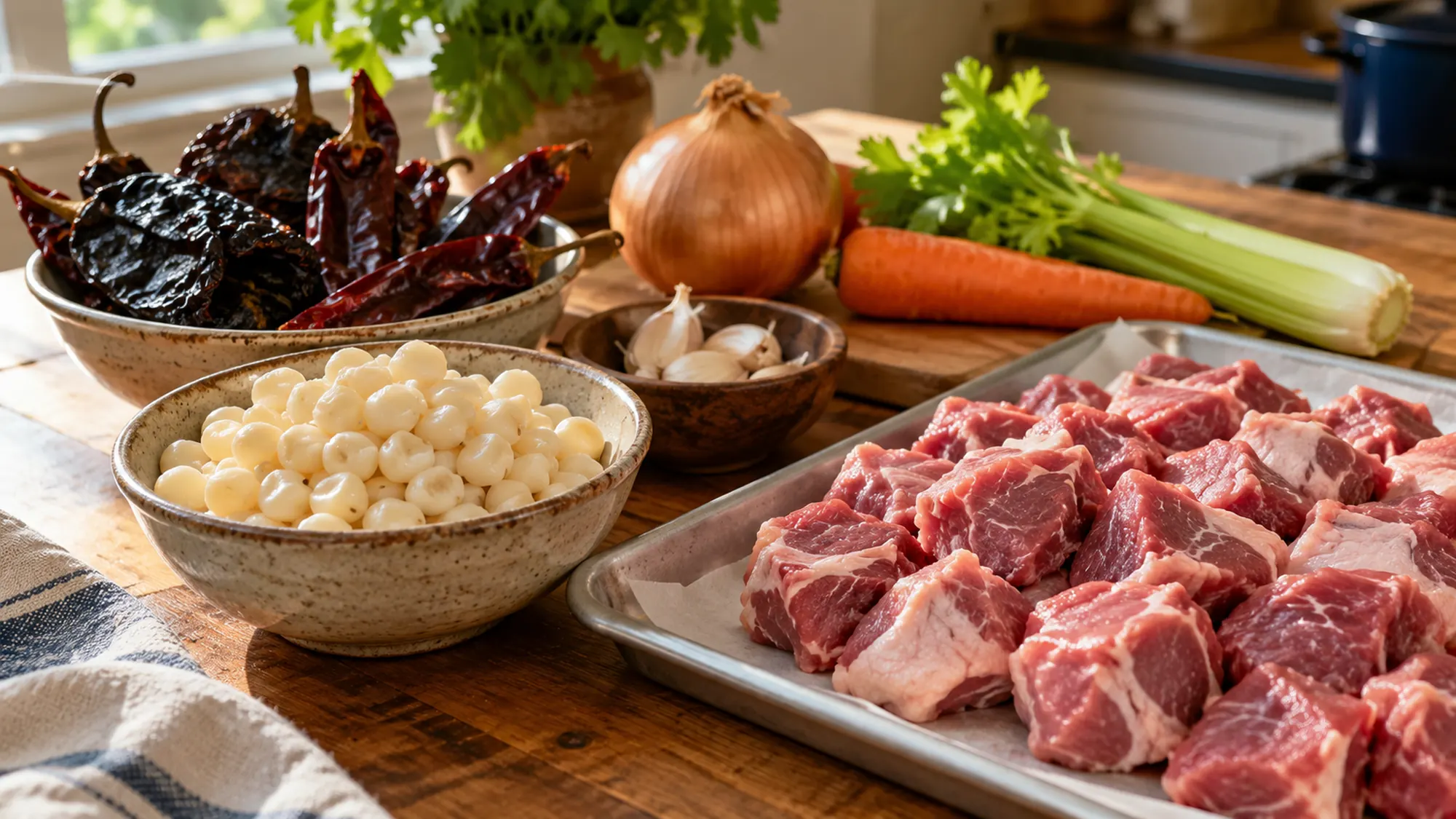
Serving Pork Pozole
Use bowls deep enough to hold broth but wide enough for a little garnish. A generous pile of toppings can be lovely, yet it should not hide the pork and hominy entirely. Put a small plate beside the bowl if you are offering tortillas, so they do not become soaked before anyone wants them.
Lime, shredded cabbage, radishes and cilantro give each diner a different way to finish the soup. These are optional additions rather than ingredients silently built into the nutrition estimate. Start with a little acidity, taste, then decide whether the bowl needs anything more.
- For crunch: finely sliced cabbage or radish stays distinct from the tender meat.
- For brightness: squeeze lime over the individual bowl rather than the whole pot.
- For an extra side: warm corn tortillas are useful but not required.
| Optional finish | What it changes | How to add it |
|---|---|---|
| Lime | Makes the broth taste brighter | A small squeeze first |
| Cabbage or radish | Adds a crisp bite | Scatter just before eating |
| Cilantro | Adds a fresh herbal note | Keep a separate bowl |
Use fresh toppings for contrast, not to cover up the flavor of the chile broth.
Pork Pozole Variations
White hominy is not ordinary sweetcorn. Its large, chewy kernels are central to the texture, so replacing them with yellow corn creates a different soup. Drain and rinse canned hominy, then weigh the amount you use rather than assuming a can’s gross weight is all edible kernels.
I would keep the guajillo-and-ancho combination before adding extra hot chile. The broth benefits from a rounded dried-pepper flavor, not just a sharp burn. Dried peppers vary, so taste the finished pot and offer stronger heat separately when preferences differ.
- More broth: add water gradually and check seasoning after it warms through.
- Different oregano: Mexican oregano has its own character; another dried oregano is a disclosed flavor change.
- Smaller portions: serve a modest bowl with a simple salad rather than changing the pot’s proportions.
- Preparing ahead: the soup can be portioned for later, but cool it promptly rather than leaving a large pot on the counter.
- A quicker expectation: do not raise the heat aggressively to force tenderness; shoulder needs time.
Preserve the hominy and dried-chile foundation, then adjust broth level, toppings or heat to suit the table.
Nutrition and Safe Cooking
Pork provides protein, and hominy contributes carbohydrate and some fiber. Shoulder also contains fat, and the final amount in a bowl depends partly on trimming and skimming. A rich red broth is not evidence of a special health benefit, nor does a vegetable garnish change the character of the whole meal.
The estimate uses a generic canned-hominy composition as a proxy for drained kernels. It also counts the vegetables and dried chiles conservatively, although some solids are strained out. Those limitations matter more than pretending a decimal place makes homemade soup exact.
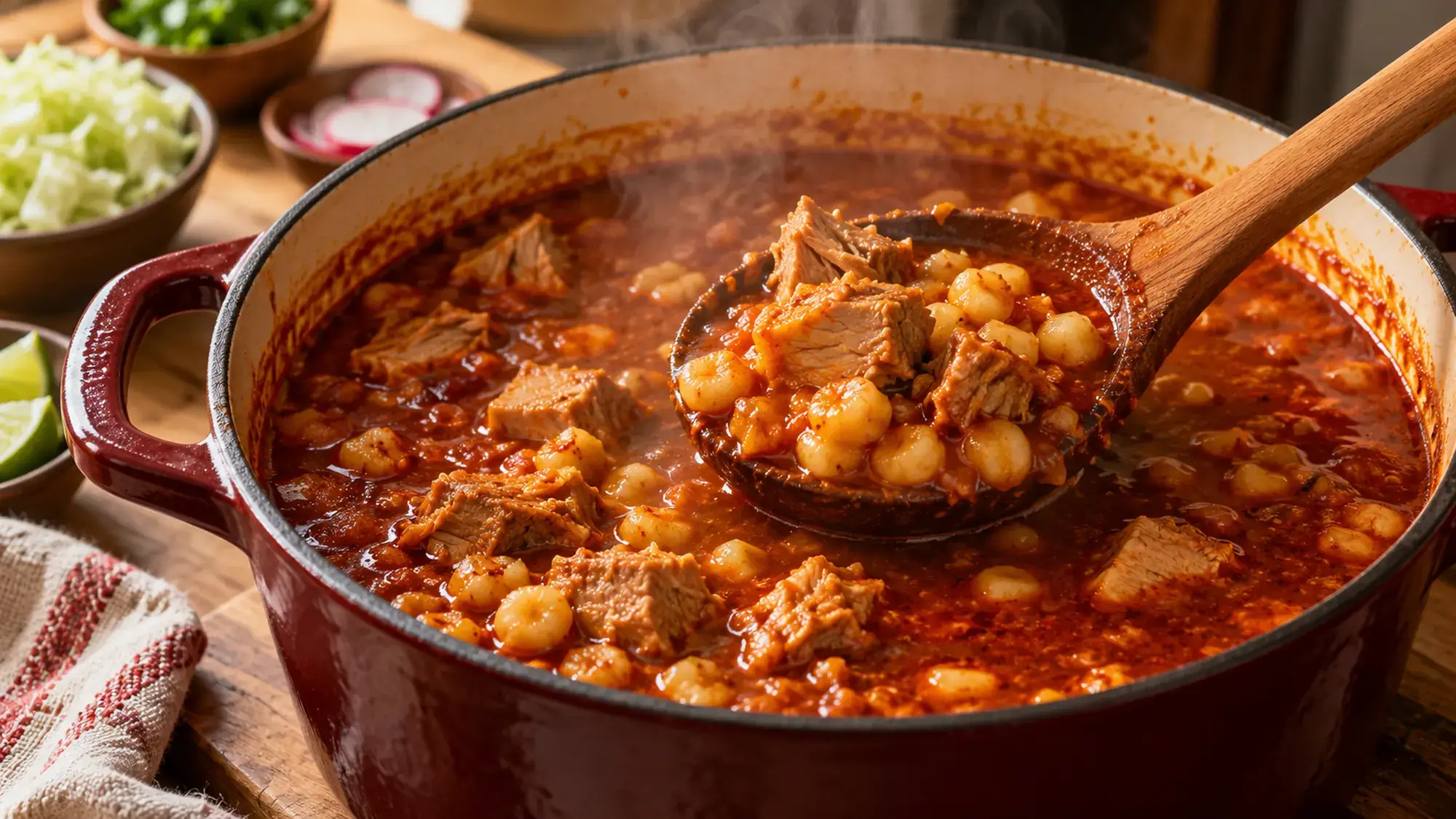
- Cook for tenderness: the shoulder should separate readily with a fork; keep the simmer gentle.
- Blend carefully: hot liquid needs a vented blender lid or a suitable immersion blender, not a tightly sealed container.
- Cool in portions: use shallow containers and reheat leftovers to the 165°F leftover temperature.
Enjoy a satisfying bowl while keeping the ingredient estimate, drained weights and leftover handling realistic.
Bottom Line
Pork pozole is a good reason to leave room in the day for a slow pot. The meat needs tenderness, the hominy needs its own space in the spoon, and the broth should taste of dried chiles rather than only salt or heat. Finish the bowl simply and let the contrasts remain clear.
Tender pork, chewy hominy and a balanced red broth are the essentials; everything else is a finishing choice.
Pork Pozole Recipe

Ingredients
- 1200 g boneless pork shoulder cut into 2-inch chunks
- 150 g onion halved
- 100 g carrot halved
- 100 g celery large pieces
- 6 g fine salt plus optional adjustment
- 1 g ground black pepper
- 2 g ground cumin
- 2 bay leaves remove
- 2000 ml water plus extra as needed
- 3 g dried Mexican oregano
- 18 g garlic peeled
- 45 g dried guajillo chiles stemmed and seeded weight
- 15 g dried ancho chiles stemmed and seeded weight
- 600 g canned white hominy drained and rinsed
Equipment
- 1 Large heavy pot
- 1 Blender
- 1 Fine strainer
Instructions
- Put pork, onion, carrot, celery, salt, pepper, cumin and bay leaves in a heavy pot. Add about 2 liters water, bring just to a simmer and skim foam. Add oregano, partly cover and cook gently until the pork is nearly tender, about 2 hours; add water to keep it covered.
- Cover the seeded dried chiles and peeled garlic with hot broth in a heatproof bowl. Soak 20–30 minutes until soft. Blend carefully with enough soaking broth to make a smooth sauce; vent hot mixtures safely or use an immersion blender.
- Remove the large vegetable pieces and bay leaves from the pot. Press the chile puree through a fine strainer into the broth, discarding tough skins. Continue simmering until pork separates easily with a fork.
- Add drained hominy and simmer 20–30 minutes to heat through and bring the flavors together. Total cooking is about 3 hours but tenderness decides. Adjust water and seasoning; optional cilantro and lime are served separately.
Nutrition
Video
Notes
Tried this recipe?
Let us know how it turned out!Hi, I’m Laura, the voice behind Tastiva. I’ve always believed that eating well should feel enjoyable, comforting, and realistic—not like another complicated rule to follow. I love creating recipes that fit into everyday life, sharing simple nutrition ideas, and finding small ways to make meals feel a little better without losing the pleasure of good food.