
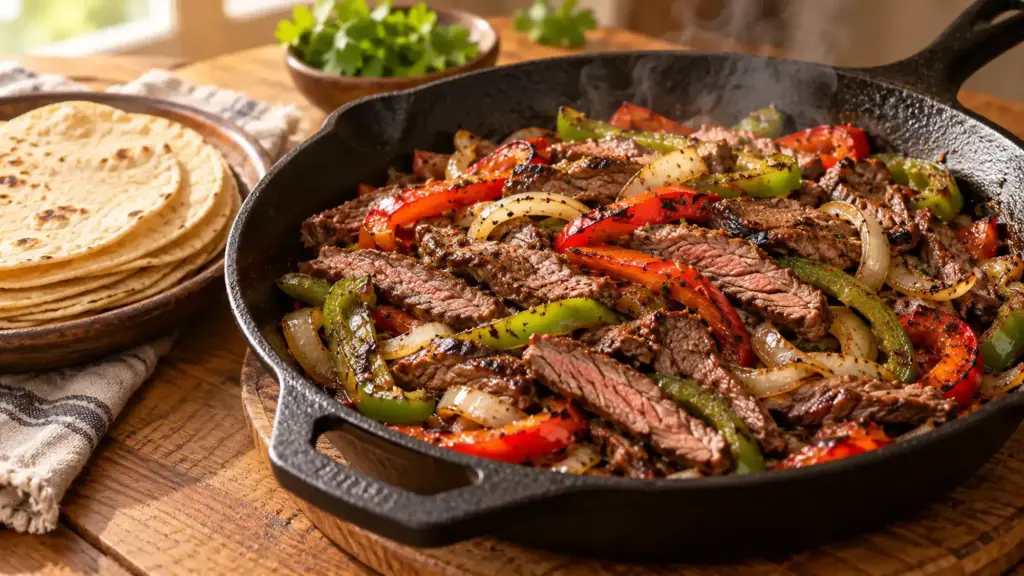
The tempting part of beef fajitas is not only the sizzling skillet. It is the contrast between a browned strip of steak, a sweet pepper edge and a warm tortilla that bends without splitting. Getting those pieces ready together matters more than piling on every possible topping.
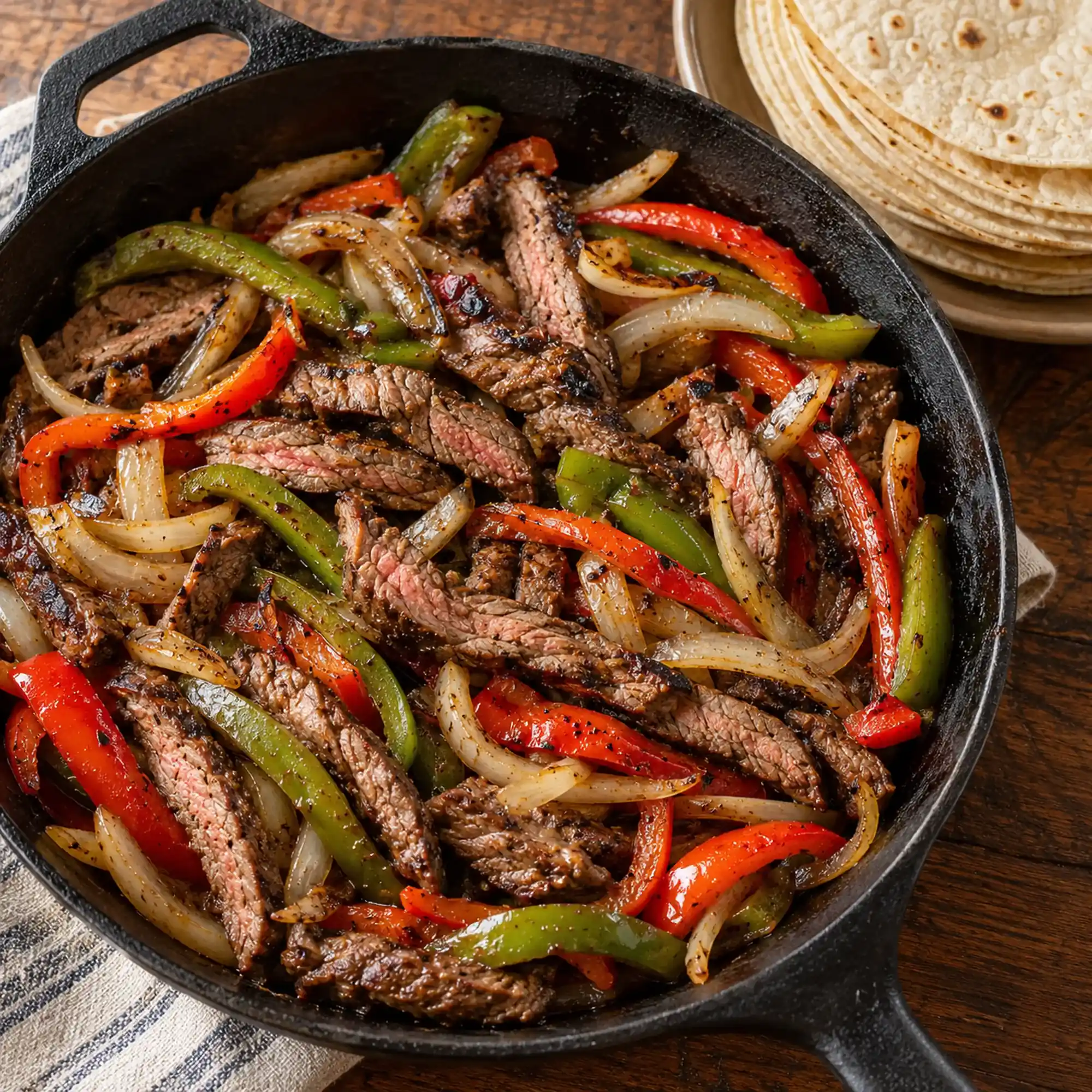
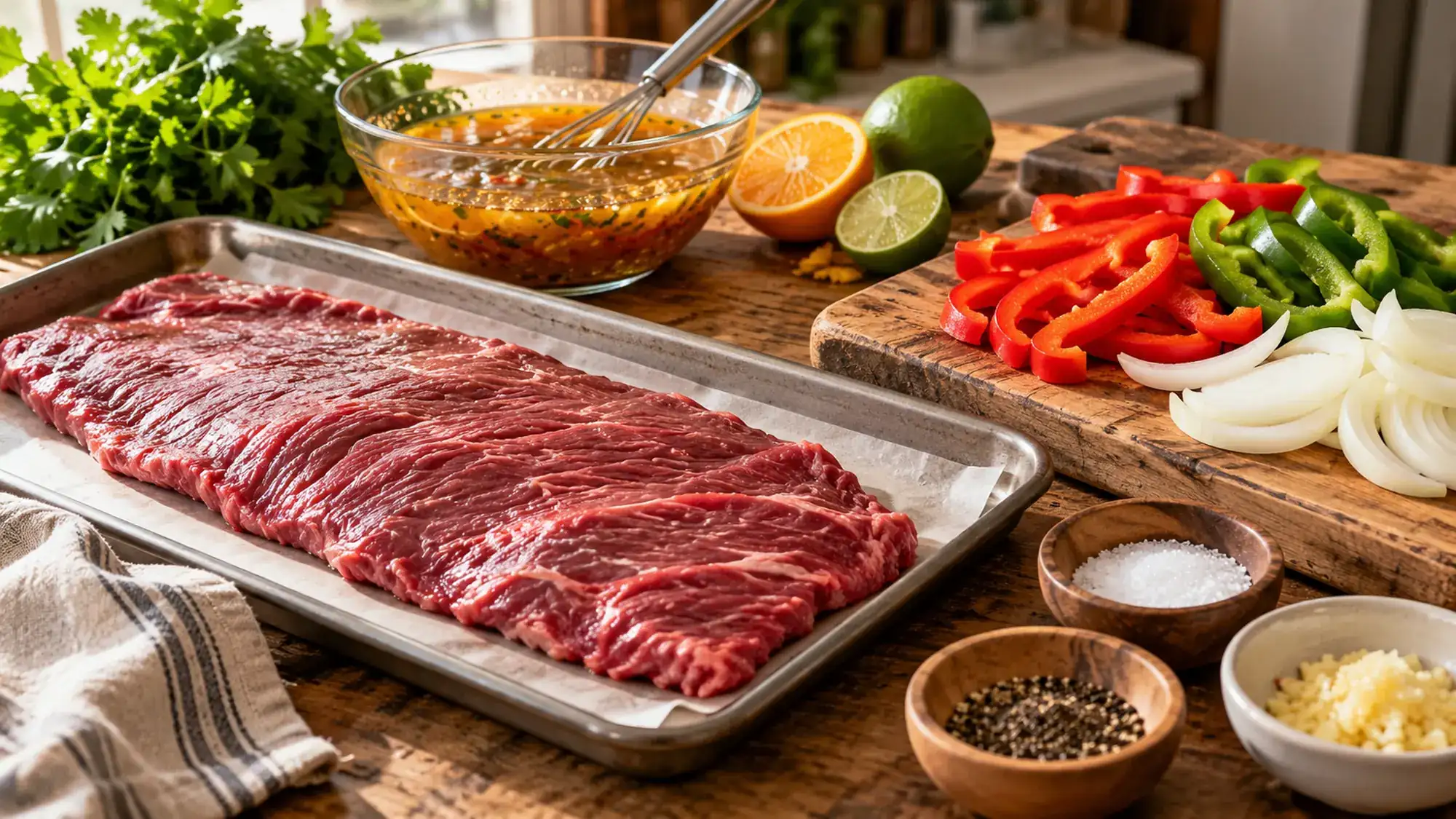
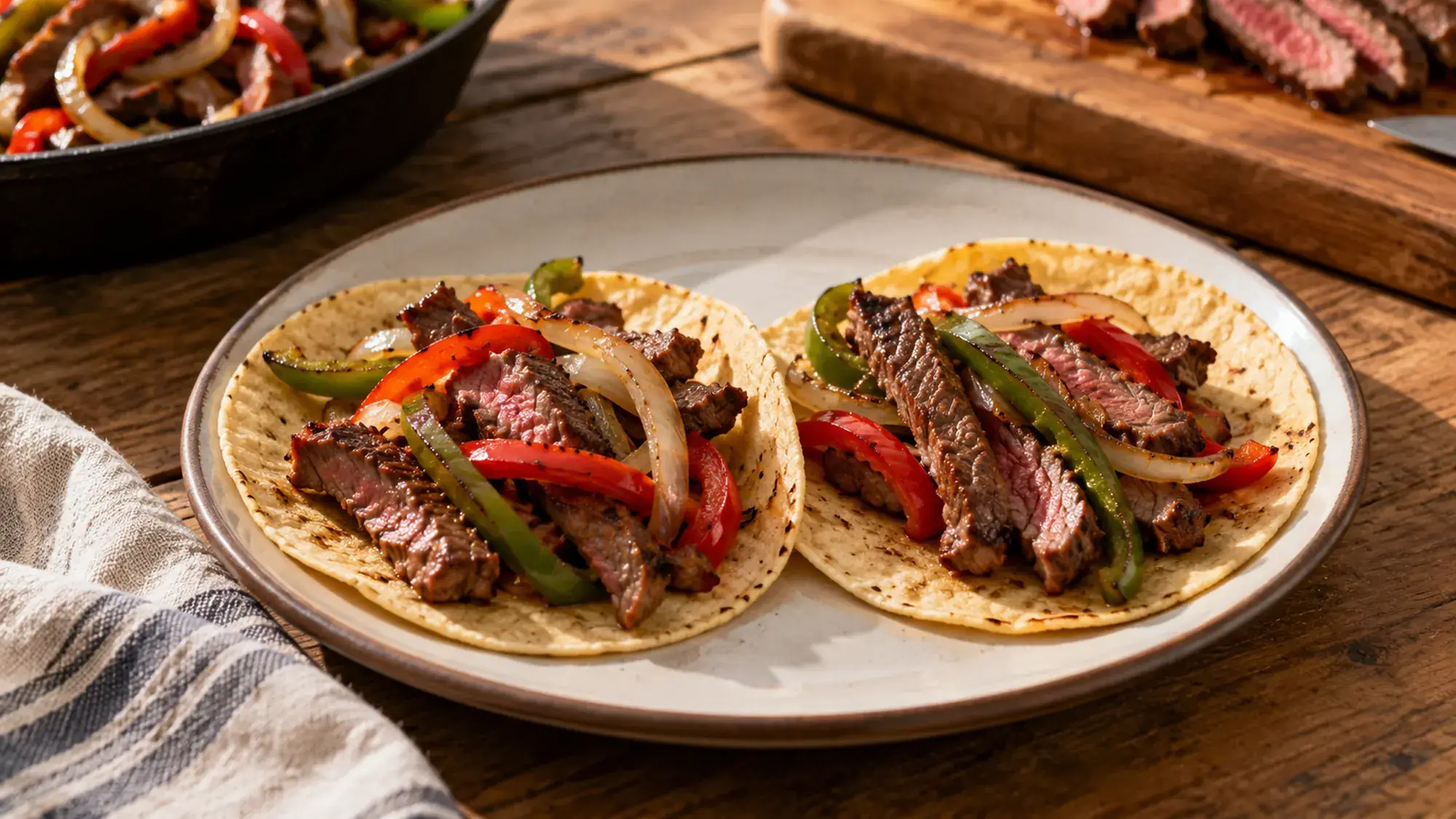
These beef fajitas use citrus-marinated flank steak, charred peppers and onions, with two small corn tortillas per serving. Rest the steak before cutting thinly across the grain; that cut makes a noticeable difference to the bite.
The citrus-and-spice direction follows RecipeTin Eats’ steak fajitas, with measured corn tortillas and its smoked-paprika alternative. I prefer a fairly spare first tortilla so the steak and vegetables have room to show up.
Serving Beef Fajitas
Bring the vegetables and sliced steak to the table together, but keep tortillas wrapped separately until people are ready. A warm tortilla is more flexible than one left uncovered beside a hot skillet. Give diners a clean serving spoon or tongs rather than asking them to reach across the pan.
Two small tortillas are the starting portion in the card, not a promise that everyone wants exactly the same meal. Offer extra tortillas or a bowl base separately if needed. Those additions change the nutrition and cost, so keep them outside the stated estimate.
- For a bowl: serve over plain rice instead of tortillas.
- For a cool contrast: offer chopped cucumber or a simple salad.
- For toppings: use small bowls so sour cream, avocado and cheese remain optional.
| Serving choice | Useful detail | Why it helps |
|---|---|---|
| Warm tortillas | Keep wrapped until needed | They stay flexible |
| Thin steak slices | Cut across visible fibers | Each bite is easier to chew |
| Separate toppings | Start with a little | The filling remains the focus |
Warm tortillas and thin steak slices do more for the finished bite than an overloaded topping station.
Beef Fajitas Variations
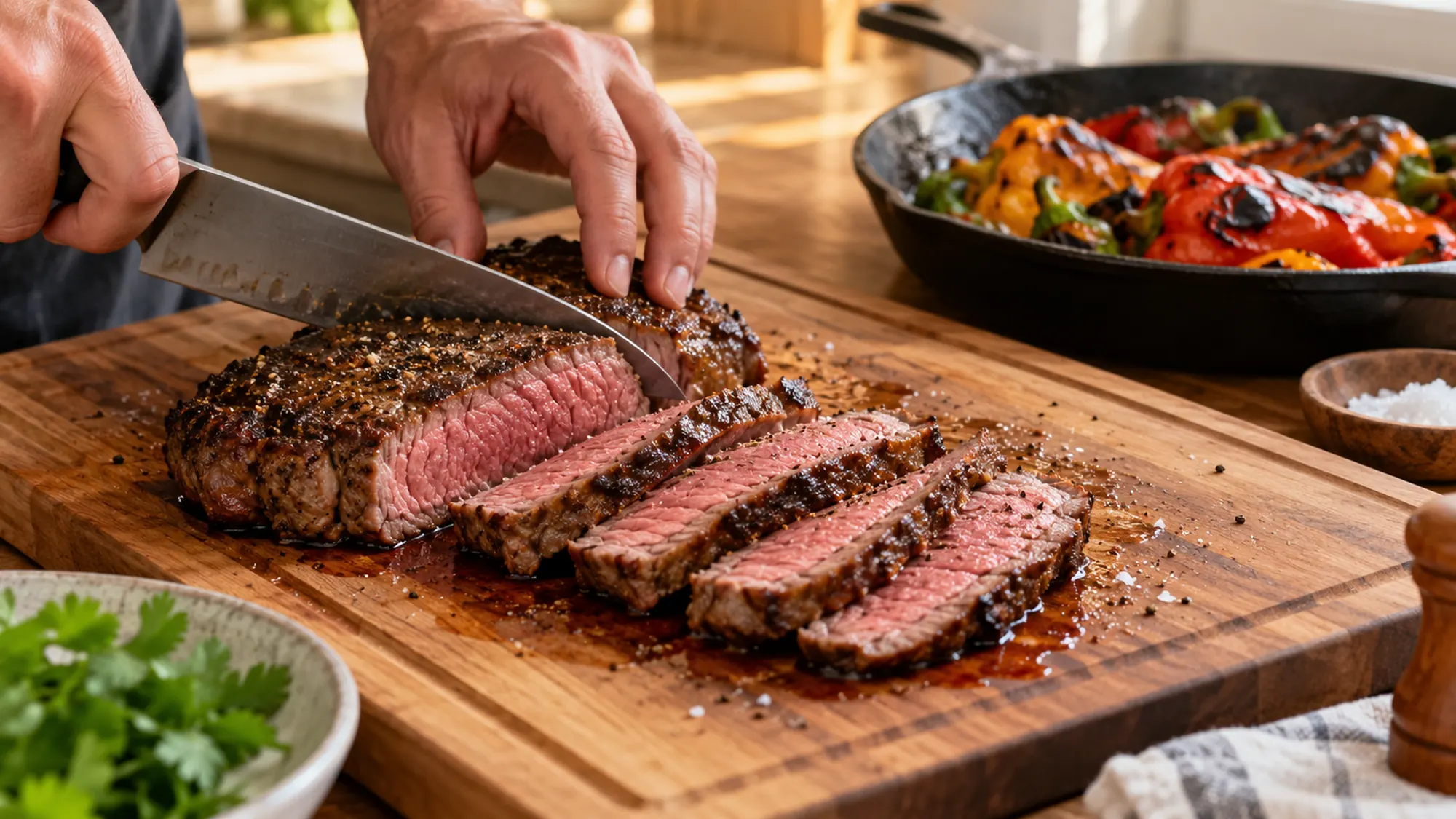
Flank steak has a clear grain, so take a moment to locate the long muscle fibers before cutting. Slicing in their direction leaves longer strands to chew; cutting across them shortens those strands. A sharp knife gives cleaner slices without squeezing all the juices onto the board.
I would adjust heat at the table when cooking for mixed tastes. The paprika-and-cayenne combination is easy to scale, while a separate hot sauce lets everyone choose. More chile is not a substitute for giving the peppers enough pan space to brown.
- Different peppers: use a mixture of colors, keeping the total amount similar.
- No citrus marinade: the source offers a dry-spice variation, but it has a different flavor and timing.
- Flour tortillas: they work, though their size and nutrition can differ considerably.
- More vegetables: cook an extra batch rather than crowding the steak’s cooking space.
- Less heat: reduce cayenne first and retain the smoky paprika.
Keep the steak and vegetables in manageable batches; change the heat or tortilla style without crowding the pan.
Nutrition and Safe Cooking
Beef contributes protein, while peppers, onions and corn tortillas add different textures and some fiber. This does not make every fajita plate nutritionally identical. The amount of oil, tortilla size and optional toppings can change the finished meal substantially.
The ingredient estimate conservatively counts the full marinade, even though the liquid is discarded before searing. Actual absorbed citrus, seasoning and salt cannot be measured from the recipe alone. Treat the numbers as a planning guide, not a precise laboratory analysis of your plate.
- Marinate safely: keep the covered steak in the refrigerator and discard used raw marinade.
- Use a thermometer: whole beef steaks should reach145°F and rest at least three minutes.
- Choose a clean board: do not slice cooked steak where raw meat was handled without washing first.
Build the plate around the measured filling, then account separately for the toppings and extras you actually choose.
Bottom Line
Beef fajitas work when the individual parts keep their character: juicy steak, browned vegetables and soft tortillas. Give the marinade time, avoid a crowded pan and make the final knife cuts carefully. The result should be easy to assemble and easy to eat, rather than a balancing act.
A hot pan creates the edges; a careful cross-grain slice finishes the job.
Beef Fajitas Recipe

Ingredients
- 500 g flank steak
- 60 ml fresh orange juice
- 30 ml lime juice
- 6 g garlic minced
- 1 g ground cumin
- 1 g ground coriander
- 1 g onion powder
- 1.5 g smoked paprika
- 0.5 g cayenne pepper
- 4 g fine salt divided
- 1 g ground black pepper
- 30 ml olive oil
- 150 g red bell pepper sliced
- 150 g green bell pepper sliced
- 200 g onion sliced
- 8 small white corn tortillas about 188 g total
Equipment
- 1 Covered marinating container
- 1 Heavy skillet
- 1 Sharp knife
- 1 Instant-read thermometer
Instructions
- Mix orange juice, lime juice, garlic, cumin, coriander, onion powder, paprika, cayenne,2 g salt and pepper. Coat the steak, cover and refrigerate 2 hours or up to overnight.
- Lift out the steak, discard raw marinade and pat the surface dry. Rub with 15 ml oil. Heat a heavy skillet well; sear, turning as needed, until at least 145°F (63°C), then rest on a clean board for at least 3 minutes.
- Use the remaining 15 ml oil to cook onion and peppers in batches until tender with browned edges. Add the remaining 2 g salt or less to taste.
- Warm the tortillas in a dry pan. Slice the rested steak thinly across its grain and serve with vegetables, two tortillas per person. Optional toppings are not included in the estimate.
Nutrition
Video
Notes
Tried this recipe?
Let us know how it turned out!Hi, I’m Laura, the voice behind Tastiva. I’ve always believed that eating well should feel enjoyable, comforting, and realistic—not like another complicated rule to follow. I love creating recipes that fit into everyday life, sharing simple nutrition ideas, and finding small ways to make meals feel a little better without losing the pleasure of good food.