
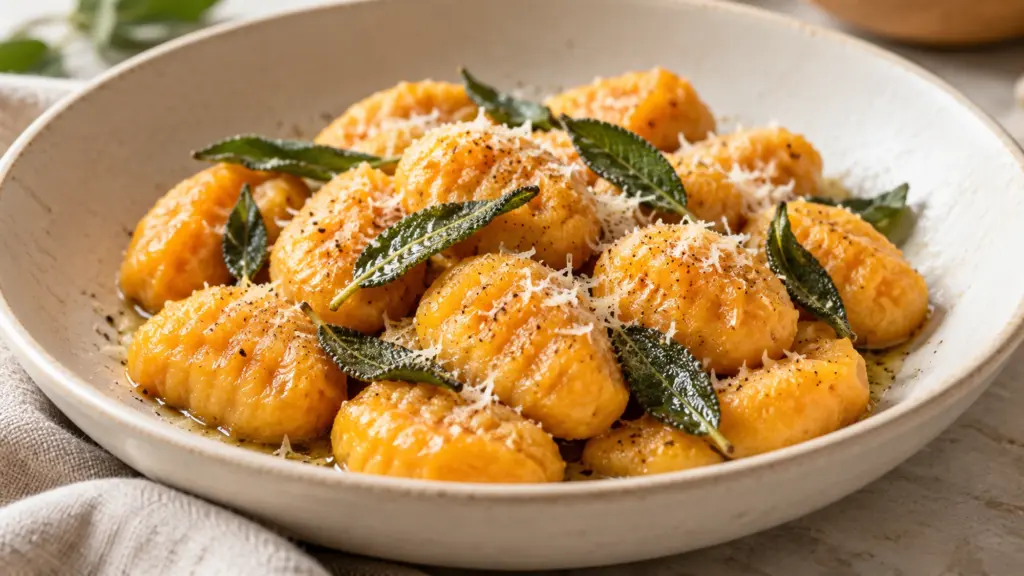
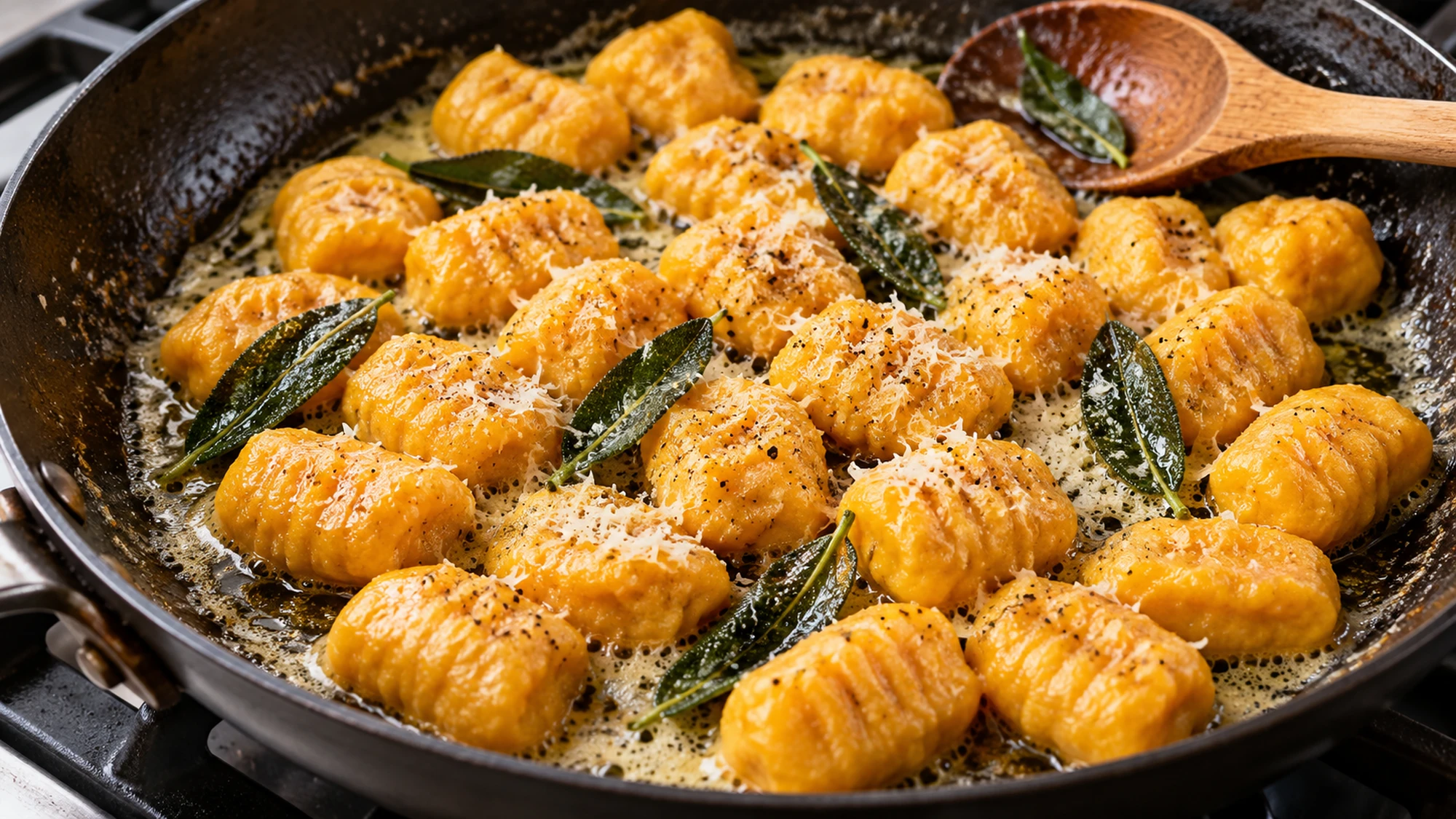
Pumpkin gnocchi asks for a different kind of patience than a long-simmered dinner: a light hand with the dough and a minute to check one dumpling before shaping the rest. Plain canned pumpkin keeps the preparation manageable, while sage butter gives the little orange pillows a savory finish.
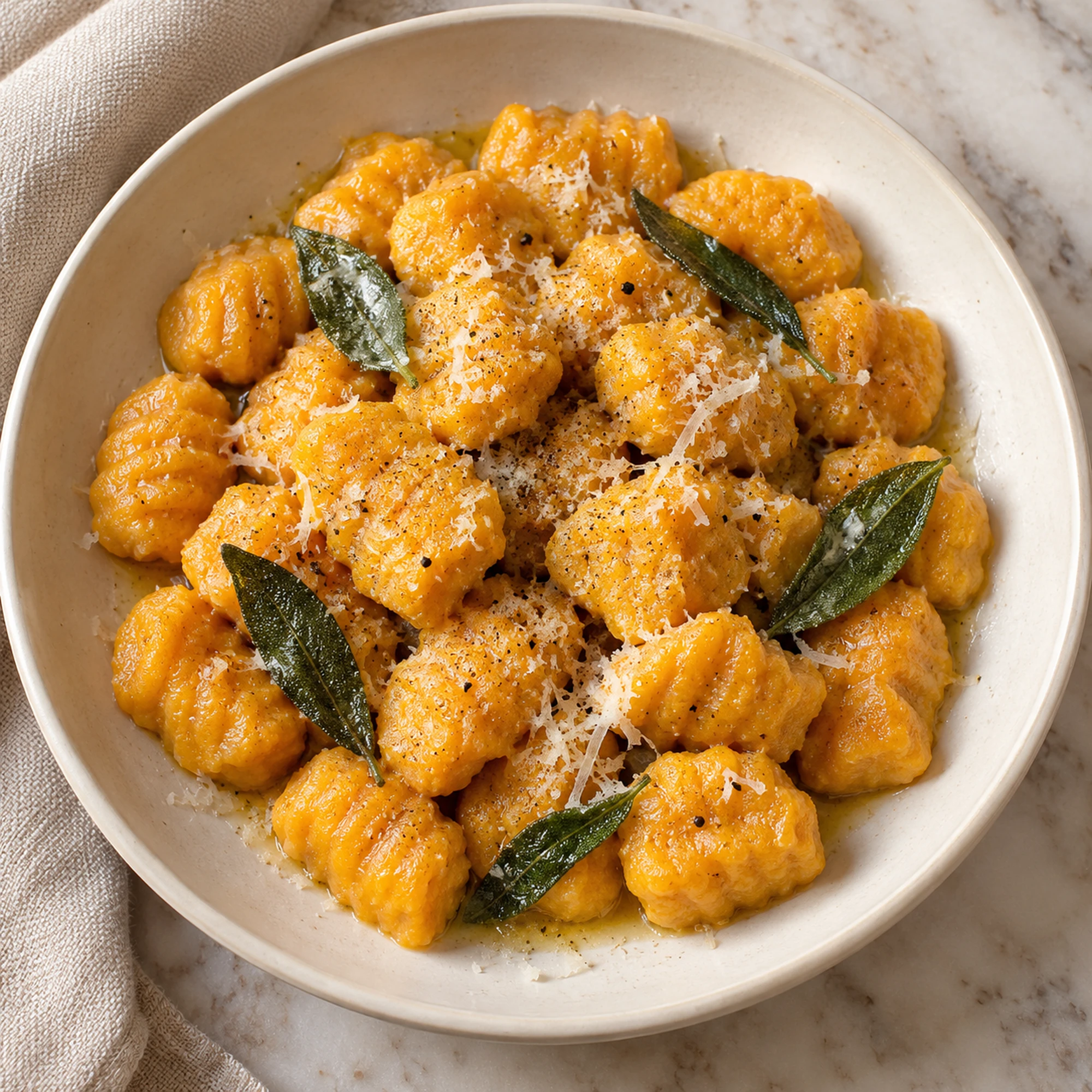
These pumpkin gnocchi use pumpkin, flour, egg and Parmesan, with no potato or ricotta. Start with thick pumpkin purée, mix gently and cook one sample dumpling before committing to more flour. The goal is a soft dough that holds together, not a firm ball that feels like bread dough.
The useful distinction at the grocery store is plain pumpkin versus pumpkin pie filling. This recipe needs unsweetened pumpkin, not a mixture already flavored for dessert. Stir the purée before measuring.
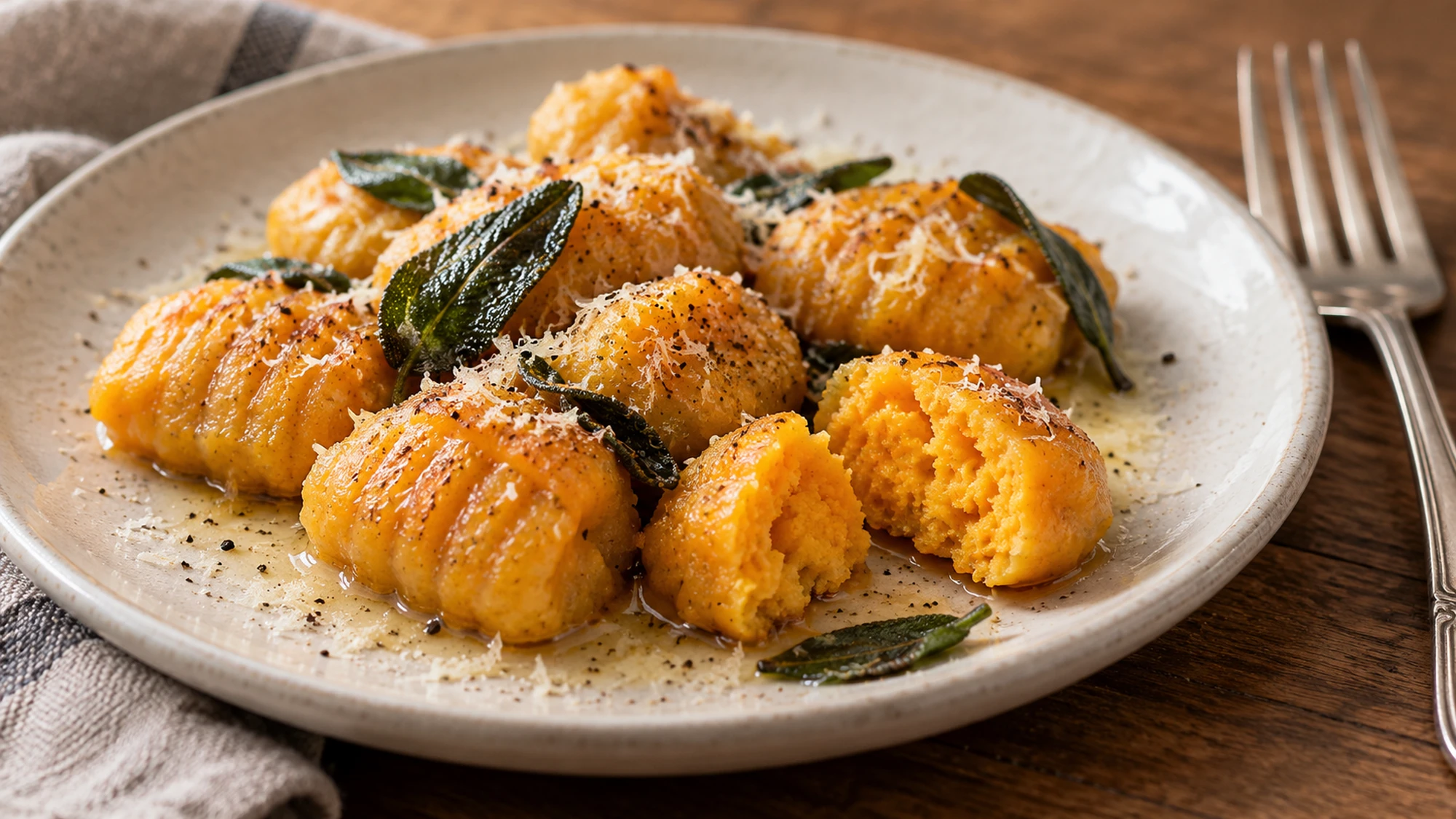
Serving Suggestions for Pumpkin Gnocchi
Have the sauce and serving bowls ready before you boil the shaped gnocchi. The dumplings cook in small batches, and they are easiest to coat while warm. A slotted spoon lets you move them from the water to the skillet without pouring everything through a colander.
- Add a green vegetable: our green beans recipe or a simple leafy salad brings contrast to the butter and tender dumplings.
- Choose a bright salad: Lemon juice or a vinegar-based dressing gives the plate a different flavor from the rich sauce. I’d choose that contrast rather than another creamy side.
- Keep portions comfortable: The recipe makes four servings. For a larger meal, add vegetables and a separate protein of your choice rather than assuming the gnocchi alone must fill the whole plate.
- Serve promptly: Gnocchi can absorb sauce as they sit. A small splash of water helps the butter coat them without leaving the pan dry.
For leftovers, refrigerate in shallow containers within two hours, or one hour when the temperature exceeds 90°F (32°C). Use within three days and reheat to 165°F (74°C). A little water and gentle handling can help during reheating, although the texture will be softer than freshly cooked gnocchi.
Keep the sides fresh and simple, and bring the gnocchi to the table while the sage butter still coats each piece.
Variations and Dough Troubleshooting
Pumpkin moisture varies between cans and batches, which is why the extra flour is a reserve rather than an automatic addition. Add it sparingly only when the sample dumpling shows that the dough needs more structure. Too much flour can make a manageable dough but a heavier dinner.
| Situation | What to try | What to avoid |
|---|---|---|
| Dough feels sticky | Lightly flour hands and work surface | Kneading in flour until completely dry |
| Sample falls apart | Fold in a small amount of reserved flour | Adding the entire reserve at once |
| Dumpling center is doughy | Cook the next sample a little longer | Treating floating as the only doneness cue |
| Butter darkens quickly | Lower the heat or move the pan off it | Waiting until the milk solids turn black |
- Choose the cheese deliberately: A different hard cheese changes the saltiness and flavor. If vegetarian ingredients matter, choose a cheese specifically labeled suitable for vegetarians.
- Let sage lead: The leaves flavor the butter, while the nutmeg stays in the background.
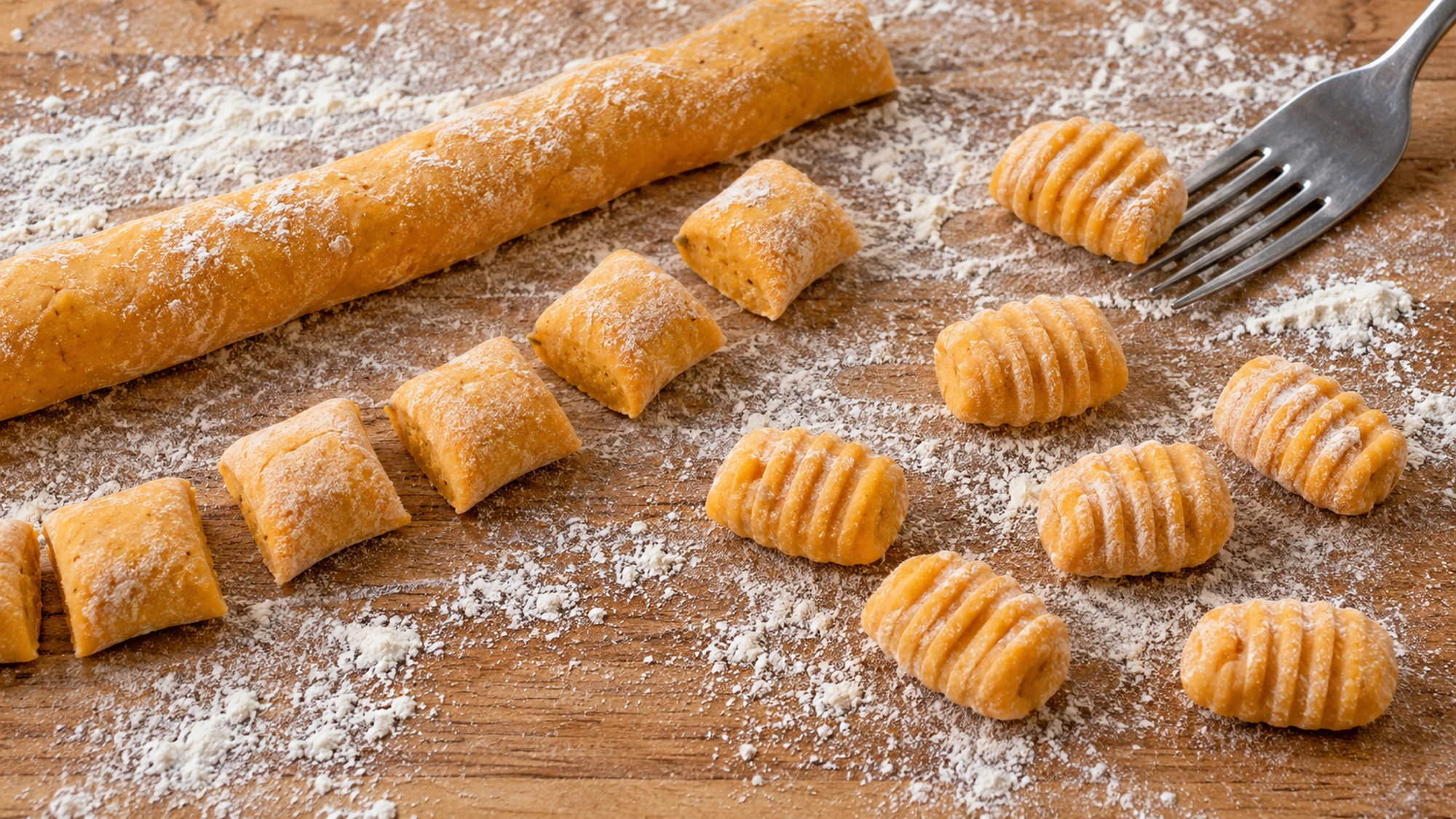
- Skip elaborate shaping: Simple cut pillows are enough. Fork ridges are optional.
- Adjust the sauce gently: Add the recipe’s water gradually and toss carefully, just until the butter coats the gnocchi.
Vincenzo’s Plate demonstrates a roasted-pumpkin and Pecorino version in the card’s video; our quantities use canned pumpkin and Parmesan.
A soft dough, a cooked sample and small adjustments are more useful than chasing an exact flour amount by feel alone.
Health Benefits
Pumpkin brings color and contributes fiber, while egg and Parmesan contribute protein. Flour provides most of the structure. This is still a butter-sauced pasta-style meal, so the vegetables and other foods you serve with it help shape the overall balance.
- Consider the sauce: Butter adds richness and saturated fat. The listed nutrition estimate includes it rather than treating the sauce as an invisible extra.
- Check allergens: This recipe contains wheat, egg and milk. Changing one ingredient does not automatically make the whole dish suitable for an allergy.
- Read the portion note: Nutrition is an estimate for one-quarter of the recipe, not for an unspecified bowl or optional sides.
Enjoy the pumpkin flavor and pair it with vegetables that add variety.
Bottom Line
Choose thick plain pumpkin, resist unnecessary flour and check one dumpling before cooking the batch. Finish with lightly browned sage butter and a simple green side for a dinner that keeps the pumpkin at the center.
Pumpkin Gnocchi Recipe

Ingredients
- 300 g plain canned pumpkin purée thick, not pumpkin pie filling
- 250 g all-purpose flour plus up to 50 g extra only as needed
- 1 large egg
- 30 g Parmesan finely grated
- 1/2 teaspoon fine salt
- 1 pinch ground nutmeg
- 60 g unsalted butter
- 10 fresh sage leaves about 2 g
- 1/8 teaspoon ground black pepper
- 2–4 tablespoons water for loosening the sauce
Equipment
- 1 Large pot
- 1 wide skillet
- 1 Mixing bowl
- 1 Kitchen scale
- 1 Knife or bench scraper
- 1 Slotted spoon
- 1 Tray
- 1 Fork (optional)
Instructions
- Bring a large pot of water to a gentle boil. Lightly flour a tray and your work surface. Stir the pumpkin purée; it should be thick, not watery.
- In a bowl, gently combine the pumpkin, egg, Parmesan, salt and nutmeg. Fold in 250 g flour just until a soft dough forms. Do not knead like bread dough.
- Cook a small sample in gently boiling water. Once it floats, give it another 30–60 seconds, then cut it open to check that the center is cooked rather than floury. If it falls apart, gently fold a small amount of the reserved flour into the dough and test again. Use only what is necessary, up to 50 g extra; avoid making the dough stiff.
- Divide the dough into manageable portions. With lightly floured hands, roll each into a rope about ¾ inch thick. Cut into small pillows. Leave plain or roll gently over fork tines; place on the prepared tray.
- Melt the butter in a wide skillet over medium-low heat. Add the sage and cook gently until fragrant and the butter turns light golden brown. Remove from the heat before it burns.
- Cook the gnocchi in small batches in gently boiling water, using the successful sample’s timing as a guide. Lift with a slotted spoon and transfer to the butter pan.
- Add the black pepper and 2–4 tablespoons water a little at a time. Toss gently over low heat just until the butter coats the gnocchi. Serve promptly.
Nutrition
Video
Notes
Tried this recipe?
Let us know how it turned out!Hi, I’m Laura, the voice behind Tastiva. I’ve always believed that eating well should feel enjoyable, comforting, and realistic—not like another complicated rule to follow. I love creating recipes that fit into everyday life, sharing simple nutrition ideas, and finding small ways to make meals feel a little better without losing the pleasure of good food.