
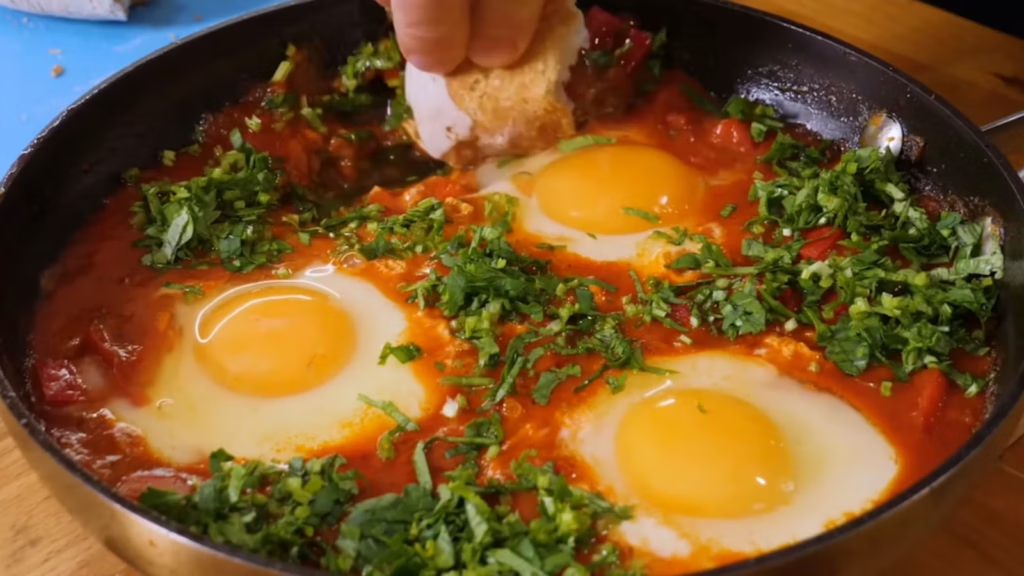
Shakshuka is a skillet of eggs nestled into a thick, warmly spiced tomato and pepper sauce, finished with herbs and carried to the table with plenty of bread. It is breakfast, brunch, or dinner without changing clothes. The sauce should be concentrated enough to hold small wells for the eggs, but still loose enough for dipping. The eggs need gentle heat so the whites set without turning the yolks chalky. Get those two textures right and the whole pan feels generous, colorful, and far more impressive than the effort suggests.
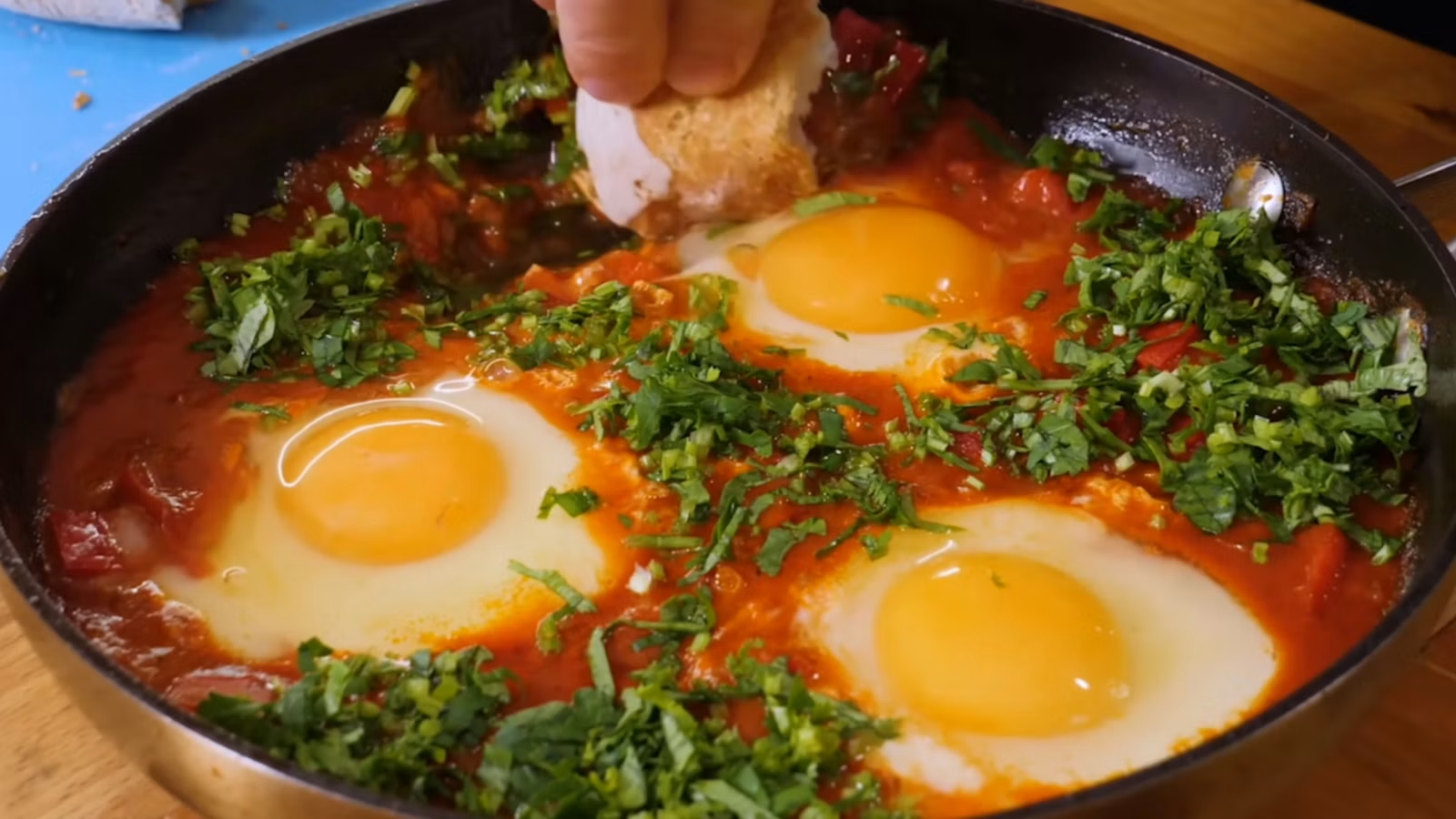
Reduce the tomato sauce before adding the eggs; a thick base gives you tender whites instead of watery tomato soup with breakfast floating in it.
Shakshuka has North African roots and many homes
Shakshuka is widely connected with North African cooking and is now deeply woven into food cultures across the Middle East, including Israel. Exact origin stories vary, which is common for dishes that travel through families, markets, migration, and shared regional ingredients. The recognizable version uses eggs cooked directly in a tomato-pepper sauce, though green shakshuka, versions with meat, and eggs stirred rather than left whole all belong to the broader conversation.
That flexibility is part of its charm. Peppers may be sweet or hot; the spices may lean toward cumin, paprika, caraway, or harissa; toppings can include feta, yogurt, olives, or none at all. This recipe stays close to the tomato-and-egg center of the dish and uses pantry spices. It fits naturally into a Mediterranean-style meal plan, but it should not be flattened into a generic “Mediterranean eggs” label. The dish carries a richer regional history than that shortcut allows.
Build a thick, balanced tomato sauce
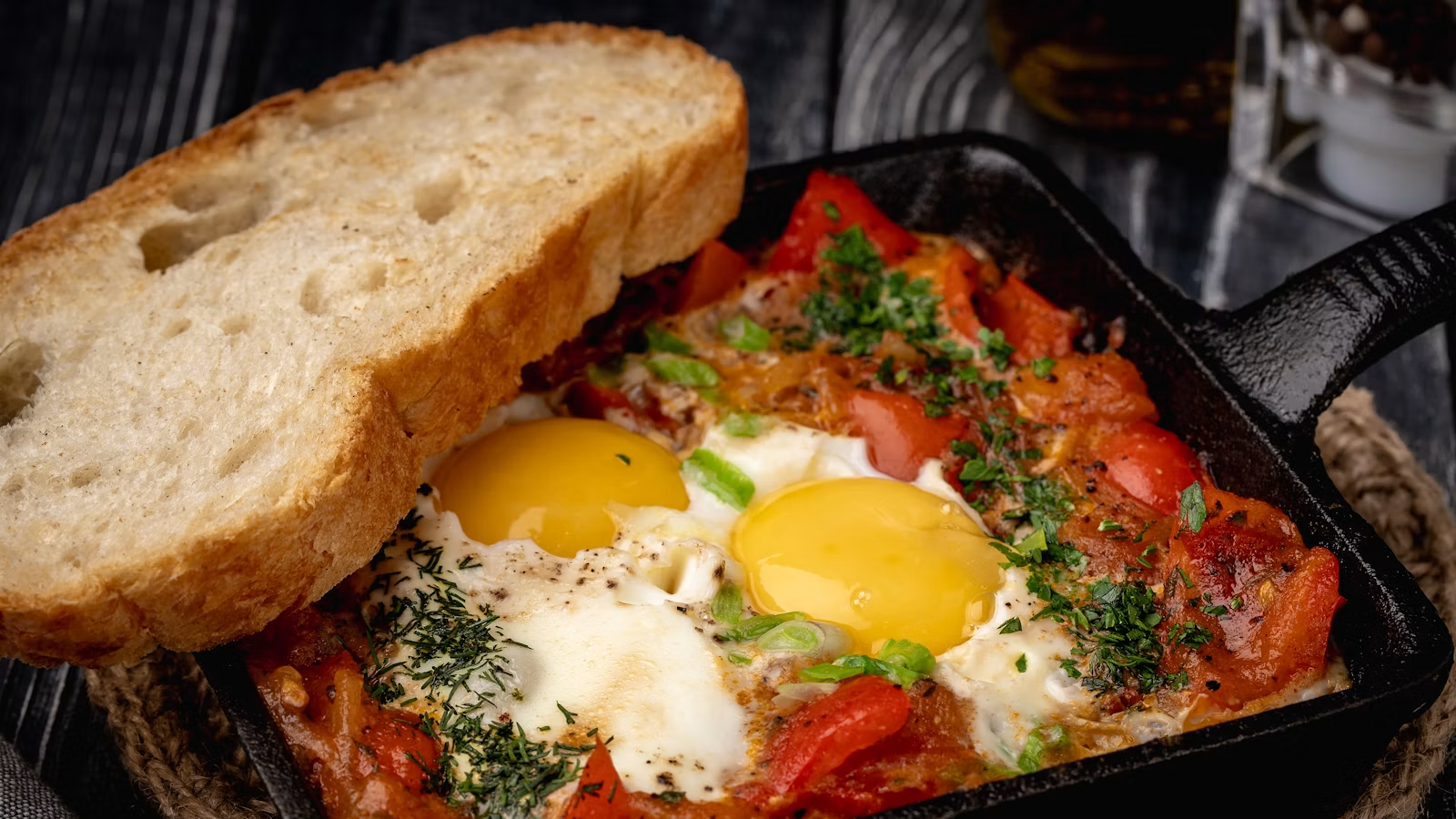
Begin with onion and red bell pepper in olive oil. Give them enough time to soften and take on a little color before adding garlic; garlic needs only a minute and becomes bitter if it spends the entire sauté auditioning for attention. Bloom cumin, sweet paprika, and a pinch of cayenne in the oil so their aromas open before the tomatoes arrive.
Crushed tomatoes make a dependable year-round base. Simmer uncovered until the sauce is thick enough that a spoon dragged across the pan leaves a path for a second or two. Taste before adding the eggs. Tomatoes may need salt, pepper, a pinch more chile, or—in a very sharp batch—a tiny pinch of sugar. The sauce should taste complete on its own because the eggs will soften, not fix, its seasoning.
- Too thin: Simmer longer before cracking the eggs.
- Too acidic: Cook a little longer and add a small pinch of sugar only if needed.
- Too mild: Stir in harissa or extra cayenne before the eggs go in.
- Too thick: Add water by the tablespoon until the sauce moves easily again.
Add the eggs without losing the yolks
Use the back of a spoon to make six shallow wells, then crack each egg into a small cup before sliding it into the pan. That extra cup protects the whole skillet from one broken shell or stubborn yolk. Space the wells evenly so the whites can spread a little without merging into one enormous egg blanket.
Cover the pan and lower the heat. Steam trapped under the lid helps the tops of the whites set, but the sauce can catch underneath if the heat stays high. Begin checking after five minutes. For the classic soft-yolk texture, remove the skillet when the whites are opaque but the yolks still wobble. For people who need fully cooked eggs, FoodSafety.gov advises cooking raw eggs until both white and yolk are firm; egg dishes reach 160°F (71°C).
Remember that the pan remains hot after it leaves the burner. Add feta and herbs immediately, then move it to the table before the residual heat takes the yolks from golden and spoonable to hard-boiled in disguise.
Serve, store, and reheat shakshuka
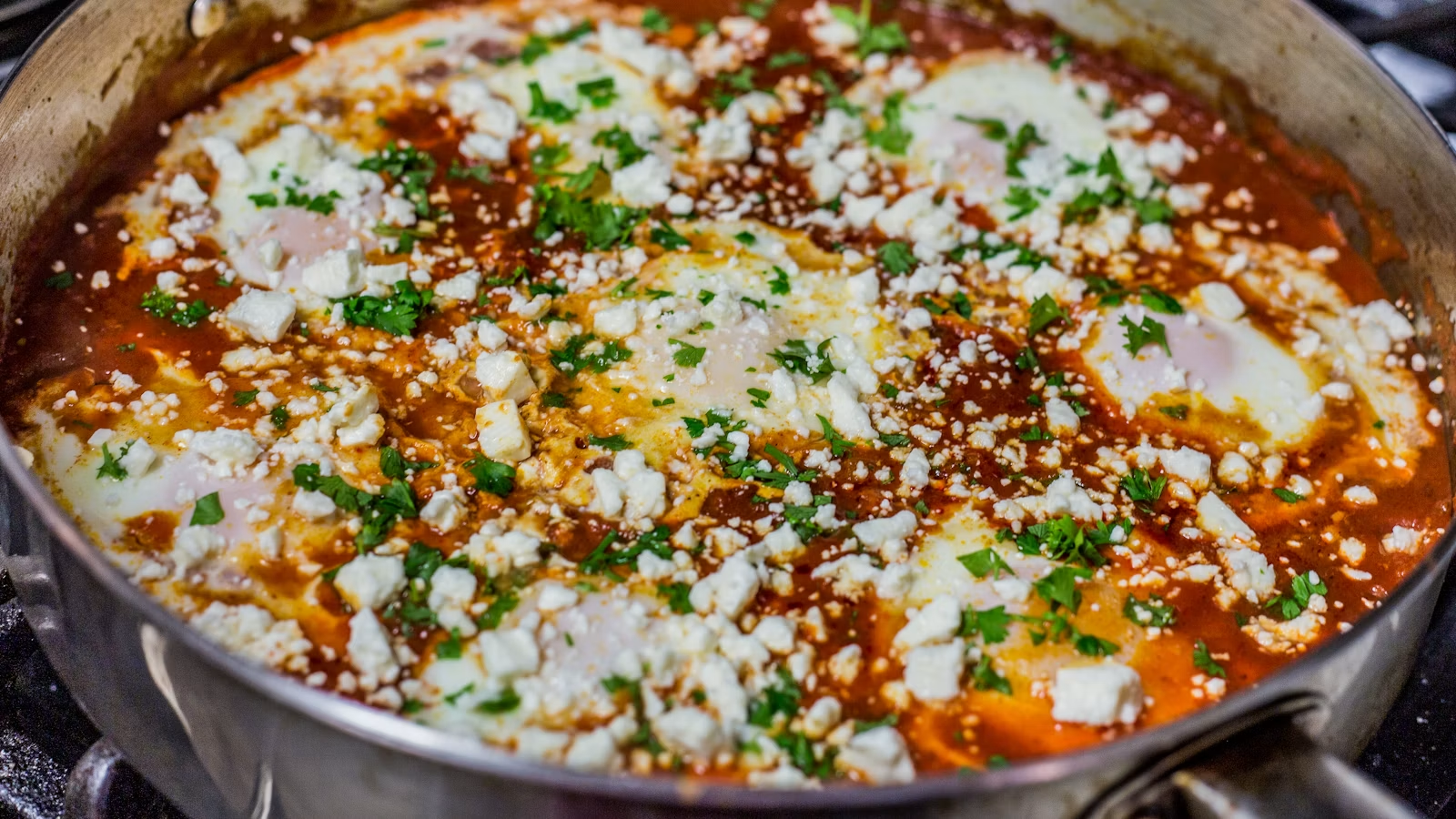
Serve shakshuka straight from the skillet with pita, flatbread, or thick toast for scooping. A cucumber salad, bitter greens, or lemony beans make it a fuller meal without competing with the sauce. Feta is optional but useful: its salt and tang sharpen the sweet peppers and tomatoes. Parsley or cilantro adds the fresh final note the pan needs.
The tomato sauce is excellent make-ahead material. Cook it through the reducing step, cool, cover, and refrigerate for up to three days. Reheat it in the skillet, then add fresh eggs just before serving. That gives you better yolks than reheating a finished pan. If you do have cooked leftovers, refrigerate promptly and reheat gently until steaming hot; expect the yolks to become firmer.
For variation, add drained chickpeas before the eggs, tuck in roasted peppers, or replace part of the tomato with greens for a looser green shakshuka interpretation. Keep one principle steady: the vegetable base should taste lively enough to carry every bite. Eggs are the soft center, not the entire plot.
Shakshuka Recipe

Ingredients
- 2 tablespoons extra-virgin olive oil
- 1 medium yellow onion diced
- 1 red bell pepper seeded and diced
- 3 cloves garlic minced
- 1 teaspoon ground cumin
- 1 teaspoon sweet paprika
- 1/4 teaspoon cayenne pepper optional; adjust to taste
- 1 28-ounce can crushed tomatoes
- 3/4 teaspoon fine salt plus more to taste
- 1/4 teaspoon black pepper
- 6 large eggs
- 1/3 cup crumbled feta optional
- 1/4 cup chopped fresh parsley or cilantro
Equipment
- 1 12-inch skillet with lid stainless steel, enameled, or nonstick
- 1 wooden spoon
Instructions
- Heat the olive oil in a 12-inch skillet over medium heat. Add the onion and bell pepper and cook for 8 to 10 minutes, stirring occasionally, until soft and lightly golden.
- Add the garlic, cumin, paprika, and cayenne. Cook for 1 minute, stirring, until fragrant.
- Stir in the crushed tomatoes, salt, and black pepper. Simmer uncovered for 10 to 12 minutes, until thick enough that a spoon dragged across the pan leaves a brief path. Taste and adjust the seasoning.
- Make 6 shallow wells in the sauce. Crack each egg into a small cup, then slide it into a well.
- Reduce the heat to low, cover, and cook for 5 to 8 minutes, until the whites are set to your preference. For fully cooked eggs, continue until both whites and yolks are firm.
- Remove from the heat and sprinkle with feta, if using, and fresh herbs. Serve immediately with pita, flatbread, or thick toast.
Nutrition
Video
Notes
- Use stainless steel, enameled, or nonstick cookware; prolonged acidic tomato sauce can affect bare cast iron.
- Make the sauce up to 3 days ahead, then reheat and add fresh eggs just before serving.
- For more heat, add harissa with the tomatoes or increase the cayenne.
- Nutrition is an estimate per serving and includes feta but not bread.
Tried this recipe?
Let us know how it turned out!Sources
- Smithsonian Magazine: Around the World in 80 Eggs
- The Guardian: Yotam Ottolenghi’s Shakshuka
- Epicurious: Shakshuka
- FoodSafety.gov: Safe Minimum Internal Temperatures
Hi, I’m Laura, the voice behind Tastiva. I’ve always believed that eating well should feel enjoyable, comforting, and realistic—not like another complicated rule to follow. I love creating recipes that fit into everyday life, sharing simple nutrition ideas, and finding small ways to make meals feel a little better without losing the pleasure of good food.