
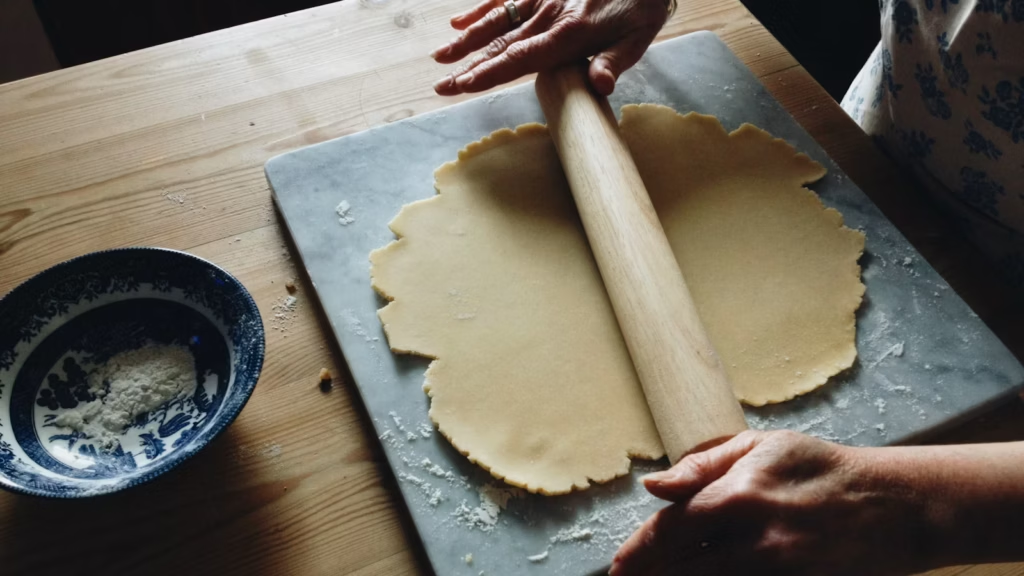
This shortcrust pastry recipe gives you the kind of crust I want under a tart: crisp at the edge, tender through the base, and buttery without leaving a greasy film on your fingers. The ingredient list is only flour, butter, salt, and water, but the method matters. Cold fat, restrained mixing, and two short rests do more for good pastry than any clever extra ingredient.
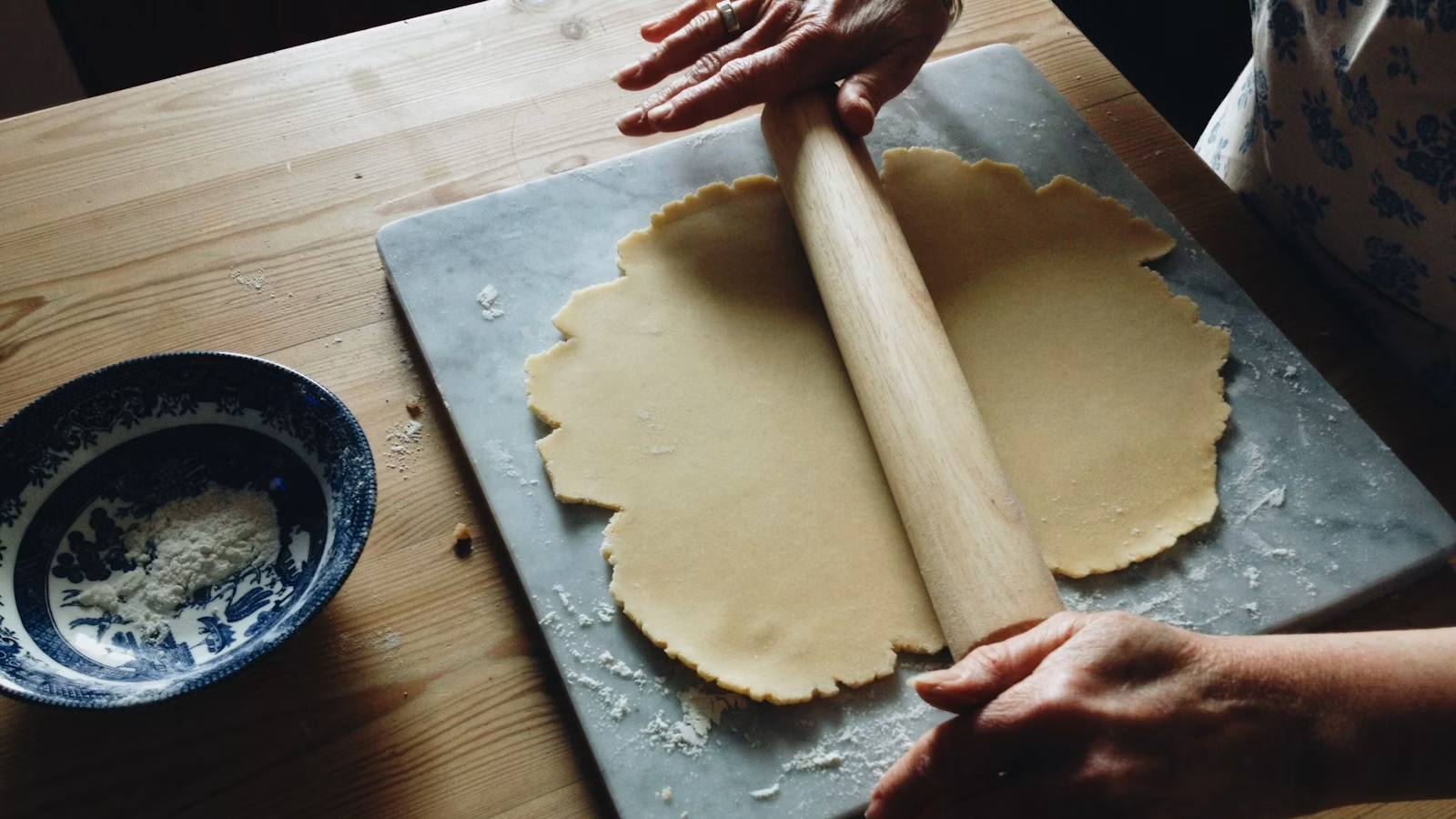
Cold butter makes flakes. Too much enthusiasm makes shoe leather.
This is a classic two-to-one flour-to-butter formula by weight, sized for one 9-inch (23-cm) tart or single-crust pie. It works for savory fillings as written. For a sweet tart, add a tablespoon of sugar; the dough does not need an egg or a blizzard of powdered sugar to behave.
Why this shortcrust pastry recipe works
Shortcrust gets its crumbly texture by coating some of the flour with fat. That limits how much gluten can form once water arrives. The little pea-sized pieces of butter that remain create delicate pockets as they melt. Rub every piece into a paste and the pastry can bake dense; leave huge lumps and it may leak.
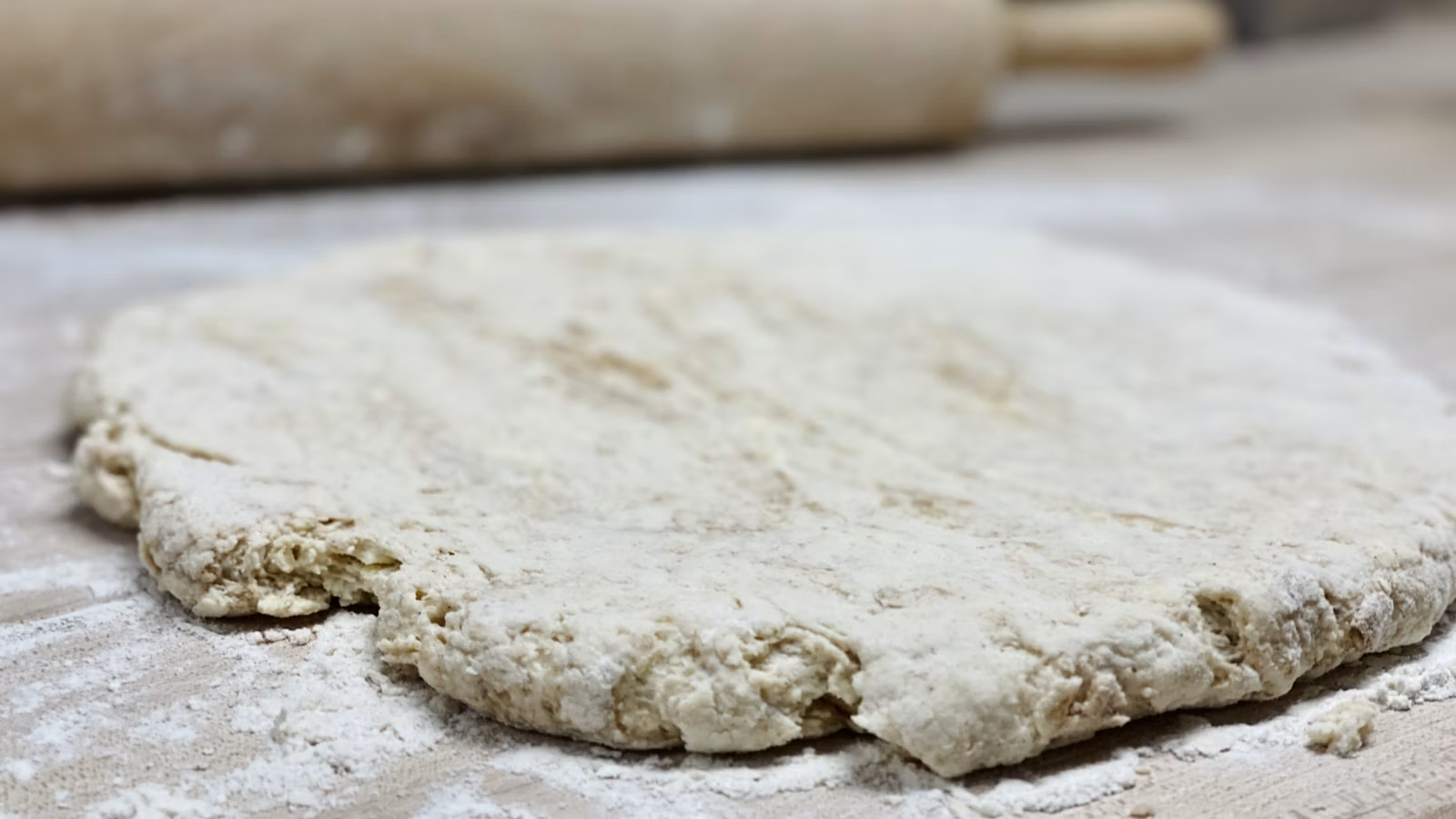
The dough should look rough before it rests. Add only enough ice water for a squeezed handful to stay together, then press—do not knead—the crumbs into a disk. Resting gives the flour time to hydrate and lets the gluten relax, so the dough rolls more evenly and shrinks less in the oven.
The four ingredients and what each one does
Plain all-purpose flour provides enough structure without making the crust bready. Spoon it into a cup and level it if you must measure by volume, but a scale is much more dependable. Different scooping habits can turn the same cup into noticeably different amounts of flour, and pastry notices.
Use unsalted butter so you control the seasoning. It should be refrigerator-cold, not frozen solid. Fine salt distributes quickly. The water should be properly cold, but ice cubes do not belong in the bowl; measure the water after chilling it so a melting cube cannot surprise you.
Humidity and flour brand affect the water amount, which is why the recipe gives a range. Start with three tablespoons. Toss rather than stir, then add more by the teaspoon. A slightly shaggy dough becomes smooth enough after resting. A wet, polished dough is already heading toward tough territory.
How to make this shortcrust pastry recipe
Whisk the flour and salt, cut in the butter, and stop when the mixture resembles coarse crumbs with a few small butter pieces. Add the water gradually. Once the crumbs hold when squeezed, turn them out and press them into a disk. Wrap and chill for 30 minutes; this is a pause, not optional scenery.
Roll from the center outward, turning the disk often and using only a light dusting of flour. Ease it into the pan without stretching, trim the edge, and chill again for 15 minutes. That second rest is modest insurance against slumping sides, especially if the kitchen warmed the butter while you rolled.
Shortcrust Pastry Recipe

Ingredients
- 250 grams all-purpose flour plus more for rolling
- 125 grams unsalted butter very cold and cut into 1/2-inch cubes
- 1/2 teaspoon fine salt
- 3–5 tablespoons ice water add only as needed
Equipment
- 1 large mixing bowl
- 1 pastry blender or food processor optional
- 1 Rolling Pin
- 1 9-inch tart pan
Instructions
- Whisk the flour and salt together in a large bowl. If your kitchen is warm, chill the bowl for 10 minutes before continuing.
- Add the cold butter. Rub it in with your fingertips or use a pastry blender until the mixture resembles coarse crumbs with a few pea-sized pieces. Do not work it into a smooth paste.
- Drizzle in 3 tablespoons ice water and toss with a fork. Add more water 1 teaspoon at a time, stopping as soon as a squeezed handful holds together without feeling wet.
- Tip the mixture onto the counter, press it together gently, and shape it into a 1-inch-thick disk. Wrap and refrigerate for 30 minutes. Do not knead.
- Roll the chilled dough on a lightly floured surface to about 1/8 inch thick. Ease it into a 9-inch tart pan without stretching, trim the edge, and chill for 15 minutes.
- Fill and bake according to your recipe, or blind-bake at 375°F (190°C): line with parchment, add pie weights, and bake 15 minutes. Remove the weights and parchment, then bake 7 to 10 minutes more, until dry and lightly golden.
Nutrition
Video
Notes
Tried this recipe?
Let us know how it turned out!Rolling, blind-baking, and fixing cracks
If the disk cracks immediately, it is probably too cold. Leave it on the counter for two minutes, then try again. Patch a split with a thin scrap and roll gently over the join. If the dough sticks, lift it with a bench scraper and dust beneath it rather than burying the top in flour.
For a crisp shell under a wet filling, blind-bake it. Line the chilled crust with parchment, fill it to the top with weights, and bake at 375°F (190°C) for 15 minutes. Remove the weights and bake until the base looks dry and lightly golden. King Arthur Baking’s guide is useful if blind-baking is new to you.
Make-ahead and storage
The dough keeps for three days in the refrigerator. Let a very firm disk sit briefly before rolling; forcing it only creates cracks. For longer storage, wrap it well, place it in a freezer bag, and freeze for up to three months. Thaw overnight in the refrigerator so the butter stays cold.
You can also freeze a lined tart shell. Wrap the pan tightly and bake from cold, adding a few minutes as needed. I prefer freezing the raw shell rather than a loose rolled circle because the pan protects the edges. Label it sweet or savory now; future you should not have to conduct a pastry investigation.
Sources
- Tesco Real Food: How to Make Shortcrust Pastry
- Ricardo: Basic Shortcrust Pastry
- King Arthur Baking: How to Blind-Bake Pie Crust
- Great British Chefs: How to Make Shortcrust Pastry
Hi, I’m Laura, the voice behind Tastiva. I’ve always believed that eating well should feel enjoyable, comforting, and realistic—not like another complicated rule to follow. I love creating recipes that fit into everyday life, sharing simple nutrition ideas, and finding small ways to make meals feel a little better without losing the pleasure of good food.