
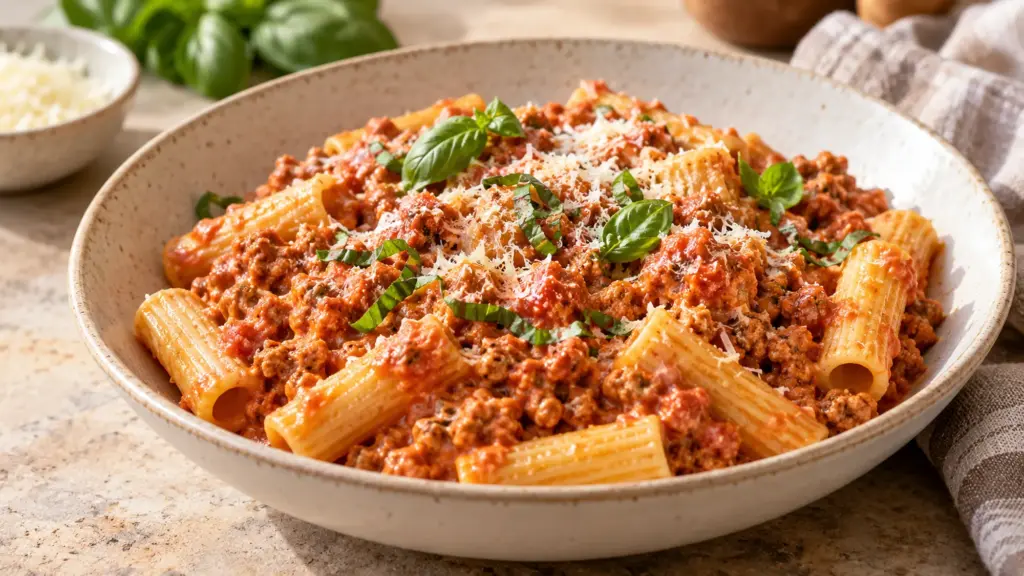
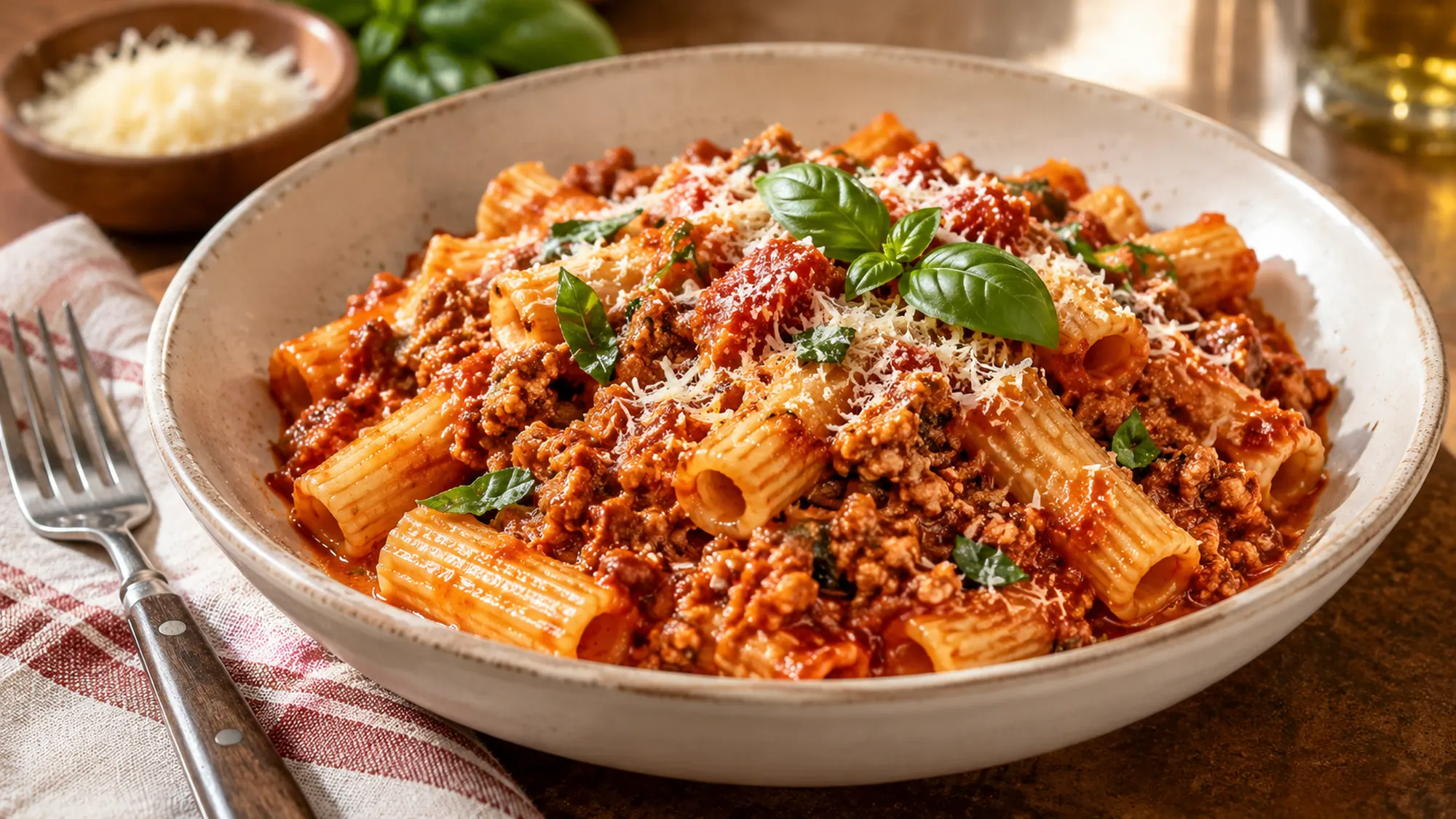
Cottage cheese does not have to announce itself in little white curds. In this turkey bolognese, it blends into tomato sauce before meeting the browned meat, creating a smooth rosy coating. The result is a practical turkey meat sauce rather than a claim to reproduce a long-simmered traditional ragù.
For turkey bolognese, blend the cottage cheese and marinara until smooth, fold them into cooked ground turkey and warm the sauce gently with herbs and Parmesan.
I like this approach when the goal is a creamy sauce without a separate cream reduction. The blender does one useful job, then gets out of the way. Choosing a marinara you already enjoy matters more than collecting extra seasonings to cover up a jar that tastes disappointing on its own.
Serving Turkey Bolognese
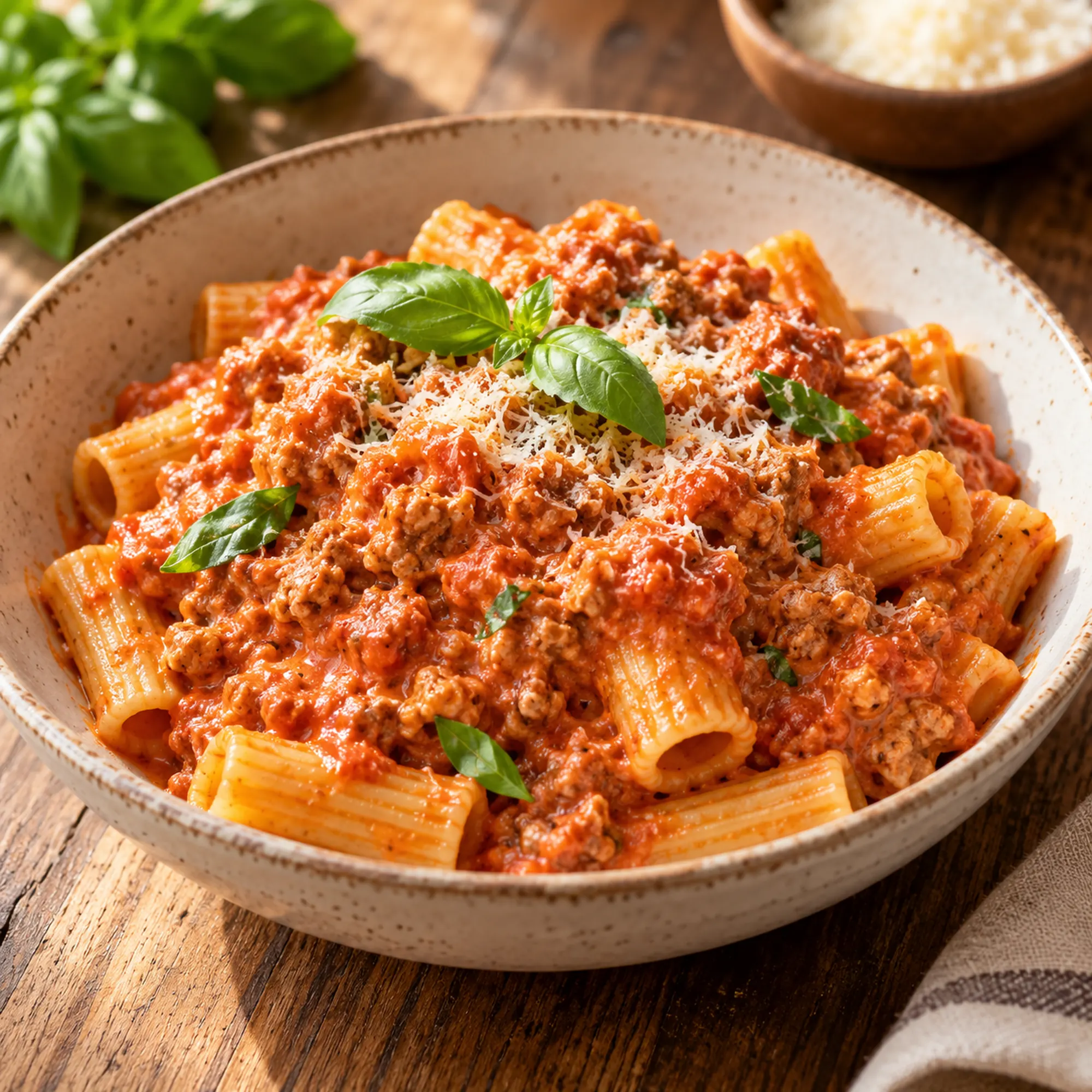
The recipe makes six portions of sauce. Pasta, zucchini noodles or another serving base are optional and not included in the estimate, so add them according to appetite. Spoon the sauce over the base just before eating, or toss it with a small amount of cooking water if you prefer a more even coating.
A crisp vegetable side can provide a different texture beside the soft sauce. Tastiva’s garlic-lemon green beans are one option. Extra cheese is optional too; taste the sauce first because both the marinara and Parmesan already contribute seasoning.
- Keep enough moisture in the sauce that it spreads easily rather than sitting in a solid mound.
- Use a serving bowl for surplus sauce instead of automatically mixing every portion with pasta.
- Add fresh basil at the end so its aroma stays noticeable.
| Serving base | Texture and preparation |
|---|---|
| Short pasta | Catches the small turkey crumbles |
| Spaghetti | Works with a little pasta water |
| Zucchini noodles | Needs brief cooking and good draining |
Treat this as a sauce recipe first, then choose the base and portion that suit the meal.
Turkey Bolognese Variations
The blended-cottage-cheese technique follows Clean & Delicious’ turkey bolognese. This version measures the dried herbs individually instead of relying on an unspecified Italian-seasoning blend. It uses 93% lean turkey and low-fat cottage cheese, which should not be confused with fat-free products.
I would blend the sauce thoroughly for this particular dish rather than leave the cottage cheese partly textured. That choice keeps the turkey crumbles distinct against a smooth background. A small blender or food processor can work, but avoid filling a machine beyond its safe capacity.
- Use a mild marinara first, then decide whether the red pepper flakes are welcome.
- If changing the turkey’s fat percentage, expect the texture and nutrition to change too.
- Loosen a thick sauce with small additions of water or pasta cooking water.
- Warm gently after adding the dairy mixture instead of reducing it at a hard boil.
- A different cheese is not a direct nutritional equivalent, even if it makes a similar-looking sauce.
Keep the cottage-cheese mixture smooth and the final heat gentle so the meat remains the main texture.
Nutrition and Safe Cooking
Turkey, cottage cheese and Parmesan contribute protein, while the tomato sauce brings flavor and moisture. The chosen base determines how much carbohydrate and additional fiber the full plate contains. Calling the sauce a complete pasta meal without counting the pasta would make the estimate less useful.
The nutrition values cover one-sixth of the sauce alone, including measured oil and cheese. They use specified cottage-cheese and marinara labels rather than assuming every brand is identical. Optional pasta and extra Parmesan are excluded, and a different jar or dairy product can change sodium and other values noticeably.
- Cook ground turkey to 165°F (74°C); color alone is not enough.
- Check labels for dairy and other ingredients relevant to allergies.
- Keep cooked sauce separate from utensils that handled raw turkey.
- Cool leftovers promptly in shallow containers, refrigerate and reheat thoroughly rather than leaving the whole pan on the stove.
Count the serving base separately and use temperature, not just color, to check the turkey.
Bottom Line
Turkey bolognese with cottage cheese is a straightforward way to give tomato meat sauce a creamy texture. Brown the turkey, blend the dairy mixture until smooth and bring the two together over gentle heat. Keep the serving base flexible, taste before adding extra cheese and let the basil provide a fresh finish.
A smooth blended sauce and well-cooked turkey make this a useful, adaptable dinner component.
Turkey Bolognese Recipe

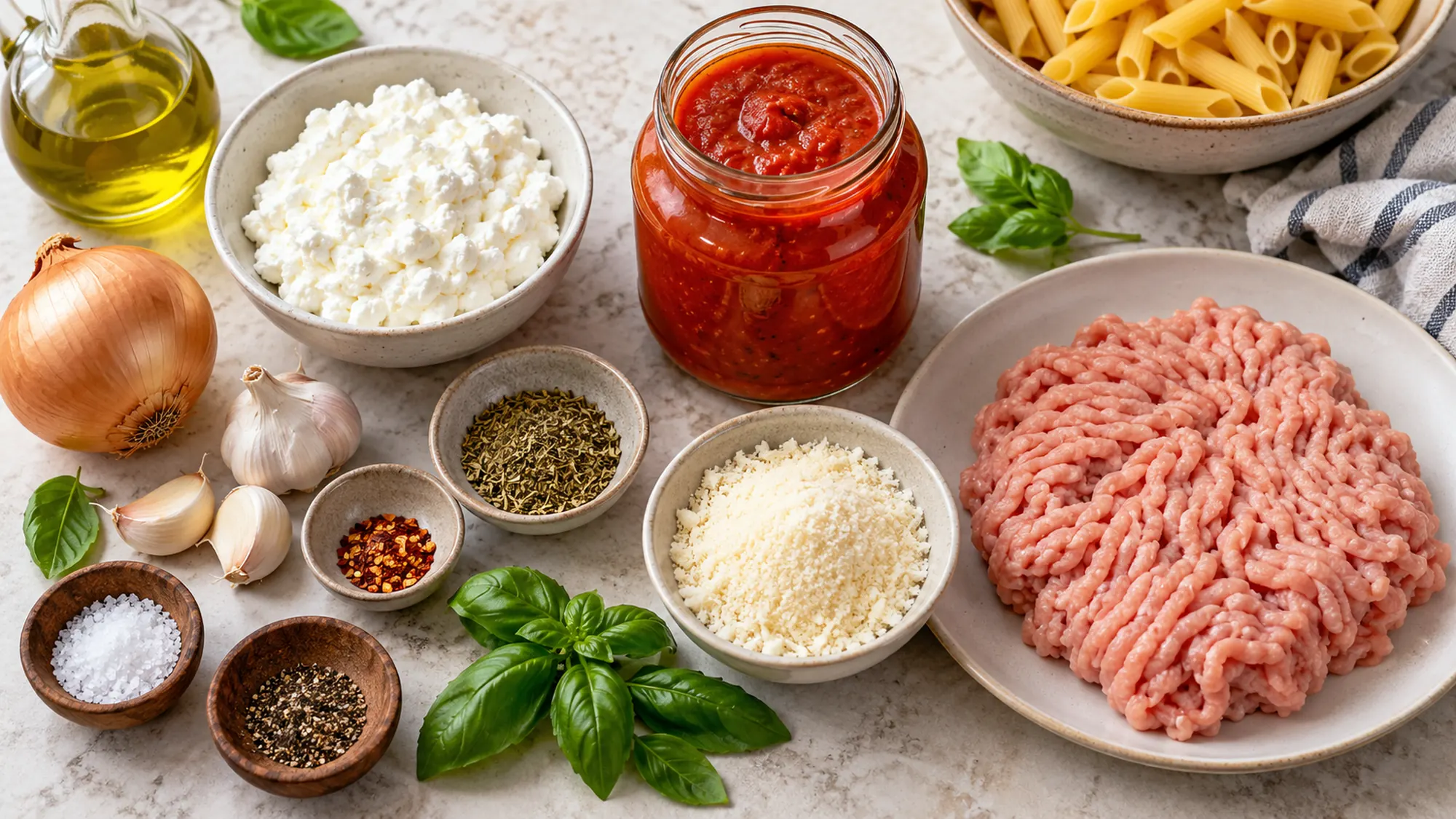
Ingredients
- 15 ml olive oil
- 150 g onion diced
- 9 g garlic minced
- 0.5 g crushed red pepper
- 454 g 93% lean ground turkey
- 30 g grated Parmesan
- 225 g low-fat cottage cheese
- 680 g marinara sauce
- 1 g dried oregano
- 1 g dried basil
- 0.5 g dried thyme
- 2 g fine salt
- 0.5 g black pepper
- 6 g fresh basil torn
- pasta or zucchini noodles optional serving base, excluded from estimates
Equipment
- 1 Large skillet
- 1 Blender
- 1 Instant-read thermometer
Instructions
- Heat olive oil in a wide sauté pan. Soften onion for about 5 minutes, then add garlic and red pepper and cook for 1 minute.
- Add ground turkey, salt and pepper. Break into small crumbles and cook about 5–7 minutes, until cooked through and at least 165°F (74°C).
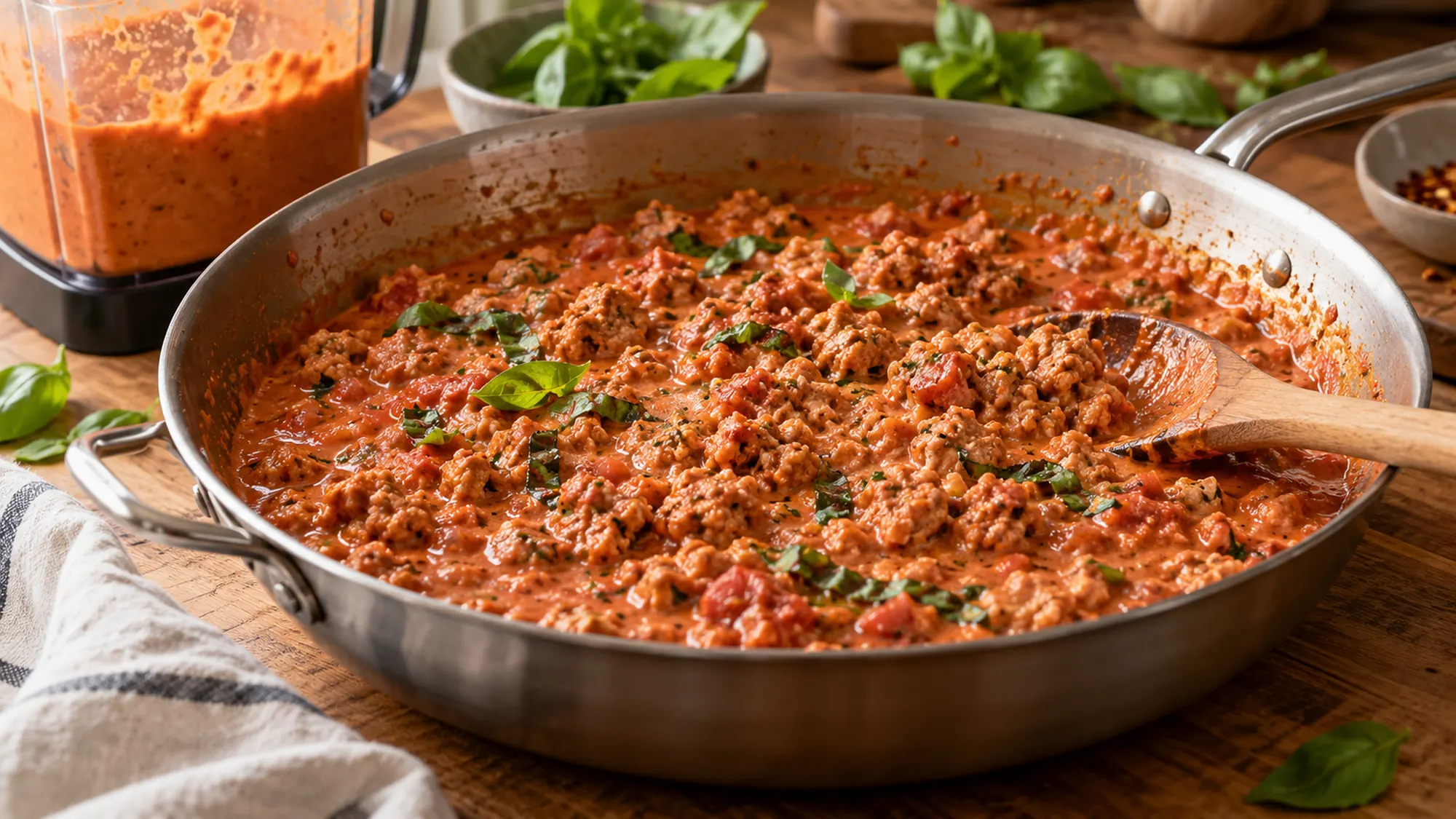
- While the meat cooks, blend cottage cheese with marinara until smooth. Work in batches if necessary rather than overfilling the blender.
- Pour the blended mixture into the turkey. Add oregano, dried basil, thyme and Parmesan, then simmer gently for 5–10 minutes, stirring. Add small amounts of water if too thick.
- Stir in fresh basil and divide the sauce into six portions. Serve over optional pasta or zucchini noodles. Individual dried herbs replace the source’s Italian-seasoning blend; pasta and extra cheese are excluded from the sauce-only estimate.
Nutrition
Video
Notes
Tried this recipe?
Let us know how it turned out!Hi, I’m Laura, the voice behind Tastiva. I’ve always believed that eating well should feel enjoyable, comforting, and realistic—not like another complicated rule to follow. I love creating recipes that fit into everyday life, sharing simple nutrition ideas, and finding small ways to make meals feel a little better without losing the pleasure of good food.