
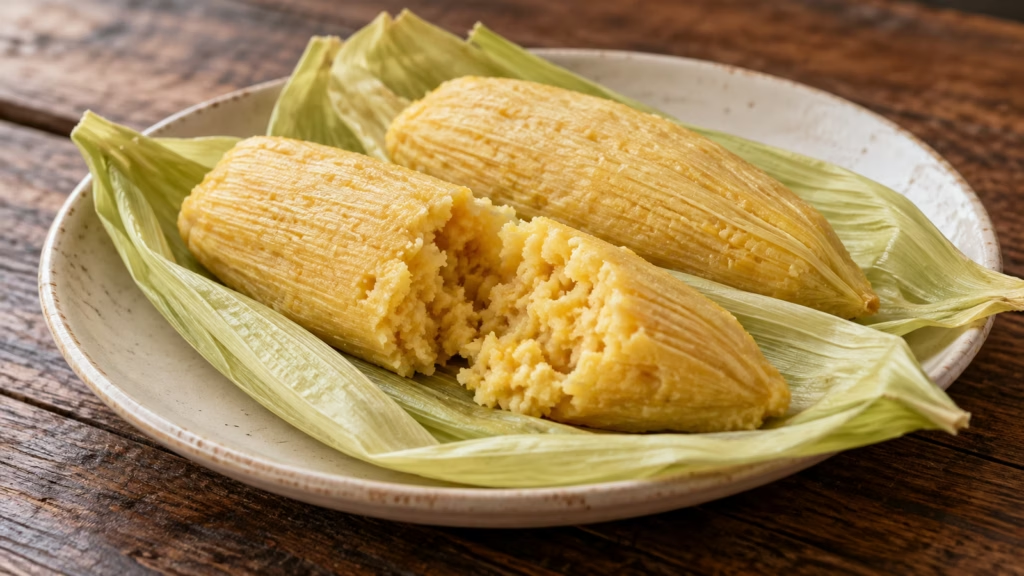
A bowl of freshly cut corn can look wonderfully juicy right up until it needs to become a tamal. For uchepos, that moisture is the detail to watch: grind the kernels into a thick mixture, add milk cautiously, and let the wrapped tamales steam and rest until their delicate centers set.
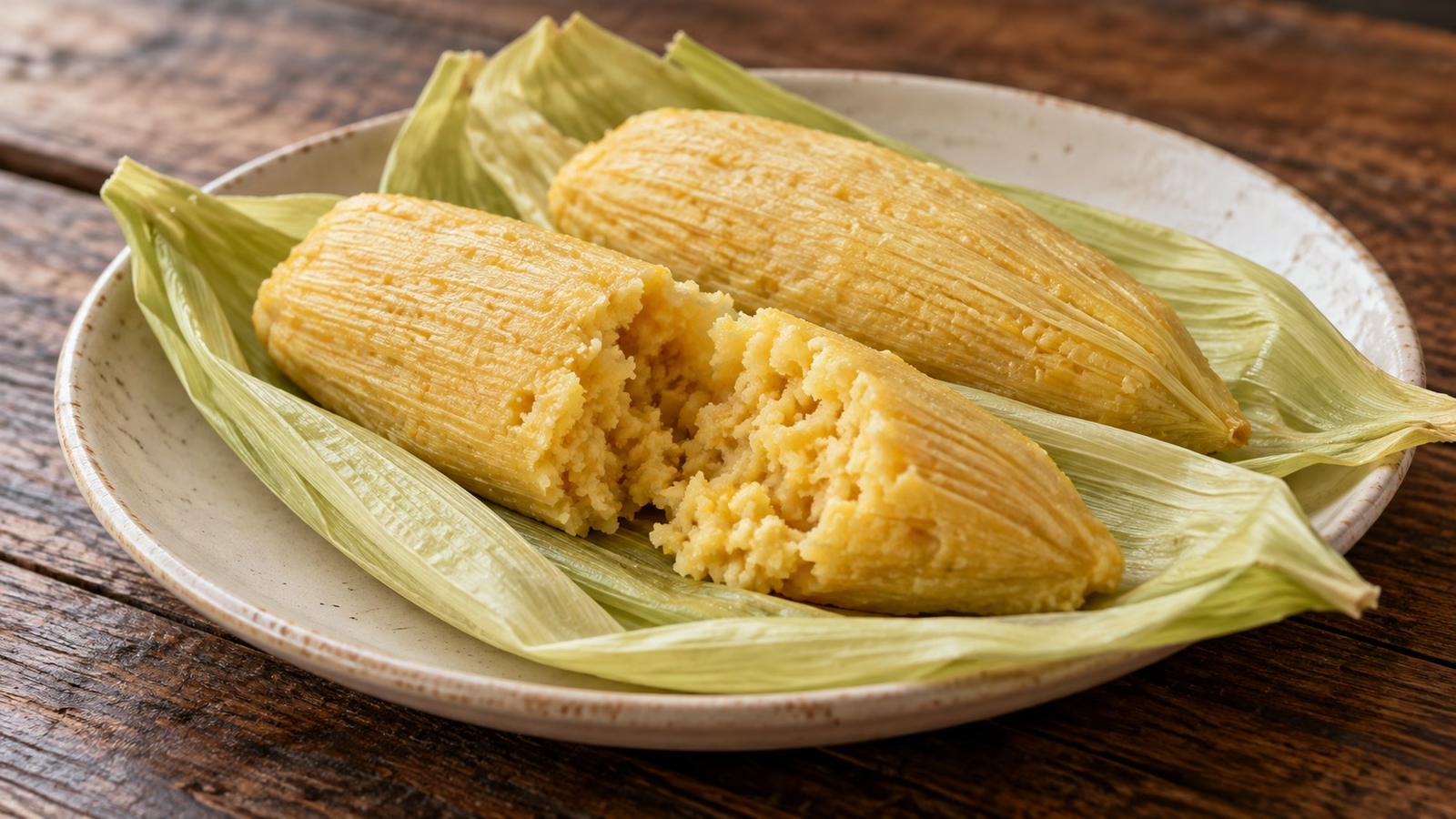
Let the corn lead. A thick, spoonable batter gives these small tamales a much better start than an extra splash of milk.
What makes uchepos different
Uchepos belong to Michoacán’s rich family of tamales, but they begin with fresh, tender corn rather than the prepared nixtamalized masa used for many other versions. The Mexican Cultural Information System describes their corn-husk wrapping and the variations in milk, water and seasoning. There is room for household differences here.
This version keeps the flavor simple: fresh corn, a little butter and cream, modest sugar and salt. I would keep cinnamon out of this particular batch so the corn stays at the center, especially if you want salsa on the side. The result should be tender and moist, with a fine corn texture rather than a springy cake crumb.
- There is no meat filling to prepare, and no separate outer layer of dough.
- Fresh husks wrap the mixture; the husks are peeled away before eating.
- The recipe yields twelve small uchepos. Think of that as a count, not a promise that every ear of corn will yield the same amount.
Choose the corn before reaching for the milk
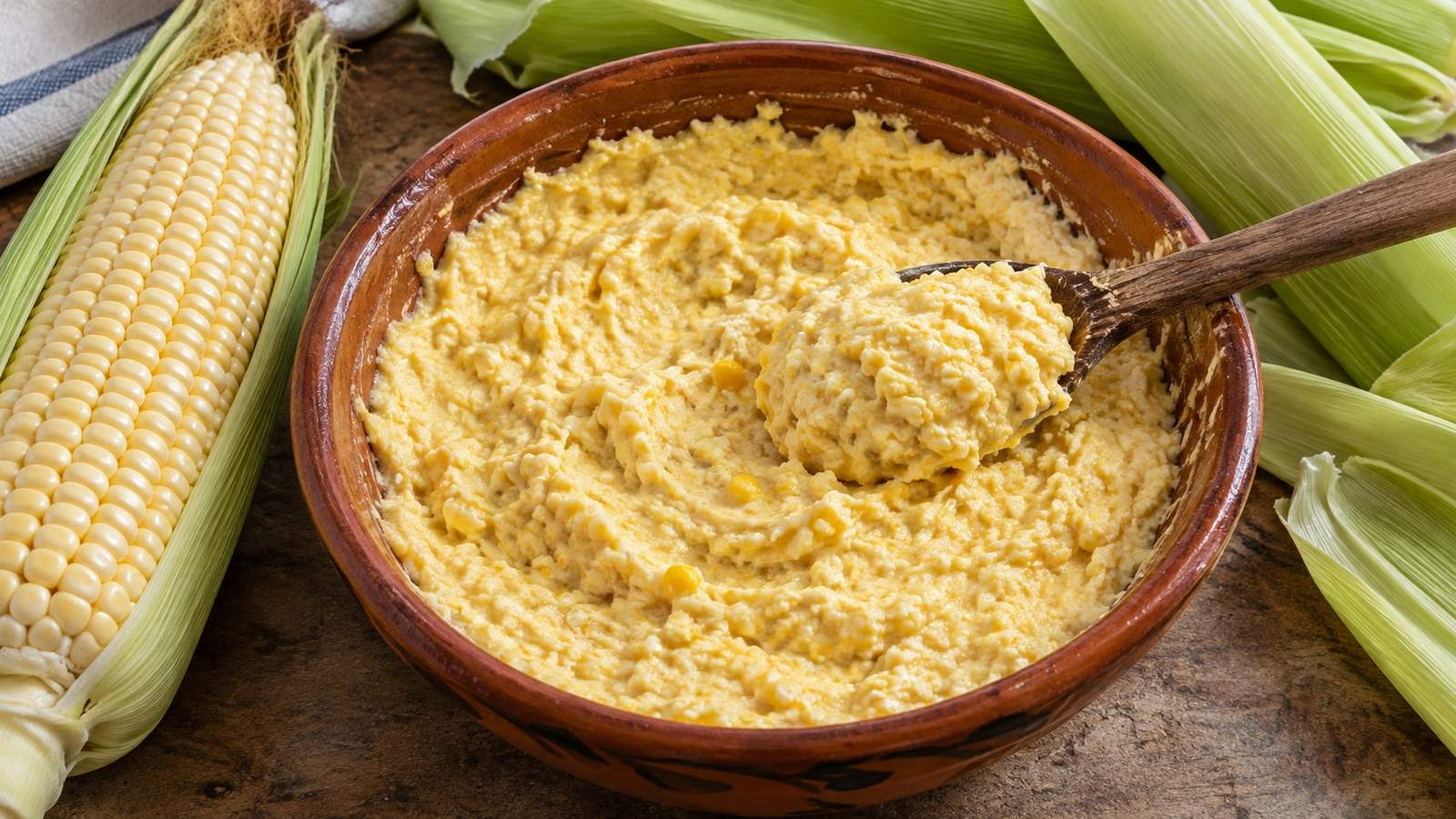
Start with plump kernels and intact husks. Weigh the corn after cutting it from the cobs: you need 35.3 ounces, or 1,000 grams. Depending on their size, roughly six to eight ears may supply that amount, but the scale is the more useful guide. U.S. sweet corn varies in sweetness and moisture, so texture deserves more attention than a fixed blender time.
- Peel gently. Save twelve broad, clean husks and a few extra to reinforce narrow wrappers and cover the steamer.
- Cut close enough to collect the kernels without taking tough pieces of cob. Remove the silk before grinding.
- Use a food processor or a capable blender in small batches. Scrape down the container rather than immediately adding more liquid.
- Add only enough of the measured milk to help the blades move. The finished mixture should mound softly on a spoon instead of pouring like cream.
The butter and cream are part of this formula; they are not interchangeable with unlimited milk. I would rather stop and scrape the machine than try to rescue a watery bowl later. Adding dry flour changes the recipe, and ordinary corn flour is a different ingredient from masa harina, as our corn flour guide explains.
Wrap gently and give the steam a path
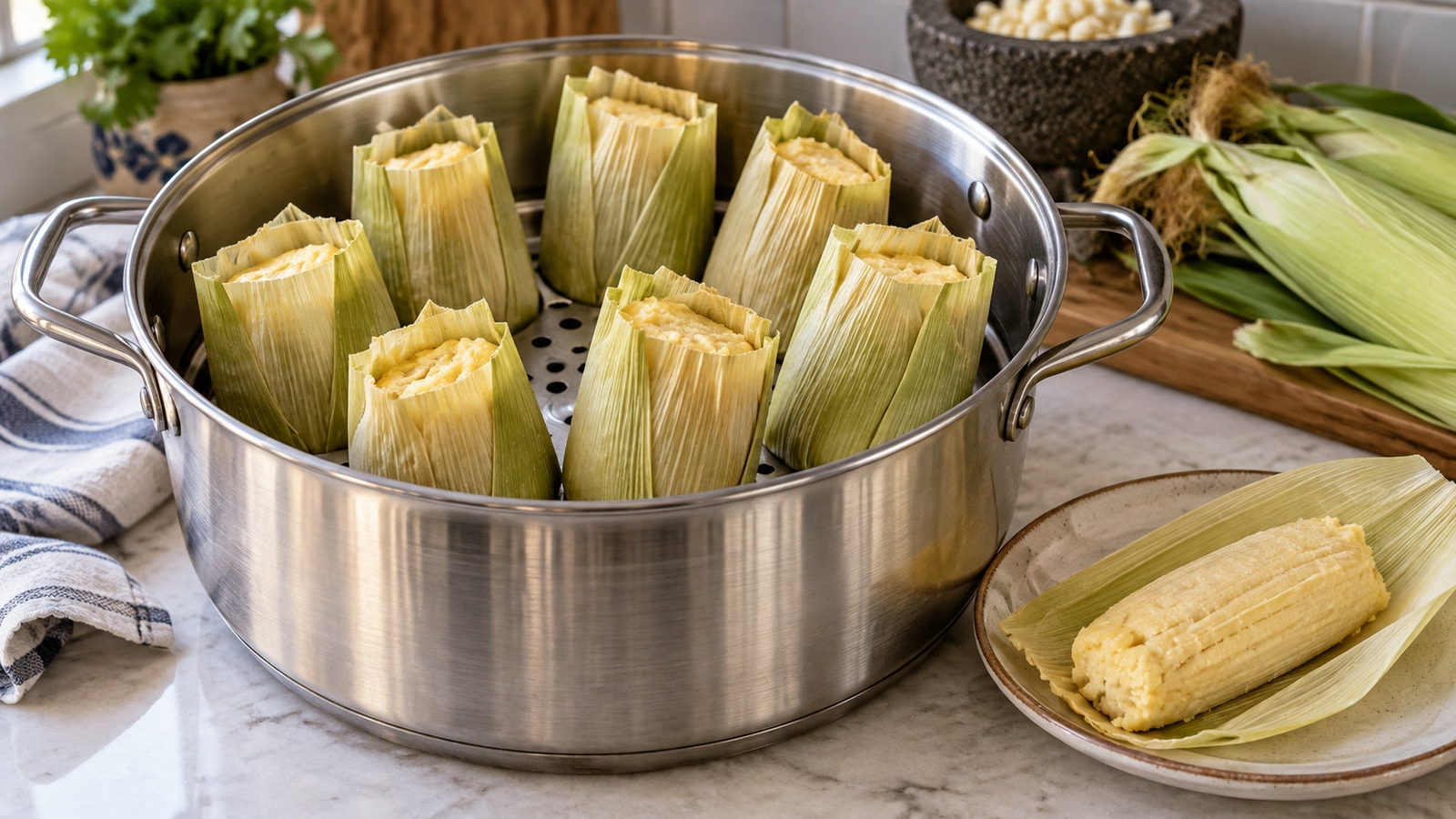
Uchepos do not need an elaborate fold. Divide the batter evenly, bring the long sides of each husk together, then fold the narrow bottom upward. Set each parcel upright so the open end faces the lid. A second husk can support a small wrapper; it is more helpful than squeezing too much filling into the first one.
- Keep the steamer water below the rack. The parcels should cook in steam, without sitting in simmering water.
- Leave small gaps between the tamales. Packing the pot tightly makes the center harder to cook evenly.
- Count the cooking time once steady steam is established. Keep the lid on between checks and replenish with hot water along the side when needed.
- At sixty minutes, remove one tamal and wait five minutes before opening it. A hot, fragile center can look less set than it really is.
- Continue steaming if the center is still raw and pasty. Once cooked, let the batch rest twenty minutes before serving.
That first test tamal is useful information, not a verdict on the whole pot. The leaf should pull away and the center should hold together, although fresh-corn tamales remain softer than many masa-based ones. The timer helps you plan; the cooled test piece tells you whether dinner is ready.
Serving and keeping the delicate texture
I would offer the first uchepo plain, then let everyone choose a little crema, salsa or roasted poblano on the side. Keep those additions separate when you want the corn’s sweetness to remain distinct. The card’s estimated nutrition describes one plain uchepo, not a plate with toppings.
- Serve warm after the resting time, removing the husk at the table.
- Refrigerate in shallow containers within two hours, or one hour if the surroundings are above 90°F. Keep the refrigerator at 40°F or below.
- Use refrigerated leftovers within three to four days, following USDA leftover guidance.
- Reheat with gentle steam until the center reaches 165°F. The husk can help protect the surface; unwrap it before eating.
Uchepos Recipe

Ingredients
- 35.3 oz fresh corn kernels 1,000 g; about 6–8 ears, husks reserved
- 1/4 cup whole milk 60 g; add only as needed
- 2 tbsp unsalted butter 30 g, melted and cooled slightly
- 2 tbsp heavy whipping cream 30 g, pasteurized and unsweetened
- 1 tbsp granulated sugar 12 g
- 1/2 tsp fine salt 3 g
- 12 large fresh corn husks plus extras for lining and covering
Equipment
- Steamer with rack and lid
- Food processor or strong blender
- Kitchen scale
- Instant-read thermometer
Instructions
- Wash and drain the husks, removing silk. Set up a steamer with water below the rack.
- Process the corn in small batches with the butter, cream, sugar and salt. Add the milk gradually, using only enough to help the blades move. Scrape the container as needed. The mixture should be finely ground and thick enough to mound softly on a spoon; do not taste the raw mixture.
- Divide among twelve husks. Fold the sides over the batter and fold the narrow end upward, leaving the top open. Reinforce small husks with a second one.
- Stand the parcels upright on the steamer rack without packing them tightly. Cover with extra husks and the lid. Once steady steam rises, cook for 60–75 minutes. Keep water below the rack and replenish carefully with hot water as needed.
- After 60 minutes, remove one uchepo and rest it for 5 minutes. The husk should release and the center should be set without raw paste. If necessary, continue steaming in 10-minute intervals.
- Turn off the heat and rest the batch for 20 minutes. Remove the husks to eat. Refrigerate leftovers promptly as directed in the notes.
Nutrition
Notes
Tried this recipe?
Let us know how it turned out!Sources
- Secretaría de Cultura: Michoacán’s tamale traditions.
- USDA FoodData Central SR Legacy: ingredient-based nutrition estimates; see the recipe notes for food records.
- USDA FSIS: safe handling of leftovers.
Hi, I’m Laura, the voice behind Tastiva. I’ve always believed that eating well should feel enjoyable, comforting, and realistic—not like another complicated rule to follow. I love creating recipes that fit into everyday life, sharing simple nutrition ideas, and finding small ways to make meals feel a little better without losing the pleasure of good food.