
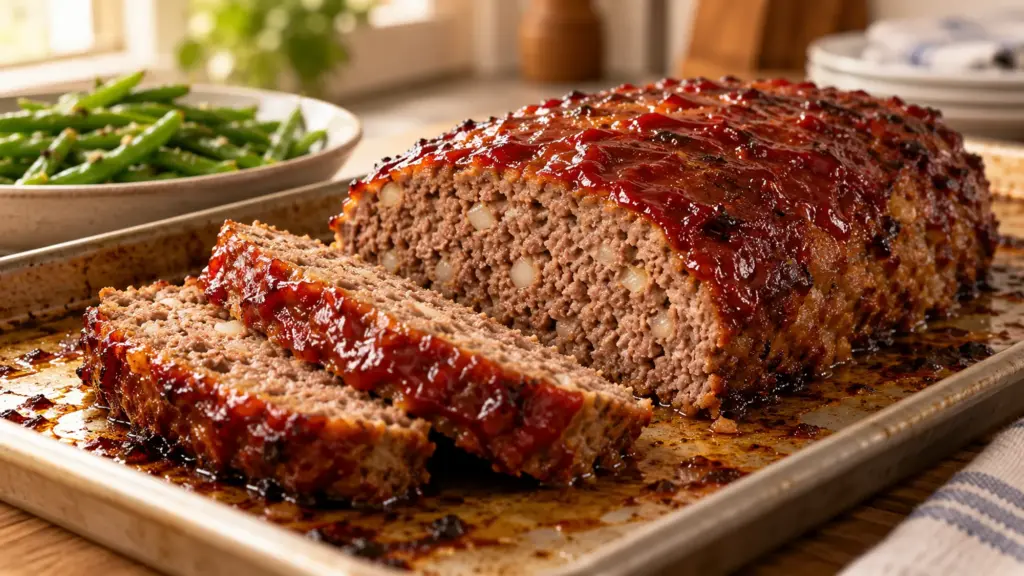
A meatloaf does not need a loaf tin to look like dinner. This beef meatloaf is shaped directly on a lined baking sheet, leaving room around the sides for a glossy ketchup glaze. The mixture has softened onion, panko and milk to help it hold together without turning every slice into a tightly packed block.
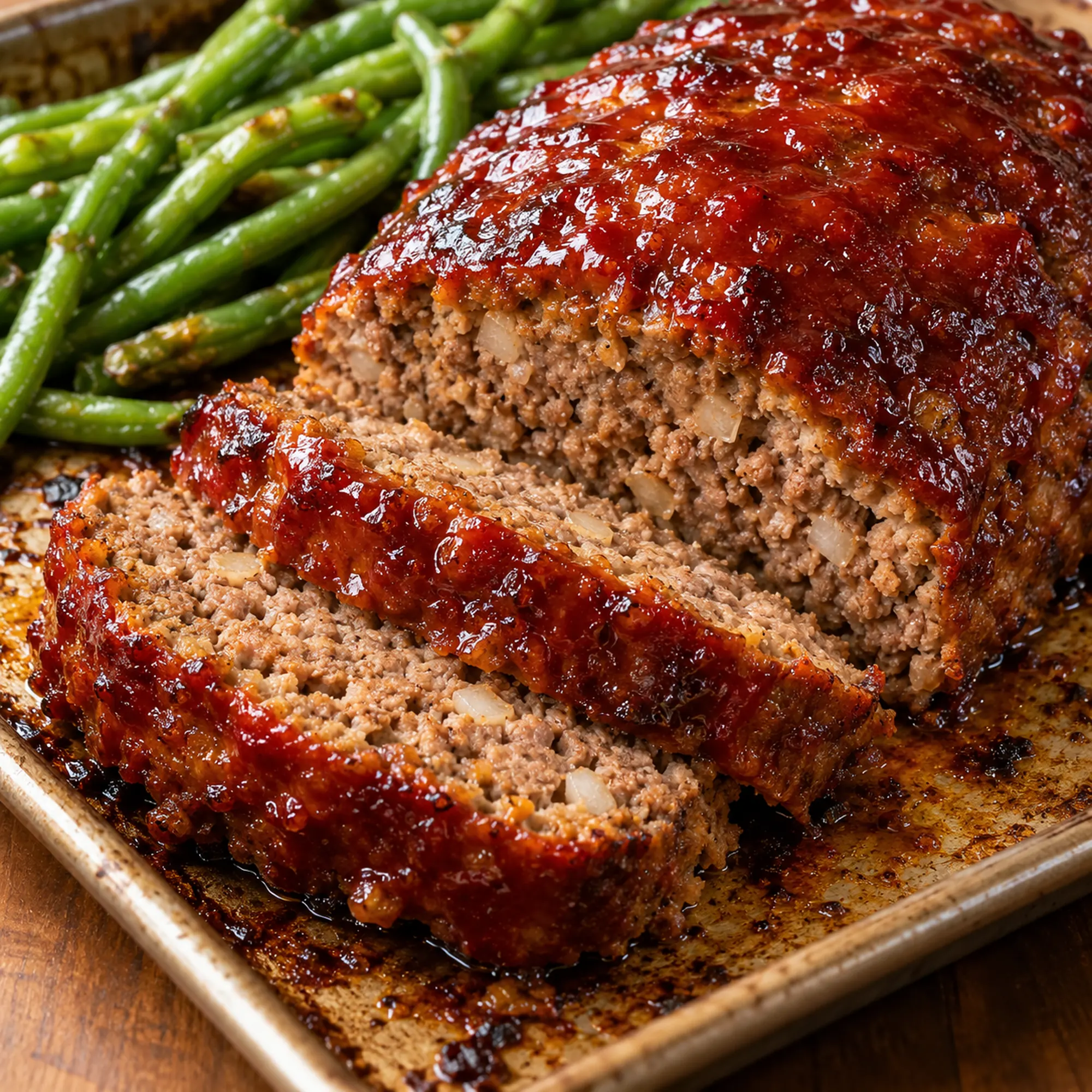
For tender beef meatloaf, mix only until the ingredients are combined, shape an even loaf and use a thermometer to check the center before resting and slicing.
I like the freeform shape because it keeps the whole loaf in view. There are no hidden corners to pry out of a tin, and the glaze can reach the upper sides as well as the top. It is a small change in equipment, not a reason to make the mixture complicated.
Serving Beef Meatloaf
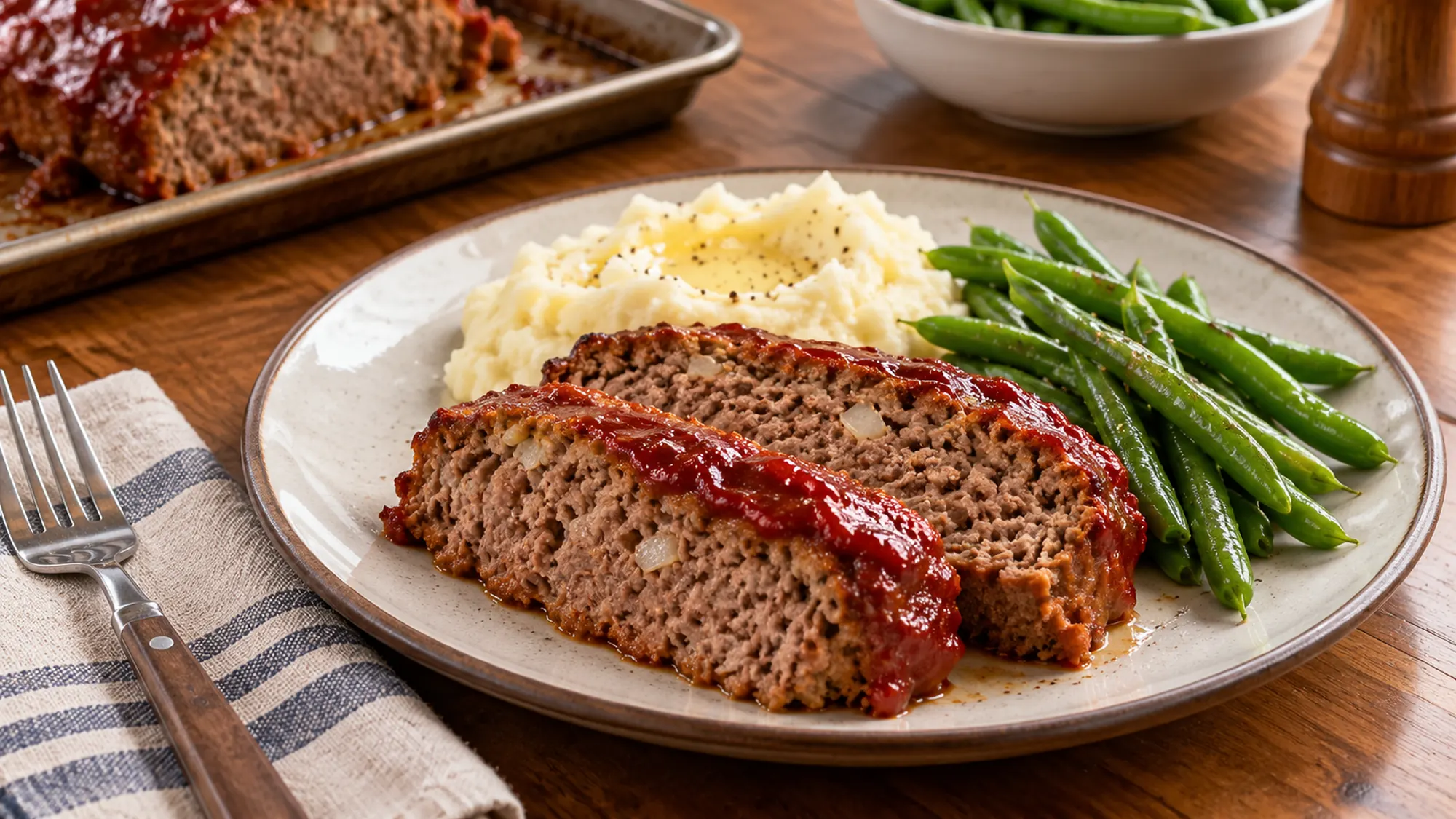
Cut the rested loaf into even portions with a sharp knife, supporting each slice as it moves to the plate. A little glaze may cling to the blade, so wiping it between cuts can help keep the next slice tidy. The meatloaf is the rich part of the meal; sides can stay straightforward.
Soft potatoes are a familiar partner, but a crisp green salad or simply cooked vegetables work well too. If you plan to make sandwiches from leftovers, refrigerate the remaining loaf promptly rather than leaving it on the serving board while the meal continues.
- Pair warm slices with mashed potatoes.
- Add green beans with garlic and lemon for contrast.
- For a sandwich, reheat the needed slice thoroughly and add crisp lettuce or pickles if desired.
| Serving idea | Texture contrast | Useful detail |
|---|---|---|
| Potatoes and vegetables | Soft base, firmer greens | Keep the sides lightly seasoned |
| Warm sandwich | Tender slice, crisp bread | Reheat only the portion needed |
| Salad plate | Rich meat, fresh leaves | Dress the salad separately |
Let the loaf rest before slicing, then keep the sides simple enough to balance the glaze.
Beef Meatloaf Variations
The sheet-pan method is adapted from Preppy Kitchen’s updated meatloaf recipe. This version measures the tray oil and uses oregano and basil instead of an unspecified Italian seasoning blend. The beef is 90% lean; changing its fat percentage changes both texture and the ingredient-based nutrition estimate.
I would resist adding a little of everything from the refrigerator to the first batch. Extra vegetables, cheese or sauce can change how the mixture holds together. Start with the measured formula, then choose one useful variation rather than turning the loaf into a collection of competing flavors.
- A little finely chopped parsley can replace part of the dried-herb flavor if you prefer a fresher finish.
- A different ketchup or Worcestershire brand can change sweetness and saltiness; taste the glaze before it touches raw meat.
- If using a loaf pan instead of a sheet, follow a suitable pan-specific method rather than assuming identical baking time.
Keep the meat, binder and liquid proportions steady while changing small flavor details.
Nutrition and Safe Cooking
Beef and eggs contribute protein, while the breadcrumbs, milk and glaze are also part of the finished dish. Leaner beef does not make the butteriest side dish disappear from the plate, and a sweet-tangy glaze still contains sugar. The useful question is how the whole meal fits your appetite and preferences.
The calculation divides the complete loaf and glaze into eight portions and includes all measured oil. Panko uses a dry-breadcrumb composition estimate. Fat that drains onto the tray is not measured or subtracted, so the figures are approximate rather than a laboratory result for a cooked slice.
- Ground beef should reach 160°F (71°C) in the center.
- Do not taste the raw meat mixture; keep the glaze bowl and utensils away from raw beef.
- Wash hands and surfaces after shaping the loaf.
- Refrigerate leftovers promptly and reheat portions thoroughly to 165°F (74°C).
Check the center with a thermometer and keep raw-meat handling separate from serving.
Bottom Line
Beef meatloaf works best when the details stay practical: softened onion, gentle mixing, an even shape and enough resting time to cut a clean slice. The glaze supplies the sweet-tangy finish without needing a long list of extras. Add a simple side, and let the browned edges and tender center carry the plate.
Mix gently, check the center and give the finished loaf a short rest.
Beef Meatloaf Recipe

Ingredients
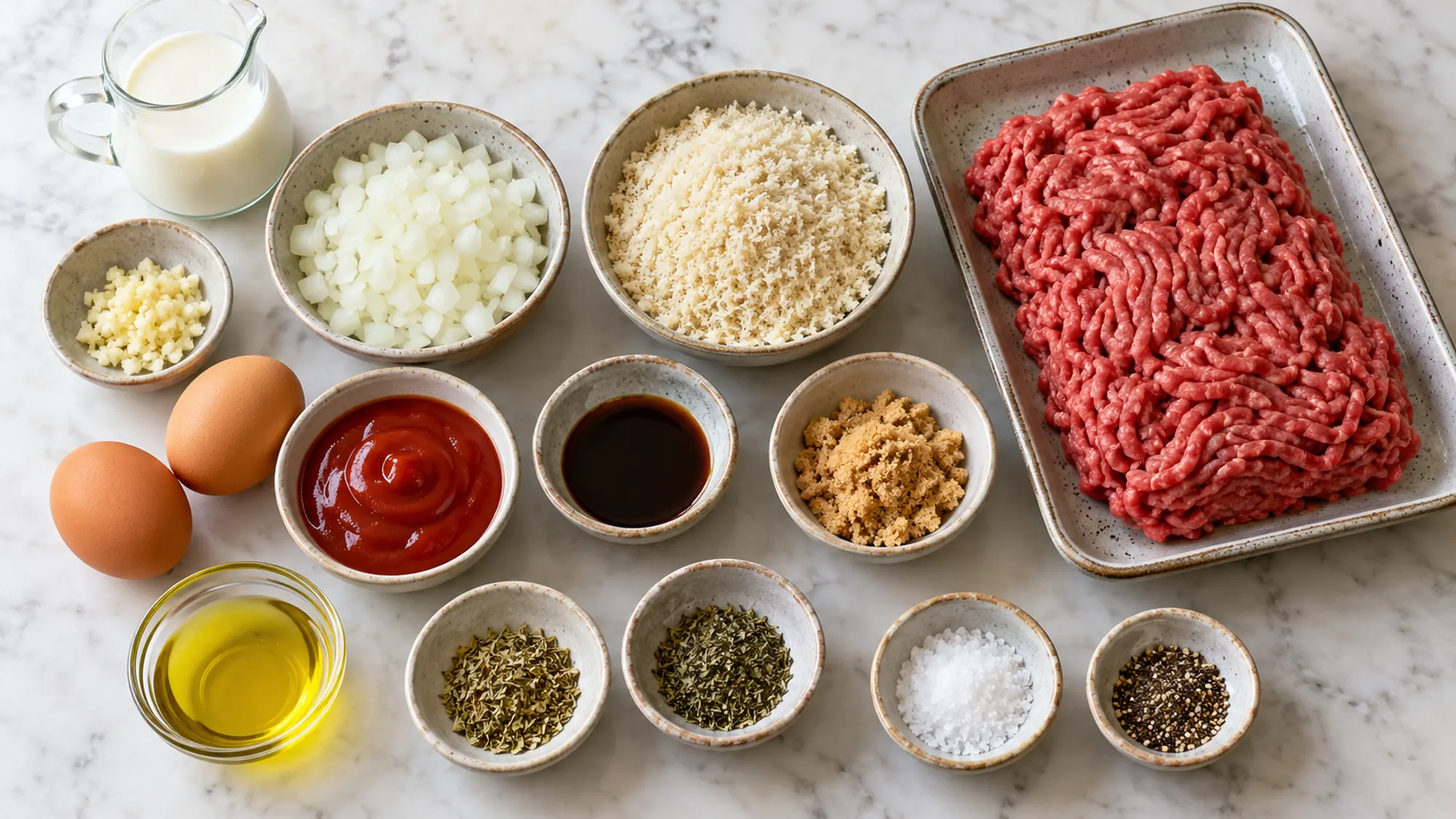
- 900 g 90% lean ground beef
- 20 ml olive oil 15 ml aromatics, 5 ml tray
- 130 g onion finely chopped
- 7.5 g fine salt divided
- 9 g garlic minced
- 2 large eggs about 100 g without shells
- 80 ml whole milk
- 55 g panko breadcrumbs
- 133 g ketchup 33 g mixture, 100 g glaze
- 30 ml Worcestershire sauce divided
- 1 g dried oregano
- 0.5 g dried basil
- 1 g black pepper
- 12 g brown sugar
- mashed potatoes and vegetables optional sides, excluded from estimates
Equipment
- 1 Rimmed baking sheet
- 1 Mixing bowl
- 1 Instant-read thermometer
Instructions
- Heat oven to 350°F (175°C). Line a rimmed baking sheet with parchment or foil and brush with 5 ml oil. Heat the remaining oil in a skillet, add onion and 2.5 g salt, and cook for about 6 minutes. Add garlic for 1 minute, then transfer to a bowl and cool for about 15 minutes until just warm.
- Add beef, eggs, milk, panko, 33 g ketchup, 15 ml Worcestershire, oregano, basil, remaining salt and pepper. Mix gently until evenly combined, without packing the mixture tightly.
- Shape into an even freeform loaf approximately 8 by 4 by 2 inches on the prepared tray. Bake for 30 minutes. Meanwhile, combine the remaining ketchup and Worcestershire with the brown sugar in a clean bowl.
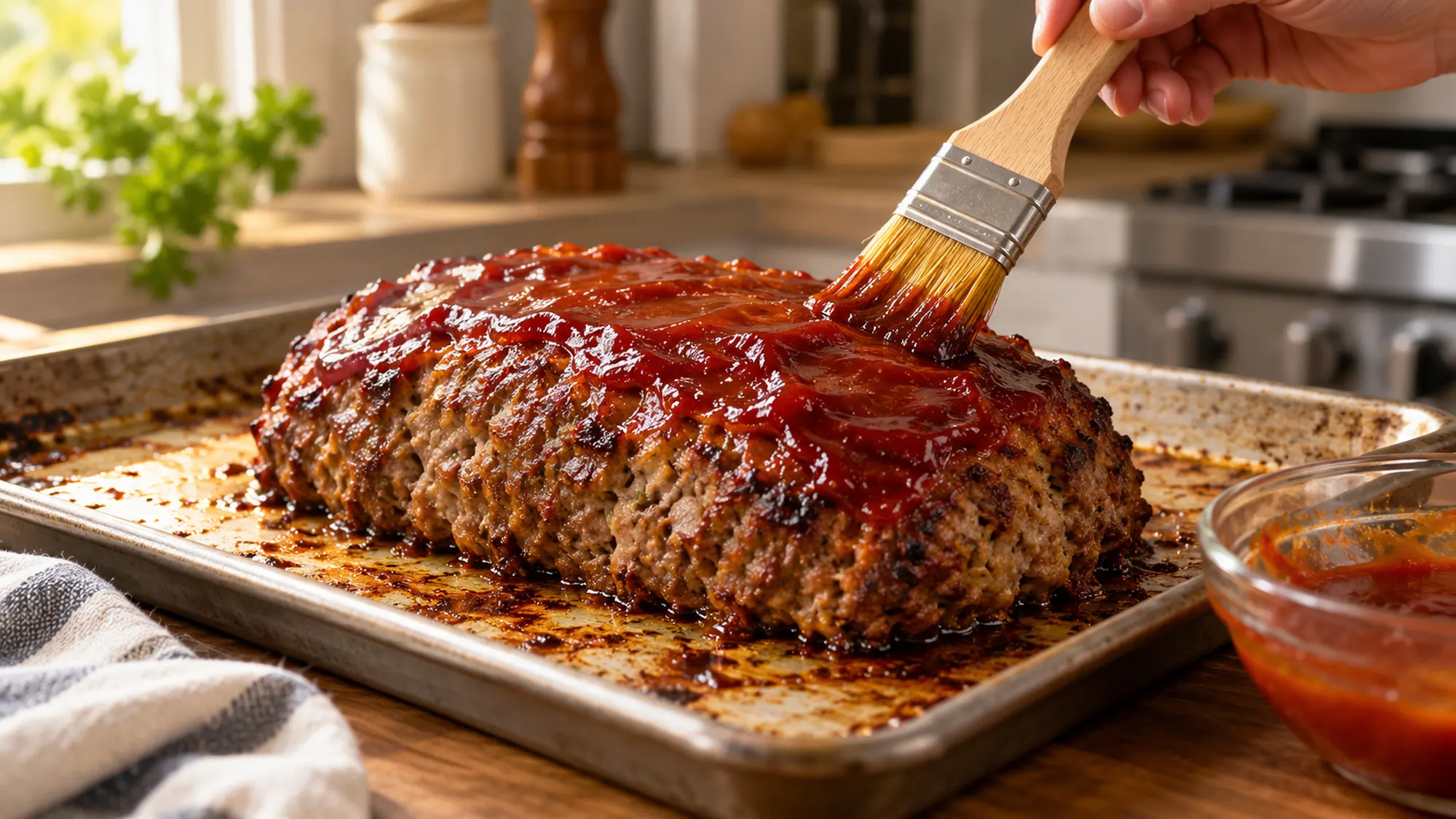
- Brush half the glaze over the loaf and bake for another 20–25 minutes, or until the center reaches 160°F (71°C). Brush with the remaining glaze using a clean utensil.
- Rest for 10 minutes before cutting into eight portions. Oregano and basil replace the source’s Italian seasoning blend; all measured tray oil and glaze are included in estimates.
Nutrition
Video
Notes
Tried this recipe?
Let us know how it turned out!Hi, I’m Laura, the voice behind Tastiva. I’ve always believed that eating well should feel enjoyable, comforting, and realistic—not like another complicated rule to follow. I love creating recipes that fit into everyday life, sharing simple nutrition ideas, and finding small ways to make meals feel a little better without losing the pleasure of good food.