
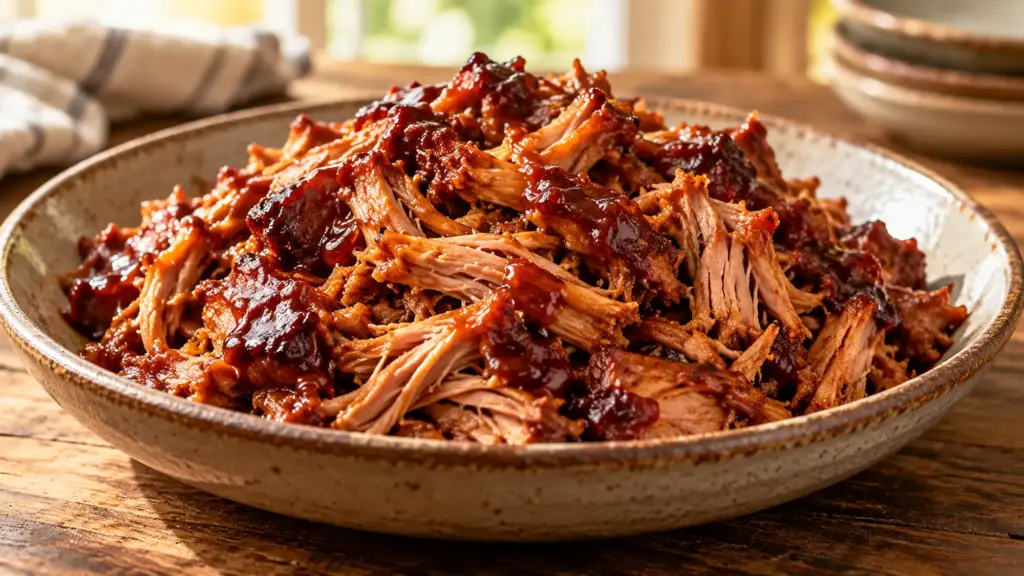
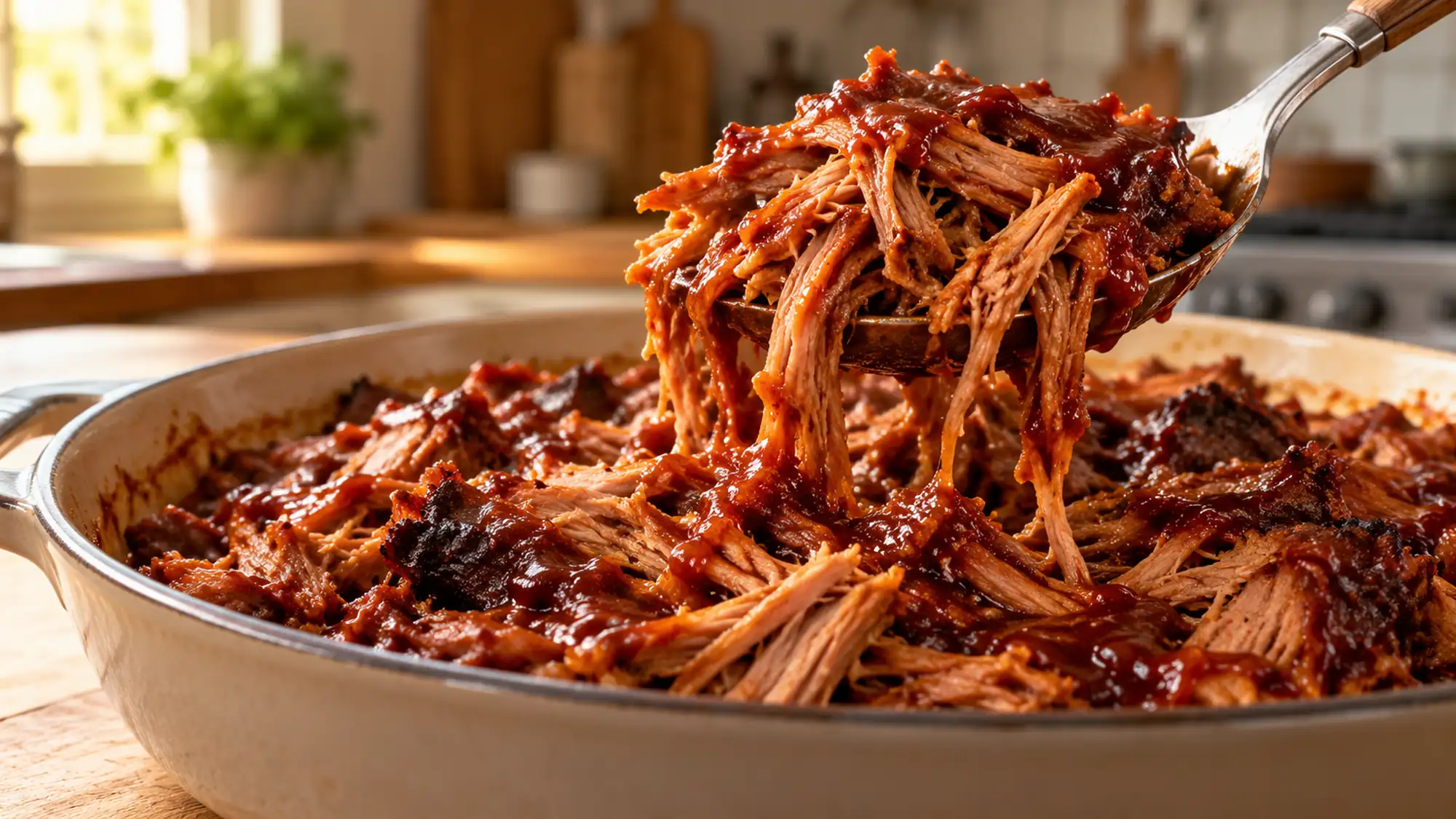
Good pulled pork still looks like meat. It should separate into tender strands, not turn into a uniform paste once the sauce goes in. Barbecue pulled pork makes a generous batch, but the most useful finishing step is often simply knowing when to stop stirring.
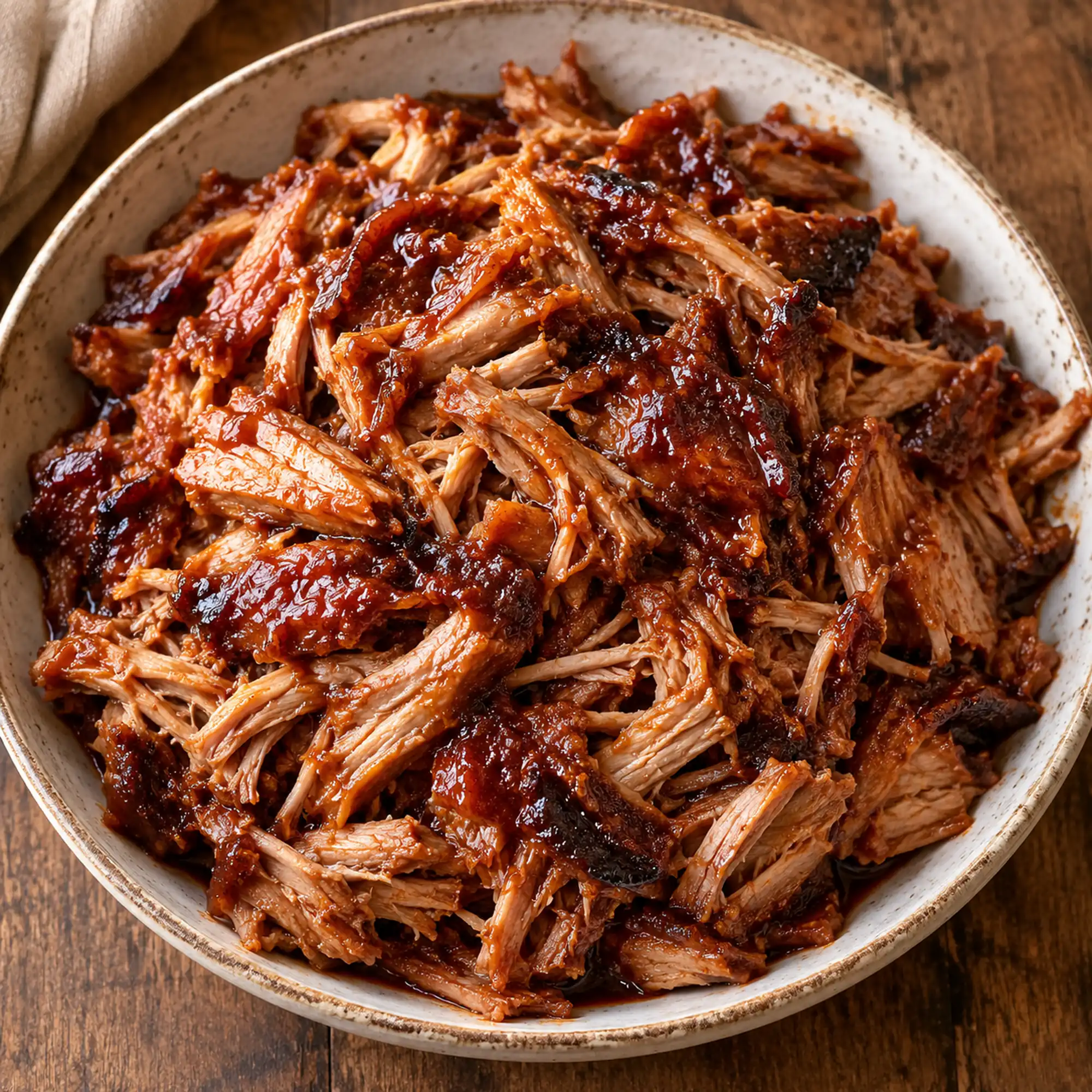
This barbecue pulled pork uses boneless shoulder, apple juice and a homemade tangy-sweet sauce. Slow cooking makes the meat shreddable; gentle folding keeps its texture once the sauce is added.
The method is adapted from RecipeTin Eats’ slow-cooker version, with a clearly standardized pork weight. I like leaving a few larger pieces among the shreds, so each serving has more character than a completely uniform pile.
Serving Barbecue Pulled Pork
Serve the pork from a shallow dish with tongs or a broad spoon. A deep container encourages repeated stirring, which can break the strands down. Keep extra cooking liquid available only if the meat needs loosening; it should be moist, not swimming.
The estimate divides the pork and sauce into twelve portions. Buns, slaw and other sides are optional, so a sandwich is not nutritionally identical to the stated serving. A smaller portion can suit a slider, while a dinner plate may use a different amount alongside vegetables.
- For sandwiches: offer buns and slaw separately so people can build their own.
- For a dinner plate: green beans add a simple vegetable.
- For a bowl: a modest scoop of rice can carry the sauce.
| Serving style | What to keep separate | Why |
|---|---|---|
| Sandwiches | Buns and slaw | Less soggy assembly |
| Dinner plates | Vegetable sides | Easier portion choices |
| Saved portions | Only the meat and sauce | More flexible future meals |
Keep the strands visible and the accompaniments separate; that makes a big batch easier to serve well.
Barbecue Pulled Pork Variations
Shoulder is chosen because it can tolerate the long cooking needed for shredding. Lean tenderloin is not a like-for-like replacement, even though both are pork. Its texture and timing differ enough that it deserves a different recipe rather than the same long slow-cooker treatment.
I would taste the barbecue sauce for sourness before adding more sugar. Ketchup and molasses already bring sweetness, while cider vinegar gives the sauce its lift. A sauce that tastes balanced alone can seem milder once it coats a large amount of pork.
- Different cooking liquid: the source permits cider or beer instead of apple juice; flavor and estimates change.
- Less heat: omit the small hot-sauce addition rather than changing every spice.
- No oven finish: the browning step is optional; the pork will have fewer roasted edges.
- A smaller batch: shoulder shape and slow-cooker size affect timing, so do not scale the clock mechanically.
- Extra sauce: make and count it separately rather than quietly doubling the amount on each portion.
Preserve the shoulder cut and gentle shredding; adjust the sauce’s heat or acidity to suit the meal.
Nutrition and Safe Cooking
Pork contributes protein, but shoulder contains fat and the barbecue sauce contains added sugar and salt. A homemade sauce makes the ingredients visible; it does not remove those trade-offs. The twelve-serving estimate is meant to help with planning rather than label the dish as low in anything.
Some fat is discarded with the cooking juices or removed before shredding. The calculation conservatively includes the full raw pork and sauce rather than guessing exactly how much fat leaves the pan. Actual portions can therefore differ from the ingredient-based estimate.
- Start safely: use thawed pork and follow the slow cooker’s fill guidance.
- Judge tenderness: shreddable shoulder needs more time than simply reaching a minimum safe temperature.
- Cool a large batch promptly: divide it into shallow containers rather than leaving one deep pot to cool.
- Reheat thoroughly: leftovers should reach the 165°F reheating temperature.
Plan portions and cooling before the batch is finished; a large quantity needs thoughtful handling.
Bottom Line
Barbecue pulled pork is useful because it does much of its cooking without constant attention, then offers several ways to serve the result. The finishing choices still matter: skim, shred gently and fold in a sauce that tastes balanced. Keep the meat recognizable and the extras optional.
Tender strands and a balanced coating of sauce are better than more stirring or more sweetness.
Barbecue Pulled Pork Recipe

Ingredients
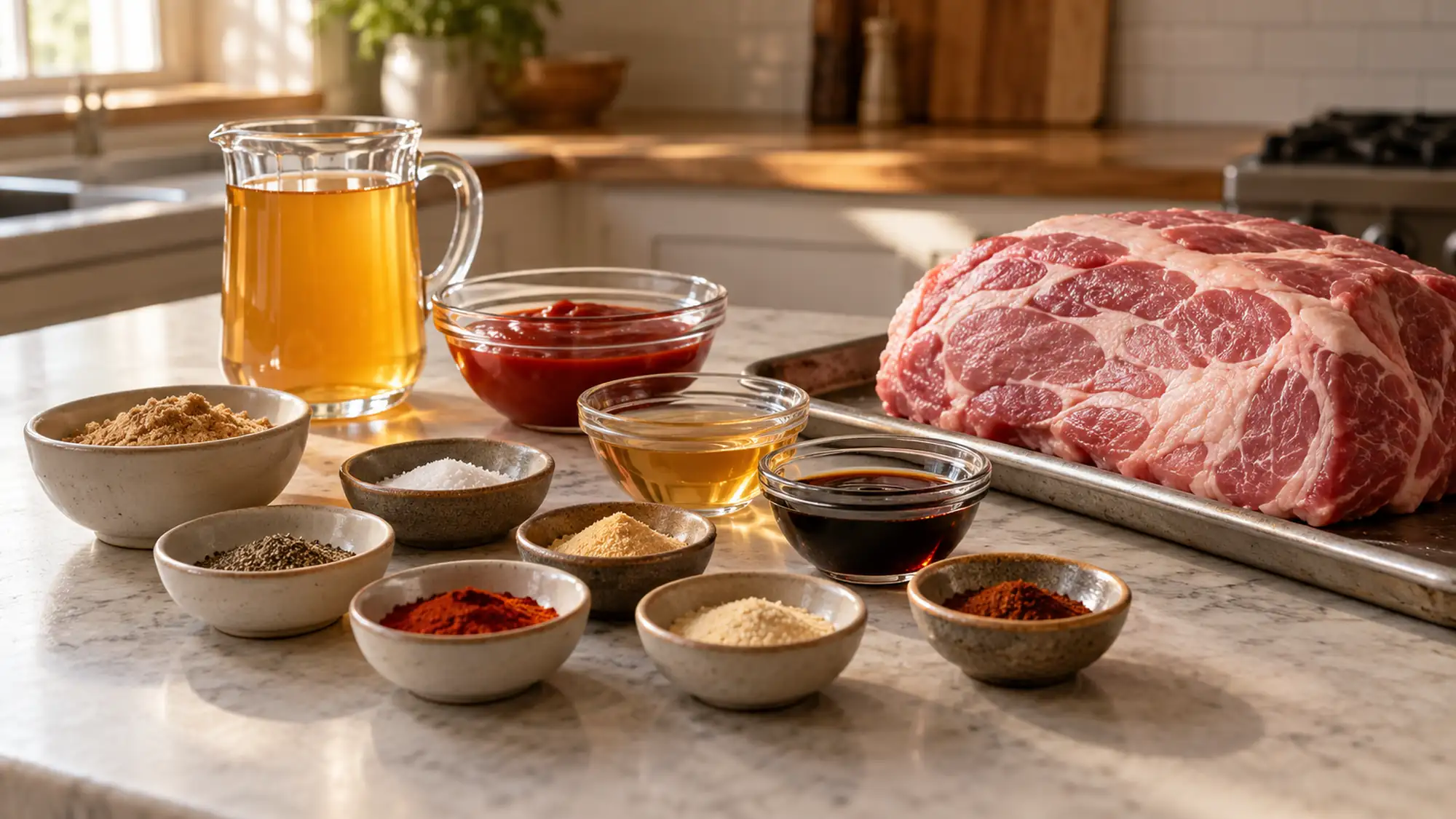
- 2500 g boneless pork shoulder skin removed, fat left for cooking
- 240 ml apple juice
- 130 g light brown sugar 30 g rub,100 g sauce
- 6 g paprika
- 14 g garlic powder 8 g rub,6 g sauce
- 4 g onion powder
- 12 g mustard powder 4 g rub,8 g sauce
- 2 g ground cumin
- 16 g fine salt 12 g rub,4 g sauce
- 6 g ground black pepper 2 g rub,4 g sauce
- 160 ml apple cider vinegar
- 600 g tomato ketchup
- 160 ml water
- 40 g ordinary molasses not blackstrap
- 15 ml Worcestershire sauce
- 5 ml hot sauce
Equipment
- 1 Large slow cooker
- 1 Roasting pan
- 1 Saucepan
- 1 Two forks
Instructions
- Combine 30 g brown sugar, paprika, 8 g garlic powder, onion powder, 4 g mustard powder, cumin, 12 g salt and 2 g pepper. Rub over the pork and place in a large slow cooker with apple juice.
- Cook on low 8–10 hours, until the meat pulls apart readily with a fork. Timing varies with the shoulder shape and slow cooker; do not stop merely because the meat has reached the minimum safe temperature.
- For the sauce, combine ketchup, cider vinegar, water, molasses, remaining sugar, mustard powder, garlic powder, salt and pepper, Worcestershire and hot sauce. Simmer gently 30–45 minutes, stirring often.
- If desired, transfer the cooked shoulder to a roasting pan and brown at 350°F (180°C) for about 20 minutes. Skim reserved cooking juices; remove large loose pieces of fat from the meat.
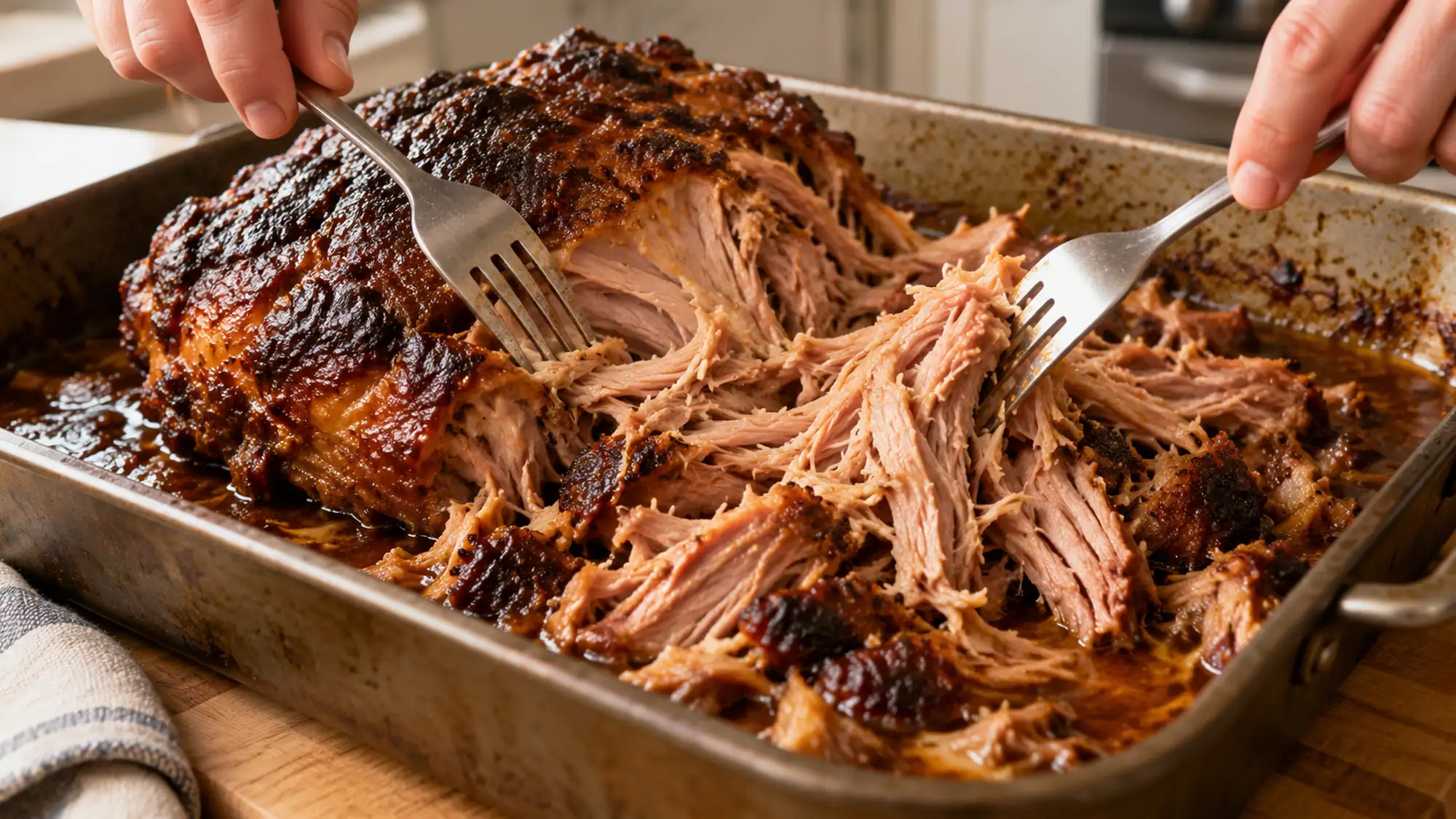
- Pull the pork into distinct shreds with two forks. Loosen the sauce with a little defatted cooking liquid as needed, then fold it through the meat. Divide into 12 portions; buns and slaw are optional and excluded from estimates.
Nutrition
Video
Notes
Tried this recipe?
Let us know how it turned out!Hi, I’m Laura, the voice behind Tastiva. I’ve always believed that eating well should feel enjoyable, comforting, and realistic—not like another complicated rule to follow. I love creating recipes that fit into everyday life, sharing simple nutrition ideas, and finding small ways to make meals feel a little better without losing the pleasure of good food.