
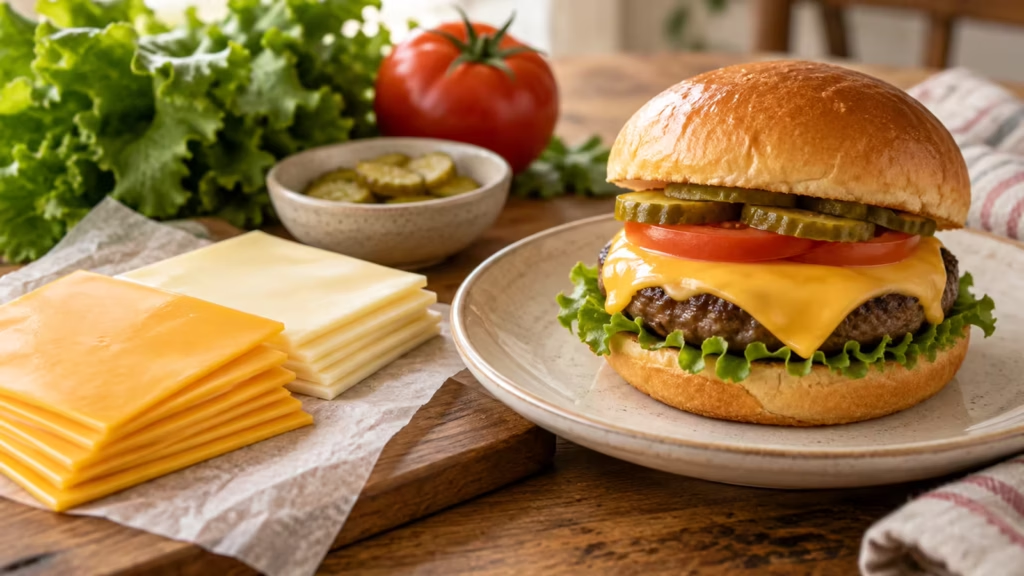
American cheese has a talent that becomes obvious the moment it meets a hot burger: it softens into a glossy blanket instead of breaking into oil and rubbery clumps. That performance is engineered, but “engineered” does not mean imaginary. Many American cheeses begin with real cheeses such as cheddar or Colby, then use heat, moisture, and emulsifying salts to create a smooth, consistent product. The package may say pasteurized process American cheese, cheese food, cheese spread, or prepared cheese product. Those phrases are not decorative legal confetti; they tell you which recipe standard is inside.
American cheese is not one mysterious slice—it is a label family, and the words before “cheese” explain what you are buying.
What American cheese actually is
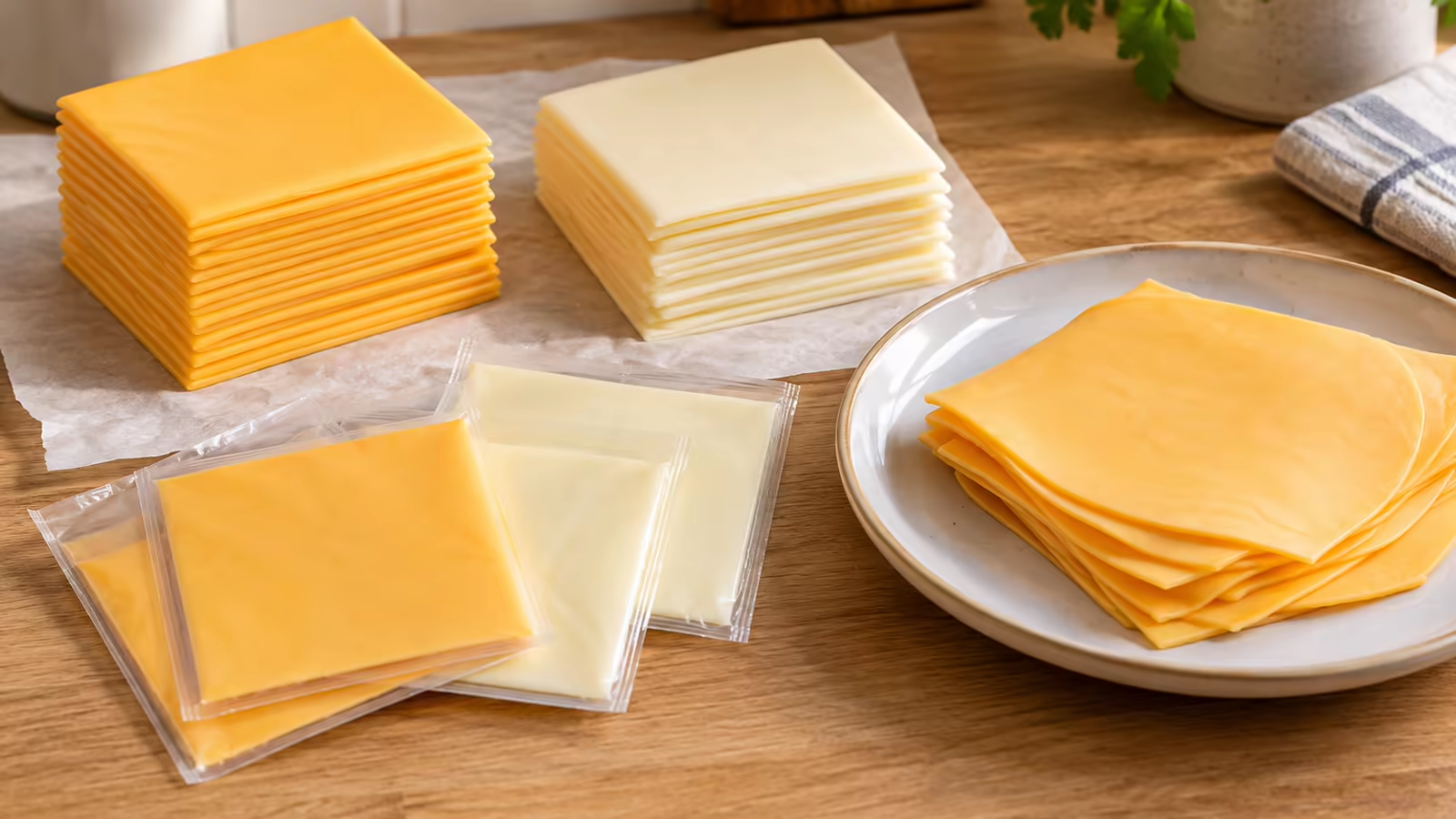
Under the U.S. standard for pasteurized process cheese, one or more natural cheeses are ground and mixed with heat and an approved emulsifying agent into a uniform mass. When the cheese ingredient is cheddar, washed-curd, Colby, granular cheese, or a qualifying mixture, the label may use “American cheese.” Water, salt, color, cream, milkfat, acids, and certain other ingredients may be allowed within defined limits.
“Pasteurized process cheese food” follows a different standard: cheese ingredients must make up at least 51% of the finished product, and other dairy ingredients may be included. A process cheese spread also requires at least 51% cheese ingredient but contains more moisture and is designed to spread at about room temperature. A phrase such as “pasteurized prepared cheese product” is not one of those federal standardized names, so the ingredient list matters even more.
| Words on the package | What the U.S. standard tells you |
|---|---|
| Pasteurized process American cheese | Cheddar, washed-curd, Colby, granular cheese, or a qualifying mixture is blended with heat and emulsifying salts into a smooth mass. |
| Pasteurized process cheese food | At least 51% of the finished food is cheese ingredient; additional dairy ingredients are allowed. |
| Pasteurized process cheese spread | Also at least 51% cheese ingredient, with more moisture and a formulation designed to stay spreadable around room temperature. |
| Pasteurized prepared cheese product | Not one of the federal standardized names above; the ingredient list and Nutrition Facts panel tell you what that particular product contains. |
Orange and white American cheese are usually the same basic style; permitted coloring creates the familiar orange shade. Color does not reveal quality, cheese percentage, or nutrition. Deli-cut American, individually wrapped slices, and restaurant slices can all have different formulas. Turn the package around before deciding they are identical.
Why it melts so smoothly
Natural cheese is an emulsion of water and fat held within a protein network. With too much heat, that network tightens and fat can escape, leaving an oily puddle and tough solids. Emulsifying salts—often sodium or potassium phosphates or citrates—help proteins interact with both water and fat. During processing, the mixture becomes smooth and stable; during reheating, it softens evenly.
That is why a thin slice can coat a burger, disappear into scrambled eggs, or rescue a grainy cheese sauce. The same feature gives American cheese its springy, uniform texture when cold. Different formulations melt differently: a higher-moisture cheese food may flow more readily, while deli process cheese can have more chew and a stronger cheddar character.
This is food science, not proof that the slice is “plastic.” Plastic describes how the warm mass behaves, not a petroleum ingredient. The honest criticism is simpler: some products are highly formulated, high in sodium, or less cheese-forward than a person expects. The honest defense is equally simple: they are safe regulated foods when properly made, and they perform a culinary job extremely well.
Nutrition: read the slice, not the stereotype
American cheese can provide protein, calcium, phosphorus, and vitamin B12 from its cheese and dairy ingredients. It can also contribute saturated fat and a noticeable amount of sodium. The exact numbers vary so much by slice weight and formulation that a generic verdict is not very useful. Compare products by the same weight, then look at sodium, saturated fat, protein, calcium, and the ingredient list together.
FDA uses 2,300 milligrams as the Daily Value for sodium, and the agency recommends using the percent Daily Value to compare packaged foods. One slice may fit comfortably into a day; several slices plus cured meat, a salty bun, sauce, fries, and pickles can stack sodium quickly. The whole sandwich matters more than isolating one yellow square as the villain.
- For more cheese character: look for pasteurized process American cheese or a deli product with cheese prominent in the ingredient list.
- For sodium: compare equal gram weights; “thin” slices can look lower only because they are smaller.
- For protein and calcium: check the actual panel rather than assuming every dairy-colored slice is equivalent.
- For milk allergy: American cheese contains milk ingredients and is not safe.
- For lactose intolerance: products vary; processing does not guarantee lactose-free status.
MyPlate counts one ounce of processed cheese as a cup-equivalent from the Dairy Group, while 1½ ounces of natural hard cheese count the same. That serving conversion is a planning tool, not a command. American cheese can be part of an overall nourishing pattern; it just should not borrow a wellness halo from calcium or a shame label from processing.
How to choose, use, and store it
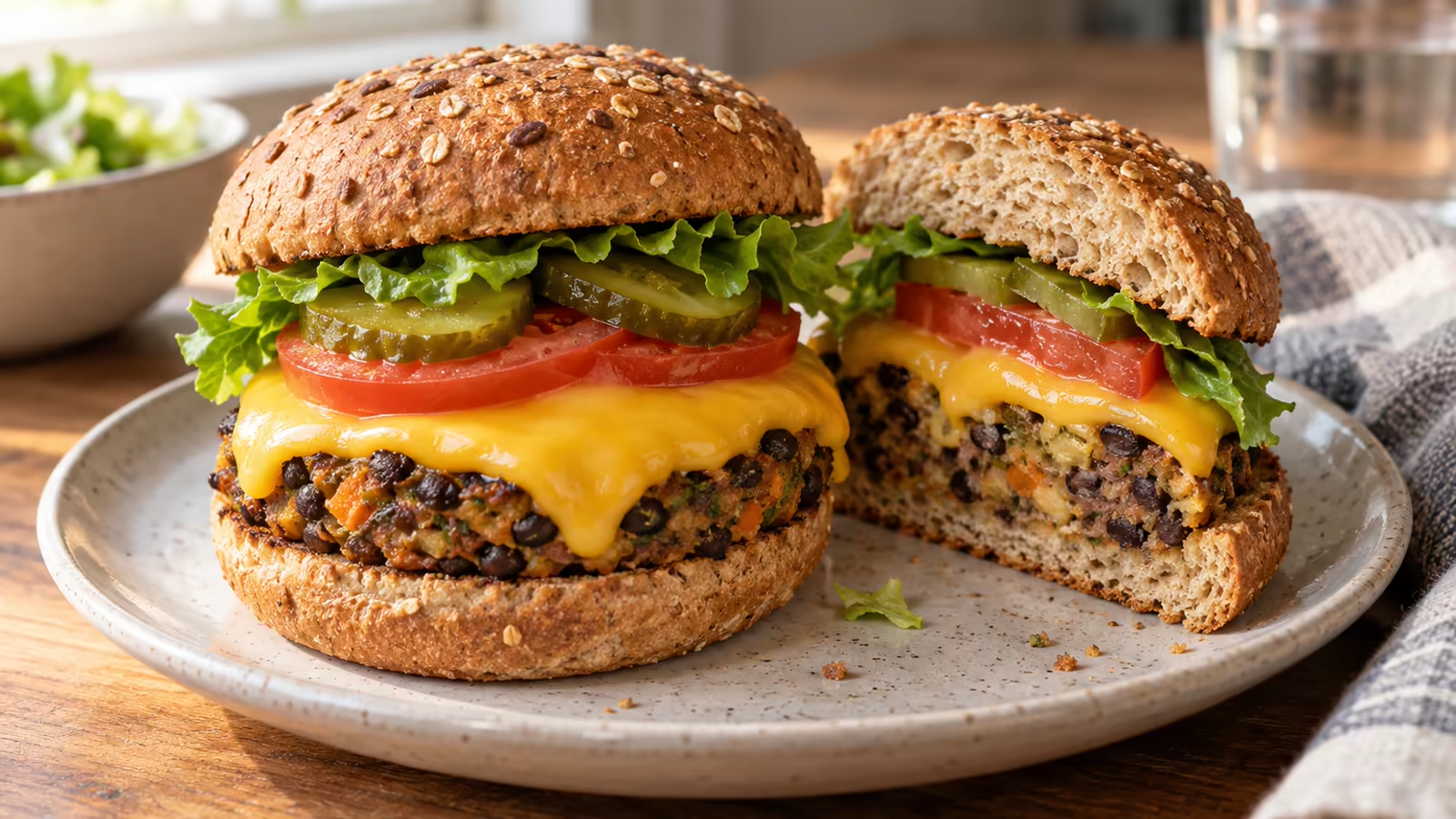
Choose according to the job. For a classic burger, a thin slice that melts quickly is perfect. For grilled cheese, try deli American alone or blend it with cheddar: the process cheese helps the filling stay creamy while the aged cheese brings sharper flavor. It also works in omelets, breakfast sandwiches, queso-style dips, and macaroni sauce when smoothness matters.
Then build contrast. Crisp lettuce, tomato, onion, pickles, apples, mustard, beans, roasted peppers, or a crunchy whole-grain toast keep the bite lively. If you want a natural cheese with a sweeter, nuttier character, our Swiss cheese guide explains why its cultures, aging, and holes create a different slice altogether.
Keep American cheese refrigerated and sealed against drying. Individually wrapped slices are protected until opened; deli slices need a clean, tightly closed package and should follow the use-by guidance from the store. Do not leave a cheese platter or sandwich filling at room temperature for hours. Freezing is possible for later cooking, but texture may become crumbly or wet after thawing. In the end, the smart choice is wonderfully un-dramatic: read the standardized name, compare the label, and use the slice where its beautiful melting earns the space.
Sources
- eCFR: 21 CFR § 133.169—Pasteurized Process Cheese
- eCFR: 21 CFR § 133.173—Pasteurized Process Cheese Food
- eCFR: 21 CFR § 133.179—Pasteurized Process Cheese Spread
- U.S. Food and Drug Administration: Sodium in Your Diet
- USDA MyPlate: Dairy Group

Hi, I’m Laura, the voice behind Tastiva. I’ve always believed that eating well should feel enjoyable, comforting, and realistic—not like another complicated rule to follow. I love creating recipes that fit into everyday life, sharing simple nutrition ideas, and finding small ways to make meals feel a little better without losing the pleasure of good food.