
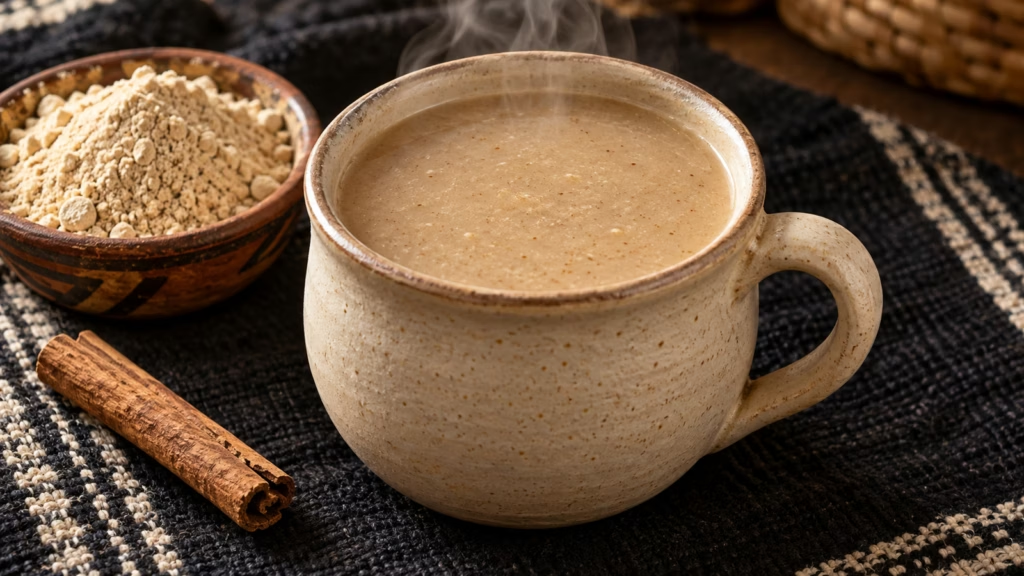
Tip a dry powder into hot water and it can gather into stubborn little islands before you find the whisk. Atole de pinole is easier when the toasted corn powder meets cool water first. This gently sweetened, water-based version becomes a warm drink with a light coating texture, and its sweetness stays manageable because you check whether the pinole already contains sugar before adding any more.
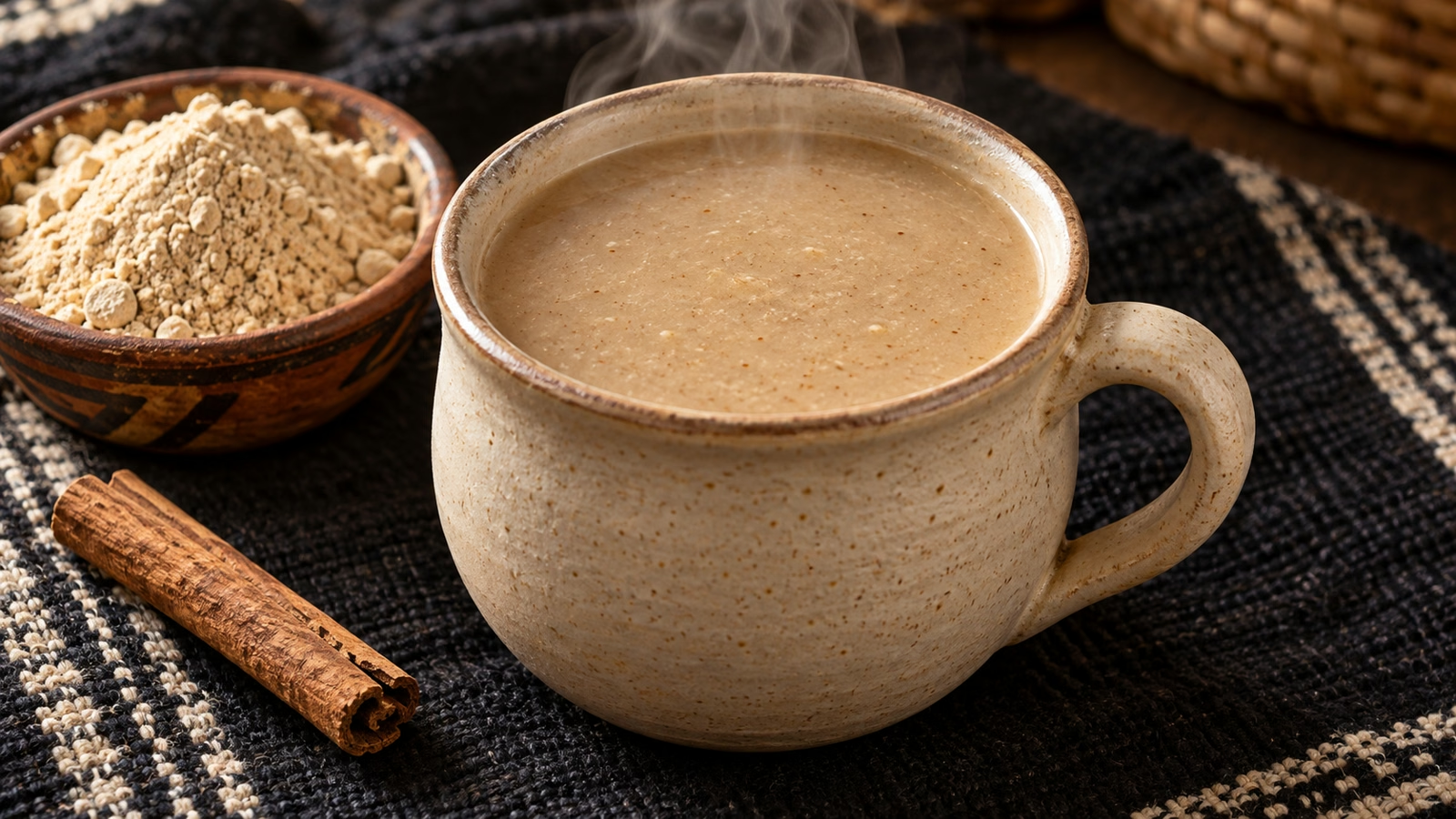
Start with the pinole label and a cool-water slurry; those two checks do more for this drink than a stronger boil.
What makes atole de pinole different
Pinole brings toasted corn flavor to this atole, rather than starting with plain starch or fresh masa. The Universidad del Caribe’s traditional recipe collection includes atole de pinole made by dispersing the ground mixture in water before heating. This home version uses a lighter proportion of pinole and a small cinnamon infusion.
- Expect a drink with body. It should pour into a mug and lightly coat a spoon. It is not meant to set into a pudding or become a smooth, clear tea.
- A little texture is normal. Finely ground corn can still leave tiny flecks. Coarse graininess and dry lumps are different problems, and extra boiling will not fix every grind.
- The liquid is water. That lets the toasted corn stay in the foreground. Using milk creates a different version and changes both its behavior in the pot and its nutrition.
- The color can vary. The corn, roasting and any ingredients already in the mix affect the finished shade. Match the ingredient list rather than expecting every package to make the same beige drink.
I’d begin with a small mug and keep the atole fairly fluid. It is easy to add a little hot water; persuading a thick mixture to behave like a drink takes more stirring.
Read the package before measuring
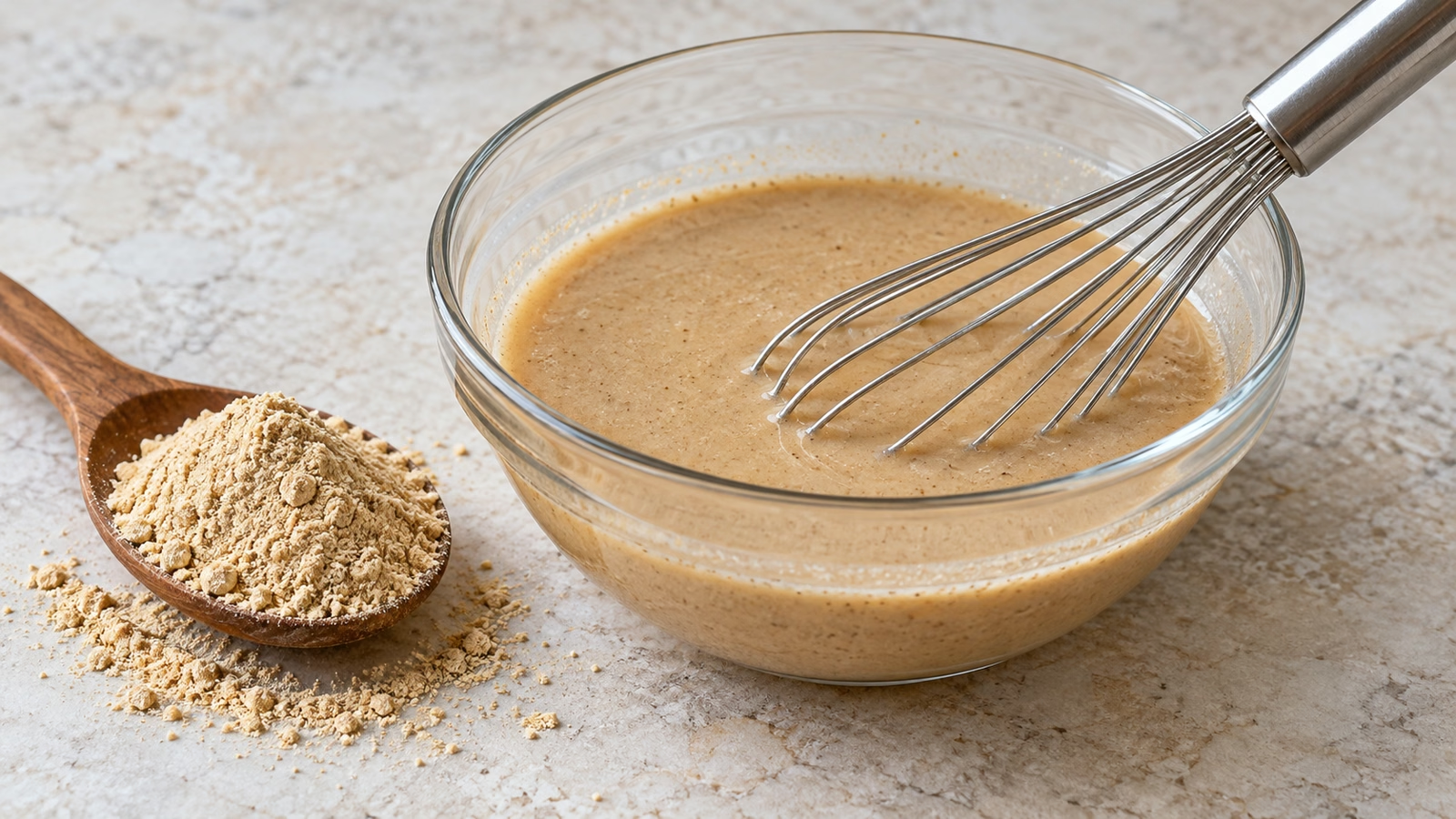
Choose finely ground toasted corn pinole without added sugar for the quantities below. Some products are already sweetened or include cinnamon, cocoa or other ingredients. Those are not wrong choices, but they need a different approach to the added sugar and seasoning.
- For plain pinole: use the measured sugar in the recipe as the starting point, then taste a cooled spoonful. Scalding-hot liquid makes careful tasting difficult.
- For sweetened pinole: begin without extra sugar and adjust only after checking the finished drink. The listed nutrition estimate will no longer match that product.
- For a coarse grind: expect more texture. Look for a finer product if you want a smoother mug rather than adding more sugar to distract from grittiness.
- For other corn powders: do not exchange cornstarch, cornmeal or masa harina one-for-one. Our guide to corn flour and related ingredients explains why those names do not describe one interchangeable product.
A scale is especially useful here. A fluffy scoop and a compacted scoop can look similar but contain different amounts of powder, changing how much water the atole needs.
A smooth start and a gentle finish
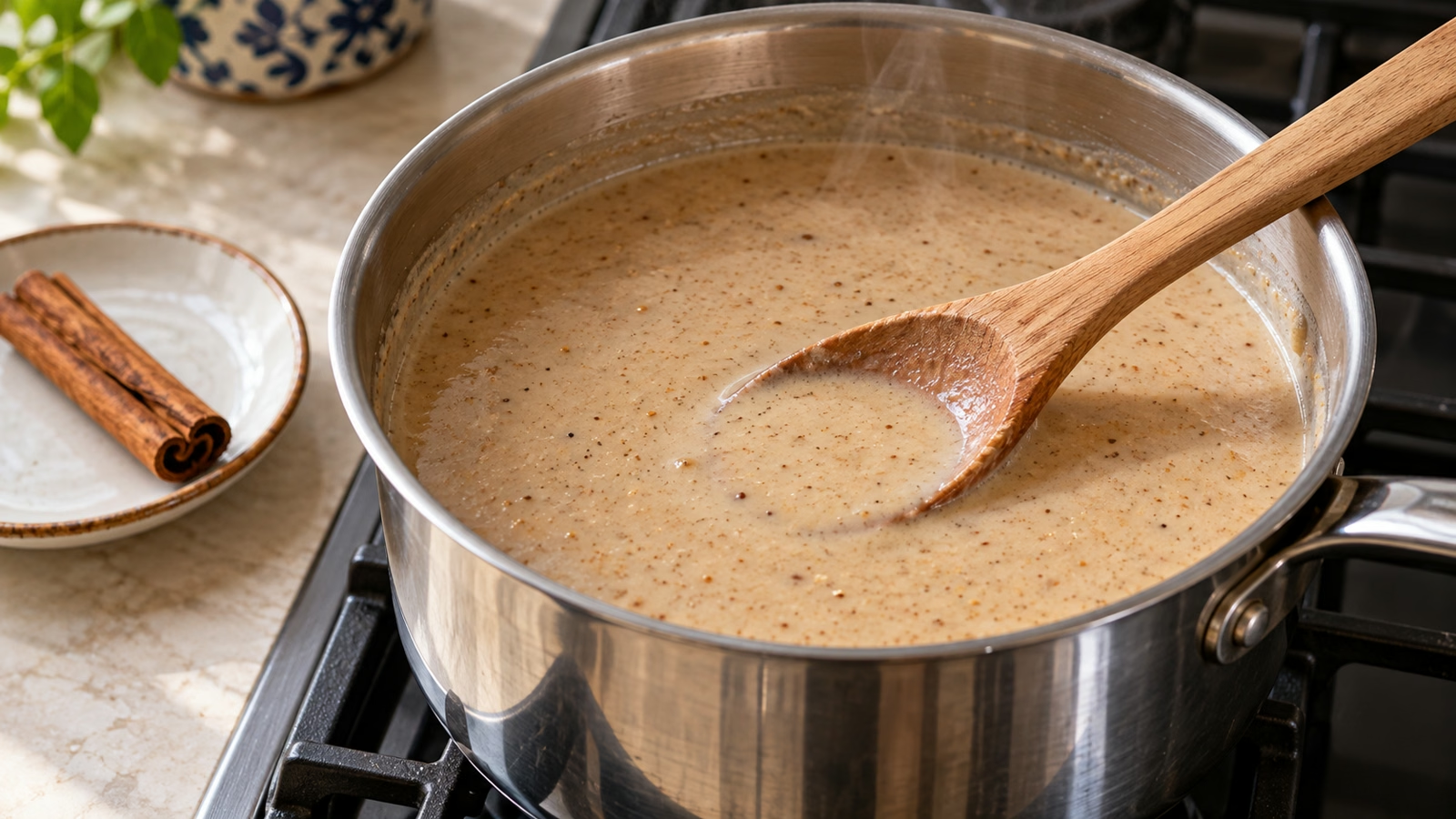
Whisking pinole with cool water gives you a chance to break up visible lumps before the mixture thickens. Keep the slurry pourable, stir it again just before adding it and pour gradually into the hot cinnamon water while whisking. Set the mug down for a moment; the pan needs your attention now.
- Start with the cool slurry. Mix until no dry pockets remain, checking the bottom of the bowl as well as the surface. It is fine for fine corn particles to remain visible.
- Lower the heat before combining. Add the slurry in a steady stream while moving the whisk through the liquid. This gives the powder less opportunity to collect in one place.
- Stir the bottom and corners. Use gentle heat and keep the mixture moving as it reaches a quiet simmer. A thick layer on the bottom can scorch before the top looks wrong.
- Adjust after the mixture cooks. If it is too thick, whisk in a little hot water. If still thin, let it cook gently a little longer while stirring, rather than adding a spoonful of dry pinole.
I’d keep a little hot water nearby when serving. Atole thickens as it waits, so the last cup may need a small adjustment even when the first was just right.
Atole de Pinole Recipe

Ingredients
- 100 g plain toasted corn pinole finely ground, no added sugar
- 1000 ml water divided, plus more if needed
- 30 g granulated sugar reduce or omit if the pinole is already sweetened
- 1 stick cinnamon about 2 inches or 5 cm; remove before serving
Equipment
- 1 Saucepan
- 1 Mixing bowl
- 1 Whisk
- 1 Kitchen scale
- 1 Food thermometer
Instructions
- Whisk the pinole with 250 ml cool water in a bowl until dispersed, breaking up visible dry lumps. Keep the mixture pourable.
- Heat the remaining 750 ml water with the cinnamon in a saucepan. Simmer gently for about 5 minutes.
- Lower the heat. Stir the slurry again, then pour it in gradually while whisking. Add the sugar. If the pinole is already sweetened, start without added sugar and adjust after tasting a cooled spoonful.
- Cook over medium-low heat, stirring the bottom and corners, until gently simmering and lightly coating a spoon, approximately 5 to 8 minutes. Do not leave unattended or let it boil violently.
- Turn off the heat and remove the cinnamon. Whisk in a little hot water if too thick. Stir and divide among four mugs; the final volume depends on evaporation. Let cool to a comfortable drinking temperature.
Nutrition
Notes
Tried this recipe?
Let us know how it turned out!Serve warm and reheat thoughtfully
The recipe makes four approximately cup-sized servings, with the exact volume depending on evaporation and any extra water. Remove the cinnamon stick, stir before pouring and let the drink cool to a comfortable temperature. A thick drink can stay hotter than its calm surface suggests.
- For leftovers: cool in shallow containers and refrigerate within two hours, or one hour above 90°F (32°C). Keep at 40°F (4°C) or below.
- For timing: use refrigerated atole within three to four days under USDA guidance. Label the container, especially when it sits beside other pale drinks.
- For reheating: warm only the portion needed, whisking in water as required, and bring leftovers to 165°F (74°C). Stir well before checking the temperature.
- For nutrition: the estimate uses plain unsweetened pinole. Some nutrient values are unavailable in the matching food table; blank fields are unknown, not zero.
Sources
- Universidad del Caribe: traditional recipes
- INCMNSZ: food composition tables
- USDA: handling leftovers safely
Hi, I’m Laura, the voice behind Tastiva. I’ve always believed that eating well should feel enjoyable, comforting, and realistic—not like another complicated rule to follow. I love creating recipes that fit into everyday life, sharing simple nutrition ideas, and finding small ways to make meals feel a little better without losing the pleasure of good food.