
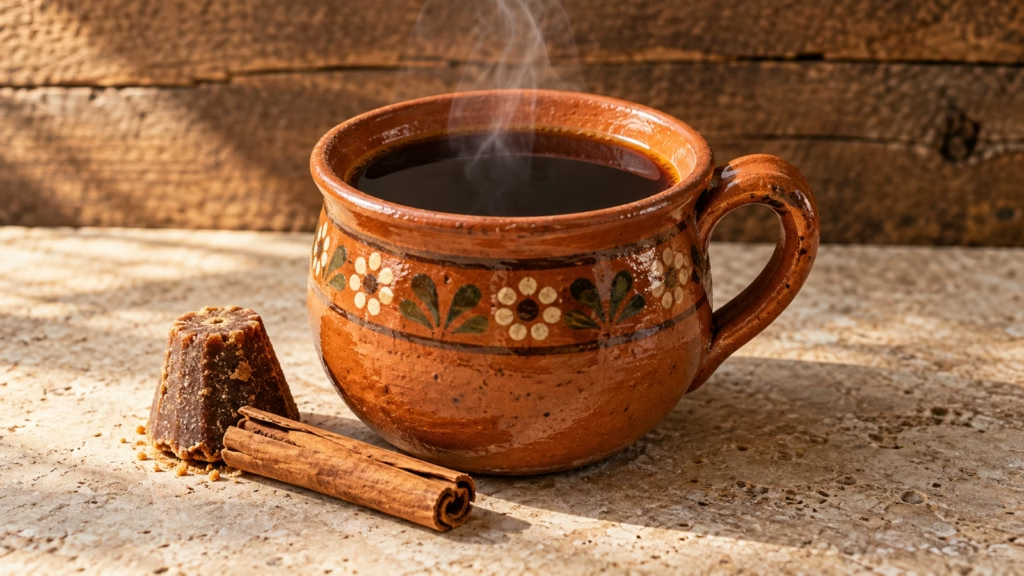
The cinnamon is fragrant and the piloncillo has dissolved, so it is tempting to leave the whole pot bubbling after adding the coffee. For this café de olla, that is your cue to switch off the heat instead. Ground coffee steeps in the sweetened cinnamon water for six minutes, then gets strained into a clean pitcher. A regular saucepan works, making this a practical way to brew four small cups without special coffee equipment.
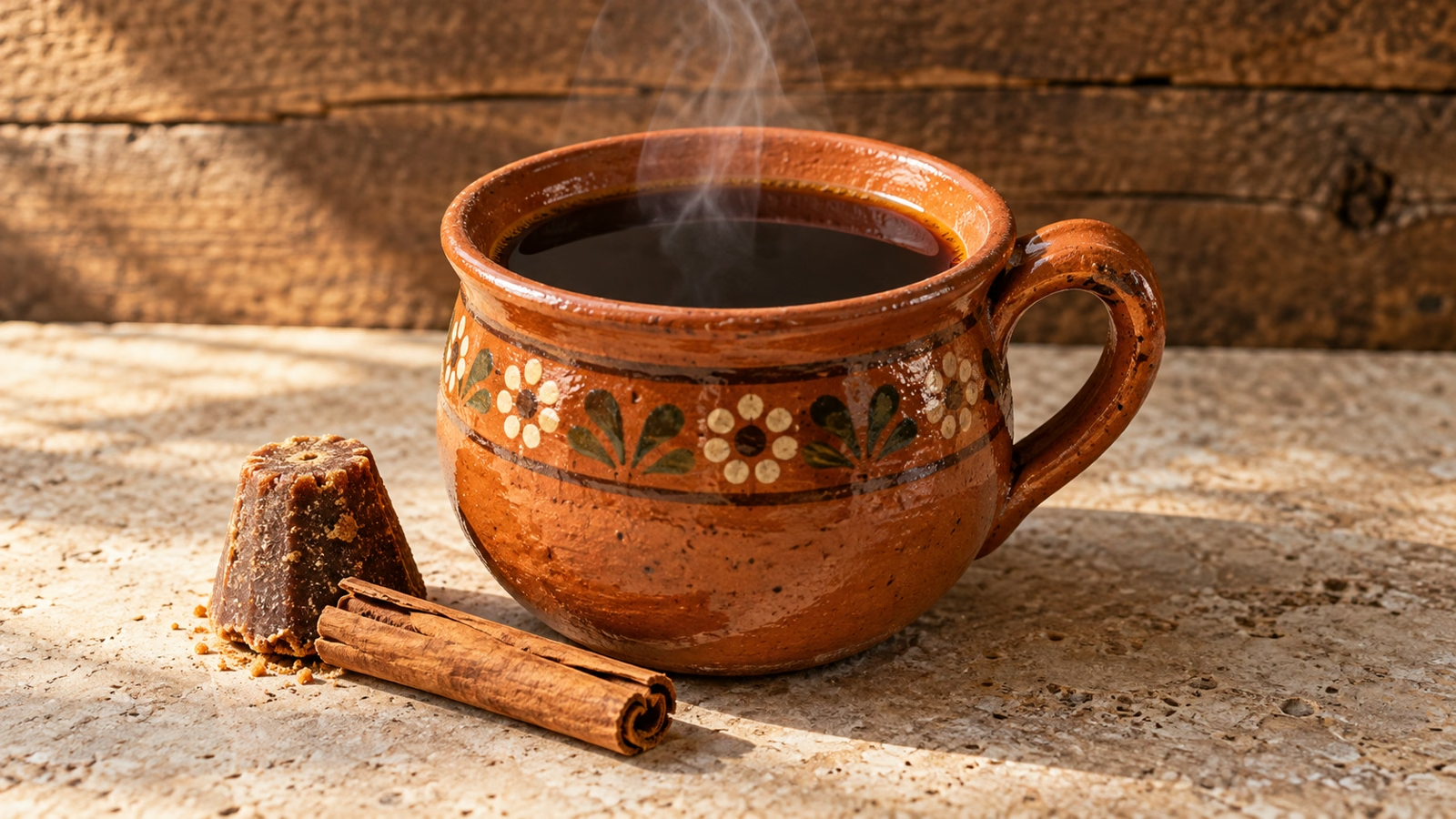
Heat the cinnamon and piloncillo first, then steep the coffee off the burner and strain the whole batch before serving.
The flavor of café de olla
Café de olla combines coffee with cinnamon and piloncillo, a solid cane sugar that brings more character than sweetness alone. Profeco’s Revista del Consumidor describes an off-heat steep followed by straining. This version keeps the seasoning to cinnamon and leaves out the additional spices in that preparation.
- Coffee is still the foundation. Choose ground coffee you enjoy drinking, with a medium-to-coarse grind. The sugar and cinnamon should accompany it rather than cover a stale or unwanted flavor.
- Piloncillo dissolves before the grounds arrive. Breaking it into smaller pieces speeds that stage. Weigh the amount because a cone is a shape, not a standard measurement.
- A cinnamon stick is easy to remove. It gives the water time to pick up aroma without leaving a layer of ground spice in the cup.
- The finish is black coffee. Milk is optional at the table. It is not included in the recipe yield or nutrition estimate.
I’d keep the first pot this simple. Once you know how the coffee and piloncillo taste together, it is easier to decide whether another spice would add anything useful.
Choose a safe pot and a workable grind
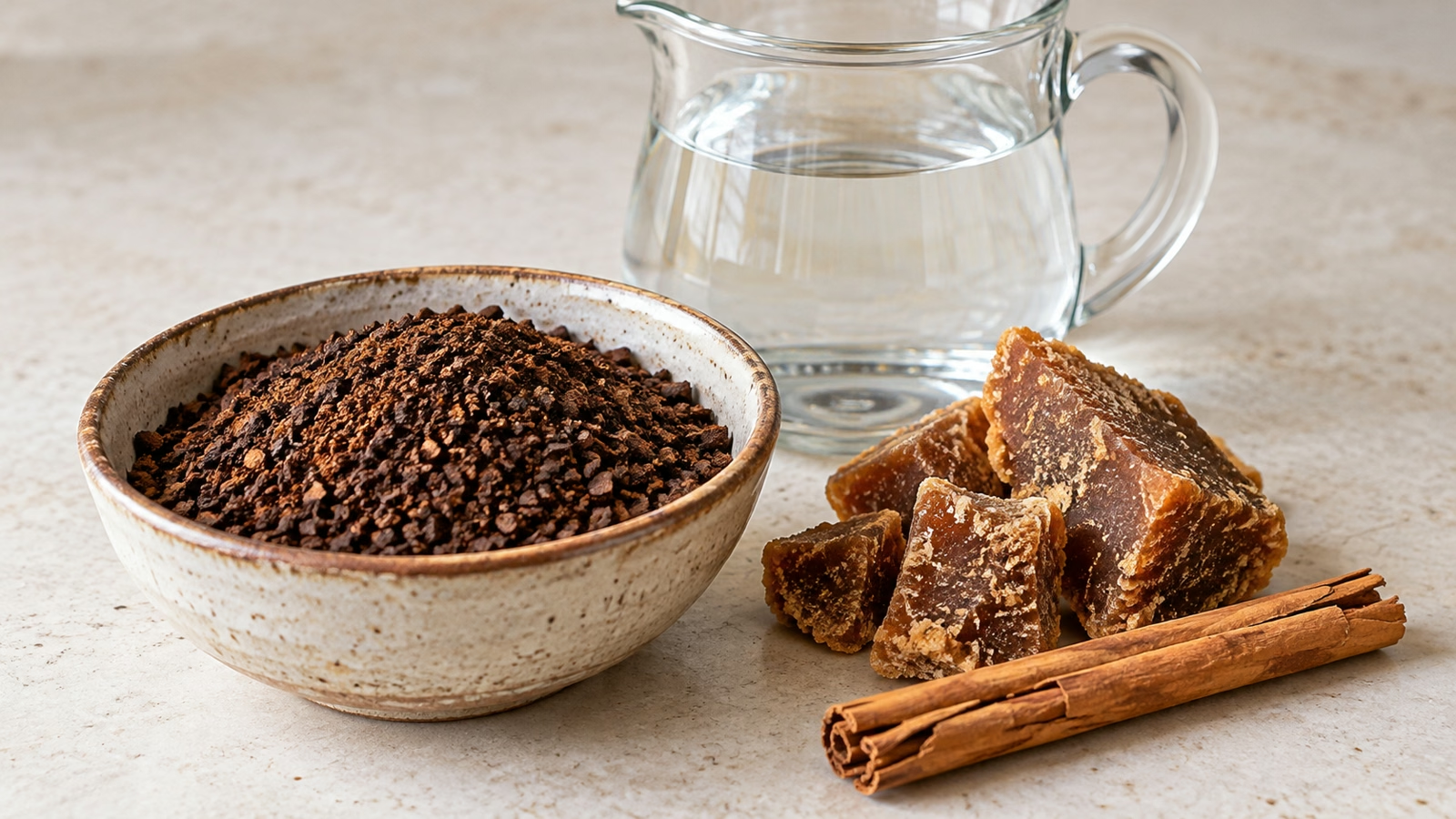
The name often brings an earthenware pot to mind, but you do not need to buy one to make this version. A stainless-steel saucepan with a lid gives you an easy, familiar cooking surface. The FDA warns that some traditional pottery can leach lead, so decorative ceramics should never be assumed safe for preparing or serving food.
- If using clay: choose food-safe, lead-free cookware from a reliable source and confirm it is suitable for your stove. Appearance alone cannot establish safety.
- If using a saucepan: make sure it and the strainer are clean and free from strong cooking odors. Coffee is not the place to discover yesterday’s onion residue.
- For the grind: medium-to-coarse grounds suit this steep-and-strain approach. Espresso-fine coffee can leave more sediment and make filtering slower.
- For cinnamon: check the package rather than guessing from a product nickname. Our guide to cinnamon types explains the useful label distinctions.
A kitchen scale keeps the coffee-to-water ratio repeatable. Spoon measures vary with the grind and how densely you fill them, so the card gives coffee and piloncillo by weight.
Steep first, strain once
Heat the water, piloncillo and cinnamon until the sugar dissolves and the water boils. Add the grounds, stir once and turn off the burner. If an electric cooking surface remains hot, move the pot to a safe, unheated spot so the coffee is not kept at a boil.
- Set a six-minute timer. Cover the pot during the steep. This gives you a repeatable starting point instead of guessing while breakfast pulls your attention elsewhere.
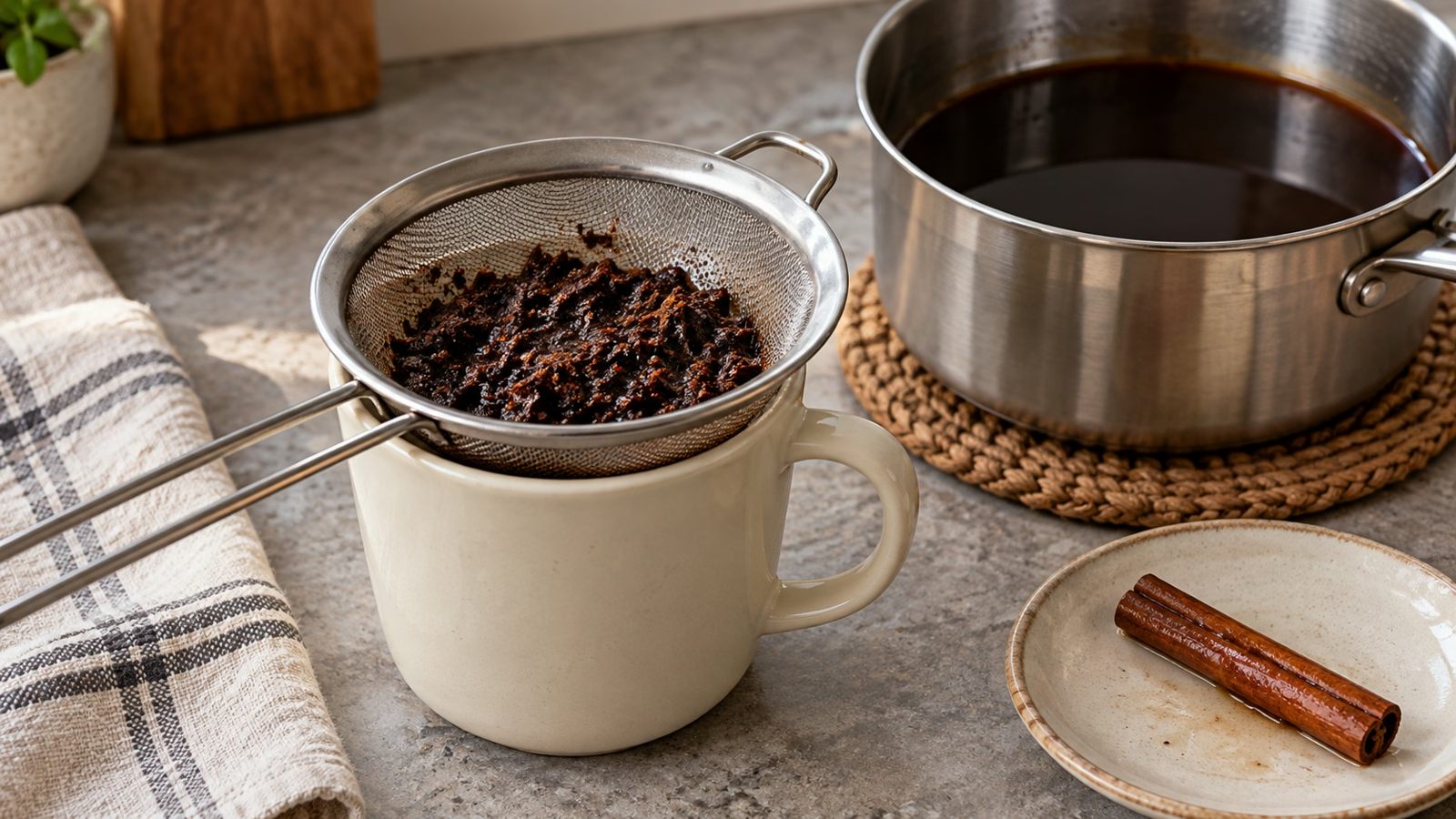
- Strain the entire batch. Pour through a fine strainer into a heatproof pitcher, removing both the grounds and cinnamon. Leaving the final servings sitting on the grounds changes their extraction time.
- Use paper for a cleaner cup if desired. Put a coffee filter in a suitable holder and pour carefully. A paper filter may drain more slowly, particularly with fine grounds.
- Judge strength after straining. If the drink is stronger than you want, dilute an individual cup with hot water. Adjust the next batch deliberately rather than repeatedly boiling this one.
I’d have the pitcher and filter ready before the timer rings. That small setup step is more useful than rushing around with a hot saucepan in one hand.
Café de Olla Recipe

Ingredients
- 1000 ml water about 4 1/4 US cups
- 60 g piloncillo about 2.1 oz, broken into pieces
- 1 stick cinnamon about 2 inches or 5 cm
- 60 g ground roasted coffee about 2.1 oz, medium-to-coarse grind; not instant
Equipment
- 1 Stainless-steel saucepan with lid
- 1 fine-mesh strainer
- 1 Heatproof pitcher
- 1 Kitchen scale
Instructions
- Heat the water, piloncillo and cinnamon in a saucepan, stirring occasionally, until the sugar dissolves and the water boils, approximately 6 to 8 minutes.
- Add the ground coffee, stir once and turn off the burner. Move the pot from the heat source if the cooking surface remains very hot.
- Cover and steep for 6 minutes. Do not keep boiling the coffee.
- Strain the entire batch into a heatproof pitcher through a fine strainer, removing the grounds and cinnamon. For less sediment, use a paper coffee filter in an appropriate holder.
- Divide among four small cups or transfer the strained coffee to a clean insulated carafe. Expect about 900 ml total, depending on liquid retained by the grounds and filter. Let cool enough to drink comfortably.
Nutrition
Notes
Tried this recipe?
Let us know how it turned out!Serving, sweetness and what the yield means
Expect about 900 milliliters of strained coffee, divided into four small servings of approximately 225 milliliters, just under a US cup each. Some water stays in the grounds and filter, so the final volume will vary. Pour into food-safe cups and let it cool enough to drink comfortably.
- To keep it warm: transfer the strained coffee to a clean insulated carafe. Avoid leaving it simmering on the stove while everyone finishes their first cup.
- To reduce sweetness: use less piloncillo in a future pot or offer extra hot water at serving. Changing the sugar amount also changes the nutrition estimate.
- For less caffeine: use decaffeinated ground coffee with the same method. Decaffeinated does not necessarily mean completely caffeine-free, and caffeine is not quantified here.
- For nutrition: the estimate models brewed coffee and all the dissolved sugar, using brown sugar as an approximation for piloncillo. It does not count the dry coffee grounds as food you eat.
There is no need to turn a remaining half cup into a second project. Brew the amount you plan to serve, and scale the weighed ingredients together when making a smaller batch.
Sources
- Profeco: Revista del Consumidor, November 2008
- FDA: lead-glazed traditional pottery
- USDA FoodData Central
Hi, I’m Laura, the voice behind Tastiva. I’ve always believed that eating well should feel enjoyable, comforting, and realistic—not like another complicated rule to follow. I love creating recipes that fit into everyday life, sharing simple nutrition ideas, and finding small ways to make meals feel a little better without losing the pleasure of good food.