
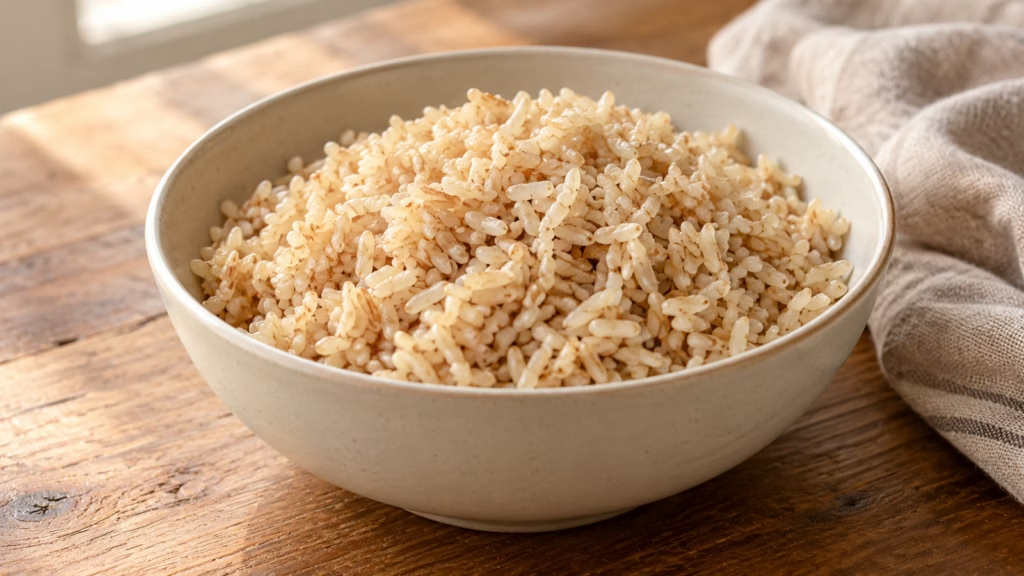
The rest of dinner is ready, but the rice still has a firm little center. That is the brown-rice timing problem in one spoonful. If you are learning how to cook brown rice, start with the bag: its directions suit that particular grain. Without directions, a useful stovetop starting point for regular medium- or long-grain brown rice is 1 cup rice to 2¼ cups water, simmered under a tight lid for about 40–45 minutes.
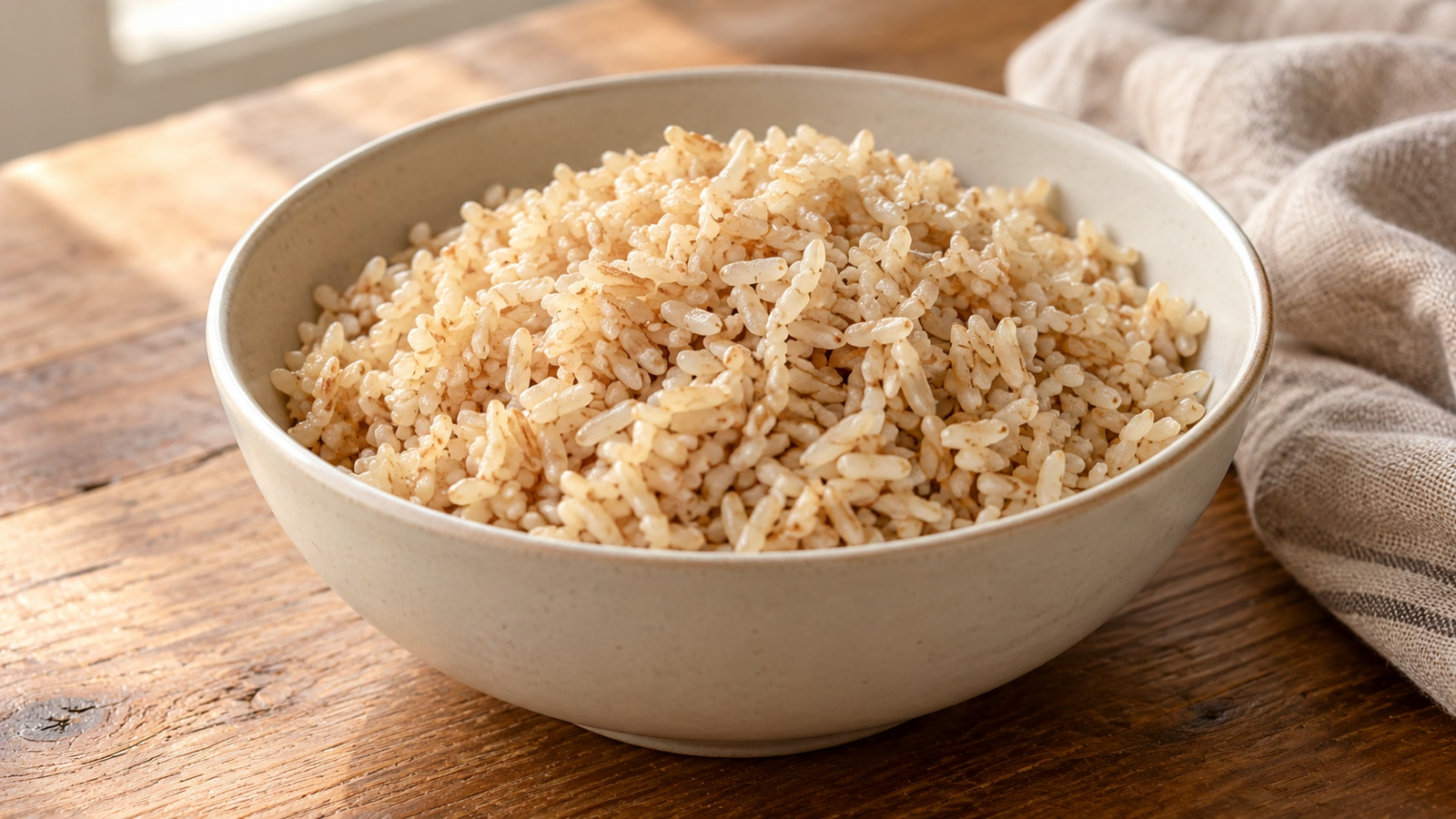
Let the grain set the schedule, and give dinner a little breathing room.
Choose the rice before choosing the ratio
Brown rice keeps its bran and germ, which helps explain its tan color and more substantial bite. I would aim for a tender center with some chew, rather than trying to make it behave exactly like white rice. The useful question is whether the grain is cooked through, not whether it feels identical to another variety.
- Regular medium- or long-grain: Use the baseline in the card when package instructions are missing. Measure rice and water with the same standard cup.
- Quick-cooking, instant, or parboiled: Follow the label. These products have different preparation requirements.
- Brown jasmine, basmati, or short-grain: Check the specific package before borrowing another rice’s measurements. Grain type and intended texture matter.
Even two sensible instructions can differ. Mahatma’s regular brown rice lists a 35-minute stovetop simmer, while USA Rice’s general chart lists 40–45 minutes for medium- or long-grain brown rice. That difference is a reason to keep the bag, rather than a reason to distrust your timer.
Set up a pot that holds onto steam
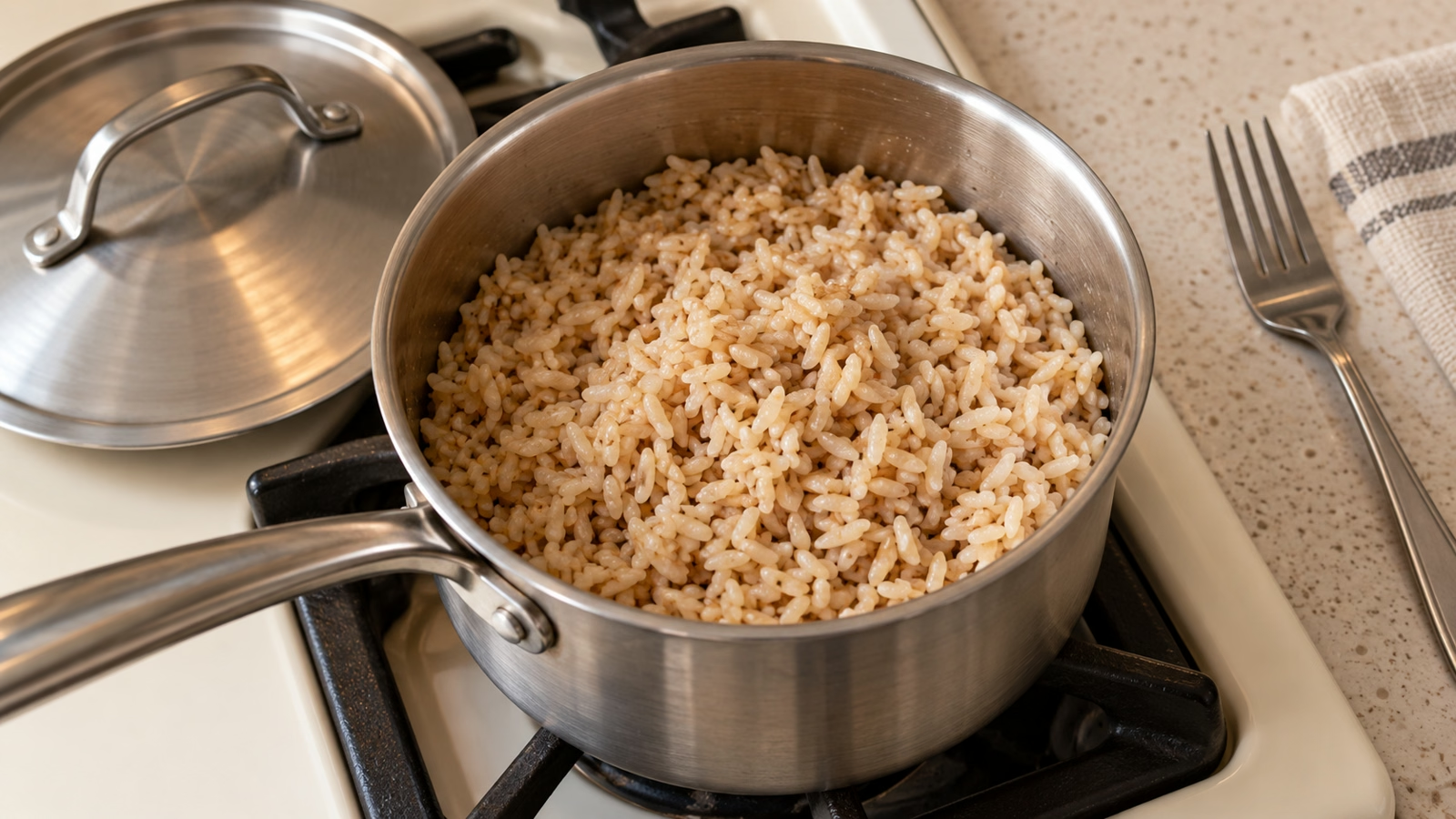
The absorption method cooks rice in a measured amount of liquid instead of boiling it in a large pot and draining it. A snug lid matters because escaping steam changes the water available to the grains. I would choose a modest saucepan with room for the rice to expand over a very wide pan.
- Measure first: Level the dry rice, then measure the liquid separately. Eyeballing both makes troubleshooting harder.
- Check the rinsing instructions: Follow the label, especially for enriched products. Tastiva’s guide to rinsing rice explains the choice in more detail.
- Keep the heat gentle: After boiling, reduce to a low simmer and cover. A vigorous boil is unnecessary.
- Leave the lid alone: Resist frequent peeks and stirring. The pot does not need an audience.
Read the texture before calling it done
When the expected time is up, check both the liquid and a grain from the pot. A tender outside can hide a hard center. Use the following cues to decide what to do next; they are more useful than automatically adding another ten minutes.
- Hard center with a dry pot: Add a small splash of water, cover again, and continue gently. Check in short intervals.
- Firm grains with liquid remaining: Replace the lid and keep simmering. Extra water is not the first move.
- Tender grains with a little remaining water: Continue briefly and check again; avoid cooking blindly until the bottom catches.
- Soft or split grains: More cooking will not restore their structure. Use them in a soup or a softer bowl, then check the next batch’s measurements and heat.
- Scorched bottom: Lift unburned rice out without scraping the dark layer into it. For the next batch, check the burner setting and lid fit.
Fluff gently when the rice is tender. If your package includes a covered rest, follow it. For a repeatable next batch, note the brand, measured water, saucepan, and time that gave you the texture you wanted.
Serve it now, then cool leftovers promptly
Plain brown rice gives a meal a quiet, chewy base. Spoon it beside beans and roasted vegetables, or under a saucy main dish. A casserole requires another check: a recipe calling for cooked rice and one calling for dry rice are different starting points. Read that distinction before using rice in a dish such as stuffed pepper casserole.
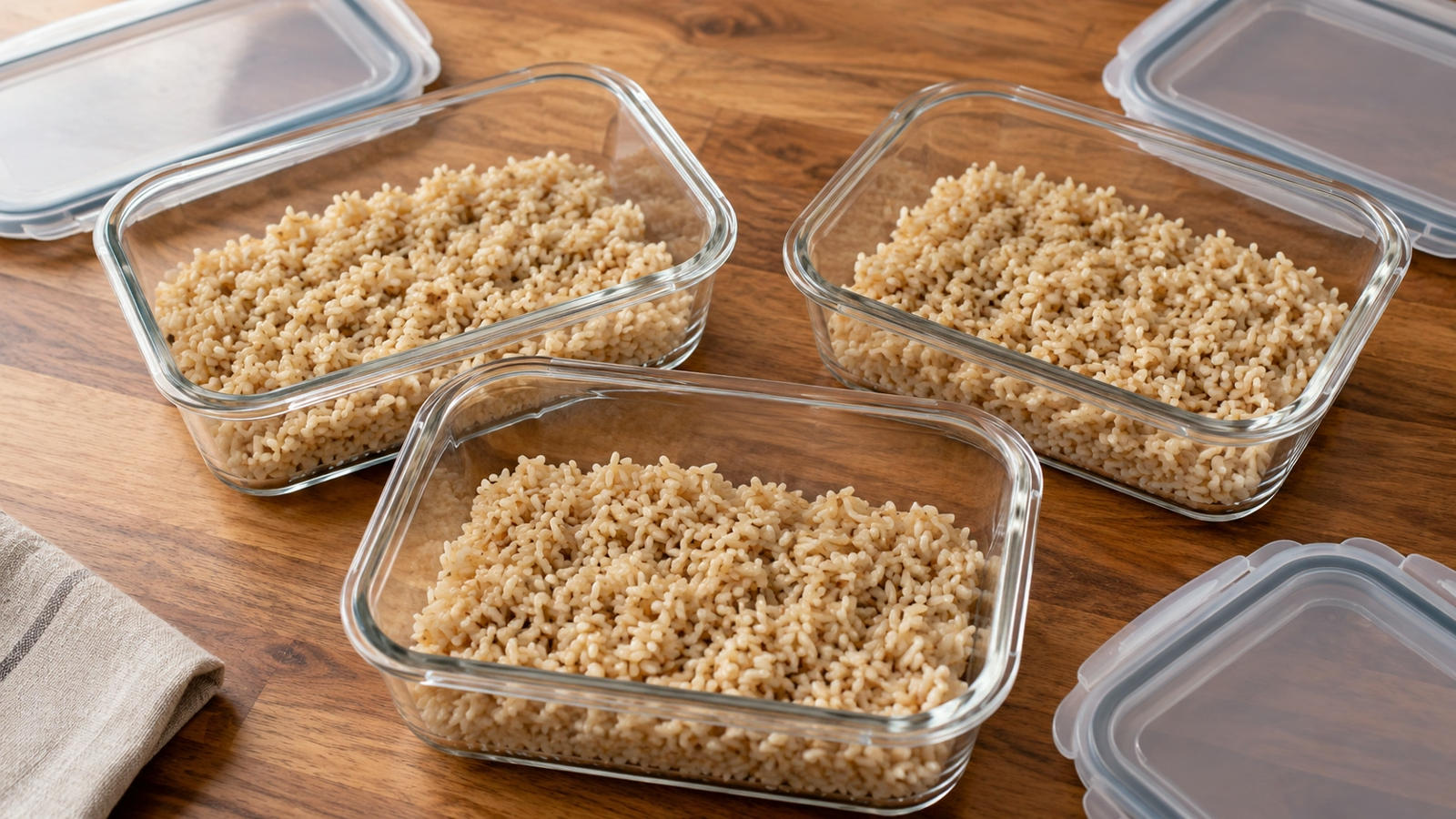
- Cool safely: Portion leftovers into shallow containers and refrigerate promptly, within 2 hours, or within 1 hour above 90°F (32°C). Do not wait for a large pot to cool on the counter.
- Keep cold: Set the refrigerator to 40°F (4°C) or below. USA Rice gives a 3–5-day refrigerated window; using leftovers within 3 days is a simple conservative plan.
- Freeze portions: Seal, label, and freeze what you will not use soon. USA Rice lists up to 6 months for cooked rice.
- Reheat thoroughly: Add a little water, cover, and heat to 165°F (74°C) throughout. Stir microwave portions so the center heats evenly. Discard rice left out beyond the safe time limit.
Brown Rice Recipe

Ingredients
- 1 cup regular long-grain brown rice 185g; not instant or quick-cooking
- 2.25 cups water use package ratio if different
Equipment
- 2- to 3-quart saucepan with tight-fitting lid
- Standard measuring cups
- Fork
Instructions
- Check the rice package first. Follow its water ratio, rinsing guidance, cooking time, and any resting instructions when available.
- For rice without directions, combine 1 cup regular long-grain brown rice with 2¼ cups water in a 2- to 3-quart saucepan with a tight-fitting lid.
- Bring to a boil. Stir once, reduce heat to low, cover tightly, and simmer gently for about 40–45 minutes. Avoid repeated stirring or opening the lid.
- Check a grain for a tender center and check for remaining liquid. If still firm with liquid in the pot, cover and cook a few minutes longer. If firm and dry, add a small splash of water, cover, and continue gently until tender.
- Remove from heat when tender and liquid is absorbed. Follow any package resting instructions, then fluff gently with a fork and portion for serving.
Nutrition
Video
Video: Howcast demonstrates covered stovetop brown rice, including a tenderness check, covered rest and fluffing. Its version uses 2 cups water per cup of rice and a 10-minute rest. Follow your package first, or the recipe above for this version’s 2¼-cup starting ratio and texture adjustments.
Notes
Tried this recipe?
Let us know how it turned out!Sources
- USA Rice: cooking methods, measurements, and texture checks
- Mahatma: regular brown-rice characteristics and product directions
- USA Rice: storing and reheating rice
- FoodSafety.gov: prompt refrigeration and temperature guidance
Hi, I’m Laura, the voice behind Tastiva. I’ve always believed that eating well should feel enjoyable, comforting, and realistic—not like another complicated rule to follow. I love creating recipes that fit into everyday life, sharing simple nutrition ideas, and finding small ways to make meals feel a little better without losing the pleasure of good food.