
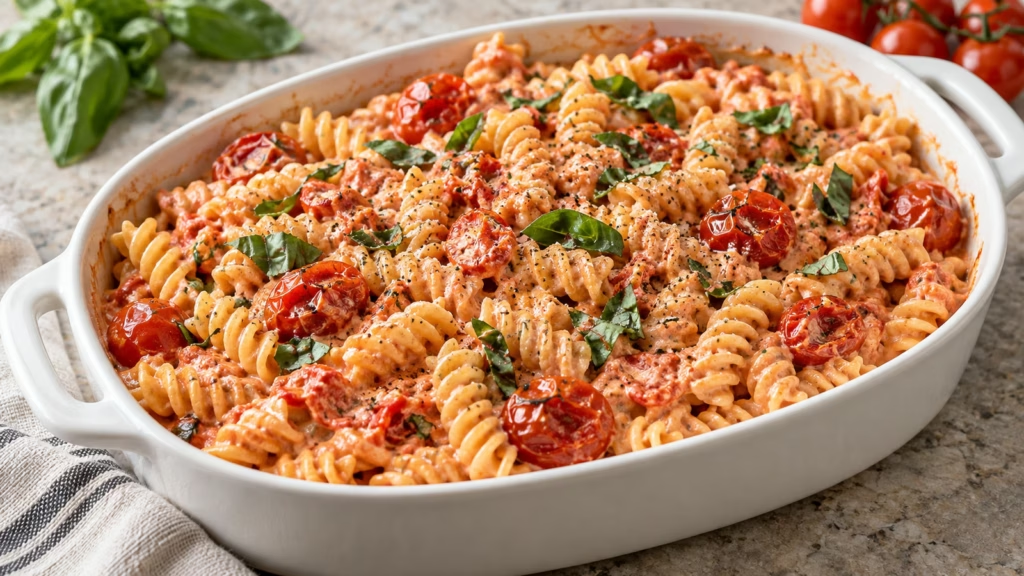
A block of feta sitting in a baking dish does not look much like pasta sauce. Give it cherry tomatoes, olive oil, garlic, and time in the oven, though, and the pieces begin to make sense. Baked feta pasta comes together when you crush the softened cheese into the tomato juices, then loosen it with a little pasta water before adding the noodles.
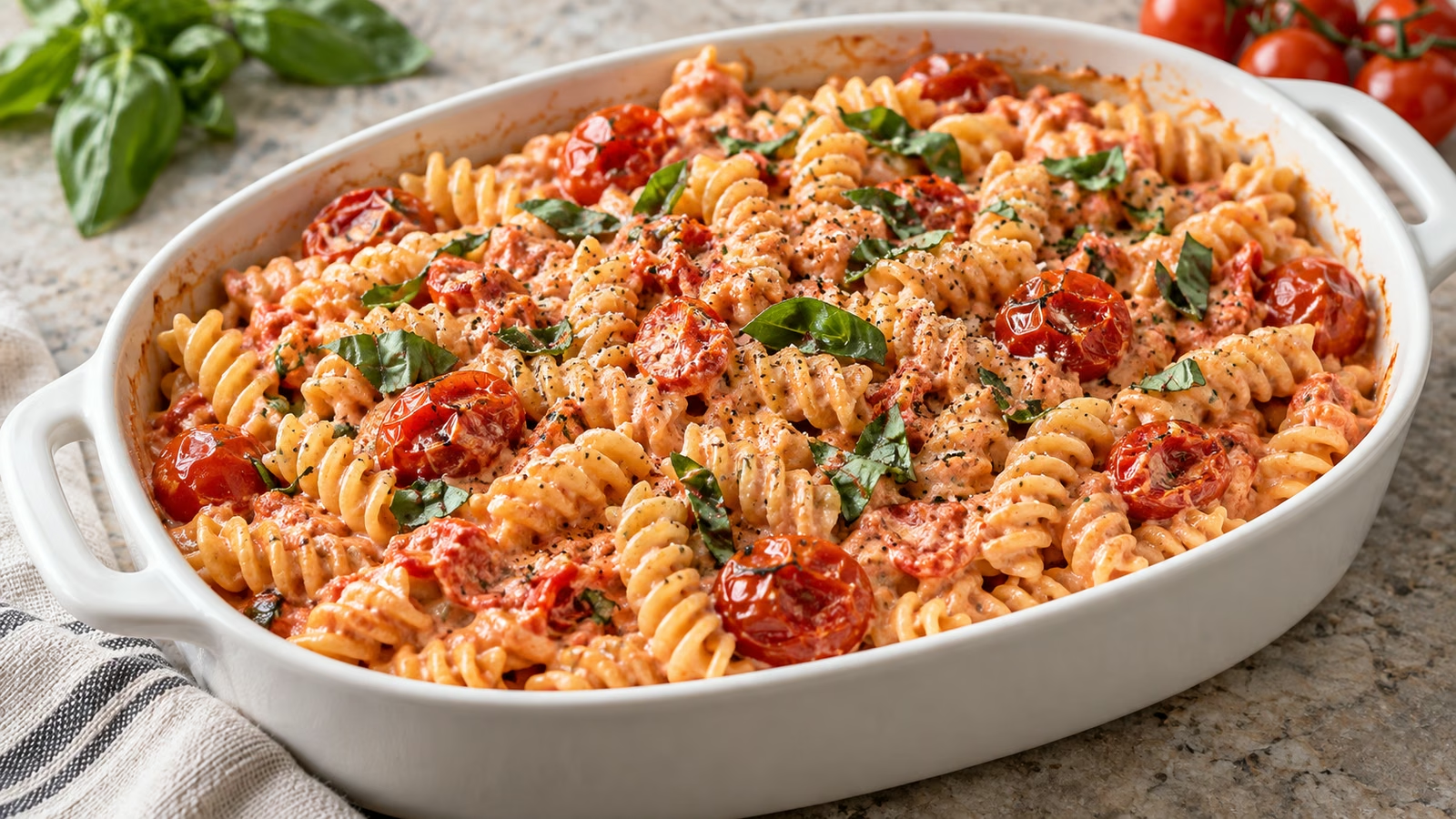
Let the tomatoes provide the juice, let the feta provide the flavor, and save enough pasta water to bring them together.
Why baked feta pasta still earns a place at dinner
This is an established viral recipe rather than a new discovery. The Finnish dish known as uunifetapasta helped inspire the global social-media versions, and American coverage has continued well beyond the original boom. Budget Bytes published its own practical take in February 2026, while home cooks still discuss the dish as one of the trends they kept.
I like the method because the oven does the slow part while you handle the pasta. There is no separate cream sauce to whisk, and the final seasoning can happen after everything is combined. The flavor is decidedly feta-forward: tangy, salty, and rich, softened by sweet roasted tomatoes rather than hidden beneath another cheese.
- Expect softened cheese: Feta does not melt into stretchy strands like mozzarella. Mash it into the juices to make the sauce.
- Use a sensible pasta portion: Too many noodles spread the sauce thin. This recipe pairs 8 ounces of dried pasta with one 8-ounce block of feta.
- Keep the finish fresh: Tear in basil after roasting so its aroma stays distinct.
Choose the block, tomatoes, and baking dish
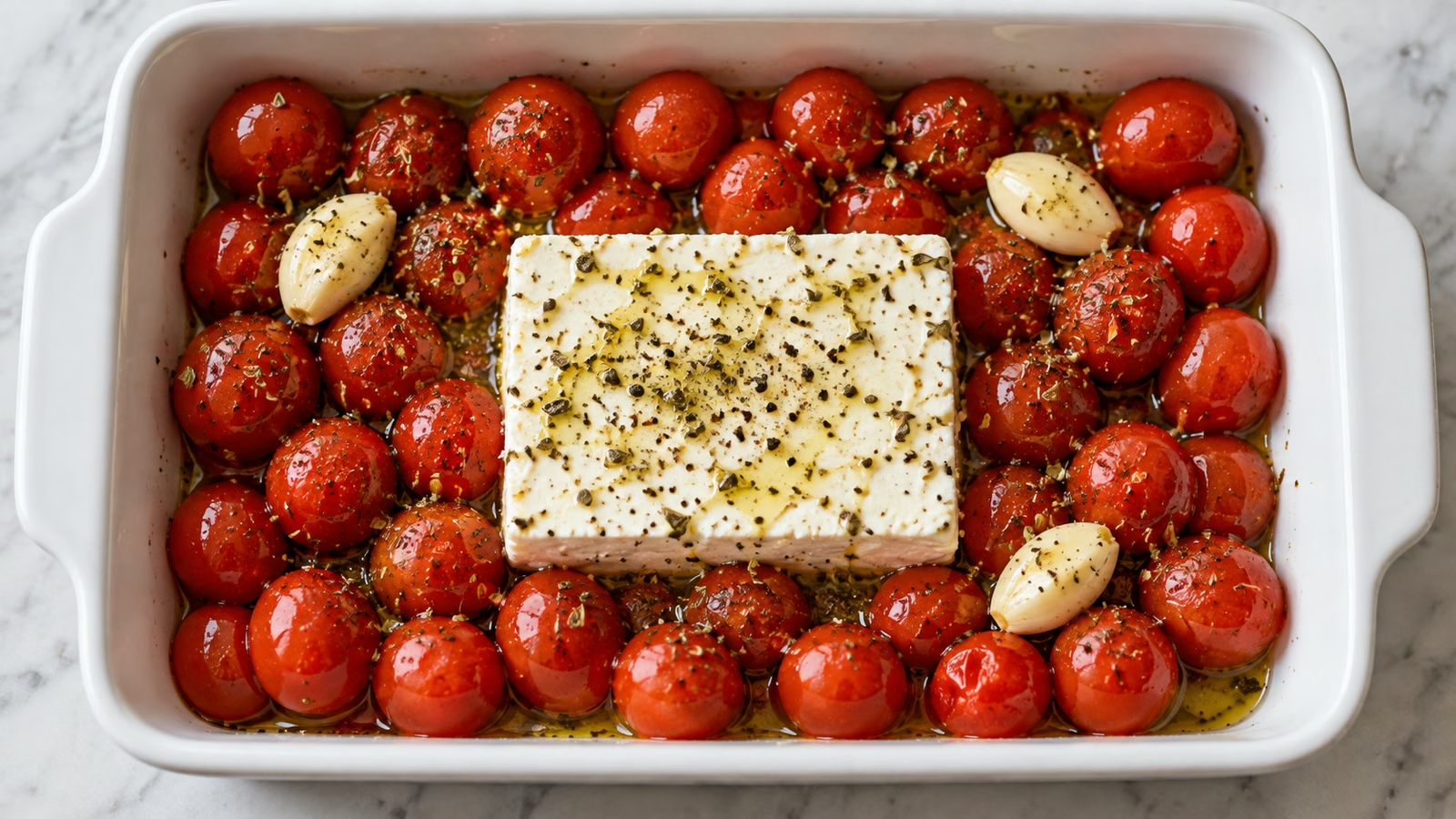
A block of feta is the simplest starting point. Pre-crumbled cheese can be drier, and some products contain ingredients to keep the pieces separate. Read the label, drain the block, and remember that salt levels differ between brands. I would rather taste at the end than commit the entire dish to extra salt before it cooks.
- Cherry tomatoes: Use about 600 grams, with damaged or spoiled fruit removed. Their juice becomes part of the sauce.
- Garlic: Whole peeled cloves roast alongside the tomatoes, then mash easily into the mixture. Keep them coated with oil so exposed edges do not scorch.
- Olive oil: The measured amount coats the ingredients and contributes richness. It is included in the nutrition estimate.
- Dish size: A roughly 9-by-13-inch baking dish leaves room for the tomatoes around the feta. Avoid piling everything into a narrow, deep vessel.
Choose a short pasta with grooves or curves, such as rotini or shells. Our guide to pasta shapes and sauce choices explains why those little spaces are useful. Long noodles are possible, but they are less convenient for catching pieces of tomato in this particular sauce.
Turn the roasted ingredients into sauce
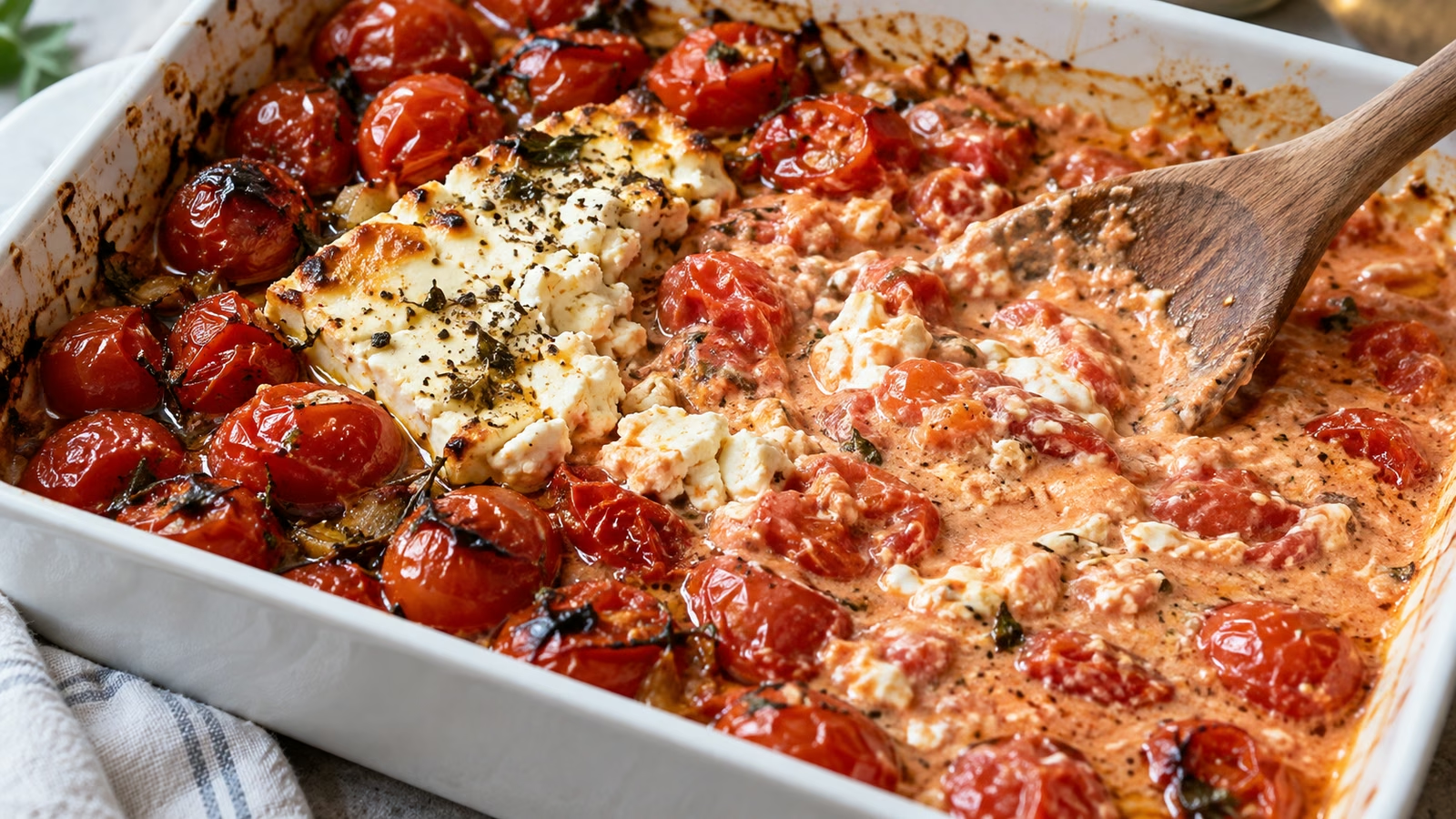
Roast until the tomatoes have burst and the feta is soft enough to crush with a spoon. A little color around the cheese and tomato skins is welcome; dry, blackened edges are a sign to stop. Your oven and baking dish may shift the timing, so inspect the food instead of waiting for one exact minute.
- Boil the pasta near the end. Aim for the noodles to finish as the roasting pan comes out, not twenty minutes earlier.
- Reserve the water before draining. A mug beside the colander is a useful reminder. The sink has enough water already.
- Mash first, then loosen. Crush feta, garlic, and tomatoes together before adding pasta. Stir in cooking water a small splash at a time.
- Toss and assess. Add the drained pasta and basil. If the sauce looks tight, add another splash; if it is loose, toss briefly and let the pasta absorb some liquid.
If the dish tastes too salty, more cheese will not help. Add unsalted vegetables or a small amount of additional cooked pasta, understanding that this changes the yield and nutrition. If the tomatoes are especially sharp, a small pinch of sugar is an optional flavor adjustment, not a required rescue step.
Serving choices and a better reheat
Serve the pasta while the sauce is loose enough to coat the noodles. A green salad with a simple lemon dressing balances the rich bowl without requiring another pan. Cooked chickpeas or chicken can be added, but they are variations rather than ingredients included in this card.
- Vegetarian check: If strict vegetarian suitability matters, choose feta made with vegetarian or microbial rennet; cheese labels vary.
- Store safely: Refrigerate in shallow covered containers within two hours, or one hour above 90°F (32°C). Use within three days.
- Loosen before reheating: Add a small splash of water, cover, and heat gently, stirring as needed. Leftovers should reach 165°F (74°C).
- Expect a firmer cold sauce: Chilled feta sauce thickens. Add liquid gradually rather than flooding the portion before it has warmed.
The nutrition estimate is for one quarter of the complete recipe, with all measured olive oil included and no extra salt added to pasta water. Feta is a substantial source of sodium, so the actual label is useful if that affects your choices. Portion and brand differences matter more than treating one estimate as a laboratory result.
Baked Feta Pasta Recipe

Ingredients
- 8 ounces feta cheese in a block 227 g, drained
- 4 cups cherry tomatoes about 600 g
- 3 garlic cloves 9 g, peeled
- 1/4 cup olive oil 54 g
- 1/2 teaspoon dried oregano
- 1/4 teaspoon ground black pepper
- 8 ounces dry rotini pasta 227 g
- 1/4 cup fresh basil leaves 6 g, torn
- 1/2 cup reserved pasta cooking water add gradually; more if needed
Equipment
- 1 9-by-13-inch baking dish
- 1 Large pot
- 1 Colander
- 1 wooden spoon
Instructions
- Heat oven to 400°F (204°C). Place the feta in the center of a 9-by-13-inch baking dish and arrange tomatoes and garlic around it.
- Drizzle with olive oil, add oregano and black pepper, and toss the tomatoes gently to coat. Leave the feta in the center.
- Bake 30–40 minutes, until the tomatoes burst and the feta is soft and lightly golden.
- Near the end of roasting, cook pasta in boiling water according to package directions. Reserve at least 1 cup cooking water, then drain.
- Mash the feta, garlic, and tomatoes in the baking dish. Stir in ¼ cup pasta water, then fold in pasta and basil.
- Add more cooking water by the tablespoon until the sauce coats the pasta. Taste before adding any extra salt. Serve promptly.
Nutrition
Notes
Tried this recipe?
Let us know how it turned out!Sources
- Budget Bytes: baked feta pasta and its viral background
- Amira’s Pantry: feta texture and preparation reference
- USDA: leftovers and food safety
- USDA FoodData Central: ingredient nutrition data
Hi, I’m Laura, the voice behind Tastiva. I’ve always believed that eating well should feel enjoyable, comforting, and realistic—not like another complicated rule to follow. I love creating recipes that fit into everyday life, sharing simple nutrition ideas, and finding small ways to make meals feel a little better without losing the pleasure of good food.