
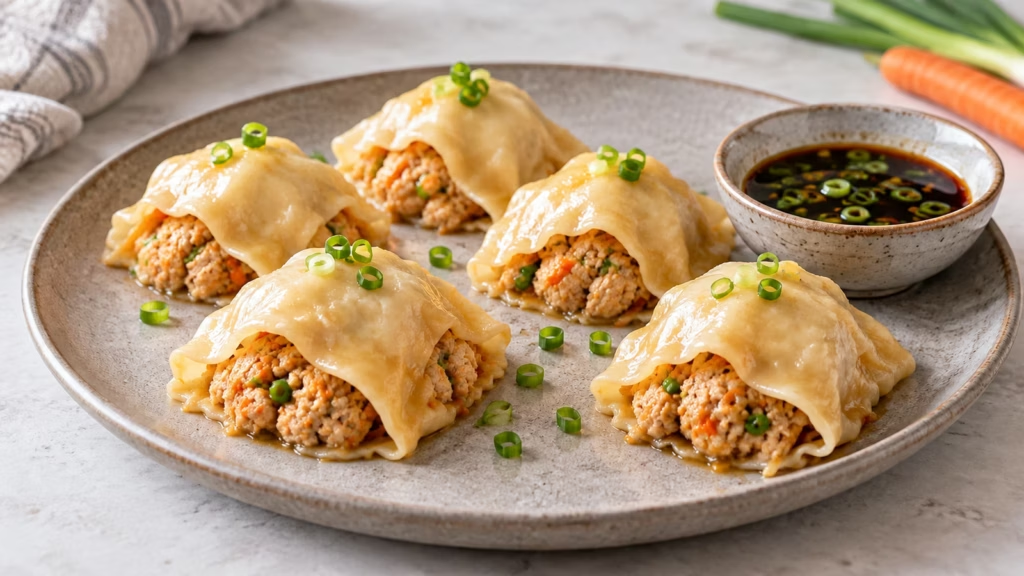
A dumpling wrapper does not have to end in a perfect pleat. For chicken blanket dumplings, it drapes over a small mound of ginger-scallion filling, leaving the bottom open against the skillet. Steam cooks the chicken and softens the wrapper; a brief uncovered finish adds browned edges. The shape is relaxed, but the portion size and temperature check still matter.
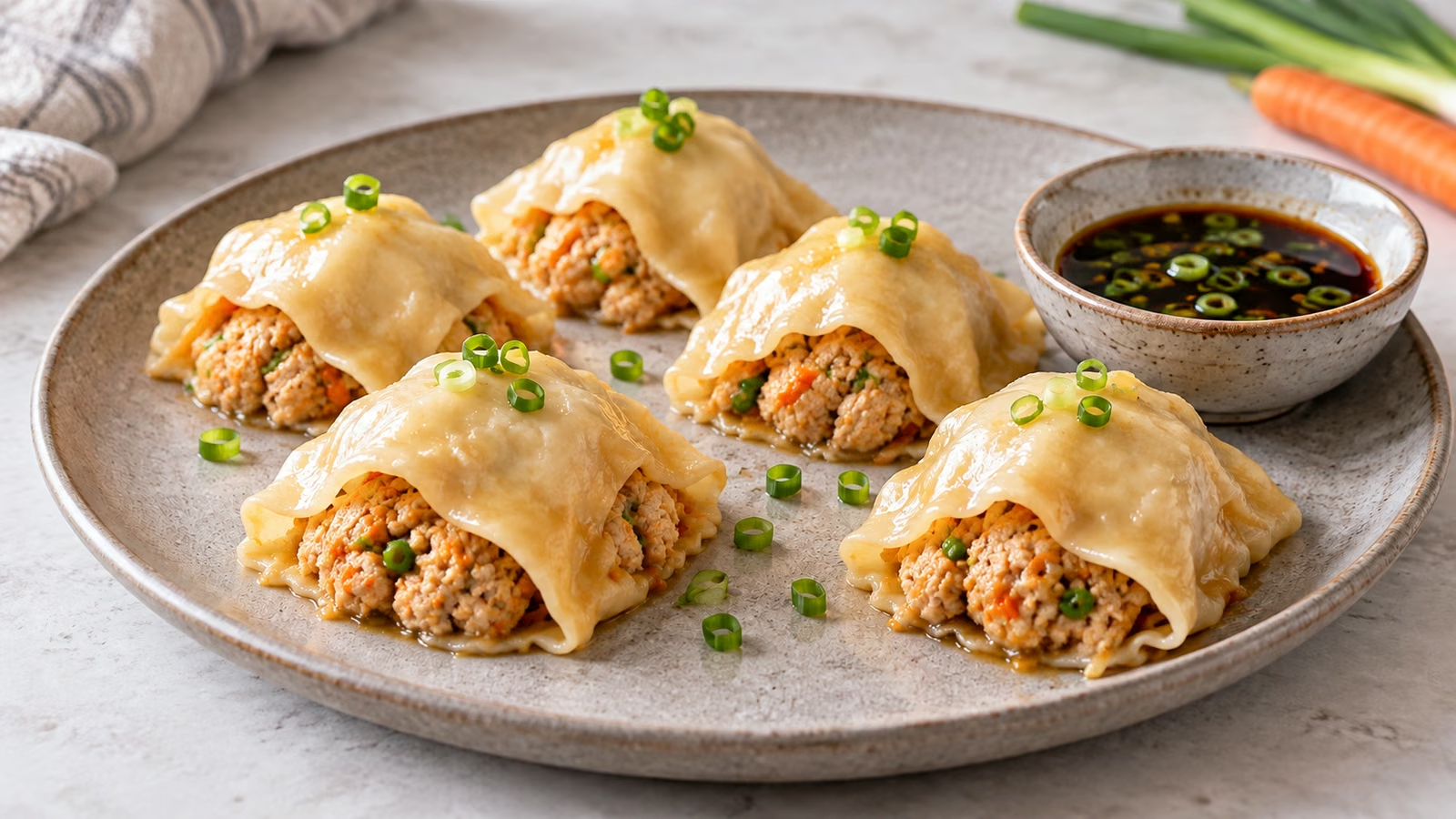
Make small, even mounds and let each wrapper hug the filling; the shortcut is skipping the folds, while keeping the cooking checks that matter.
How chicken blanket dumplings work
This no-fold format has appeared in 2026 recipe coverage as a shortcut to homemade dumplings. It uses the wrapper as a covering rather than a sealed pouch. I like the idea for a weeknight because you can spend your attention on seasoning and pan space instead of evaluating twenty-four tiny pleats.
- Keep the base open. The filling sits against the skillet, so it can brown after the steaming water evaporates. Do not tuck every edge underneath or try to make a sealed parcel.
- Portion evenly. Similar-sized mounds cook more predictably. Divide the mixture into four portions first, then make six dumplings from each portion.
- Use a gentle hand. Press the wrapper around the sides enough to make contact without squeezing the mound flat. A light dampening helps a dry wrapper settle.
- Expect a different shape. These are not enclosed traditional dumplings. The filling and wrapper can separate if handled roughly, so lift with a spatula rather than grabbing only the top. For sealed pork-and-cabbage parcels instead, use the steamed dumpling recipe.
Build a filling that stays easy to handle
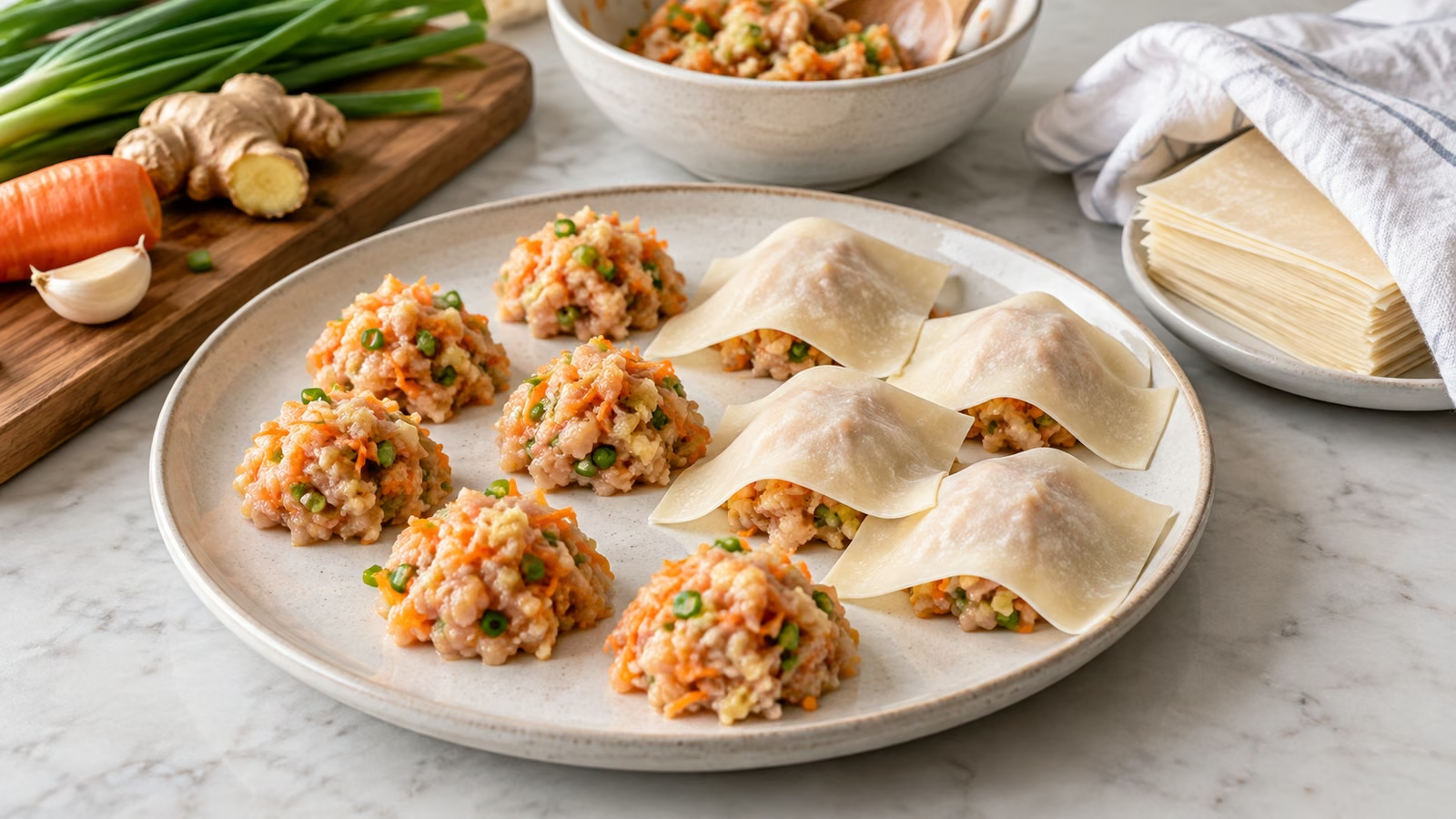
Ground chicken, finely grated carrot and fresh aromatics give the filling moisture and flavor without large pieces pushing through the wrappers. The small amount of sesame oil belongs in the mixture; the neutral oil has a separate job in the skillet.
- Ground chicken. Use plain ground chicken rather than seasoned sausage or cooked shredded meat. Different fat levels will change richness, so avoid treating every package as nutritionally identical.
- Carrot. Grate finely and measure the prepared amount. Long coarse shreds make it harder for a small mound to hold together neatly.
- Ginger and garlic. Grate or mince very finely so their flavor is distributed. Biting through a large raw-feeling piece is not the texture the wrapper promised.
- Square wonton wrappers. The corners will drape naturally around the mound. Keep the stack under a barely damp towel while working so the edges stay flexible.
Stir the filling until it is cohesive, then stop. I would cook a tiny separate spoonful to check seasoning before shaping the batch, never taste the raw chicken mixture.
Steam first and brown only after checking
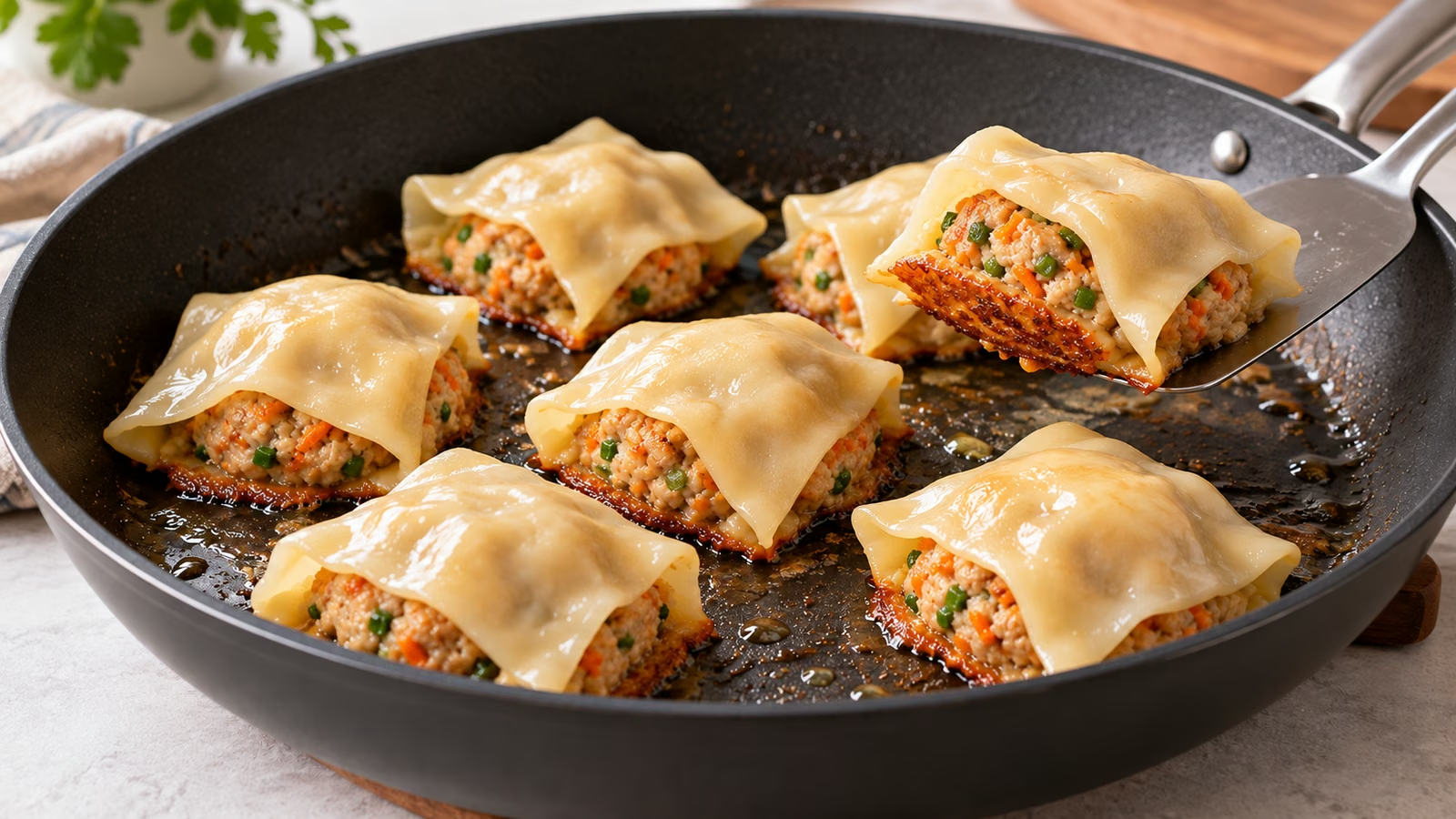
The lid is essential: it holds the steam that softens the wrapper and cooks the filling. A loud, dry sizzle early in the process means the water may have evaporated too soon. Add a little more carefully and cover again rather than letting the bottoms scorch.
- Give the pan breathing room. Cook in two batches if twelve dumplings fit with gaps. A smaller skillet may need three batches, which adds time.
- Check the center. FoodSafety.gov sets 165°F (74°C) for ground poultry. Probe a larger dumpling in the middle of the filling; wrapper softness is not a safety test.
- Uncover after doneness. Once the chicken reaches its target, allow residual water to evaporate. Only then does the brief browning stage begin.
- Watch the last minute. The change from wet pan to dry pan is quick. Lower the heat if edges darken before the filling releases, and use a thin spatula patiently.
Sauce, serving and make-ahead limits
The soy-vinegar sauce is deliberately a small batch. Divide it alongside the dumplings and dip as you eat, so the browned bases do not sit in a puddle. A crisp cucumber salad or steamed greens would make a useful partner without adding another pan-frying project.
- Keep raw portions cold. If preparing ahead, cover the assembled dumplings and refrigerate promptly. Cook within 24 hours; do not let the tray wait on the counter while other dinner jobs pile up.
- Handle batches safely. Serve finished dumplings promptly or keep them hot at 140°F (60°C) or above while finishing the rest. Use a clean serving plate, separate from the raw-filling plate.
- Store cooked leftovers. Refrigerate in shallow containers within two hours, or one hour above 90°F (32°C), and use within three days. Store sauce separately.
- Reheat gently but thoroughly. A covered skillet with a splash of water softens the wrappers again. Heat the filling to 165°F (74°C), then uncover briefly if you want to recover some browning.
The wrapper will be softer on a second heating. That is a normal leftover trade-off, not a reason to keep frying until the chicken dries out.
Chicken Blanket Dumplings Recipe

Ingredients
- 454 g ground chicken 1 pound
- 60 g carrot finely grated
- 40 g scallions finely sliced, divided
- 12 g fresh ginger finely grated
- 6 g garlic 2 cloves, finely grated
- 30 ml reduced-sodium soy sauce 2 tablespoons, divided
- 10 g toasted sesame oil about 2 teaspoons, divided
- 24 Nasoya square wonton wrappers 160 g total; 3 wrappers per 20 g label serving
- 14 g canola oil 1 tablespoon, divided between batches
- 15 ml unseasoned rice vinegar 1 tablespoon
- 180 ml water 3/4 cup for steaming, divided, plus 1 tablespoon for sauce
Equipment
- 1 Large nonstick skillet with tight-fitting lid
- 1 Thin spatula
- 1 Mixing bowl
- 1 Grater
- 1 Instant-read thermometer
Instructions
- Mix chicken, carrot, 30 g of the scallions, ginger, garlic, 15 ml soy sauce and 5 g sesame oil until evenly combined and slightly sticky. Divide into 24 equal mounds on a plate.
- Lay one wonton wrapper over each mound. Lightly dampen the underside if the wrapper feels dry, then gently press it down around the filling. Keep the bottoms open; no folded seam is needed. Cover unused wrappers with a barely damp towel.
- Set a large nonstick skillet with a tight-fitting lid over medium heat. Add half the canola oil and place 12 dumplings filling-side down, leaving gaps. Add 90 ml (6 tablespoons) water carefully around them, then cover immediately.
- Steam for about 7 to 9 minutes, maintaining gentle bubbling. Check a large dumpling at its center with a clean instant-read thermometer; the chicken must reach 165°F (74°C). If needed, add another small splash of water and continue covered until it reaches the target.
- Uncover and allow remaining water to evaporate. Cook another 1 to 3 minutes, watching closely, until the exposed filling and lower wrapper edges brown lightly. Lift gently with a thin spatula.
- Repeat with the remaining oil, water and dumplings. While the batches cook, mix the remaining 15 ml soy sauce, 5 g sesame oil, rice vinegar, 1 tablespoon water and remaining 10 g scallions.
- Serve six dumplings per person with one-quarter of the dipping sauce. Serve the first batch promptly or keep hot at 140°F (60°C) or above while finishing.
Nutrition
Notes
Tried this recipe?
Let us know how it turned out!Sources
- Weelicious: blanket dumpling trend
- FoodSafety.gov: poultry cooking temperature
- USDA: leftover handling and hot holding
- USDA FoodData Central: ingredient nutrients
Hi, I’m Laura, the voice behind Tastiva. I’ve always believed that eating well should feel enjoyable, comforting, and realistic—not like another complicated rule to follow. I love creating recipes that fit into everyday life, sharing simple nutrition ideas, and finding small ways to make meals feel a little better without losing the pleasure of good food.