
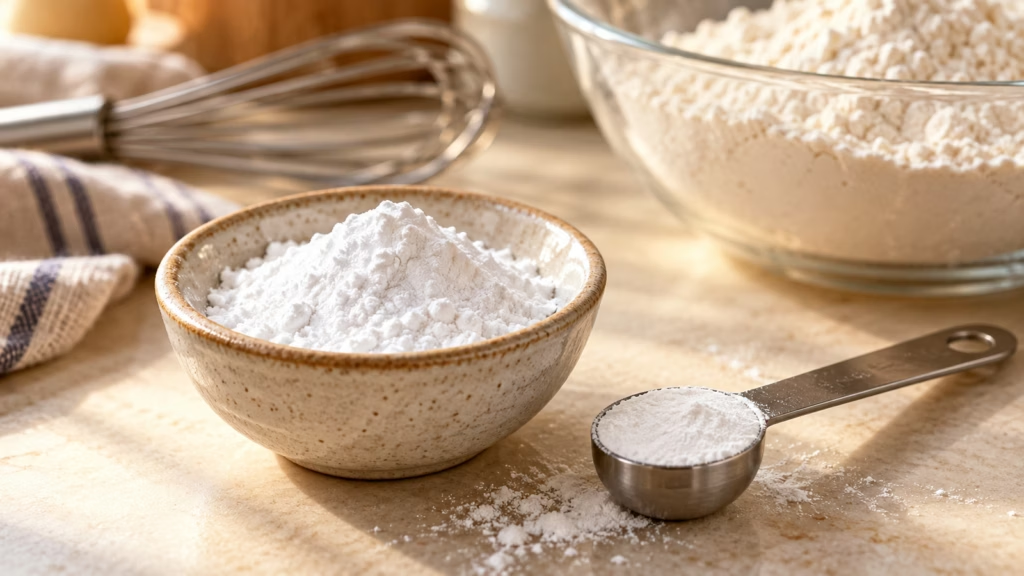
An empty baking soda box is a good reason to pause before the wet ingredients meet the flour. Baking powder can serve as a baking soda substitute in some bakes: the common emergency conversion is three times the volume. That means 3 teaspoons of baking powder for 1 teaspoon of baking soda. It is a compromise, though, and the texture, browning, or flavor may change.
Before reaching for a replacement, decide whether this is a bake you can experiment with or one that needs to turn out exactly as planned.
I’d make that decision before doing the arithmetic. A casual batch of muffins leaves more room for a different result than a birthday cake you need to stack and decorate. Here’s how to use the fallback thoughtfully, and when keeping the original recipe intact is the better choice.
The baking soda substitute ratio, with its limits
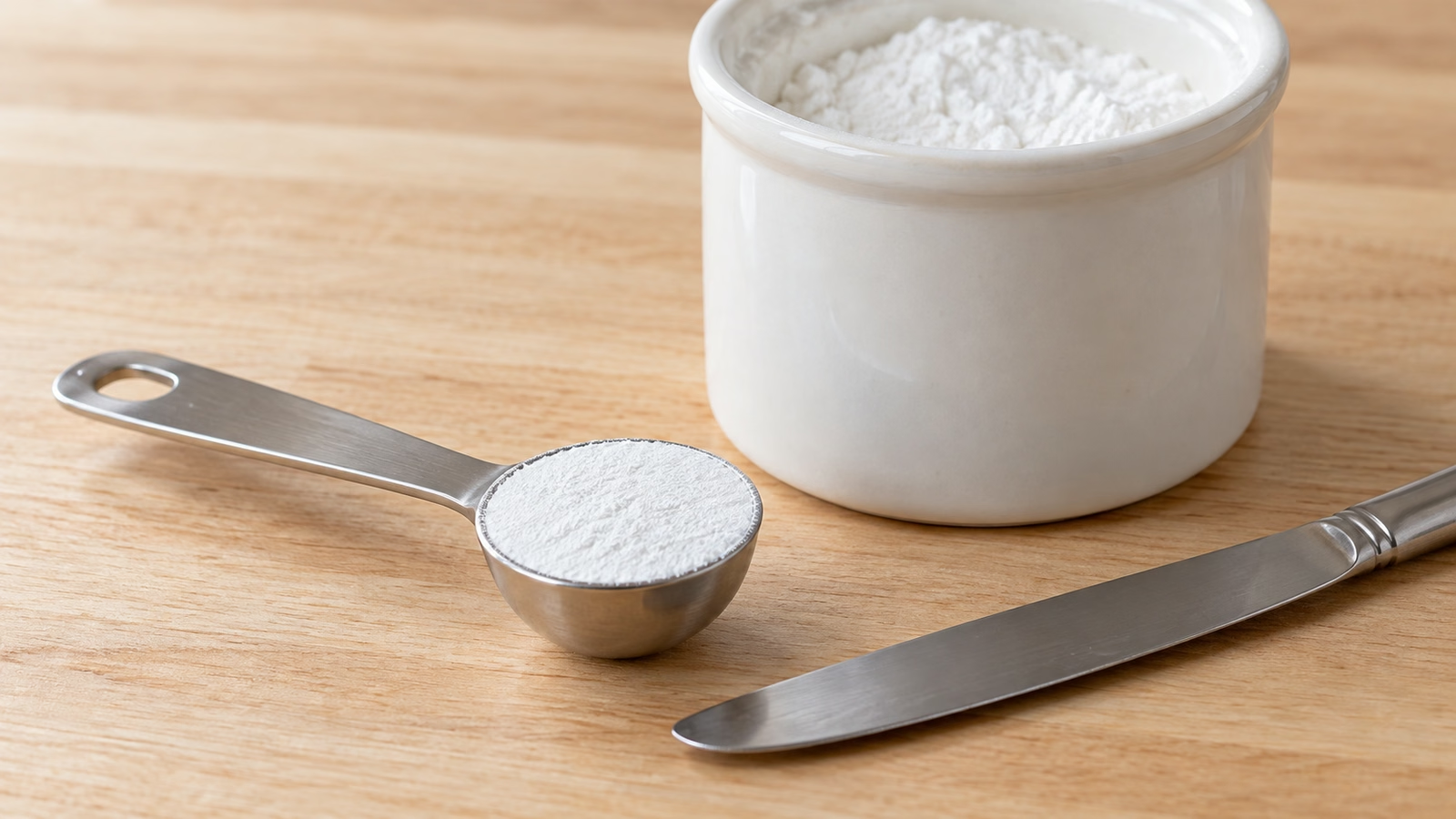
King Arthur Baking gives the three-to-one replacement as an in-a-pinch option and warns that the extra baking powder can introduce an unpleasant flavor. Use level measuring spoons and multiply only the amount of soda you are replacing; don’t triple the whole recipe’s leavener.
- For ¼ teaspoon baking soda: use ¾ teaspoon baking powder.
- For ½ teaspoon baking soda: use 1½ teaspoons baking powder.
- For 1 teaspoon baking soda: use 3 teaspoons baking powder, which equals 1 tablespoon.
- If the recipe already has baking powder: keep that original amount and add the replacement amount. For example, 1 teaspoon powder plus ¼ teaspoon soda would become 1¾ teaspoons powder. This arithmetic does not guarantee the original result.
Treat those as volume conversions, not gram-for-gram swaps. Powders differ in composition, and a teaspoon measure does not establish equal weight. There is also no useful universal cutoff where a replacement becomes guaranteed to work: the rest of the formula matters. If the original recipe offers a tested alternative, follow that instead of combining advice from several substitution charts.
Why extra baking powder cannot do every job
Baking soda is sodium bicarbonate, an alkaline ingredient that reacts with acids in a moist batter. Baking powder contains sodium bicarbonate plus dry acids and usually starch. Most supermarket versions are double-acting, producing gas when moistened and again as the batter heats. The powder brings its own acid; soda also changes the acidity of the recipe around it.
- Rise is only part of the job. Soda can affect spread and tenderness as well as making bubbles. Replacing its lifting action does not reproduce every texture change.
- Browning can change. Soda raises the batter’s pH, which can encourage browning. A substituted cookie may look or spread differently even when it cooks through.
- Acidic flavor may remain more noticeable. Buttermilk, yogurt, molasses, and natural cocoa are examples of ingredients whose interaction with soda matters.
- More powder can bring a flavor trade-off. The larger quantity may leave a bitter or otherwise unwelcome taste rather than simply giving a taller bake.
This is why two reliable baking sources can frame the decision differently. King Arthur offers an emergency conversion; Sally’s Baking advises against substitution when you want the intended result. I read those as compatible advice: an available workaround is not a promise that the recipe will behave as written.
Choose the least complicated way forward
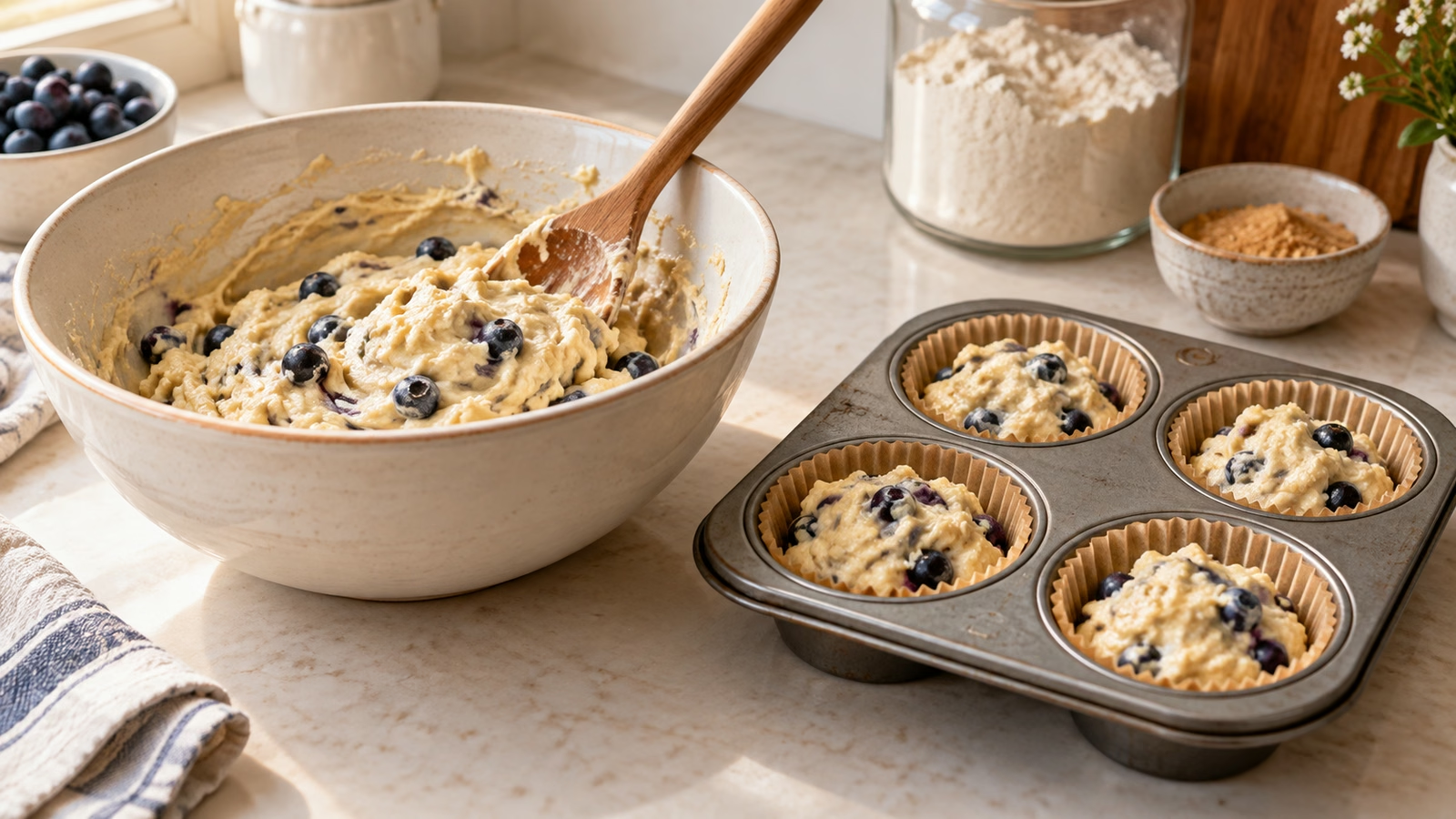
If you haven’t started mixing, you have the most useful option of all: choose a recipe developed for the ingredients you actually have. That avoids changing the leavener, dairy, sweetness, and flour together, then trying to guess which change caused a dense center or unusual taste.
- For a special-occasion cake: get fresh baking soda or choose a tested baking-powder cake. A predictable crumb matters when the layers must support frosting.
- For everyday muffins or quick bread: the emergency conversion may be worth considering if you accept a different outcome. Keep the remaining ingredients and method unchanged unless the recipe author supplies adjustments.
- For cookies: expect that spread, color, and texture may differ. A recipe already designed around baking powder is more dependable than trying to preserve a favorite cookie with several substitutions.
- If the batter is already mixed: do not keep adding different powders to chase an uncertain amount. Establish exactly what went in before deciding whether the batch is worth continuing.
- If both leaveners are missing: pick a recipe intentionally made without them. Yeasted dough and egg-foam cakes use different methods, not a spoonful-for-spoonful replacement.
Don’t automatically remove the buttermilk or pour in vinegar just because the baking powder has changed. Those ingredients also supply liquid, flavor, and other properties. This guide’s ratio addresses a missing leavener; it does not redesign a batter. You’ll usually save more frustration by changing the recipe than by changing half its ingredients.
Check the container before you measure
A forgotten can at the back of the cupboard deserves a quick activity check. King Arthur’s method is to stir ½ teaspoon baking powder into 2 tablespoons warm water; it should bubble and foam. Do this in a separate bowl and discard the test mixture. A reaction shows activity, but it cannot prove that a particular substitution will succeed.
- Read the label each time. Baking soda and bicarbonate of soda are the same ingredient. Baking powder is a mixture. Do not identify an unknown powder by appearance or a kitchen experiment.
- Keep the measure level. A rounded spoon adds an uncontrolled amount. Use a dry spoon and level across the rim with a straight edge.
- Skip incomplete replacements. Cream of tartar, lemon juice, and vinegar are acids, not stand-alone substitutes for the missing soda. Adding them alone does not supply that base.
- Stay with food ingredients. Washing soda and household cleaning products do not belong in batter, even if a name or package looks familiar.
If the missing ingredient turns out to be baking powder instead, follow the separate baking powder substitute guide. That is the reverse problem and needs different proportions. For the chemistry behind both products, Sally’s Baking explains their roles in the video below; its advice favors following a tested recipe rather than treating the emergency swap as equivalent.
Sources
- King Arthur Baking: Baking soda, baking powder, and emergency substitutions
- Arm & Hammer: Ingredient differences and replacement proportions
- McCormick Kitchens: Leavener functions and substitution guidance
- King Arthur Baking: Checking baking powder activity
- Sally’s Baking: Baking powder versus baking soda, with video

Hi, I’m Laura, the voice behind Tastiva. I’ve always believed that eating well should feel enjoyable, comforting, and realistic—not like another complicated rule to follow. I love creating recipes that fit into everyday life, sharing simple nutrition ideas, and finding small ways to make meals feel a little better without losing the pleasure of good food.